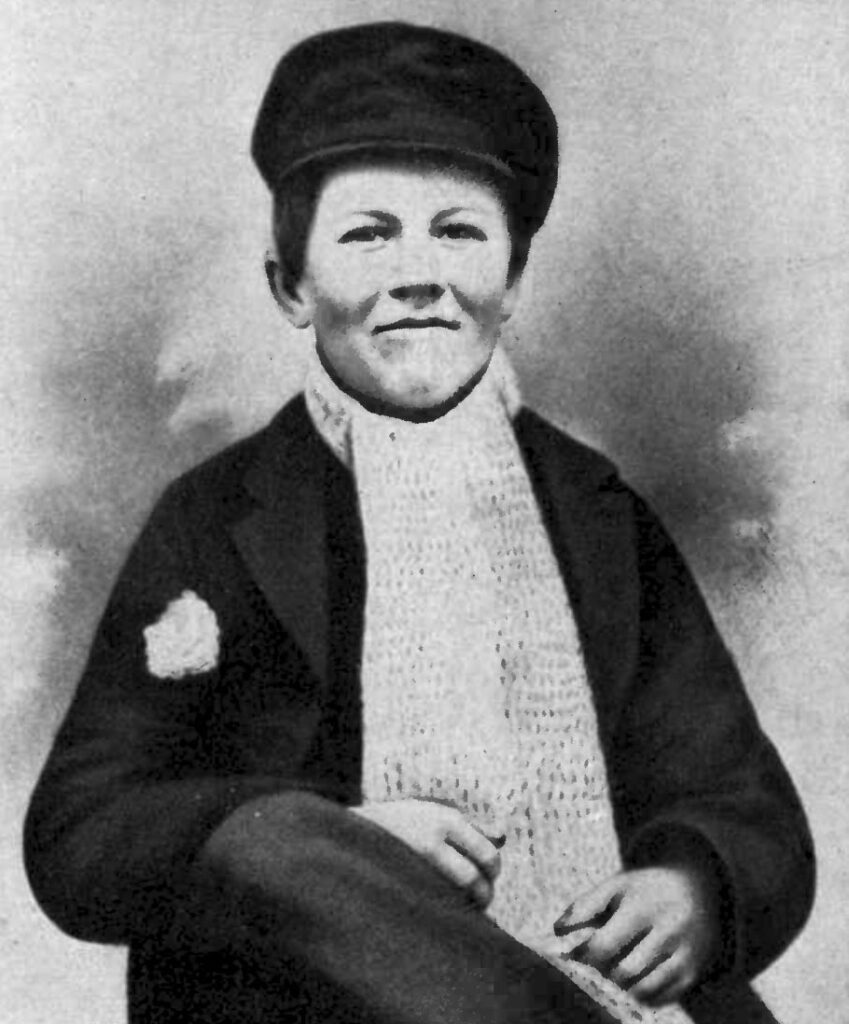
Thomas Edison was rarely modest about his own abilities. Yet when he looked back at the beginnings of his career, he placed much of the credit elsewhere. “My mother was the making of me,” he said of Nancy Elliott Edison. He remembered a woman who trusted him, opened books to him and gave him the feeling that there was “someone I must not disappoint”.
The tribute has often been turned into a sentimental tale. In its most familiar form, an unimaginative teacher dismisses the young Edison as “addled”, while his mother instantly recognises a genius and removes him from school. It is a satisfying story, but the surviving evidence is less tidy and more revealing. Edison attended school on at least two occasions, much of the dramatic dialogue comes from later recollection, and Nancy did not single-handedly create an inventor. What she did was give an inquisitive, difficult-to-teach child the habit and confidence of educating himself.
That was no small gift. Long before Menlo Park or the phonograph, Edison learnt that a book, a workshop and a stubborn question could form a school of their own.
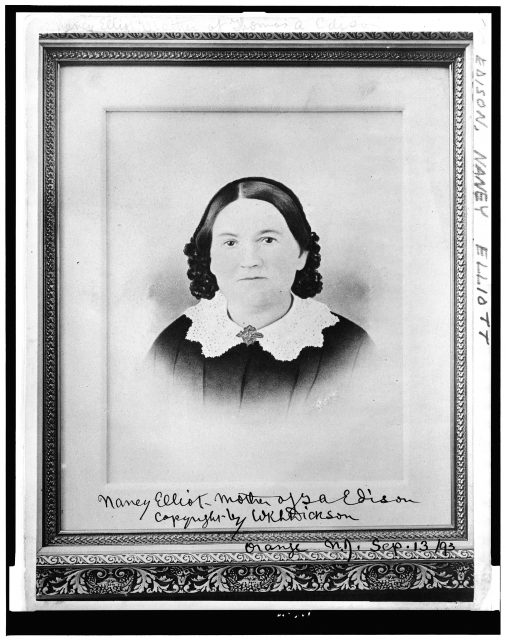
Nancy Elliott before Thomas Edison
Nancy Matthews Elliott was born in New York State in 1810. Her father had fought in the American Revolution. The National Park Service describes Nancy as a devout Presbyterian with some formal education, and sources associated with the Thomas A. Edison Papers say that she had apparently taught school. Those details matter because teaching was not merely a role assigned to her by later family legend. She brought some educational experience to the household.
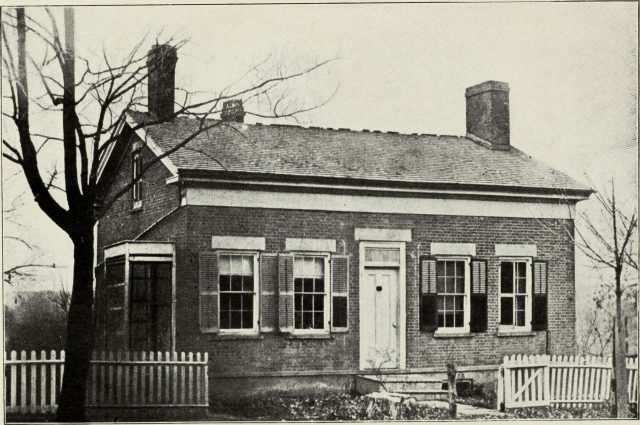
She married Samuel Ogden Edison Jr on 12 September 1828. The couple lived in Vienna, in what was then Upper Canada, where Samuel worked at several occupations and became involved in the unsuccessful rebellion of 1837. Facing arrest, he fled across the border to the United States. Nancy and the children followed, and the family eventually settled in Milan, Ohio, a busy grain port on the Milan Canal.
Thomas Alva Edison was born there on 11 February 1847, the youngest of Samuel and Nancy’s seven children. Only four of the children survived to adulthood. The home combined two influences that would remain visible in Thomas. Nancy represented formal learning, moral seriousness and reading; Samuel was politically argumentative, commercially restless and forever considering another venture. Edison inherited no simple family formula, but he grew up where books and schemes were both part of ordinary conversation.
Milan’s prosperity declined when the railway displaced canal traffic. In 1854 the Edisons moved to Port Huron, Michigan, and occupied a large house overlooking the St Clair River. The location placed the seven-year-old Edison close to ships, railway workshops and the traffic between Canada and the United States. It also supplied room for the experiments that soon tested Nancy’s patience.
Did Thomas Edison’s teacher really call him “addled”?
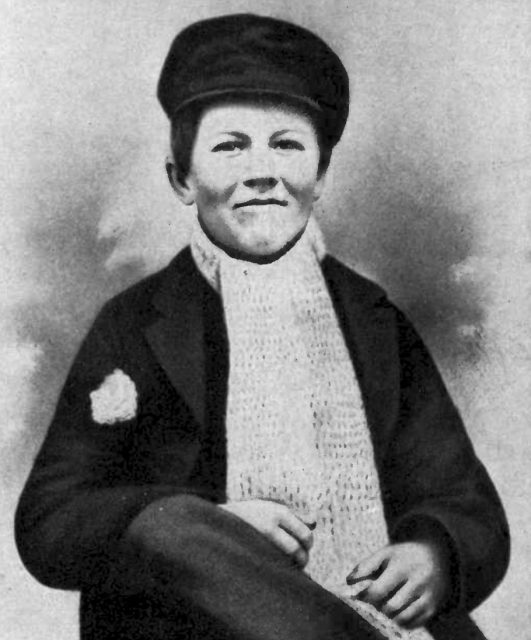
Edison’s formal education was limited, although not quite as limited as popular accounts suggest. Research by the Thomas A. Edison Papers identifies two periods of attendance in Port Huron. In 1854 he went to a private school conducted by the Reverend George Engle. He later attended the public Union School during 1859–60. For most of the years between and around those periods, Nancy taught him at home.
The usual version of the story has Engle, or another unnamed teacher, telling Nancy that her son was “addled”. Sometimes a letter is added to the tale: Edison is said to have carried home a note declaring him incapable of learning, which Nancy reads aloud as a claim that he is too clever for the school. After her death, the adult Edison supposedly discovers the true wording and weeps. There is no good contemporary evidence for that letter, and its polished moral has all the signs of later embellishment.
The older “addled” account deserves more careful treatment. Edison himself told versions of his childhood story many years afterwards, by which time his life was routinely presented as proof that practical American intelligence could defeat conventional authority. The Library of Congress biography repeats the episode, and it became part of the standard Edison narrative. A recollection may preserve a real humiliation without preserving every word, however. It cannot safely be treated like a report made in 1854.
Engle certainly knew and taught Edison. In 1885 the elderly minister wrote to his famous former pupil asking for financial assistance. He recalled that Samuel Edison had been unable to pay the school bill in full. The letter confirms the relationship between teacher and pupil, but it does not establish the dramatic confrontation later attached to it.
Other circumstances help explain why a classroom could have been difficult. Edison was intensely curious, disliked learning by repetition and developed serious hearing loss while young. The cause of that deafness remains uncertain. Edison offered more than one explanation, including childhood illness and a blow or accident on the railway. Whatever its origin, reduced hearing would have made spoken lessons harder to follow. Home education allowed Nancy to adjust the pace and method without requiring her son to behave like every other pupil in a crowded room.
What Nancy Edison actually taught him
Nancy’s most important lesson may have been how to read independently. Edison later said that she taught him to read good books quickly and correctly, opening a world of literature for which he remained grateful. Samuel’s library then supplied unusually demanding material. Accounts of Edison’s youth mention Edward Gibbon, David Hume, Thomas Paine, world history and works of science. The authorised 1910 biography even describes the boy struggling with Newton’s Principia, whose mathematics were beyond him.
This should not be mistaken for effortless brilliance. Edison could absorb facts quickly, but he had gaps in his education and never received systematic advanced instruction in mathematics. At Menlo Park he later relied on men such as Francis Upton for mathematical treatment of electrical problems. Nancy did not provide a complete curriculum. She gave him the confidence to attack difficult books, discover what he could understand and keep looking when one explanation failed.
His reading soon turned towards experiment. The Thomas A. Edison Papers identifies Richard Green Parker’s School Compendium of Natural and Experimental Philosophy as an important early book. Its demonstrations connected scientific principles to things a reader could make and observe. Edison also studied a chemistry text by Carl Remigius Fresenius and began collecting chemicals and apparatus.
The family did not simply leave him undisturbed. A childhood friend, James Clancy, later remembered Nancy warning the boys that their experiments might blow their heads off. Clancy and Edison strung a telegraph line between their houses and practised sending messages. A boarder in the Edison home, Ambrose Robinson, recalled the twelve-year-old studying mechanical journals, making devices in his workshop, taking them apart and rebuilding them until they satisfied him.
Nancy therefore appears neither as a severe schoolmistress nor as an indulgent spectator. She worried, warned and imposed limits, but she allowed curiosity enough room to become disciplined practice. Edison’s later laboratories worked on a grander scale, with paid experimenters, machine tools and industrial finance, yet the repeated movement between books, apparatus, failure and alteration had begun much earlier.
Books were only one part of his education
It is tempting to leap directly from Nancy’s lessons to the great inventions, as though home schooling inevitably produced the phonograph. Edison’s education had several further stages. When the Grand Trunk Railway reached Port Huron, he persuaded his mother to let him work on the trains. By late 1859 he was selling newspapers, magazines and sweets between Port Huron and Detroit.
The job expanded his world. During the long Detroit layover he read at the city library. He bought chemicals and created a small laboratory in a baggage car. He printed a newspaper, the Grand Trunk Herald, and employed other boys in small trading ventures. These activities combined self-education with the commercial instinct he had also observed in his father.
A railway experiment ended in a fire, according to Edison’s later account, and his chemicals were moved back to the family home. The incident has sometimes been combined with one of his explanations for his deafness, producing a neat story in which a conductor boxed his ears and permanently damaged his hearing. The Edison Papers treats the recollection as one of several competing explanations, not a settled medical history.
Telegraphy supplied the next, decisive education. After learning from railway operator James MacKenzie, Edison practised intensively and gained work as an operator. From 1863 to 1867 he moved through towns and cities in the Midwest, maintaining instruments, studying trade journals and experimenting with discarded apparatus. He became an expert receiver and learnt how communication systems worked under real operating pressures.
Nancy had not taught him telegraph engineering, nor did she introduce him to the skilled mechanics, manufacturers and investors who later made invention a career. Her contribution came earlier. She had made self-directed learning normal. When Edison reached a railway office, a library or a machine shop, he already knew how to treat the place as another classroom.
A mother’s confidence—and its limits
Edison’s longer tribute to Nancy is more revealing than the familiar slogan. He remembered her as true and sure of him, and said that her confidence gave him someone he felt bound not to disappoint. The statement does not prove that she predicted his fame. It tells us how the adult Edison interpreted her support: belief created an obligation to work.
That interpretation fitted the public identity he later cultivated. Edison presented himself as the practical, self-educated inventor who learnt through effort rather than academic theory. Nancy occupied a central place in that story because she represented intelligent encouragement outside an institution that had failed to hold him. The narrative was useful publicity, but it was not invented from nothing. His brief school attendance, extensive reading at home and enduring gratitude are well documented.
There were harder parts of Nancy’s life that the uplifting version usually leaves out. The National Park Service reports that she developed mental illness late in life. The authorised biography describes her final years as a period of invalidism. Retrospective descriptions are not enough for a modern diagnosis, and it would be wrong to supply one. They do make clear that the relationship was not frozen in the happy scene of a mother teaching a small boy beside a shelf of books.
Nancy died in Port Huron on 9 April 1871. Edison was twenty-four. He had already become an accomplished telegraph operator, filed patents, formed partnerships and established workshop operations in Newark. She lived long enough to see him turn invention into a profession, but not to see the work that made his name universal.
What Nancy did not live to see
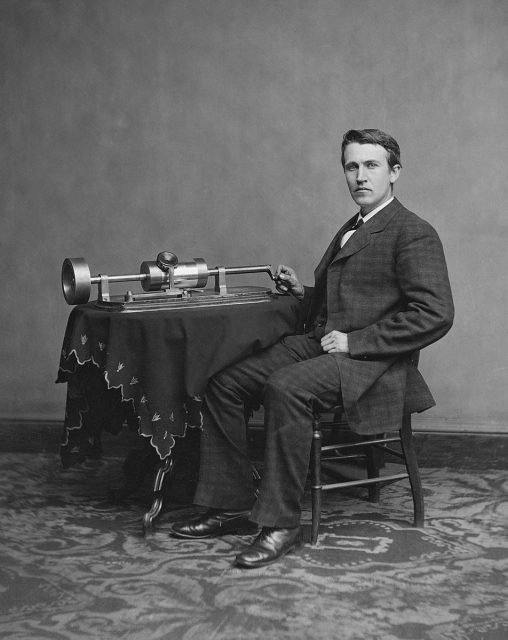
Six years after Nancy’s death, the first phonograph spoke at Menlo Park. Electric-light experiments followed, then power stations, recording businesses, motion pictures and the vast West Orange laboratory. The distance between the Port Huron schoolroom and those industrial organisations can make any single explanation of Edison’s success look inadequate.
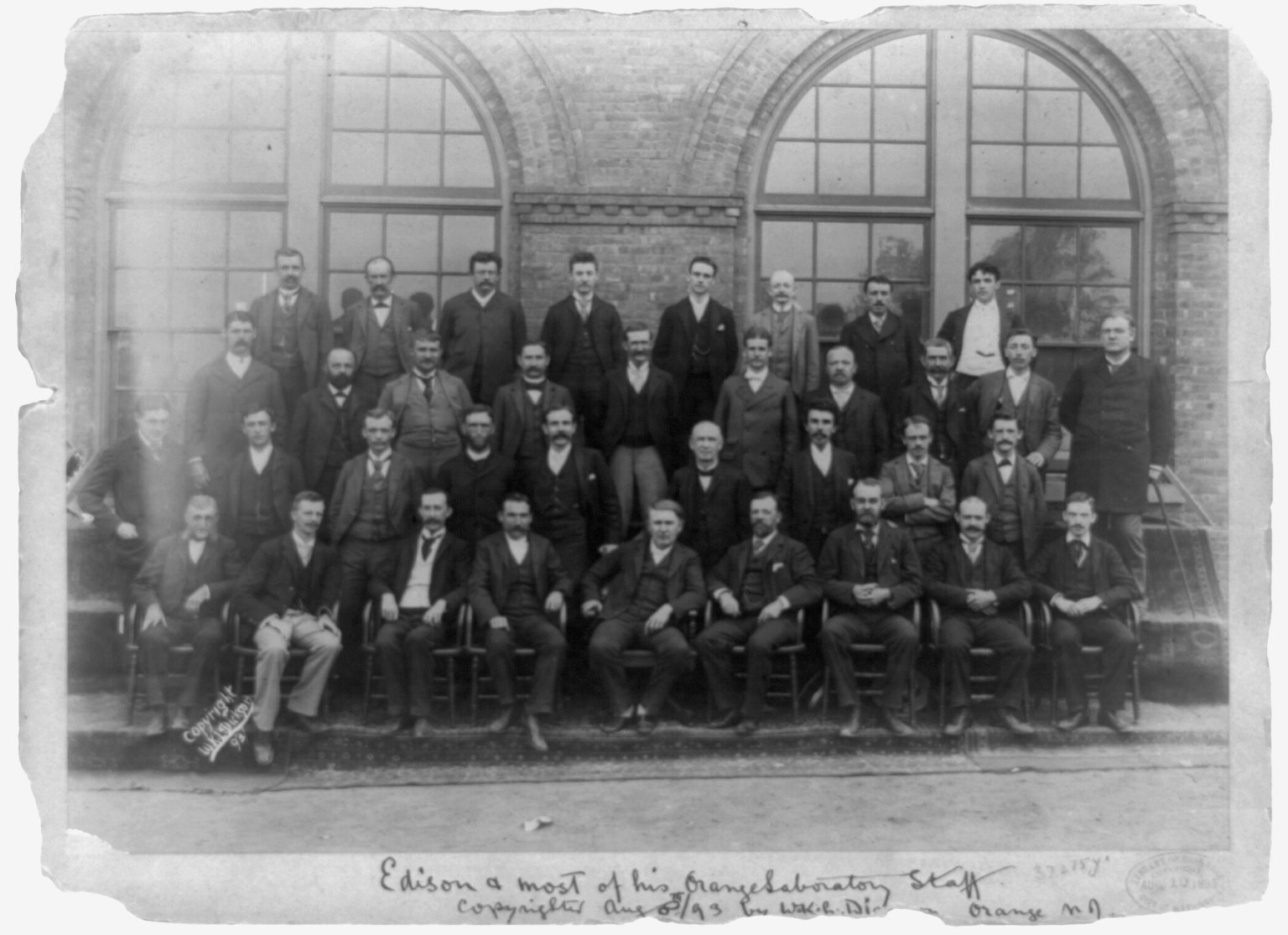
It was inadequate. Edison’s achievements depended on years of telegraph experience, talented colleagues such as Charles Batchelor and John Kruesi, scientific and technical specialists, investors, patent lawyers, factory workers and an unusual talent for promotion. His father’s entrepreneurial example mattered too. The record gives no reason to credit Nancy with ideas that other people developed or with knowledge she did not possess.
Her influence can be stated without exaggeration. She recognised that conventional schooling was not working well for her son. She had enough education to teach him herself. She encouraged serious reading, permitted practical investigation and made him feel that intellectual difficulty was a reason to persist rather than withdraw.
Nancy Edison’s real legacy
The mythical Nancy Edison rescues a hidden genius from a foolish teacher and changes history in a single afternoon. The real woman’s achievement was quieter and took longer. She educated her youngest child across years, within a family that moved countries, lost children, changed livelihoods and eventually left Ohio for Michigan.
Her influence is most visible not in any one invention but in Edison’s lifelong method of learning. He read until he found something testable, built it, watched it fail and began again. At the Menlo Park invention laboratory, a library, chemistry room and machine shop belonged to the same organisation. The scale was industrial, but the underlying assumption was familiar: knowledge became useful when books and hands worked together.
That is why Edison’s praise of his mother has survived the doubtful anecdotes around it. Nancy did not need to foresee electric lighting or recorded sound. She taught a child whom school did not suit that education could continue elsewhere. Edison spent the rest of his life proving how far that idea could travel.
Sources and further reading
- Thomas A. Edison Papers: “The Boyhood Years” — Edison’s two periods of formal schooling, George Engle’s later letter, early reading, experiments and the recollections of James Clancy and Ambrose Robinson.
- Thomas A. Edison Papers: “Detailed Biography” — the family library, home education, railway work and Edison’s development as a telegrapher and inventor.
- Thomas Edison National Historical Park: “Samuel and Nancy Elliott Edison” — Nancy’s background, family history, home teaching, later illness and Edison’s tribute to her.
- Library of Congress: “Life of Thomas Alva Edison” — the established popular account of Edison’s early schooling and self-education.
- Edison: His Life and Inventions, Frank Lewis Dyer and Thomas Commerford Martin (1910) — an authorised early biography containing Edison’s recollections; valuable but read critically because it helped construct his public legend.