Joseph Swan demonstrated an incandescent lamp before Thomas Edison announced his own electric-light experiments. Edison did not invent the general idea of passing current through a material until it glowed. Swan did not build the complete commercial system that Edison’s organisation developed at Menlo Park. The history becomes distorted when either man is made to disappear.
Their rivalry was most important in Britain. Swan possessed strong British patent rights. Edison’s interests could fight him and risk losing, or combine. In 1883 the Edison & Swan United Electric Light Company was formed and quickly became known as Ediswan.
The company name suggests a friendly joint invention. The reality was negotiation after parallel work and potential litigation. Swan’s cellulose filament eventually influenced the wider industry; Edison’s high-resistance lamp and electrical system shaped commercial distribution. Their relationship shows how national patent laws could turn technical overlap into corporate partnership.
Swan before Edison
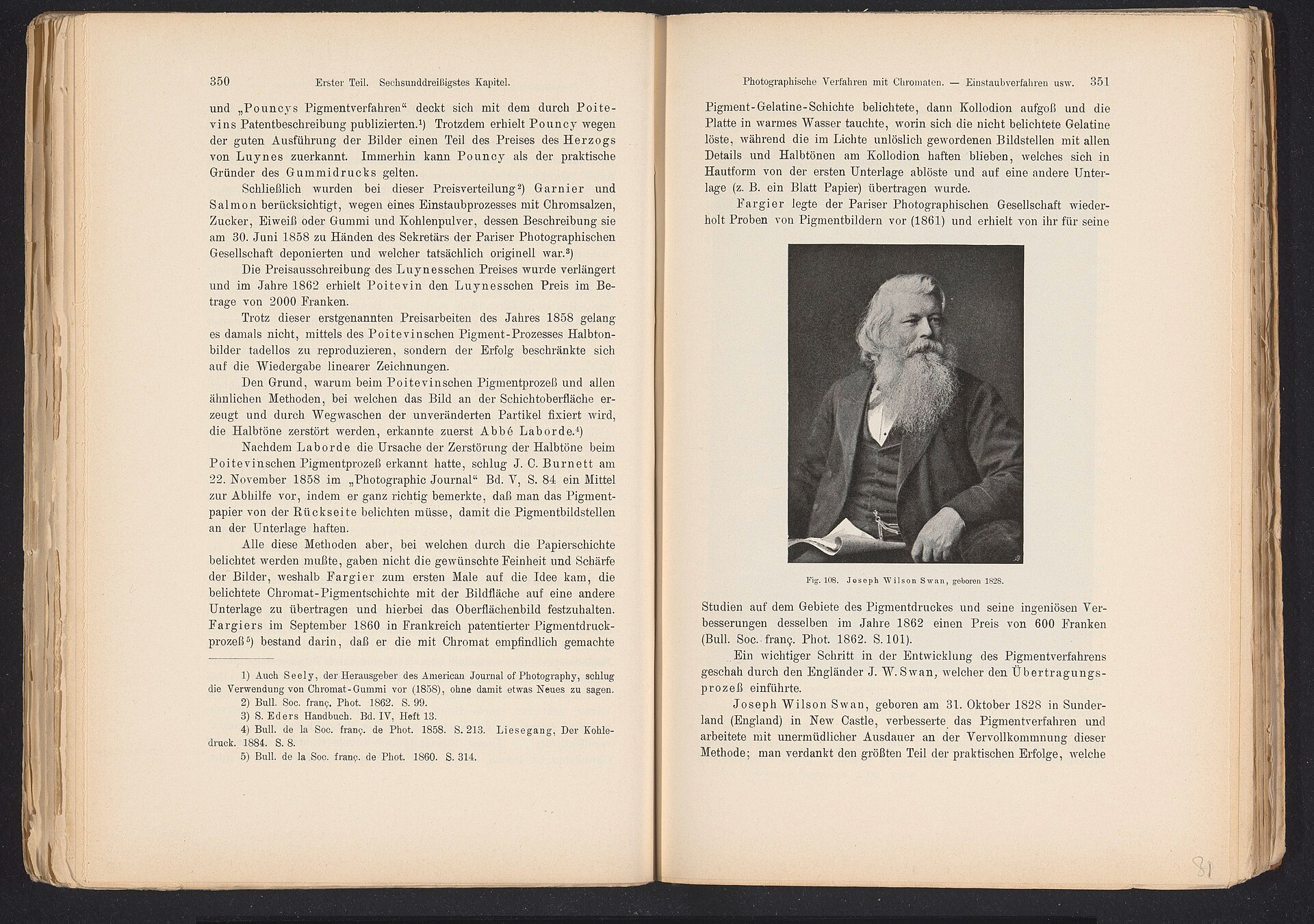
Joseph Wilson Swan was born in Sunderland in 1828 and trained in pharmacy. His work crossed chemistry, photography and electricity. By 1860 he had demonstrated an experimental incandescent lamp using a carbonised paper element inside an evacuated glass bulb.
The lamp produced light, but the available vacuum technology and the carbon conductor limited its life and practicality. Residual gas attacked the glowing carbon, and material released from the element blackened the bulb. A laboratory demonstration did not yet amount to a durable household system.
Improved vacuum pumps encouraged Swan to return to the problem in the 1870s. He demonstrated lamps publicly in the north-east of England in 1878 and 1879, before Edison’s successful carbon-filament tests at Menlo Park were announced.
Priority therefore depends upon the claim being made. Swan had made and displayed incandescent lamps earlier. Edison’s group developed a high-resistance lamp as part of an economically designed central-station network.
Public light before a complete system
Swan’s demonstrations were not secret laboratory curiosities. He lectured before audiences in Newcastle and showed that an evacuated carbon lamp could provide steady electric light. Lamps associated with his work were installed in prominent British buildings, including the home of industrialist Sir William Armstrong at Cragside and public premises in Newcastle. These installations gave Swan a genuine place in the arrival of practical British lighting.
They also expose the difficulty of asking who made the “first practical bulb”. A lamp may be practical enough to illuminate one building from a dedicated generator yet poorly suited to a city network. It may work electrically but prove expensive to manufacture. It may last for a demonstration while remaining inconsistent in routine service. Edison and Swan were solving overlapping problems at different scales and under different patent regimes.
The British public did not need to wait for an American announcement before seeing incandescent light. What Edison’s companies brought was a system designed for multiplication: many high-resistance lamps, parallel circuits and central generation. Swan’s earlier success and Edison’s system achievement can both be true.
Why resistance changed the system
Edison approached the lamp as a component in an electrical distribution system. If each lamp drew a large current, thick copper conductors would be required and the cost of wiring a city would become prohibitive. A high-resistance filament allowed many lamps to operate in parallel while using comparatively modest conductors.
The Menlo Park team experimented with thin carbonised materials and improved evacuation. A carbonised cotton-thread filament burned for extended tests in October 1879. Carbonised Bristol board and later bamboo provided longer life.
It is this relationship between lamp resistance, copper cost and central generation that distinguishes Edison’s programme. He was not simply competing to make a bulb glow. His companies needed a product that could be manufactured, connected, metered and supplied from a station.
Two inventors, two patent systems
Patents are territorial. A right granted in the United States does not automatically control manufacture in Britain. Edison’s American patent strategy and Swan’s British rights therefore produced different commercial landscapes.
Swan’s patents were strong enough to succeed in British litigation against another lamp maker. Edison’s British representatives faced the risk that a direct contest would restrict their ability to trade. Negotiation offered a safer route.
This is sometimes summarised as “Edison lost to Swan”. The phrase is too simple. The Edison interests chose to combine after Swan’s rights had been demonstrated as formidable. The settlement recognised commercial realities without establishing that every technical claim made by either side was identical.
The birth of Ediswan
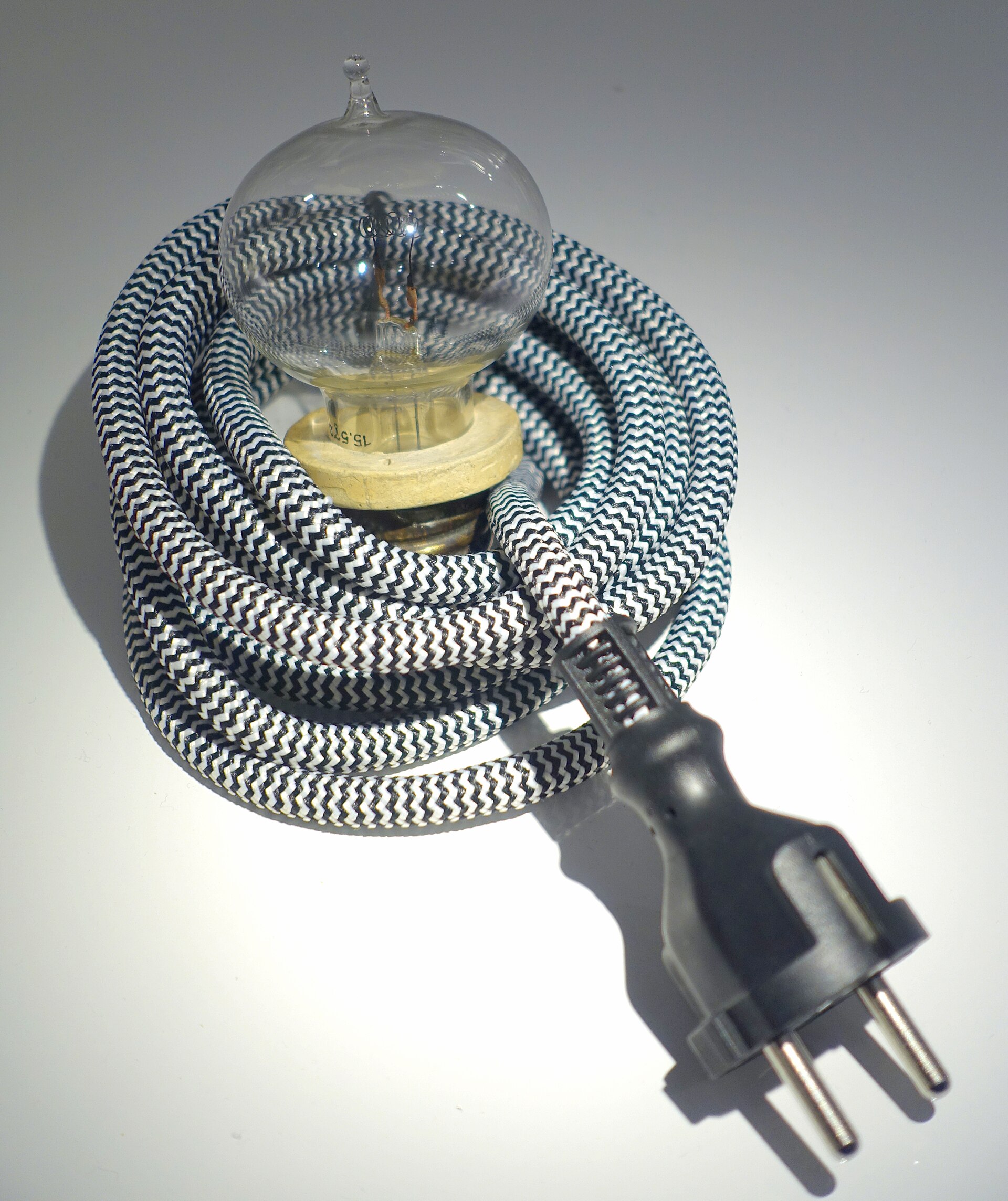
The Edison & Swan United Electric Light Company was established in 1883. The combined business sold lamps in Britain and benefited from both names. “Ediswan” was memorable, and it turned the appearance of rivalry into a public image of union.
Corporate combination did not mean that Edison and Swan now shared a laboratory bench. Their work had developed separately, and the company drew upon manufacturing organisations, managers and patent arrangements larger than either inventor.
The merger also reduced uncertainty for customers and investors. Electric lighting required capital for generating machinery and wiring. A market divided by patent injunctions could delay installations. Combining rights made the business easier to finance and supply.
Ediswan’s factories and managers then had to turn the settlement into ordinary production. Customers did not buy a patent compromise; they bought lamps expected to fit, burn consistently and be replaced from a dependable supplier. The joined company converted rival reputations and legal rights into a manufacturing standard, which is why its history continued after the excitement of the original priority dispute had faded.
Its success depended upon repeatable factory work and trained employees, not another ceremonial first lighting before an admiring audience.
Swan’s cellulose filament
Swan continued improving carbon filaments. In 1881 he patented a process in which treated cellulose could be formed into fine, uniform threads and carbonised. The result was more consistent than cutting each filament from an irregular natural material.
Ediswan sold lamps using Swan’s cellulose filament. Variations of the method became an industry standard. Edison’s American company continued using carbonised bamboo until the 1892 merger that created General Electric, after which the combined concern moved towards cellulose.
This later adoption is one of the clearest reasons Swan belongs inside, rather than beside, the electric-light story. His importance is not limited to demonstrating an earlier bulb. A manufacturing method associated with his work outlasted Edison’s preferred bamboo.

What Edison contributed
Correcting the myth that Edison invented the first light bulb should not conceal his achievement. His Menlo Park organisation joined lamp design to generators, feeders, mains, switches, fuses, sockets and meters. It investigated how a central station could supply many customers safely and economically.
Pearl Street Station began service in lower Manhattan in September 1882. It demonstrated a direct-current network supplying commercial customers. The lamp was essential, but the station, conductors and operating discipline made electric light available beyond a demonstration room.
That system perspective explains why Edison is generally credited with a practical incandescent light. “Practical” should not be used to erase Swan; it identifies the larger commercial problem Edison’s team solved.
What Swan contributed
Swan’s achievements were also broader than a priority claim. He persisted with incandescent lighting across two decades, took advantage of improved vacuum technology, secured effective British patents and developed a cellulose-filament process important to manufacture.
His lamps were installed in British buildings while electric lighting was still novel. Swan became a respected scientific and industrial figure and was later knighted. He also made important photographic innovations, including improvements related to carbon printing and dry plates.
Reducing him to “the man Edison copied” denies the independence and range of his work. The evidence supports parallel development within an international field whose participants knew that electric light promised a major industry.

Did Edison steal Swan’s light bulb?
“Steal” is an unhelpful description of the documented relationship. Edison knew that other inventors had made incandescent lamps; the general goal was public. His claims concerned a particular lamp and its use within a system. Swan possessed overlapping British rights and achieved priority on important aspects there.
The formation of Ediswan shows that Swan could not simply be ignored. It does not prove that Edison secretly took Swan’s complete design. Their filaments, resistance choices, vacuum experience and business environments differed.
A more accurate account recognises cumulative invention. Earlier experimenters established that electrical incandescence was possible. Swan produced workable British lamps and a valuable filament process. Edison’s team made a high-resistance lamp and integrated distribution system. Companies and courts determined which rights could be exploited in each market.
A rivalry resolved in a company name
Ediswan is a useful correction to heroic invention stories because it places the dispute where nineteenth-century technology often ended: inside a corporation. Patents were negotiated, capital was combined and manufacture continued under a name broad enough to include both reputations.
Neither inventor emerged as the sole creator of electric light. Swan’s earlier demonstrations and cellulose filament remained part of the technical inheritance. Edison’s network and commercial organisation expanded the scale of electric service.
The bulb did not pass from one mind into the world. It travelled through experiments, patents, factories, courtrooms and power stations. The joined name “Edison and Swan” is therefore not an awkward compromise. It is a more truthful description of how modern lighting began.
Sources and further reading
- Smithsonian National Museum of American History, “Joseph W. Swan” – early lamps, high resistance, British patent position, Ediswan and cellulose filaments.
- Science Museum Group, Joseph Wilson Swan – biography, electrical lighting and photographic work.
- Thomas A. Edison Papers, “Electric Light” – Edison’s high-resistance lamp and system development.
- Thomas Edison National Historical Park, Edison biography – Menlo Park lighting programme and commercial system.
- National Archives, Edison incandescent-lamp patent drawing – United States patent record.