In January 1910, an Edison film crew photographed a monster taking shape in a vat of burning chemicals. The sequence was achieved by filming a constructed figure as it burned and collapsed, then running the images backwards. Bones appeared to gather flesh; rags and wild hair assembled into a creature.
Frankenstein was produced by the Edison Manufacturing Company, but Thomas Edison did not direct it, write it or play its scientist. J. Searle Dawley directed and adapted Mary Shelley’s story. Charles Ogle became the monster, Augustus Phillips played Frankenstein and Mary Fuller played his fiancée. James White operated the camera.
The film survives for about thirteen minutes. It is frequently called the first Frankenstein film and sometimes the first horror film. The first claim is secure; the second is not. Earlier supernatural films existed. Its stronger distinction is that it turned a major literary monster into an American screen drama and used cinema itself—reversal, substitution and the mirror—to make creation and destruction visible.
Edison’s name and the people who made the film
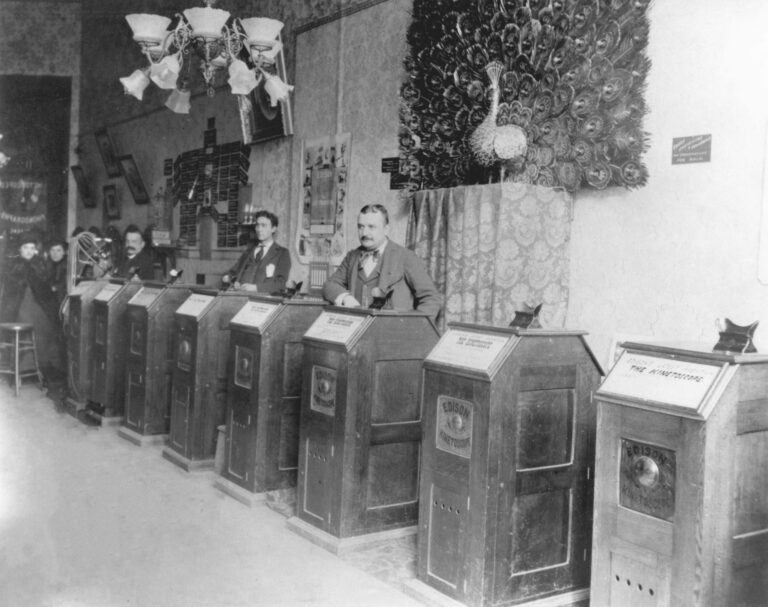
By 1910 the Edison company had been producing motion pictures for nearly two decades. Edison’s laboratory had initiated the camera and Kinetoscope programme, but the mature studio employed directors, actors, camera operators, set builders and managers. Films appeared under the Edison brand whether or not Edison participated personally.
Dawley was an experienced stage actor and filmmaker. He wrote the scenario and directed. The Library of Congress catalogue credits James White with photography. Ogle’s costume and performance created the film’s most memorable figure, while Phillips and Fuller carried the domestic story.
Calling it “Edison’s Frankenstein” is useful if “Edison” identifies the company. It is misleading if it turns the inventor into the film’s creative author.
A “liberal adaptation” of Mary Shelley
The Edison catalogue promoted the film as a liberal adaptation of Shelley’s novel. It compressed a long story of ambition, abandonment and revenge into one reel. The student Frankenstein leaves home for college, attempts to create a perfect human being and recoils from the creature that emerges.
The monster follows him. On Frankenstein’s wedding day it confronts its creator and appears in a mirror. The ending turns away from Shelley’s Arctic pursuit. Love and moral recovery destroy the evil Frankenstein has projected into physical form; the creature vanishes, and its reflection fades from the glass.
This interpretation makes the monster less an independent victim than an external image of its maker’s disordered mind. It is psychologically neat and morally reassuring. Shelley’s creature, who learns language and argues about responsibility, is far more complex.
The creation scene
The film’s most striking effect begins with a dummy or constructed figure burning inside a curtained vat. Photographed in ordinary direction, the material blackens, collapses and falls apart. Projected backwards, the debris seems to gather itself into a skeleton and acquire a body.
Reverse motion was not new in 1910, and European trick-film makers such as Georges Méliès had explored substitution and transformation. Dawley’s use of it was unusually appropriate. Cinema reversed natural time to depict an unnatural birth.
The scene remains unsettling because the creature does not simply enter wearing make-up. It assembles from matter before the audience. Ogle’s later appearance—stooped, ragged and crowned with a mass of hair—continues the sense that the creation is unfinished.
The poster and the promise of spectacle
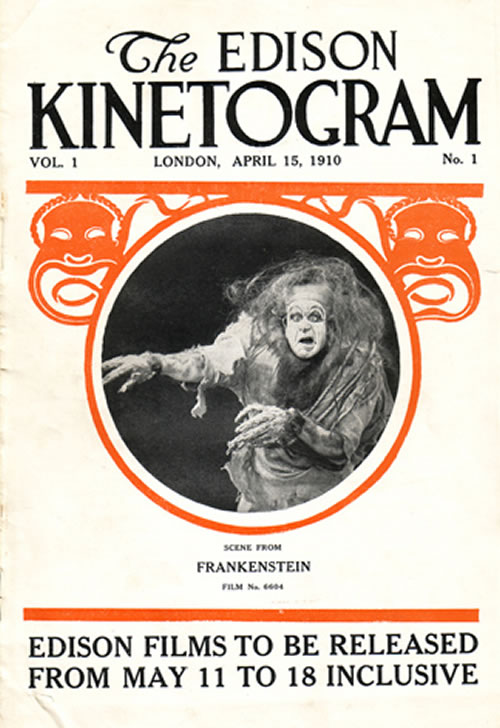
Advertising emphasised the recognisable title and the spectacle of creating the monster. Edison’s brand suggested technical novelty and respectable production. This was useful for a subject that might otherwise appear lurid to theatre managers.
The company also reassured audiences through its moral framing. The catalogue explained that the film omitted repulsive situations and concentrated on the mystical and psychological aspects of the story. Horror was being sold, but within a narrative in which domestic love restored order.
That positioning reveals the uncertainty of early film culture. Producers wanted sensational images while assuring respectable exhibitors that the attraction had literary and moral value.
What the film changed from Mary Shelley
Shelley’s novel gives the creature intelligence, language and a history of rejection. He learns by observing a family, confronts his maker and demands a companion. The catastrophe develops through Frankenstein’s refusal to accept responsibility for a being capable of thought and suffering.
A film of roughly a reel could not reproduce that structure. Dawley reduced the story to the experiment, the creature’s pursuit and Frankenstein’s moral recovery. The monster becomes the external form of an evil thought rather than an abandoned person shaped by isolation. Elizabeth’s love can therefore dissolve the threat because the threat has been located inside Frankenstein.
The change weakens Shelley’s social argument but creates a story legible without spoken dialogue. Audiences could recognise ambition, horror, pursuit and redemption through gesture, intertitles and effects. The adaptation is not a miniature copy of the novel. It is evidence of how early film companies transformed a prestigious book into one reel of visual action.
Where it was filmed
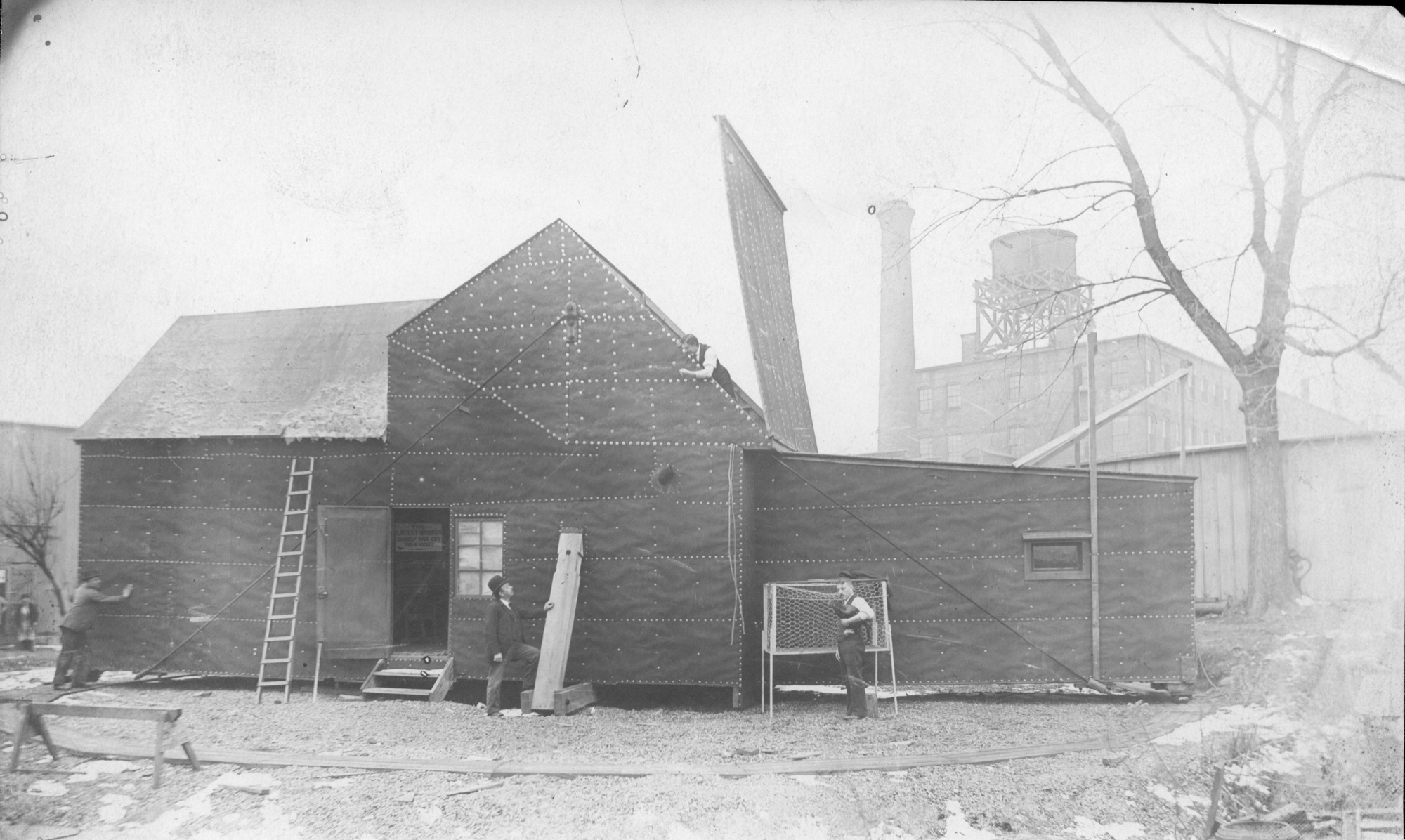
The Library of Congress records filming in New York City on 13, 15 and 17 January 1910. It was not made in the original Black Maria at West Orange, although that studio belongs to the company’s earlier history.
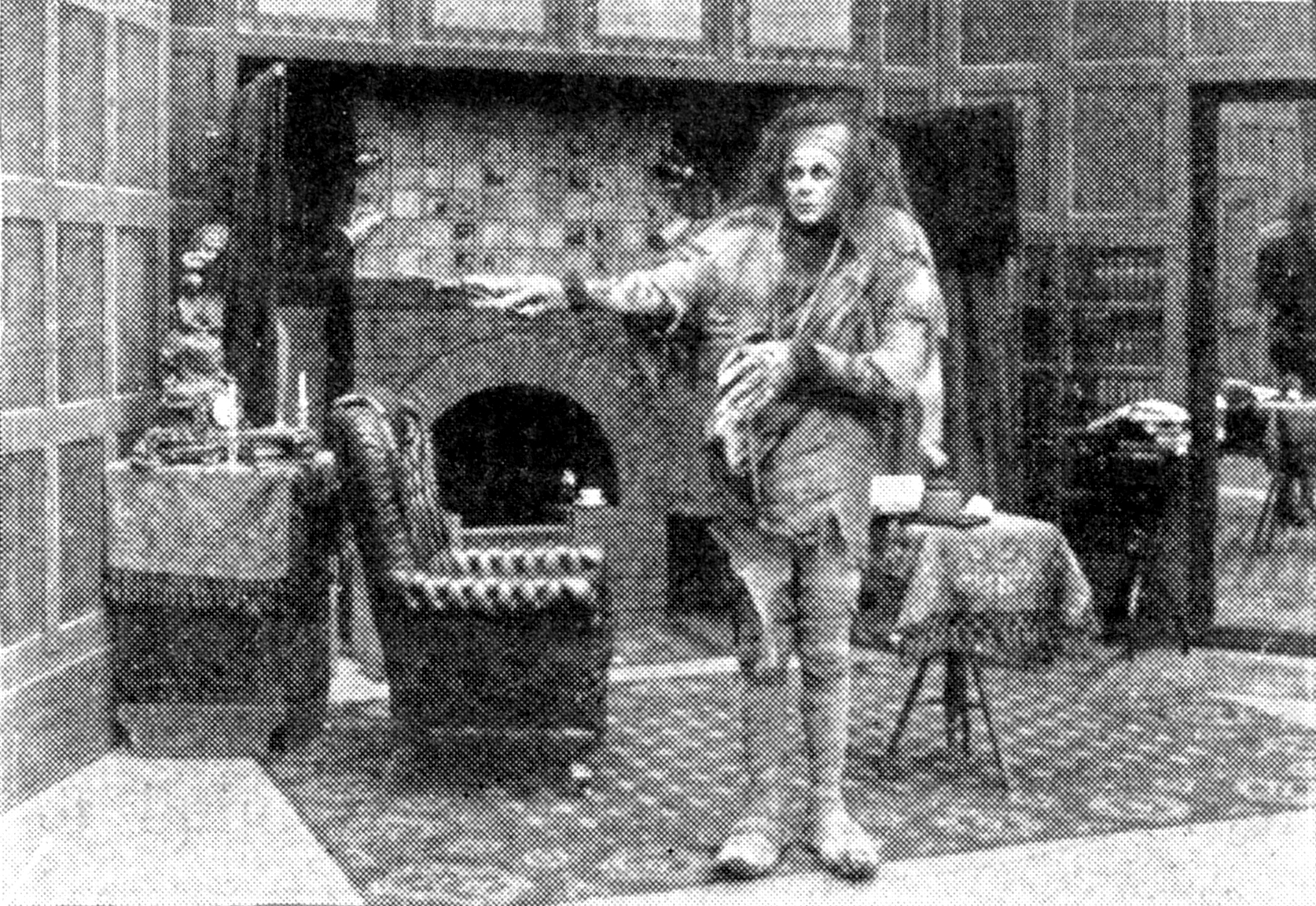
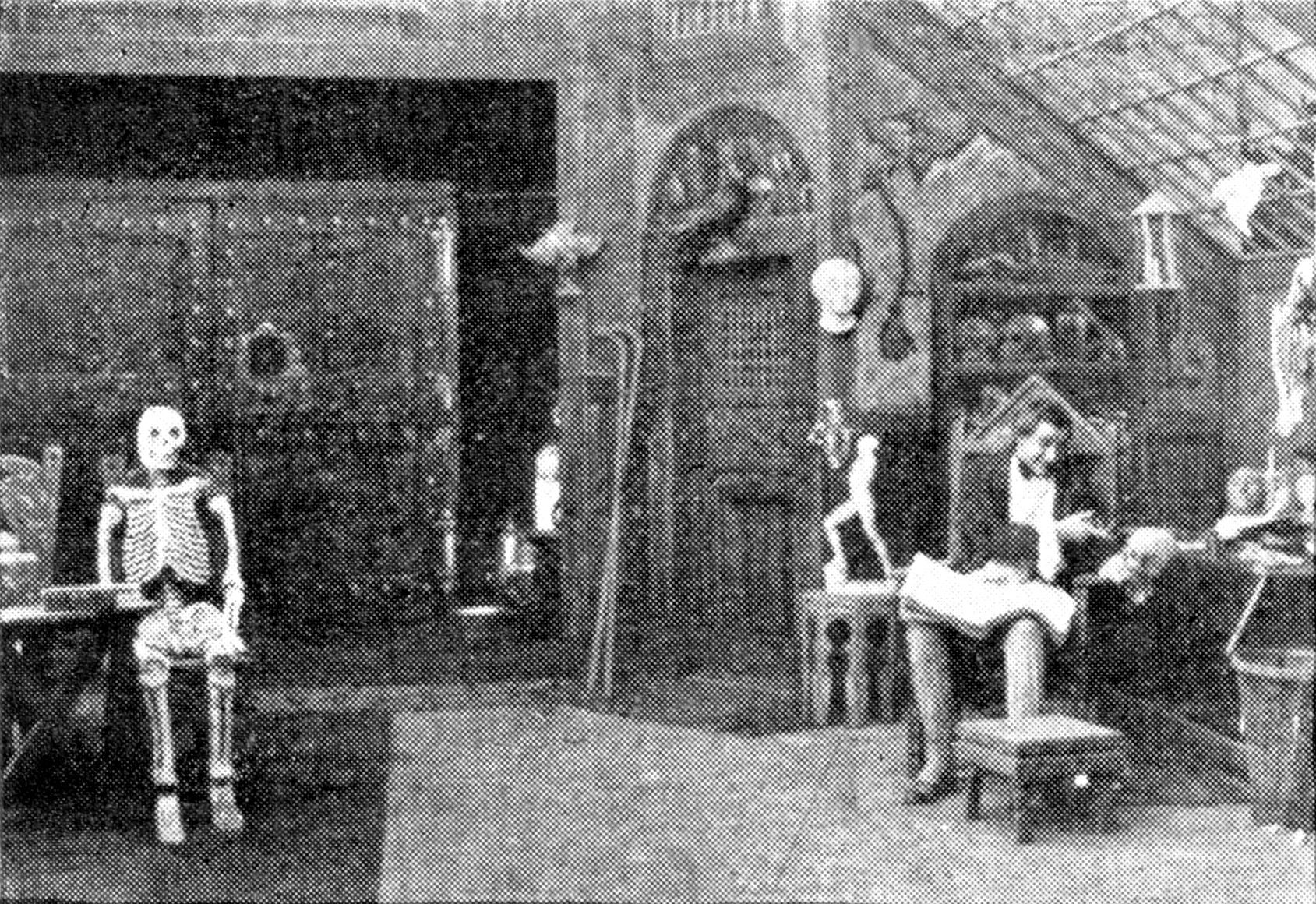
The sets retain the stage. Rooms are presented frontally, action unfolds within a fixed frame and painted or constructed interiors organise the performance. Yet the transformation sequence and mirror effect could not be reproduced in the same way before a live audience. The film is theatrical in arrangement and cinematic at its decisive moments.
Charles Ogle’s monster
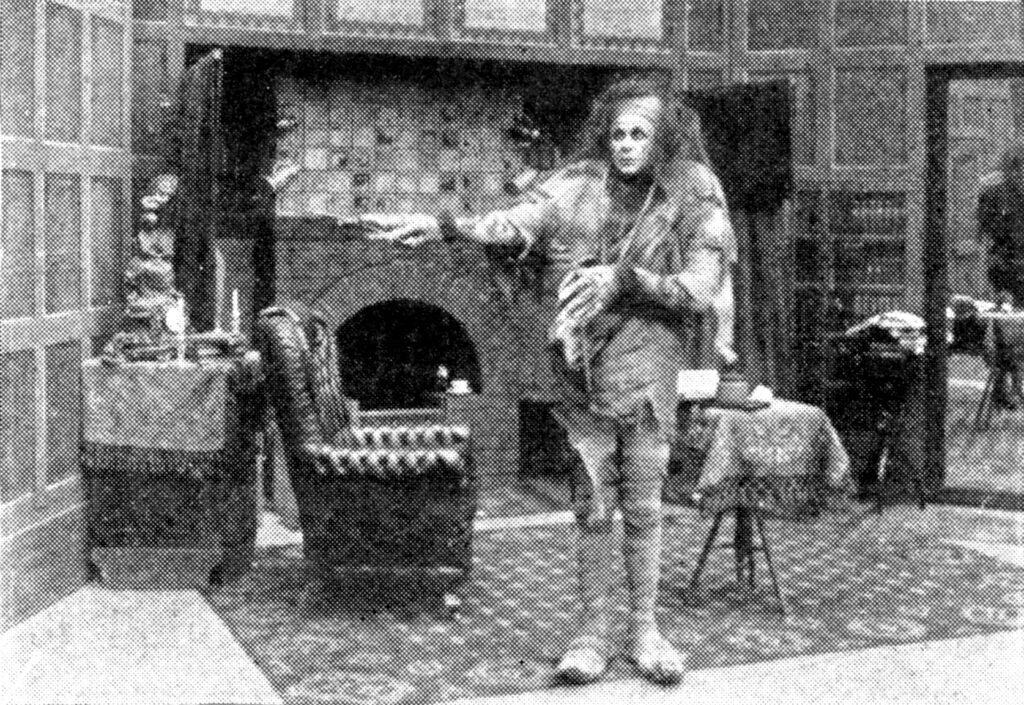
Later screen monsters made Boris Karloff’s squared head and neck bolts familiar. Ogle looks completely different. His creature has elongated fingers, a hunched body, tattered fabric and an enormous disordered wig. The design suggests decay, deformity and a body assembled without harmony.
Ogle’s performance is broad because the camera was distant and the film silent. Gesture carried fear and menace. His monster reaches, recoils and watches his reflection with movements intended to remain legible in a theatre.
The costume’s roughness suits the adaptation’s central idea. Frankenstein intended perfection, but the moral corruption of the experiment materialises as physical disorder. The monster looks like an error made visible.
The mirror that defeats the creature
The final mirror scene is more than a convenient disappearance trick. Throughout the film the creature is bound to Frankenstein’s inner condition. When the monster faces the mirror, the body vanishes but the reflection remains. That image then fades. Frankenstein looks and sees himself restored.
Modern viewers may find the conclusion morally evasive. The creator escapes responsibility through love rather than making amends to an abandoned being. Shelley’s novel insists that Frankenstein’s rejection helps produce the catastrophe. Dawley converts that social and ethical conflict into a struggle within one man.
As cinema, however, the sequence is elegant. A fixed camera, a mirror and staged substitutions express an abstract claim without dialogue.
Was it the first horror film?
The answer depends upon definition. Méliès’s Le Manoir du diable of 1896 and other early films used devils, skeletons, ghosts and transformations. It would be inaccurate to declare the Edison production the beginning of all screen horror.
Nor was American cinema waiting for 1910 to discover the macabre. Trick films used decapitations, disappearances and animated skeletons; adaptations drew upon Faust, ghosts and sensational stage traditions. What Frankenstein added was a monster created through experiment and a recognisable literary identity that later filmmakers could repeatedly reinterpret.
Frankenstein can reasonably be called the first known film adaptation of Shelley’s novel and one of the earliest important American monster films. Its literary source, sustained narrative and creation sequence place it close to the later horror tradition.
The question in the title is therefore more useful than a superlative. The film did not invent horror, but it helped show how American narrative cinema could turn fear, science and a famous book into a screen attraction.
How the film disappeared
Early films were commercial stock, not automatically treated as heritage. Prints wore out, nitrate decomposed and company catalogues moved on to new releases. For many years Frankenstein was regarded as lost.
A surviving print belonged to Wisconsin collector Alois F. Dettlaff. Its existence became more widely known in the twentieth century, and versions circulated from that material. The Library of Congress later acquired the Dettlaff collection and created a digital viewing copy, drawing also upon documentary material including a paper-print fragment held at Thomas Edison National Historical Park.
The Library catalogue now makes the film available with a modern musical accompaniment while identifying the 1910 production and the 2017 preservation version separately. That distinction protects the historical object from being confused with the work of restoration.
Edison’s real place in Frankenstein
Edison’s company supplied the studio system, brand, distribution and production organisation. Those contributions were substantial. He did not stand behind the camera during the three January shooting days, and there is no reason to attribute Dawley’s adaptation or Ogle’s monster design to him personally.
The film therefore belongs beside the fuller history of Edison and motion pictures. By 1910 the organisation he had helped create was capable of making a literary horror film through specialised creative labour.
The monster returned from supposed extinction for much the same reason early cinema survives at all: collectors, archives and preservationists kept material that industry had ceased to value. Edison’s name got the film into catalogues. Dawley, White, Ogle, Phillips and Fuller put it on the screen. The Library of Congress helped bring it back.
Sources and further reading
- Library of Congress, Frankenstein – cast, direction, filming dates, synopsis, source collection and rights statement.
- Library of Congress, “History of Edison Motion Pictures” – company organisation and development of Edison film production.
- Thomas A. Edison Papers, Motion Picture Catalogs – Edison advertising and catalogue context.
- Moving Picture World, 12 March 1910 – contemporary release description cited by the Library of Congress.
- Wikimedia Commons, Frankenstein (1910) media – public-domain publicity stills and film copies.