On 23 April 1896, an audience at Koster and Bial’s Music Hall in New York watched moving pictures thrown onto a screen. The machine was advertised as “Edison’s Vitascope”, and Edison’s name gave the event the authority of America’s most famous inventor.
The projector itself had not been invented by Edison. Its essential development belonged to Thomas Armat and C. Francis Jenkins, whose partnership produced an earlier machine called the Phantoscope. After the partnership broke down, Armat refined the apparatus. Businessmen Norman Raff and Frank Gammon brought it to Edison, who agreed to manufacture and market it.
The Vitascope story is not a minor correction to a famous name. It marks the moment American moving pictures changed from a private peephole attraction into an experience for an audience. It also shows what the Edison name could do: turn another inventor’s machine into a commercially credible system supplied with films, publicity and manufacturing capacity.
The limitation of the Kinetoscope
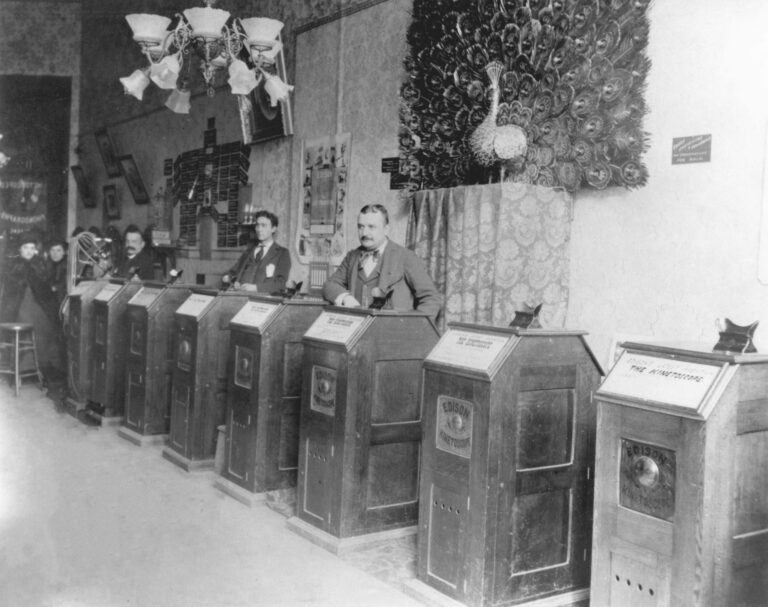
Edison’s motion-picture programme had produced the Kinetograph camera and Kinetoscope viewer, with much of the experimental work directed by W. K. L. Dickson. Commercial Kinetoscope parlours opened in 1894. Customers leaned over individual cabinets and watched a short loop of film through a viewing aperture.
The arrangement was profitable at first, but it imposed a severe limit. One machine served one viewer at a time. An exhibitor needed a row of expensive cabinets and a supply of short film loops. Projection could sell the same performance to hundreds of people in a theatre.
Edison’s organisation understood the appeal of a screen, but did not have a commercially ready projector when European and American rivals began demonstrating projection systems. The Lumière brothers’ Cinématographe in France made the pressure especially visible.

Jenkins and Armat build the Phantoscope
C. Francis Jenkins, an inventor interested in moving pictures, worked with Thomas Armat, a mechanically skilled businessman from Washington, D.C. They developed a projector called the Phantoscope and presented it at the Cotton States and International Exposition in Atlanta in 1895.
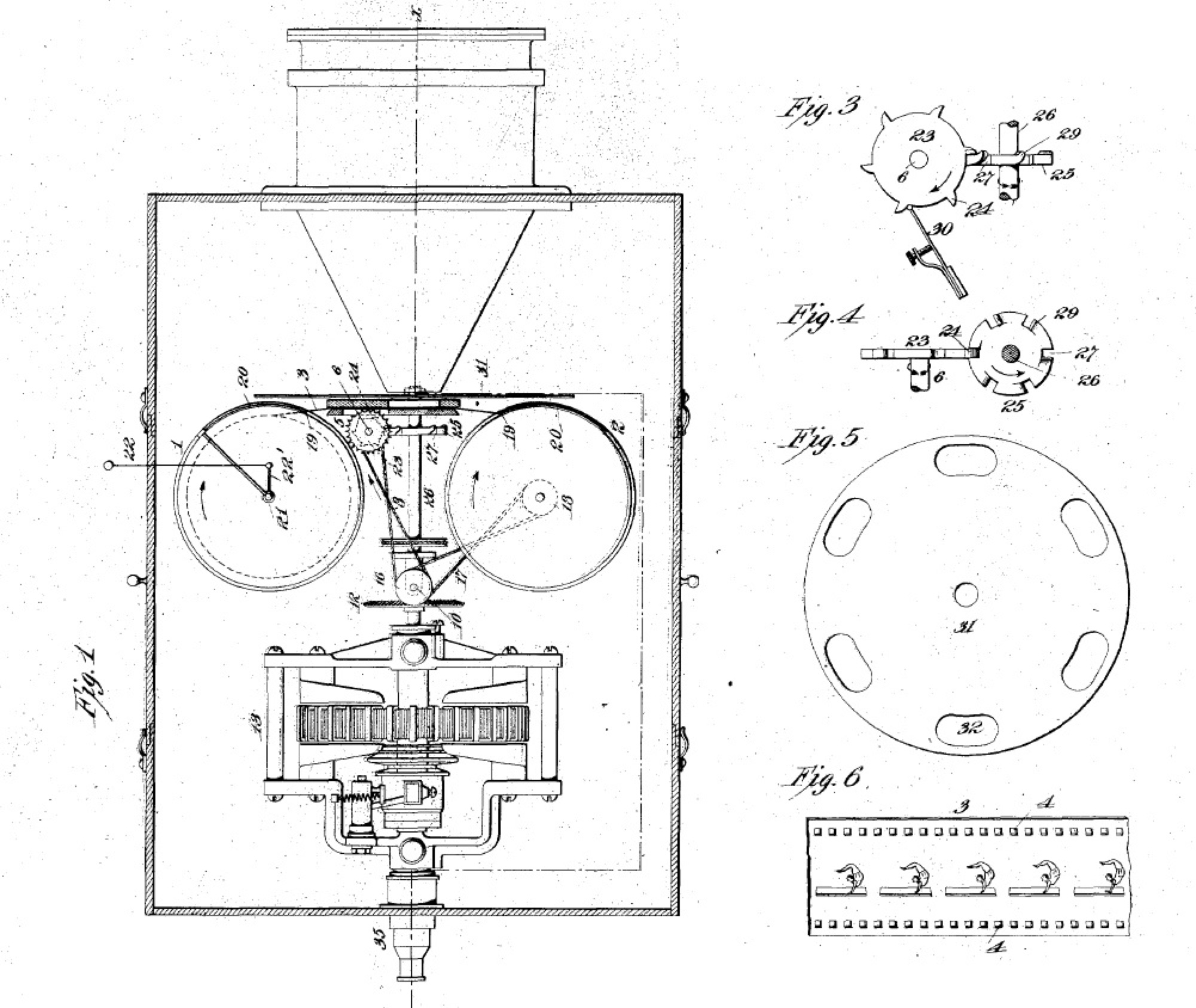
Projection required film to stop briefly in front of the lens, be illuminated and then advance to the next frame without tearing. A shutter had to block the light during movement. The intermittent mechanism was therefore central to producing a steady image rather than a blur.
Jenkins and Armat’s partnership deteriorated amid disagreement over money, patents and credit. Both men later advanced claims. Armat continued working on the mechanism and sought a commercial route for the projector.
Why Edison accepted Armat’s machine
Raff and Gammon had marketed Kinetoscopes and understood that exhibitors wanted screen projection. They introduced Armat’s apparatus to Edison’s company. Edison supplied three assets the projector’s inventors lacked at scale: a recognised name, manufacturing facilities and films.
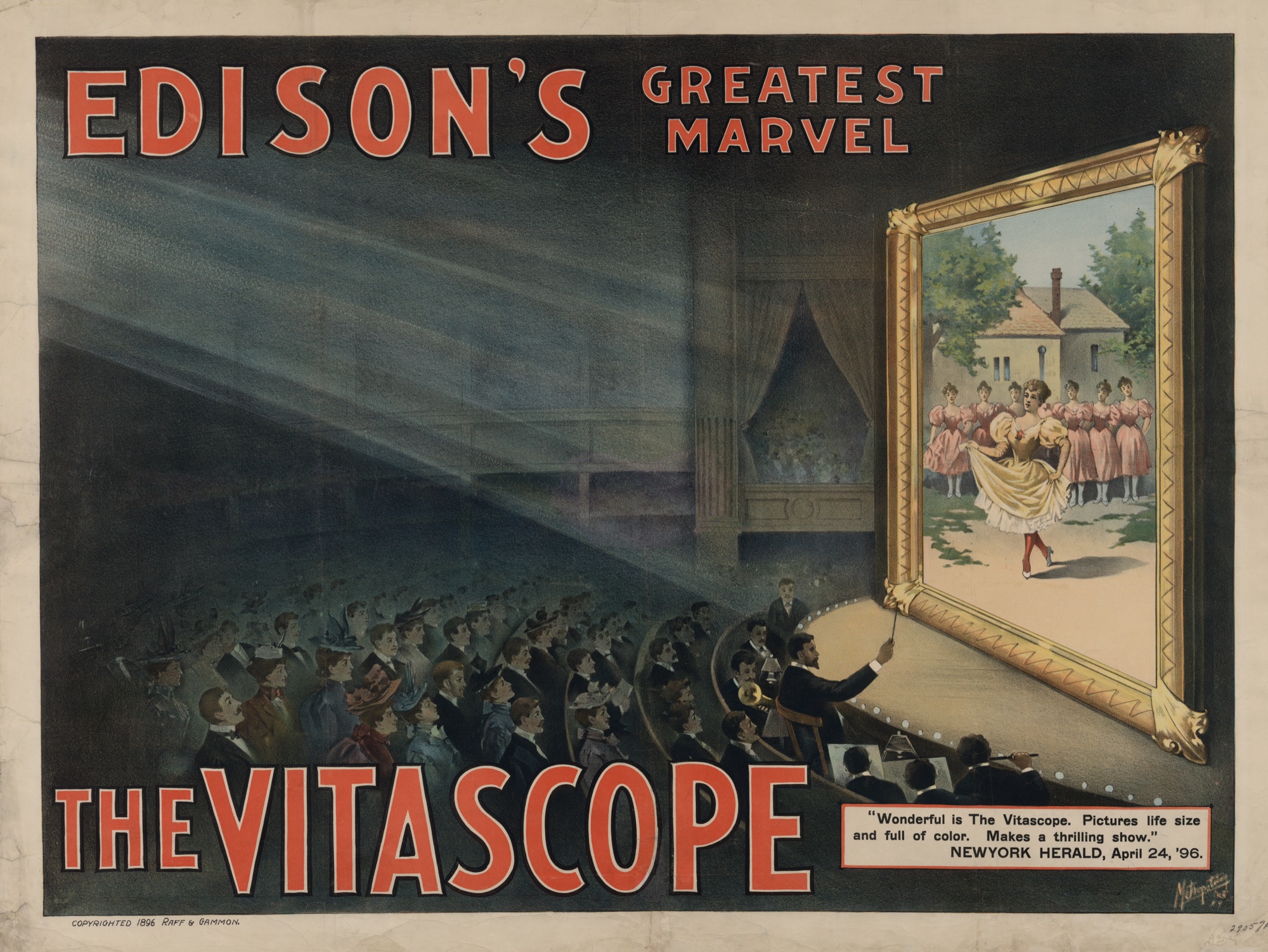
The deal was presented to the public as an Edison development. The machine was renamed the Vitascope, from words suggesting life and seeing. Posters placed Edison’s name above the device in type large enough to dominate the design.
This was commercially effective and historically confusing. Customers could reasonably conclude that Edison had invented the projector. His company’s involvement was genuine, but it began after Armat and Jenkins had established the essential machine.
The night at Koster and Bial’s
Koster and Bial’s was a New York variety theatre. On 23 April 1896 the Vitascope appeared as one attraction within a live programme. Short films were projected large enough for the room to react together.
Contemporary accounts emphasised the sensation of motion: dancers, waves and comic action appeared with a vividness that the press described as lifelike. The subjects were brief, but duration was not the novelty. Scale and simultaneity were. The audience laughed, applauded or recoiled at the same image.
The show did not represent the world’s first projected motion pictures. Projection systems had been demonstrated elsewhere. It was, however, a major commercial debut in the United States and a decisive step for Edison’s film business.
A crowded race towards the screen
The Vitascope arrived in a field moving faster than any one company could control. The Lumière brothers projected their Cinématographe programme in Paris in December 1895. In Britain, Robert W. Paul and Birt Acres had pursued cameras and projectors; in Germany, Max and Emil Skladanowsky had presented moving pictures with their Bioscop. American experimenters also demonstrated screen systems before and around the Vitascope launch.
These machines did not all operate in the same way, and a public showing did not automatically create a durable business. Projection demanded steady film transport, a bright light source, fire precautions, operators, films and a route for selling or leasing apparatus. Several inventors could reach the screen while only some established a supply organisation.
A projector also had to treat expensive film gently. A mechanism that produced a bright, steady image but tore perforations could ruin the evening and the exhibitor’s stock.
Edison’s advantage was therefore not priority in projection. It was the ability to attach a ready catalogue and a famous commercial identity to Armat’s mechanism. The Vitascope entered theatres as a packaged attraction rather than an isolated technical demonstration.
Where the films came from
A projector without films was a lantern. Edison’s earlier investment in cameras, studio production and Kinetoscope subjects gave the Vitascope an immediate programme. Films made for a peephole viewer could be adapted for projection, while new subjects were photographed for theatrical exhibition.
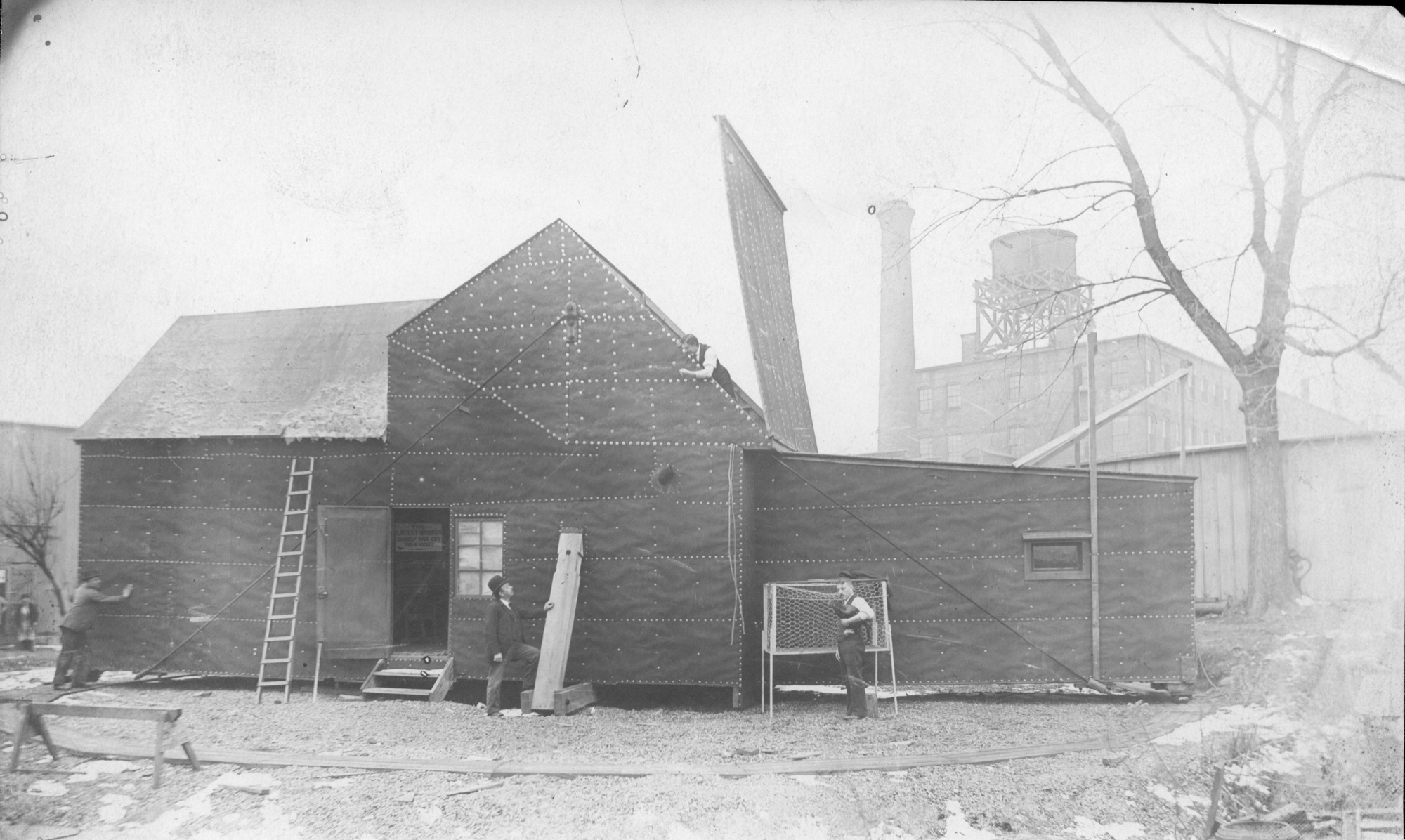
The Black Maria studio at West Orange had produced dancers, athletes, vaudeville performers and comic incidents. Its tar-papered structure rotated to follow sunlight. This catalogue was more important to the Vitascope launch than a single spectacular reel.
Projection increased demand for variety and length. A theatre could not rely indefinitely on the novelty of one dancer or approaching wave. The new exhibition model pushed producers towards travel scenes, news events, tricks and stories.
Armat’s patent and Edison’s label
Armat obtained patent protection for projector mechanisms and assigned commercial rights connected with Edison manufacture. The legal record helped preserve his role even while advertising foregrounded Edison.
It is tempting to describe the arrangement simply as theft. That misses what both sides gained. Armat needed a manufacturer and market. Edison needed a projector quickly. Raff and Gammon needed a product that could be sold to exhibitors. The agreement joined complementary assets, although the public allocation of credit was heavily unequal.
This distinction recurs throughout Edison’s career. His name on a product might identify ownership, manufacture, marketing or system leadership rather than solitary invention of every mechanism.
A temporary machine with a lasting effect
The Vitascope did not rule projection for long. The field changed rapidly, competitors offered alternatives and Edison’s organisation introduced its own Projecting Kinetoscope. Equipment that seemed astonishing in 1896 could become commercially obsolete within a few seasons.
The Vitascope nevertheless helped establish screen exhibition as a viable American business. Agents took machines to cities across the country. The Edison name persuaded theatre managers and investors that projected motion pictures were more than a passing scientific demonstration.
Territorial arrangements gave local exhibitors a reason to promote the machine energetically. A licensee could acquire the right to present the Vitascope within a district, arrange halls and publicity, and order films through the commercial network. Results varied with the operator and programme, but the system spread projection beyond a single New York première.
The arrangement also created friction. A territory was valuable only while the advertised machine remained novel and competitive. When rival projectors appeared, an exhibitor could not rely upon Edison’s name alone. The market tested brightness, steadiness, film choice and cost with a speed that no patent or poster could arrest.
Its short life should not be confused with failure. Transitional technologies often matter because they bring a new practice into the market, even when a different machine becomes the standard.
From individual customer to audience
The Kinetoscope sold access to a private view. Projection sold a performance. That change altered economics, architecture and storytelling. Exhibitors could charge a roomful of customers; programmes needed scheduling and presentation; films became part of a shared public culture.
It also changed audience behaviour. A comic gesture produced collective laughter. A wave crashing towards the camera generated a visible response across the room. Motion pictures began acquiring the social energy of theatre while retaining their ability to reproduce an event.
The later history of Edison and motion pictures includes studios, lawsuits and increasingly complex films. The Vitascope occupies the hinge between the experimental cabinet and that industry.
Who invented the Vitascope?
The clearest answer is that the projector marketed as the Vitascope derived from the work of Thomas Armat and C. Francis Jenkins, with Armat responsible for the form brought into the Edison arrangement. Edison’s company manufactured and promoted it and supplied films. Raff and Gammon organised the commercial introduction.
All of those roles mattered, but they are not interchangeable. A poster is evidence of a brand, not proof of mechanical authorship. A patent records claims, not the entire commercial system. A successful première depends upon both.
“Edison’s Vitascope” was a real product and a misleading historical shorthand. The words sold tickets in 1896. The fuller story returns the projector to Armat and Jenkins while recognising why Edison’s name helped place it before an audience.
Sources and further reading
- Library of Congress, “Shift to Projectors and the Vitoscope” – transition from Kinetoscope exhibition to projection and early Edison film production.
- Library of Congress, “Reason Gallery C: American Treasures” – Jenkins, Armat and Edison’s commercial role.
- Thomas A. Edison Papers, “Early Projection” – contemporary catalogues and projector competition.
- Library of Congress, “History of Edison Motion Pictures” – Kinetoscope, projection and production chronology.
- Smithsonian Institution, Vitascope collections record – surviving projector and object history.