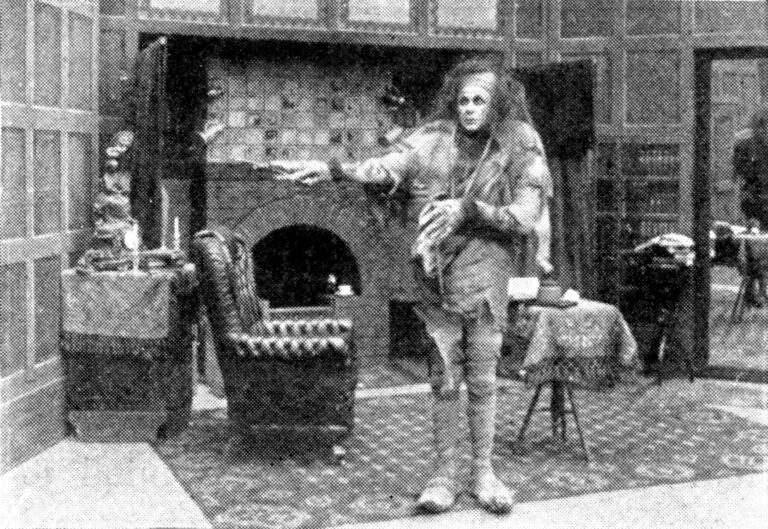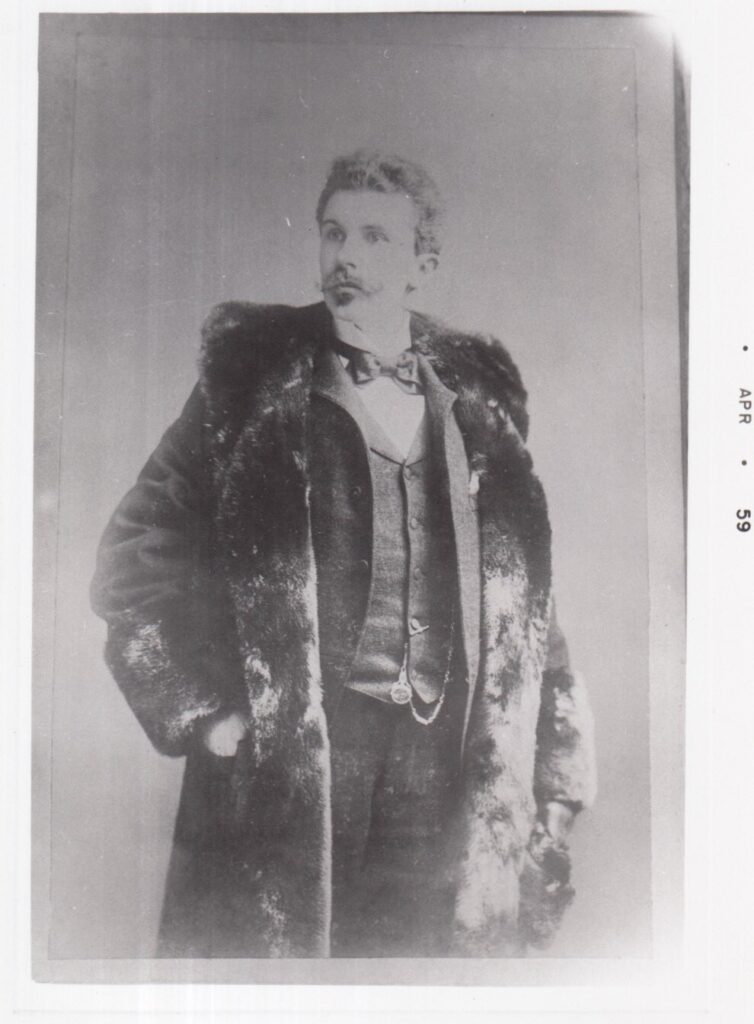
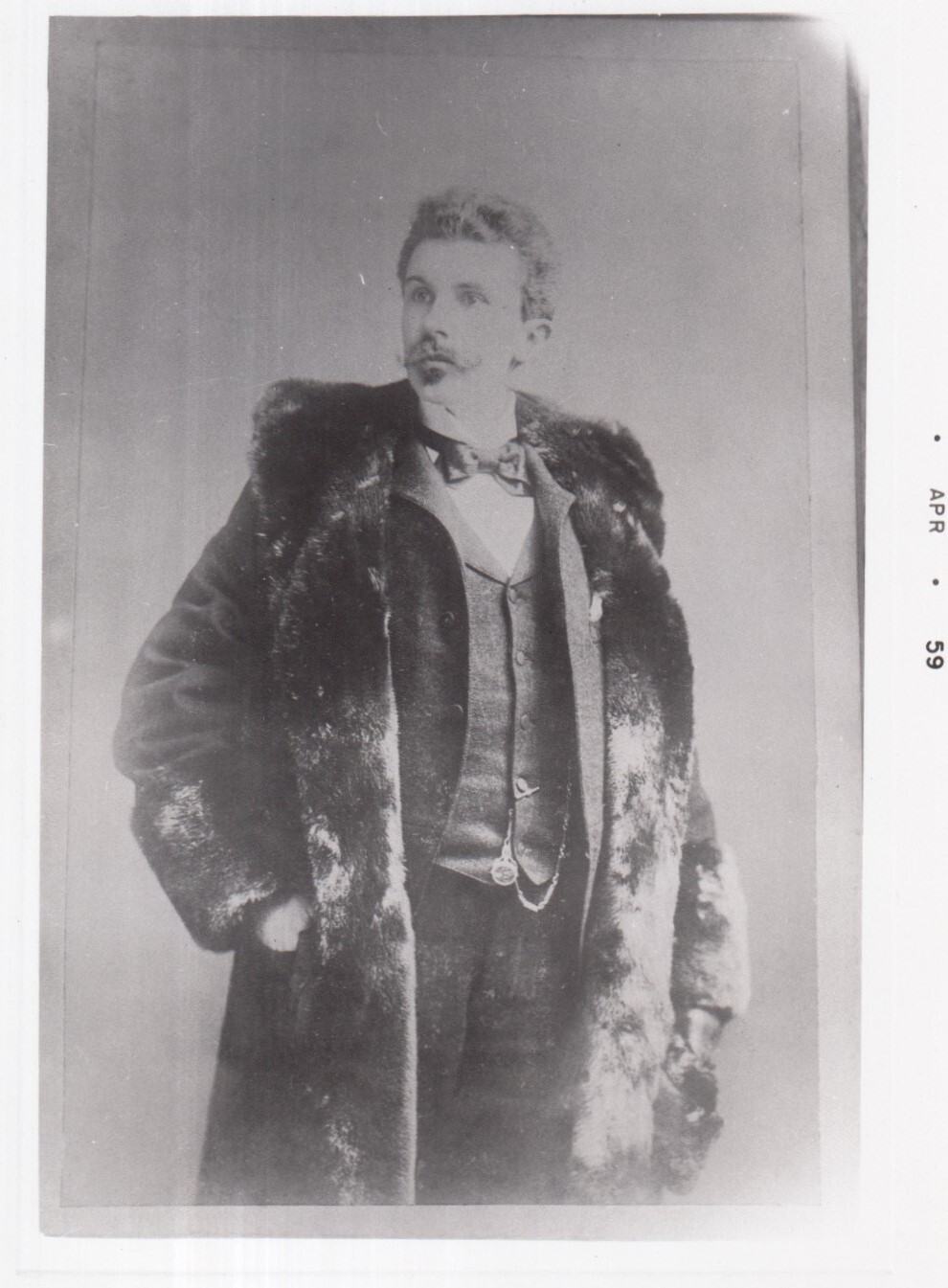
When Thomas Edison’s first motion-picture camera was taking shape, the man bending over its mechanism was William Kennedy Laurie Dickson. Tall, artistic and mechanically gifted, Dickson gave years to a project that would make Edison internationally famous. He then left the organisation, helped create a rival system and spent much of his later life outside the story his work had transformed.
Dickson is sometimes described as the true inventor of cinema and Edison as the man who took the credit. The evidence is more complicated and more revealing. Edison initiated and financed the programme, while Dickson led its practical development with a laboratory team. Cinema did not begin in one instant, and neither man worked alone.
From France and Britain to West Orange
Dickson was born in France in 1860 to a Scottish father and an English mother. He grew up in Britain and emigrated to the United States. By the early 1880s he was working for Edison, eventually becoming a trusted member of the West Orange experimental staff.
He combined interests that suited the new work. He understood machinery, electricity and photography, and he could stage an image as well as construct apparatus. Edison’s laboratory offered machine shops, chemical facilities and money, but the motion-picture problem demanded one person’s sustained attention. Dickson supplied it.
Edison’s 1888 idea
In October 1888 Edison filed a caveat proposing an instrument that would do for the eye what the phonograph did for the ear. The language established his ambition but not a completed camera. Sequential photography already had important pioneers: Eadweard Muybridge had analysed motion with banks of cameras, while Étienne-Jules Marey recorded movement photographically for scientific study.
The laboratory needed a flexible film, a mechanism that moved it intermittently and an exposure rate fast enough to create convincing motion. Dickson and his assistants tried different arrangements, including early experiments with tiny photographs placed around a cylinder. The decisive opportunity came with George Eastman’s roll film, which could be slit into long strips.
The Edison team adopted 35-millimetre film with perforations engaged by sprockets. That format later became an international standard, though the path was not a single clean invention and other manufacturers shaped its final use.
The Kinetograph and Kinetoscope
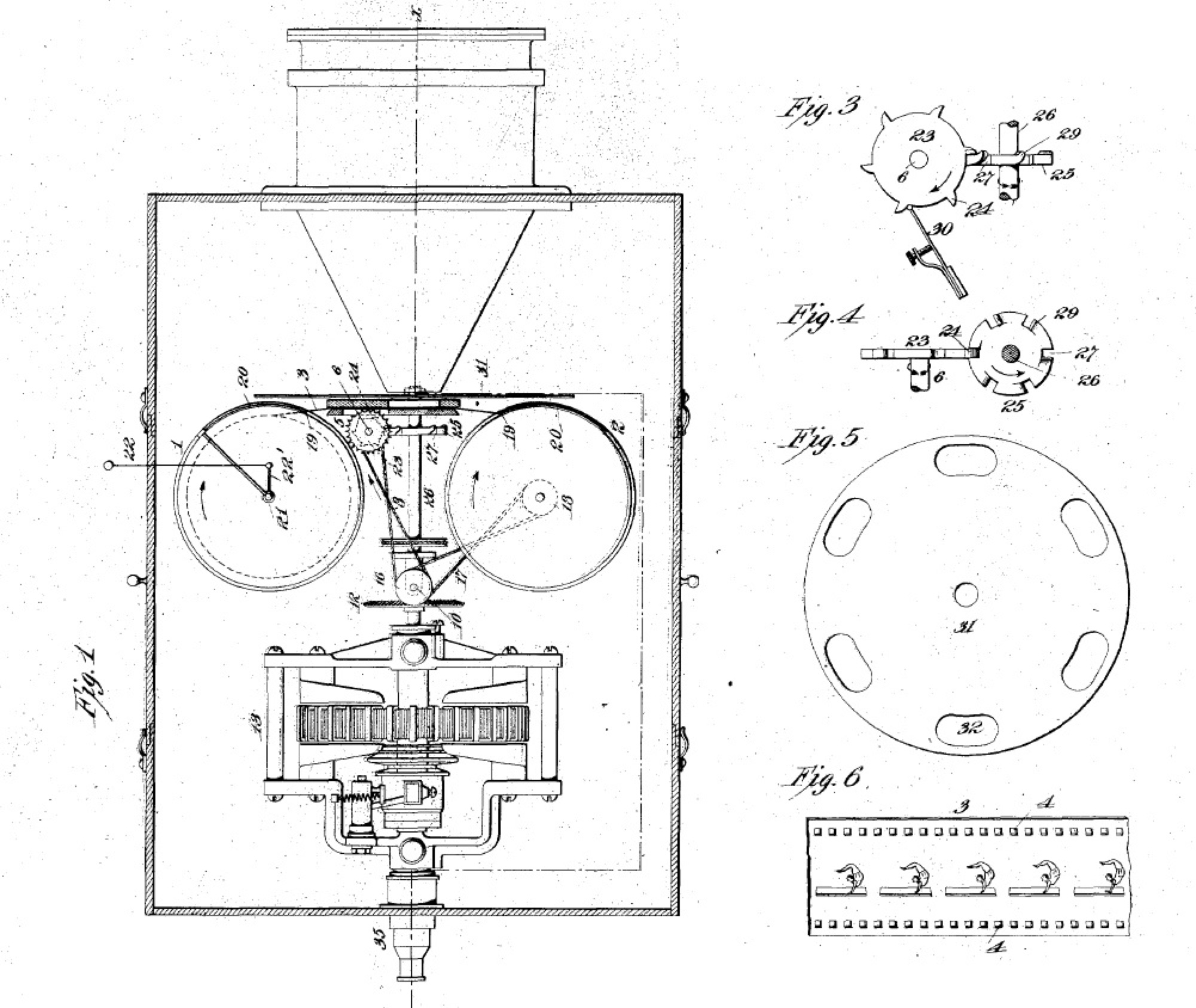
The camera became known as the Kinetograph. It advanced the film in short steps, held each frame still for exposure and then pulled the strip onward. Electric power and a heavy mechanism made the early camera largely a studio machine.
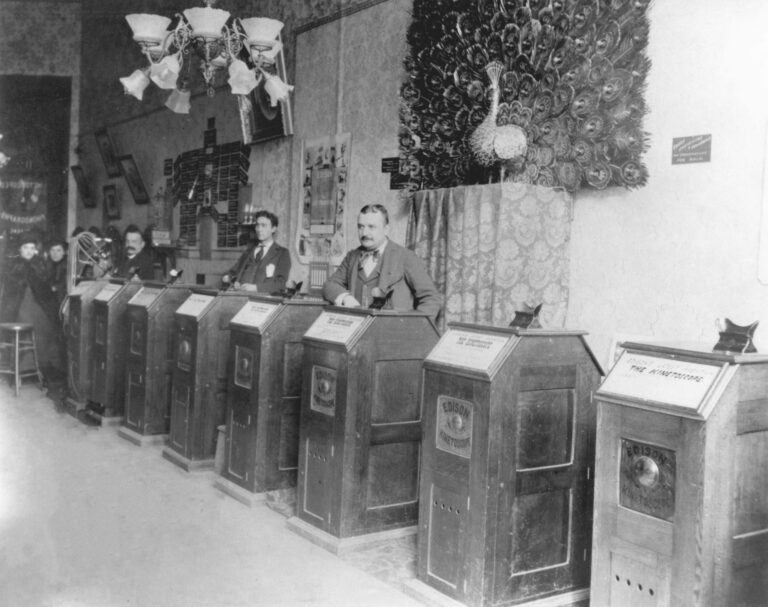
The Kinetoscope was its viewer. A loop of film passed rapidly beneath a magnifying lens while a shutter interrupted the light. One customer at a time leaned over the cabinet and watched through a peephole. The machine did not project an image for an audience; it sold a private glimpse of movement.
Dickson appears in one of the earliest surviving experimental films, now called the Dickson Greeting. He steps before the camera and makes a small gesture. The few seconds have no plot, but they turn the technician into a performer inside his own machine.
Inside the Black Maria
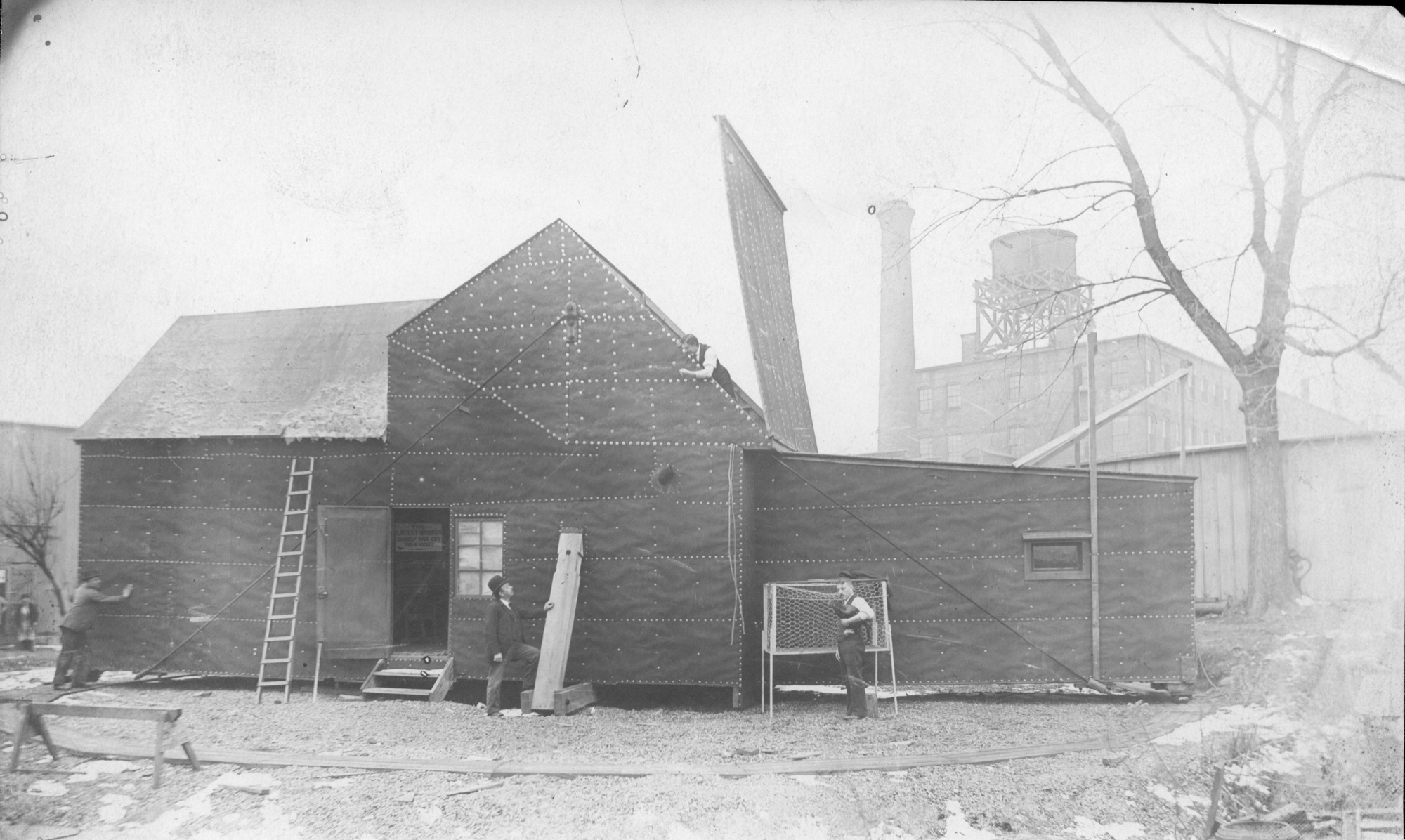
In 1893 Edison’s company completed a motion-picture studio at West Orange. Covered in dark tar paper and mounted so it could turn towards the sun, the building was nicknamed the Black Maria after a police wagon. Its roof opened to admit daylight. Performers worked in a cramped theatrical space before Dickson’s fixed camera.
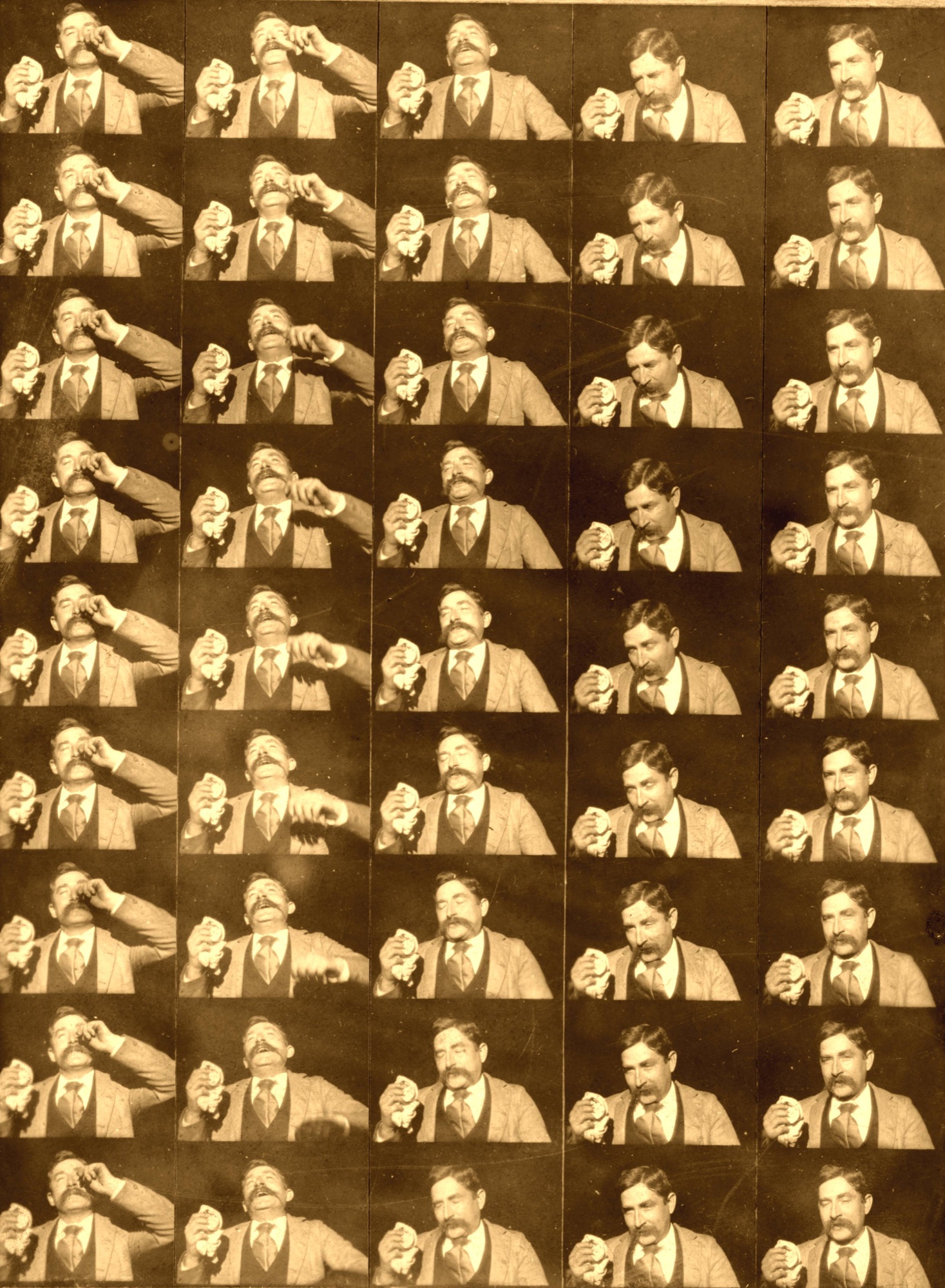
Athletes, dancers, vaudeville performers and laboratory employees supplied brief subjects. Fred Ott sneezed for the camera. Sandow flexed. Native American performers from Buffalo Bill’s show danced before the lens. These films were made to fill Kinetoscope cabinets, so direct action and recognisable movement mattered more than narrative.
Sound before the soundtrack
Edison had imagined pictures associated with the phonograph from the beginning. Around 1894 Dickson took part in an experiment now known as the Dickson Experimental Sound Film. He played a violin into a phonograph horn while two men danced nearby. A motion-picture camera recorded the scene.
The experiment did not produce a commercial system. Camera and phonograph were separate, and keeping them synchronised was extremely difficult. Even so, the surviving film and cylinder make Dickson one of the first people seen and heard in a deliberately combined motion-picture experiment.
A divided loyalty
By 1894 the Kinetoscope was commercially successful, but Dickson’s relationship with Edison deteriorated. The key conflict concerned projection. Edison initially saw profit in individual viewing machines. Others recognised that a projected picture could be sold to an entire audience at once.
Dickson became connected with the Latham family’s projection work while he was still employed by Edison. The association could not comfortably coexist with his senior position at West Orange. He left in 1895.
With Herman Casler, Henry Marvin and Elias Koopman, Dickson helped form the American Mutoscope Company. Its large-format camera and flip-card viewer competed with Edison equipment. The company evolved into the American Mutoscope and Biograph Company, one of the most important early film producers.
Dickson did not personally make every subject, but he was the programme’s central technical and creative figure. He supervised filming, appeared on screen and helped solve daily failures of film, light and machinery.
Biograph and a wider screen
The Biograph camera used wide film and produced a notably clear projected picture. Dickson travelled widely, filming public events and scenes for exhibition. In Britain he recorded royalty, military occasions and the South African War. His later work moved cinema out of the laboratory and into news, travel and imperial spectacle.
Biograph would later employ director D. W. Griffith and stars including Mary Pickford, though Dickson’s pioneering period preceded their fame. The company’s importance underlines why his departure mattered: Edison lost the man who knew the motion-picture programme from its earliest trials.
A medium made by many countries
The Edison-Dickson system was only one centre of motion-picture invention. In France, the Lumière brothers introduced the portable Cinématographe, which served as camera, printer and projector. In Britain, Robert Paul built equipment after Kinetoscopes arrived without patent protection there. Max and Emil Skladanowsky demonstrated projection in Germany.
These parallel developments make a single birthday for cinema impossible. The Kinetoscope established a commercial market for photographed movement in 1894. Projected programmes for paying audiences followed through several systems in 1895 and 1896. Film became an international exchange of machines, perforations, subjects and exhibition practices.
Dickson’s later work embodies that exchange. French-born, British-raised and American-employed, he returned to Europe with Biograph equipment. His career crossed the national boundaries that later patent histories sometimes used to assign one country ownership of cinema.
What the films show—and what they conceal
The early Edison subjects preserve extraordinary details: clothing in motion, athletic performance, popular entertainment and the direct gaze of people confronting a new camera. They were also staged commodities. The Black Maria’s severe light and fixed viewpoint determined what could be shown.
Some films recorded racial stereotypes or treated performers as exotic attractions. Others captured dancers and Indigenous performers whose names were omitted while the company and apparatus were carefully identified. Restoring Dickson’s credit should be part of a wider restoration of the people before his lens.
The camera was never merely neutral machinery. Dickson and his colleagues selected the performer, distance, movement and duration. Their technical decisions created an early visual style even before a specialised occupation called film director had settled into place.
Who invented the motion-picture camera?
A patent may identify a legal inventor; a laboratory notebook may show daily labour; a company history may preserve only the owner’s name. In Edison’s motion-picture work these records overlap without giving one simple answer.
Edison proposed the programme, provided the laboratory and made important decisions. Dickson designed and developed much of the actual apparatus with colleagues including William Heise. Eastman’s film and earlier chronophotographic research supplied indispensable foundations. Projection systems emerged through further competitors.
The fairest description is that Dickson was the principal practical developer of Edison’s early motion-picture camera and viewer. That is substantial credit. It does not require erasing Edison, just as acknowledging Edison does not justify treating Dickson as a pair of hands.
The man inside the machine
Dickson died in England in 1935. For decades his reputation was overshadowed by the name printed on the equipment. Film history has since returned him to the frame.
His career connects two phases of cinema: the concentrated industrial laboratory and the competitive world of projection and production. He helped make pictures move under Edison, then helped them leave Edison’s control. The tiny wave in the Dickson Greeting now seems appropriate. The engineer did not merely stand behind the camera. For a moment he stepped before it, leaving his own image inside the invention.
Dickson later wrote histories of the Kinetograph and Biograph, defending his place in the development. Those accounts are indispensable but, like Edison’s recollections, are claims by a participant as well as neutral reports. The laboratory notebooks, patents, surviving machines and films allow the partnership to be reconstructed with firmer proportions.
The credit Dickson actually needs
Calling Dickson an assistant can suggest that he merely followed instructions. Calling him cinema’s solitary inventor repeats the lone-genius error with a different name. He was a senior experimental leader working inside Edison’s resources and authority, then an independent pioneer who helped build a competing company.
His contribution joins design to use. He did not only make film move through a camera; he helped decide what subjects would demonstrate the apparatus, how the studio should face the sun and how moving images could be sold. Technical and creative history meet in the same person.
That is enough to place Dickson beside Edison in any accurate account of early American film.
Sources and further reading
- Library of Congress, “History of Edison Motion Pictures” – the Kinetograph, Kinetoscope and early production.
- Library of Congress, “Early Edison Experiments with Sight and Sound” – the Dickson sound experiment.
- Thomas Edison National Historical Park, motion-picture collections – West Orange films and apparatus.
- Library of Congress, “From Peep Show to Palace” – early cinema’s transition to projection.