Thomas Edison did not invent the stock ticker. That credit belongs to Edward A. Calahan, who devised a practical instrument for the Gold and Stock Telegraph Company in 1867. Edison entered the story afterwards. He repaired, redesigned and eventually produced a stock printer that was easier to keep synchronised across a network.
The distinction matters because the ticker is a perfect example of how Edison actually built his early career. He saw a machine already serving a valuable market, learned where it failed and improved the system around it. The resulting contracts gave him money, manufacturing experience and a reputation as a telegraph inventor.
A glass-domed ticker in a museum may look like a quaint ancestor of the financial screen. In the late 1860s it was part of a communications revolution. It moved prices from the exchange floor into brokers’ offices and turned the clicking of machinery into the pulse of a market.
Edward Calahan’s invention
Before electrical quotation systems, price information travelled by messenger. A broker away from the exchange could be acting upon news already overtaken by the next sale. Telegraphy promised greater speed, but ordinary messages still had to be received and copied by an operator.
Calahan’s stock ticker printed abbreviated company names and prices onto a narrow paper tape. A central transmitter sent signals to instruments distributed through subscribers’ offices. The machine’s tapping sound supplied the name “ticker”, while the stream of paper became “ticker tape”.
The innovation belonged to a larger organisation. The Gold and Stock Telegraph Company installed and operated the network, kept the instruments in repair and sold the service to financial customers. The value lay not only in the printer but in delivering the same timely quotation to many places.

Edison arrives in New York
Edison reached New York in 1869 after working as a telegraph operator and experimenter in Boston. Later accounts describe him repairing a failed quotation apparatus during a market emergency and immediately impressing the men in charge. The episode may have gained colour in repetition, but it reflects an established fact: he obtained work maintaining and improving financial telegraph equipment.
He worked with Samuel Laws’s Gold Indicator Company and then for interests connected with Gold and Stock. The job placed him inside a commercial system whose weaknesses were obvious to anyone responsible for keeping it running. A small error at the transmitter or a printer that slipped out of step could send the wrong price to a customer.
Edison was valuable because he combined the operator’s feel for circuits with the machinist’s interest in mechanisms. He did not approach the ticker as an abstract communication problem. He watched how it failed in service.
The problem of “unison”
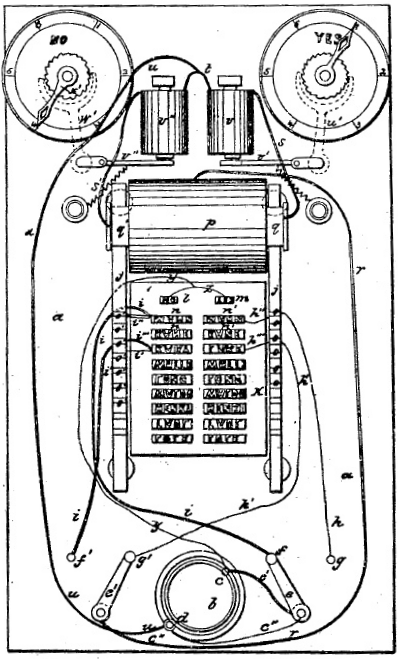
A printing telegraph selects letters and numbers by moving a typewheel. Every receiver on the same line must begin in the same position and advance identically with each electrical pulse. If one machine misses a step, it prints the wrong character even though the transmitted signal is correct.
Early networks employed staff to visit subscribers and reset instruments that had fallen out of unison. Edison designed an automatic solution. His screw-thread unison device allowed the transmitter to send repeated impulses that turned each typewheel until a peg reached a mechanical stop. Whatever its starting position, the machine ended at the same reference point as the others.
The improvement reduced a costly maintenance problem and increased confidence in the printed prices. Edison also refined the paper feed, typewheel shifting and transmitter. The resulting Universal Stock Printer used less battery power and could be operated from a keyboard resembling that of a typewriter.

A universal printer, not the first ticker
Edison’s 1871 Universal Stock Printer is sometimes presented as though it introduced ticker service. It did not. Calahan’s system had already proved the market. Edison’s achievement was to improve reliability, standardisation and economy.
That makes the machine historically significant rather than derivative. Most technologies advance through improvements that remove the reasons customers dislike or distrust an earlier version. A printer that stays in unison is commercially different from one that regularly produces misleading tape.
The ticker remained in stock-exchange use for years and survived much longer in other information services. The Edison Papers notes that related printers continued carrying material such as sports scores until about 1960. A mechanism designed for securities became a general means of distributing brief, rapidly changing information.
What ticker service changed
The machine did not make market information equal. A subscriber still needed to pay for the service, and a quotation arriving in an office was already the record of a transaction that had taken place on the exchange. Traders closest to the floor retained advantages. What changed was the speed and regularity with which a much larger circle could follow the market.
The paper strip also created a new kind of business record. A succession of abbreviated names, prices and volumes could be read, compared and saved. Brokerage offices learned to organise attention around a continuous stream rather than occasional messenger reports. The ticker was therefore not only a printer. It established the expectation that financial information should arrive ceaselessly.
That expectation outlived the mechanism. Telephone reports, electronic quotation boards, broadcast services and computer terminals displaced the glass-domed machine, but each inherited its purpose: to carry the market away from the exchange floor. Edison’s improvement belongs inside that longer history of faster access, not as its beginning but as an important stage in making a network dependable.
The famous $40,000 story
Biographies often say that Edison sold rights in his stock-telegraph inventions for $40,000. In the polished anecdote, he is too nervous to name a figure and is astonished when General Marshall Lefferts offers far more than he expected.
There was a substantial transaction with the Gold and Stock Telegraph Company, and the income transformed Edison’s circumstances. The exact dialogue belongs to later recollection and should not be read as a stenographic record. Nor did one payment represent a lifetime fortune. Edison quickly invested in shops, tools, wages and further experiments.
The important consequence is clear. Telegraph rights allowed a twenty-three-year-old inventor to establish manufacturing facilities in Newark. Instead of depending entirely upon an employer’s workshop, he could hire machinists and pursue several projects at once.
Franklin Pope and the early partnership
Edison’s progress was assisted by Franklin Leonard Pope, a telegraph engineer, writer and patent specialist. They formed the firm Pope, Edison & Company and worked on telegraph installations and inventions. Pope helped introduce Edison to professional contacts and to the legal-commercial side of electrical work.
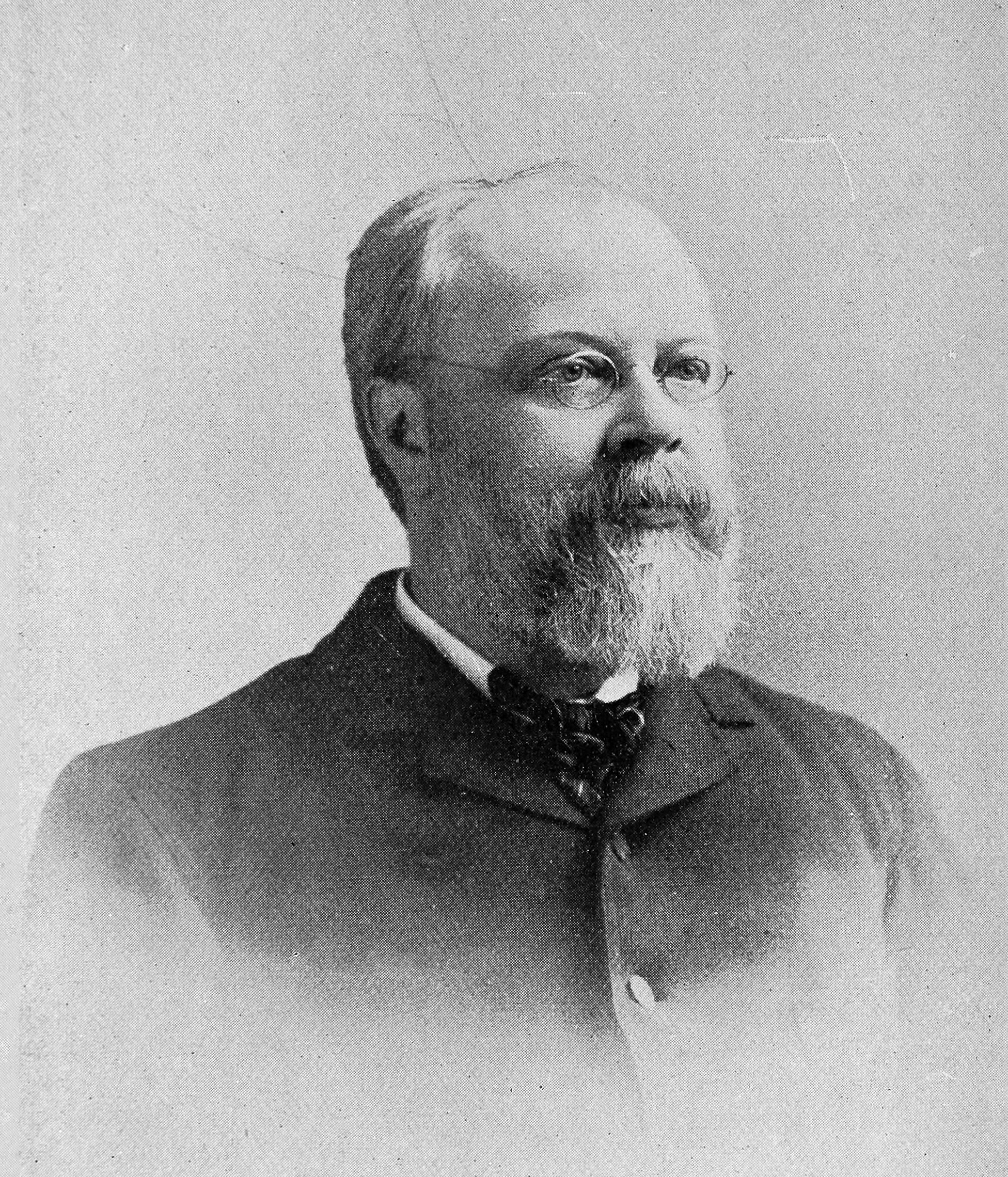
The partnership did not last, but it was part of Edison’s transition from wandering operator to independent inventor. Technical skill alone did not secure contracts. He needed drawings, patent applications, investors, company connections and someone able to explain a device to the professional public.
This collaborative beginning is often lost when the stock ticker is reduced to a story about a penniless genius repairing a broken machine. Edison was entering a mature telegraph industry populated by engineers, manufacturers and financiers.
What the ticker taught Edison about invention
The vote recorder, Edison’s first patented device, had worked but found no buyer. Financial telegraphy supplied the opposite experience. Brokers already paid for faster information, and companies could calculate the value of a more reliable printer.
Edison learned to begin with a costly weakness inside an existing system. He also learned that a component had to be manufactured consistently and maintained across many customer locations. A clever prototype was only the opening stage.
These lessons reappeared in electric lighting. Edison did not concentrate solely on a glowing filament. He worked on generators, distribution, meters and fixtures because the lamp had value only within a dependable network.
From stock printer to quadruplex
The ticker also brought Edison deeper into printing telegraphy and the economics of wire capacity. If accurate information could be printed automatically, the next question was how much traffic one circuit could carry.
His automatic and duplex experiments eventually led to the quadruplex telegraph, which transmitted four messages over one wire. That invention saved Western Union the cost of additional lines and became the crowning achievement of Edison’s pre-Menlo Park telegraph career.
The path was continuous. Repair work exposed practical faults; stock printers rewarded reliable improvement; manufacturing shops supplied people and tools; multiple telegraphy demanded more advanced electrical investigation.
Reading the museum object correctly
The surviving ticker is often labelled with Edison’s name because it embodies his design and was made within the companies associated with him. The label should not erase Calahan. It should prompt a more exact question: which part of the system did each man create?
Calahan devised the first stock ticker. Edison developed an improved Universal Stock Printer and mechanisms that kept receivers synchronised. Gold and Stock built the network. Operators, messengers, repairers and exchange staff made the information service function.
This division of credit is not an attack on Edison. It describes the kind of inventive success he achieved repeatedly. He could recognise a market, isolate an operational failure and surround an improved device with manufacturing and business arrangements.
The machine that started an invention business
The stock ticker did not make Edison famous to the general public; the phonograph did that in 1877. The ticker did something more immediately useful. It established him as a paid professional inventor.
The money financed Newark. The work deepened his knowledge of circuits and precision mechanisms. The customers taught him that reliability could be more valuable than novelty. The patents taught him how an improvement became property.
Edison did not invent the ticker. He improved the machine that helped him invent his career.
Sources and further reading
- Thomas A. Edison Papers, “Stock Ticker” – Calahan’s priority and Edison’s unison, typewheel and paper-feed improvements.
- Thomas A. Edison Papers, detailed biography – New York employment, Lefferts, patents and Newark shops.
- National Museum of American History, Edison stock ticker – surviving instrument and collections description.
- Thomas A. Edison Papers, Patent Listing – printing-telegraph and stock-printer patents.
- Thomas A. Edison Papers, “Itinerant Telegrapher” – Edison’s operator experience and early apparatus.