When Thomas Edison arrived at the Paris Exposition in August 1889, he was received less like a visiting engineer than a head of state. Crowds followed him, officials entertained him and reporters described his movements. His exhibits occupied more than a third of the space allocated to American companies.
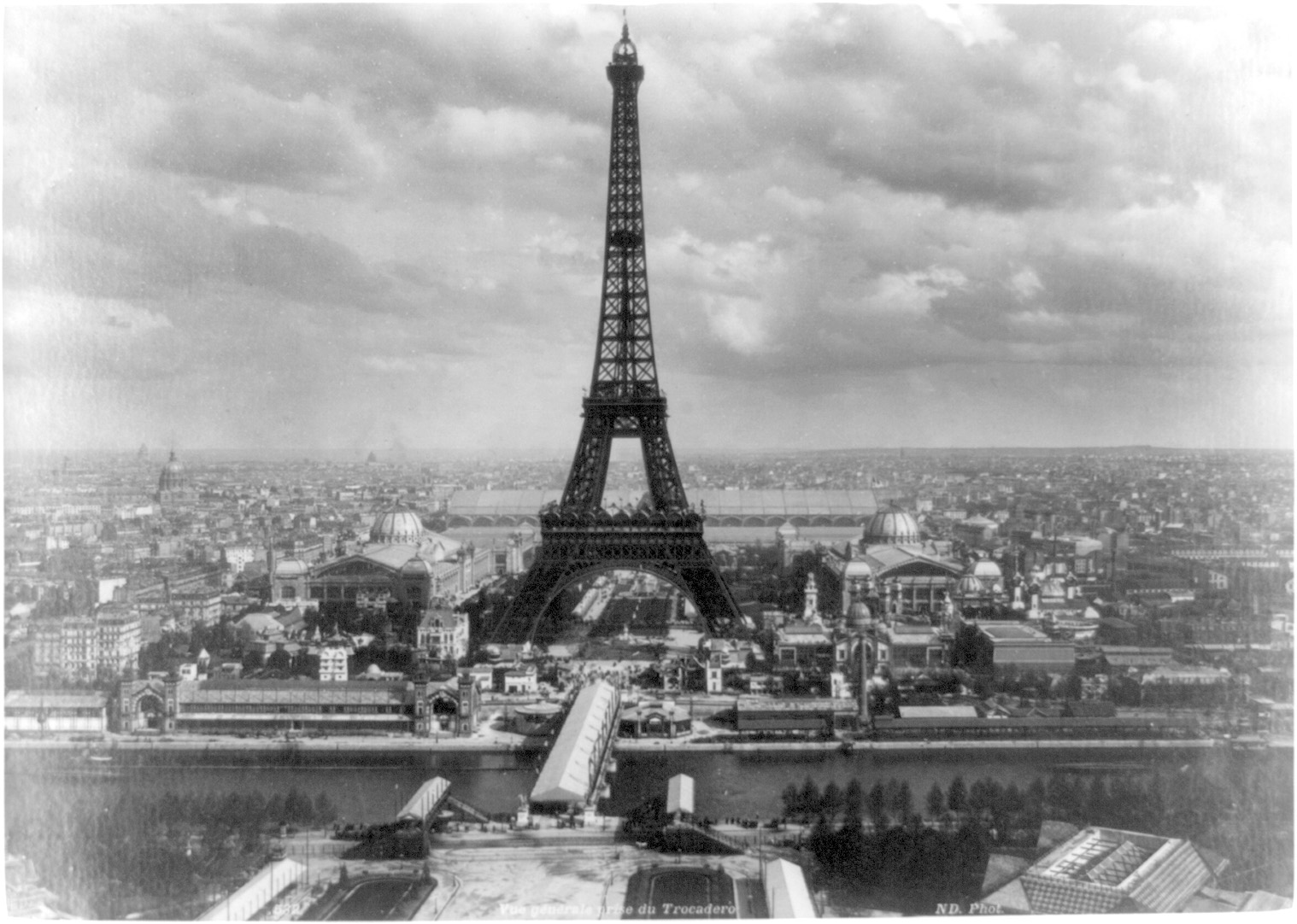
The fair made two new structures into symbols of modernity. Gustave Eiffel’s tower rose above Paris; Edison’s lamps and phonographs filled exhibition halls below. Eiffel showed what iron construction could achieve. Edison represented electricity, recorded sound and the American invention business.
The visit was a high point in Edison’s international fame. It was also a working journey. His employees had spent months organising equipment, maintaining phonographs and producing demonstrations. The celebrity appeared in public because an international technical organisation had prepared the stage.
A world’s fair for a revolutionary anniversary
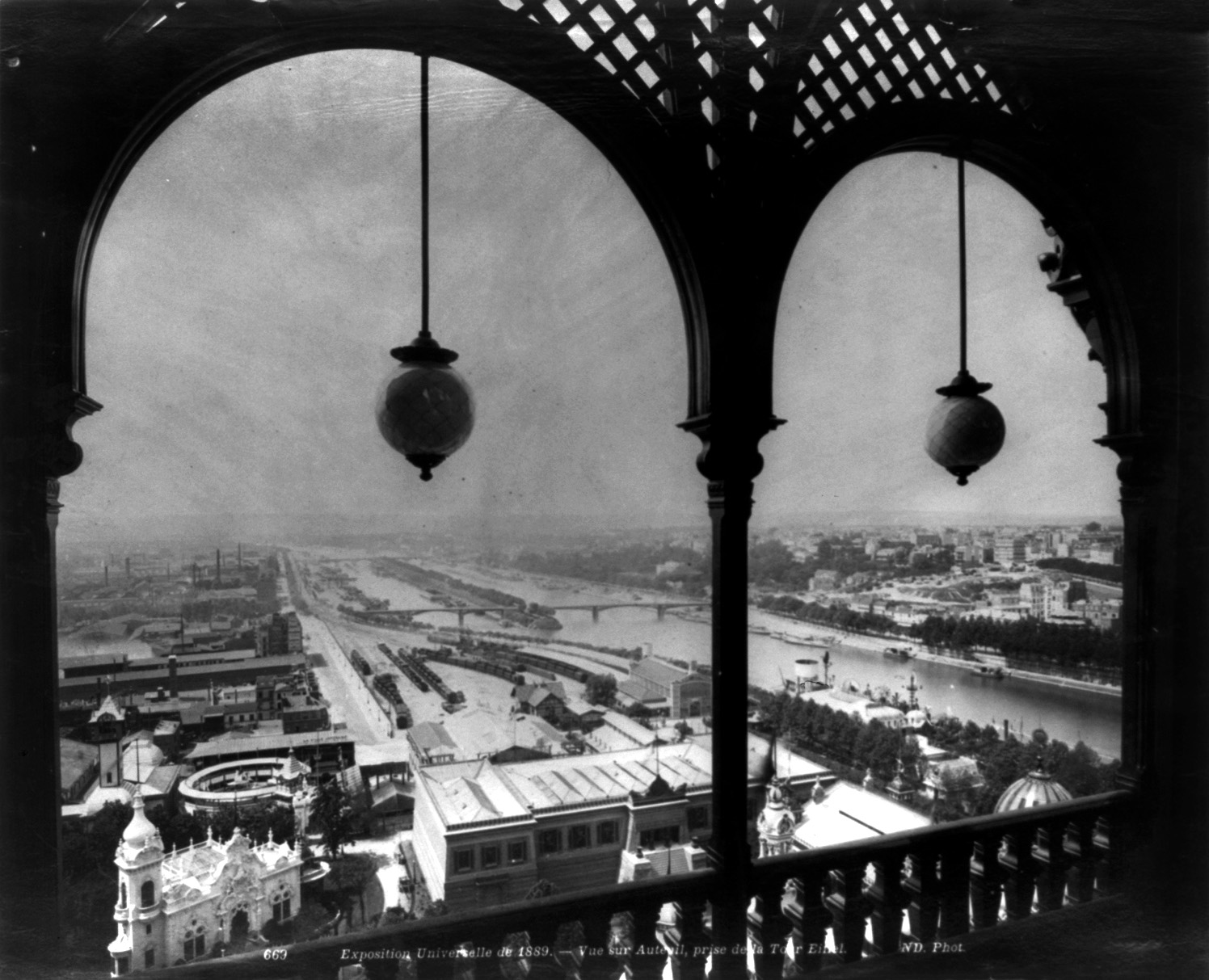
The Exposition Universelle marked one hundred years since the beginning of the French Revolution. It opened in May and continued into the autumn, attracting more than thirty-two million visits according to the Smithsonian. The Champ de Mars contained national pavilions, machinery, art, colonial displays and the new Eiffel Tower.
Electricity was both an exhibit and part of the fair’s operation. Illumination extended visiting into the night and turned buildings and fountains into spectacle. Edison lamps belonged to a competitive field that included European companies and other electrical systems, but his name carried exceptional public recognition.
The fair also displayed imperial power in degrading exhibits of colonised peoples. Celebrations of science and industry existed beside racial hierarchies presented as entertainment. A complete account cannot treat the exposition as an innocent festival of progress.
William Hammer prepares the Edison display
Edison did not arrive with a few machines in his luggage and improvise an exhibition. In March he sent engineer William J. Hammer to Paris to organise the display. Hammer had worked for Edison’s electrical interests in Europe and understood both apparatus and large exhibitions.
The Edison section included lamps, generating and distribution equipment, telephones and phonographs. Its scale was a commercial statement. American industry was claiming space in a fair long associated with European manufacturing and science.
Hammer’s surviving papers contain articles, photographs and records of the exposition. They show how much labour lay behind the apparently effortless spectacle of Edison’s inventions performing for crowds.
The phonograph becomes an international performer
Many visitors encountered recorded sound for the first time. The improved phonograph used wax cylinders rather than the fragile tinfoil of the 1877 machine. Listening tubes carried playback to the ears, making each demonstration intimate even inside a vast hall.
Edison’s exhibit dwarfed the display connected with Alexander Graham Bell’s associates and their Graphophone. The competition mattered because the revived phonograph business was still uncertain. Machines were difficult to manufacture and regional companies were struggling to turn dictation equipment into profitable service.
Paris revealed another market: public exhibition. A machine could earn money by astonishing listeners even before home ownership became common. The fair helped move the phonograph from office plan towards entertainment culture.

Theo Wangemann and the voices of Europe
Adelbert Theodor “Theo” Wangemann travelled to Europe in June 1889 to maintain phonographs at the fair, fit improved parts and train operators. A trip expected to last weeks extended until February 1890.
Wangemann recorded singers and speakers on wax cylinders, building a repertoire suitable for demonstration. After Paris he travelled through Germany and other parts of Europe, recording notable figures and performers. His cylinders included music, speech and voices that would otherwise have vanished.
The work reminds us that Edison did not personally conduct every celebrated demonstration. A skilled employee kept the machines adjusted, selected material and made recordings while the inventor attended receptions.
Edison crosses the Atlantic
Edison left the United States on 3 August with his wife Mina and mathematician Francis Upton. The party later toured France, Belgium and Germany before returning in October.
By then Edison was no longer the young “Wizard of Menlo Park” travelling to prove one startling machine. Electric-light companies operated internationally, his new West Orange laboratory directed several projects at once and Edison General Electric had been organised earlier that year.
The trip therefore combined personal celebration with corporate representation. Edison’s face authenticated businesses and technologies that involved hundreds of employees, investors and foreign partners.
An American inventor in a European market
International fame did not translate automatically into commercial control. Electrical companies operated through national patents, local capital and agreements with manufacturers who understood their own cities. European engineers had competing lamp, generator and distribution systems, while telephone and phonograph rights were divided among business interests.
The exposition allowed Edison’s organisation to display unity that business arrangements rarely possessed. Lamps, generators and sound machines could appear together beneath one name even when their manufacture and exploitation belonged to separate companies. Visitors saw a coherent Edison future; lawyers and managers dealt with a map of territorial rights.
This difference helps explain why Edison’s journey mattered. His presence supplied a personal connection across those fragmented enterprises. A banquet, demonstration or meeting could strengthen the brand without settling a patent. Celebrity became a form of commercial infrastructure.
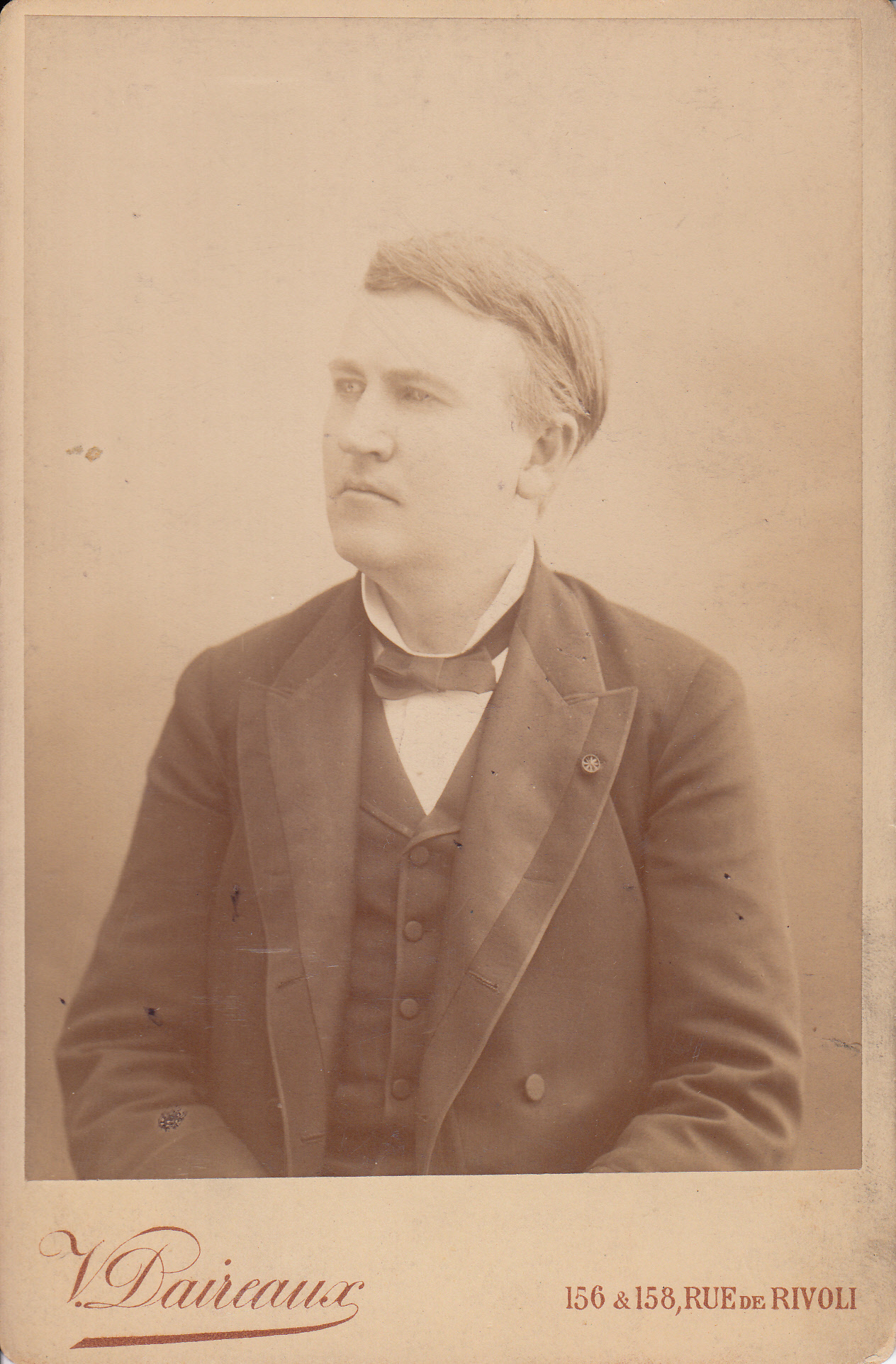
A conquering hero
The Thomas A. Edison Papers describes Edison as being received like a conquering hero. Well-wishers crowded him, banquets and honours filled the visit, and newspapers followed details that had little to do with circuitry.
France already knew the phonograph through reports and demonstrations. Arguments over the earlier ideas of Charles Cros and sound-recording experiments by Édouard-Léon Scott de Martinville added a specifically French context. Admiration for Edison did not erase debates about priority.
His appeal crossed national rivalry because he embodied a recognisable modern character: the inventor-industrialist. He was presented as a practical republican hero rather than an aristocrat or state official, a status that suited the exposition’s revolutionary anniversary.
Edison and Eiffel
Gustave Eiffel invited Edison to the apartment he had created near the top of the tower. Edison gave him a phonograph. The meeting joined the fair’s two most visible technological personalities and produced a durable image of mutual recognition.
The tower and phonograph offered opposite experiences of scale. Eiffel’s structure could be seen across the city and carried visitors hundreds of metres upwards. Edison’s machine delivered a faint voice through tubes directly to one listener. Both turned engineering into public wonder.
A surviving wax cylinder recorded on the tower on the final day of the fair begins with an announcement of the place before a faint violin is heard. The Smithsonian notes that the identity of the recorder is uncertain. Hammer retained the cylinder. It captures the way Edison’s technology could turn the exposition itself into a recorded souvenir.
The giant lamp and electrical theatre
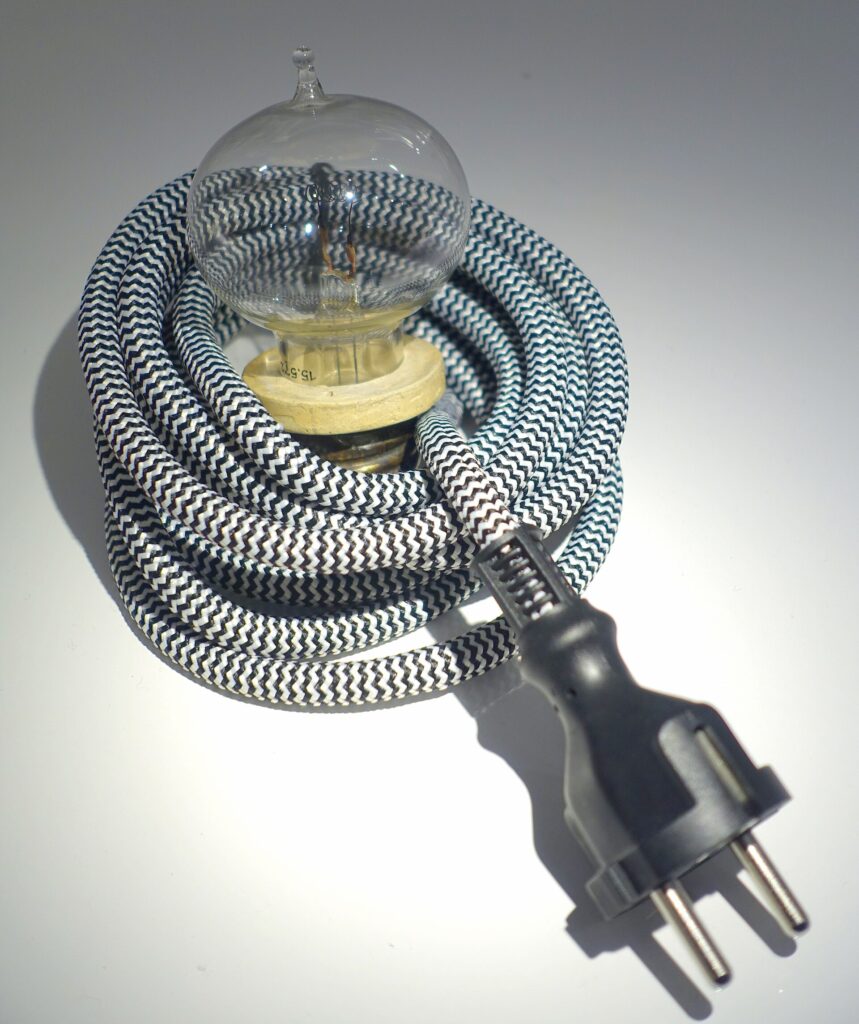
Edison’s display used scale and repetition. Arrays of bulbs demonstrated variety; oversized objects made small electrical components visible across a hall. A “mammoth” lamp transformed the household bulb into exhibition architecture.
This was not merely boastful decoration. Electrical systems were difficult to explain to a general visitor. Banks of lamps, operating motors and dramatic illumination converted invisible current into movement and light.
The display also advertised standardisation. One experimental bulb proves that a principle can work. Hundreds of manufactured lamps suggest that a company can supply a market. The exhibition’s spectacle was a claim about industrial capacity.
What the fair concealed
The Edison section bore one man’s name, but its contents came from many hands. Hammer organised the exhibit. Wangemann maintained phonographs and recordings. Upton had helped calculate the electrical system. Factories produced lamps and machines. European agents handled installation and business.
The fair also encouraged a simple progress story. Electric light, iron construction and recorded sound appeared as an inevitable future. Patent disputes, unreliable machines, expensive infrastructure and failed companies were largely outside the visitor’s view.
That is the purpose of a trade exhibition: to present readiness, not uncertainty. Historians should enjoy the spectacle while reading behind it.
Paris and the beginning of motion pictures
While Edison was in Europe, motion-picture experiments continued at West Orange under W. K. L. Dickson. When Edison returned in October, Dickson demonstrated progress on a device intended to unite moving images and sound.
The juxtaposition is suggestive. Paris celebrated inventions that had already made Edison famous while his laboratory pursued the next medium. The phonograph had taught him that mechanical reproduction could become a public marvel; photographic motion promised to do something similar for sight.
The later motion-picture programme would again depend upon employees, patents, exhibition and a famous name placed over collaborative work.
The high-water mark of Edison’s fame
Edison remained a celebrity for the rest of his life, but Paris in 1889 captured a particular moment. The phonograph had recovered from its tinfoil beginning, electric light had become an international industry and the West Orange laboratory promised continuing invention.
He appeared to stand at the centre of several futures at once. Crowds could hear voices preserved on wax, walk beneath electric lamps and look up at the Eiffel Tower. Technical systems became a language of national and personal prestige.
The reception was not proof that Edison had invented every object bearing his name. It demonstrated that he had become the symbol through which millions understood modern invention. Paris did not merely exhibit Edison’s machines. It exhibited Edison.
Sources and further reading
- Thomas A. Edison Papers, Competing Interests, January 1888–December 1889 – Edison’s reception and the visit’s place in his career.
- Thomas A. Edison Papers, chronology 1881–1890 – Hammer’s preparations, Edison’s travel party and dates.
- Thomas Edison National Historical Park, “Thomas Edison and the Paris Exposition of 1889” – exhibit scale, celebrity reception and phonograph display.
- National Museum of American History, “What Did 1889 Sound Like?” – Paris cylinders, Eiffel meeting and Hammer collection.
- Thomas Edison National Historical Park, “The Edison Phonograph in Europe, 1889–1890” – Wangemann’s assignment and European recordings.
- National Museum of American History, 1889 Exposition Universelle – attendance, exhibits, electricity and colonial displays.
- Smithsonian Institution, William J. Hammer Collection – exhibition records and Edison display documentation.