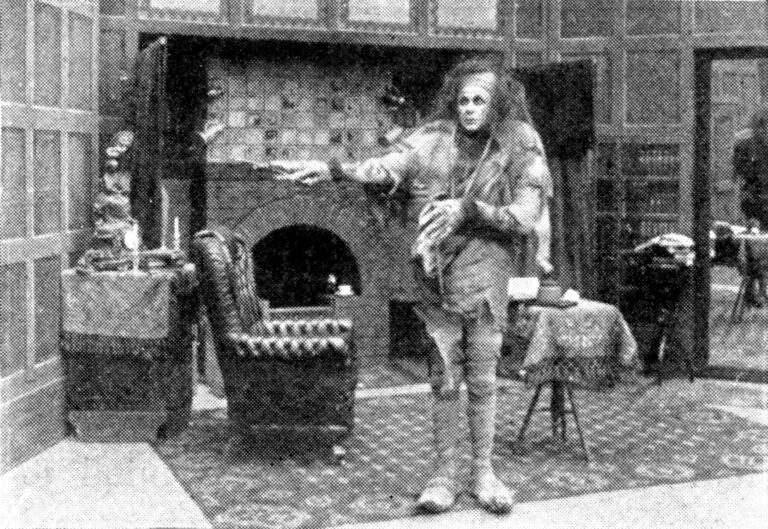
What did Thomas Edison actually invent? The question sounds simple until you look closely at any one of the objects attached to his name. He did not make the first electric light, the first motion picture or the first machine capable of recording sound. He employed gifted experimenters and machinists, bought patents, absorbed rival ideas and promoted his successes with unusual skill.
Yet the familiar correction — that Edison merely took credit for other people’s work — is no more satisfactory than the old picture of a lone genius producing modern life from a cluttered bench. Edison’s importance lay in a different kind of invention. He could take an interesting experiment, identify everything that prevented it from becoming useful, organise people and money around the problem, and build the manufacturing and distribution systems that carried the result into ordinary life.
His greatest achievements therefore make most sense in context. Some were inventions in the narrow patent sense. Some were substantial improvements. Others were systems made from many interdependent parts. All reveal what the word inventor meant in an industrial age.
Before the famous inventions: telegraphy and finance
Edison entered professional invention through the telegraph. As a young operator in the 1860s, he learned the equipment from the inside: relays that failed, signals that weakened over distance, batteries that needed attention and operators who made mistakes when traffic became heavy. His first patented invention, an electric vote recorder, was intended to let a legislature register votes rapidly. It worked, but politicians saw little advantage in speeding a process that delay could be used to influence. The disappointment taught Edison a commercial lesson. A technical solution was not valuable merely because it was clever; somebody had to want it badly enough to pay.
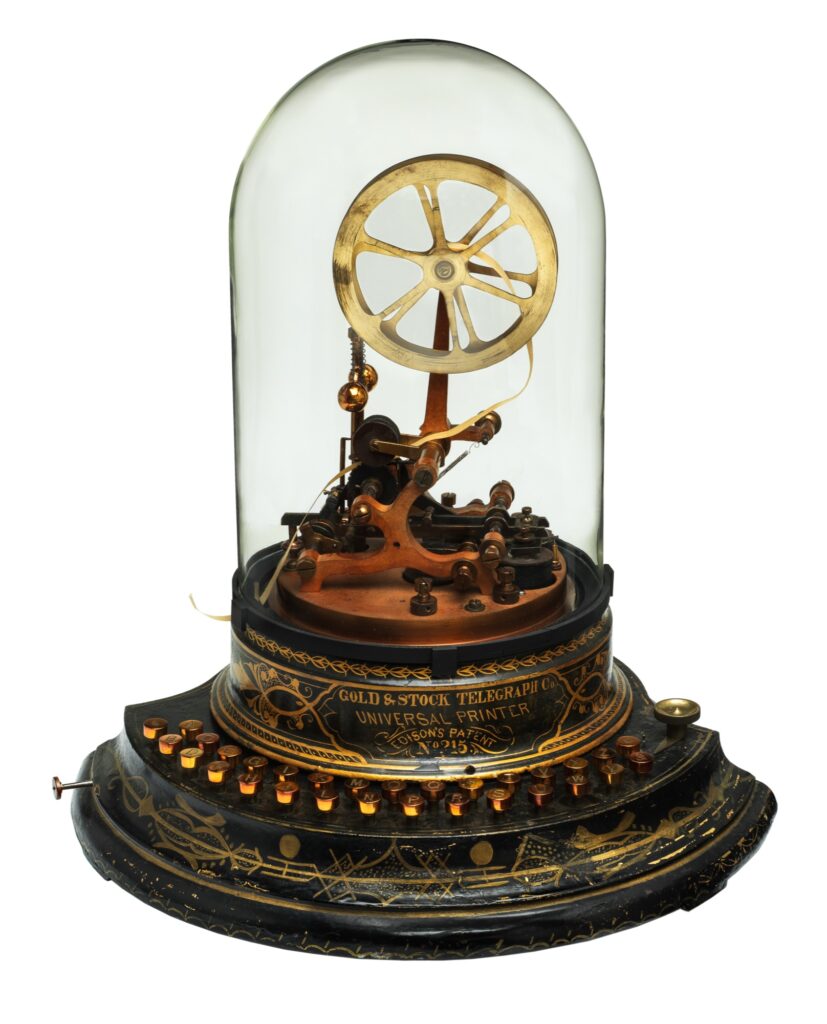
Financial telegraphy provided that customer. Stock tickers converted electrical impulses from a central transmitter into printed letters and numbers at brokers’ offices. Edison did not originate the ticker, but in Newark he improved its reliability and helped develop the Universal Stock Printer for the Gold and Stock Telegraph Company. Later recollections say that the sale of his rights brought him $40,000. The precise details have been debated, but the essential consequence is clear: the money and reputation allowed him to establish a serious workshop and employ assistants.

The most important telegraph invention of Edison’s Newark years was the quadruplex. It allowed four messages — two in each direction — to travel simultaneously over one wire. Railway and telegraph companies could increase capacity without erecting another line, which made the invention economically attractive. The underlying methods drew on earlier work in multiplex telegraphy, and the patent rights became entangled in a bitter dispute involving Western Union, financier Jay Gould and Atlantic and Pacific Telegraph. Even at this early stage, invention meant a mixture of experimental skill, corporate strategy and legal control.
The carbon transmitter made the telephone practical
Alexander Graham Bell received the decisive American telephone patent in 1876, but the early telephone had a serious weakness. Its transmitter produced a faint signal. Edison’s response was a carbon transmitter in which the resistance of carbon changed under the pressure of sound waves. That changing resistance controlled a stronger electrical current and sent speech over a greater distance at useful volume.
Other experimenters, notably Emile Berliner, worked on related variable-resistance transmitters, and the resulting patent disputes lasted for years. Edison nevertheless made a major practical contribution. The carbon principle dominated telephone transmitters for generations. It was a characteristic Edison achievement: he had not conceived the entire telephone, but he solved a problem that stood between a remarkable demonstration and a dependable service.
The work also led directly towards recorded sound. While studying how a telephone diaphragm responded to speech, Edison considered whether its movements could be captured mechanically and played back. At the Menlo Park laboratory, that possibility became his most startling invention.
The phonograph: an invention without an immediate market
In 1877 Edison sketched a machine in which sound vibrated a diaphragm and stylus, indenting a helical groove into tinfoil wrapped around a rotating cylinder. When the stylus retraced the groove, the vibrations returned as recognisable speech. Machinist John Kruesi built the experimental apparatus. The first machine was crude, awkward to operate and incapable of making convenient copies, but it did something no earlier device had done: it recorded and reproduced airborne sound.
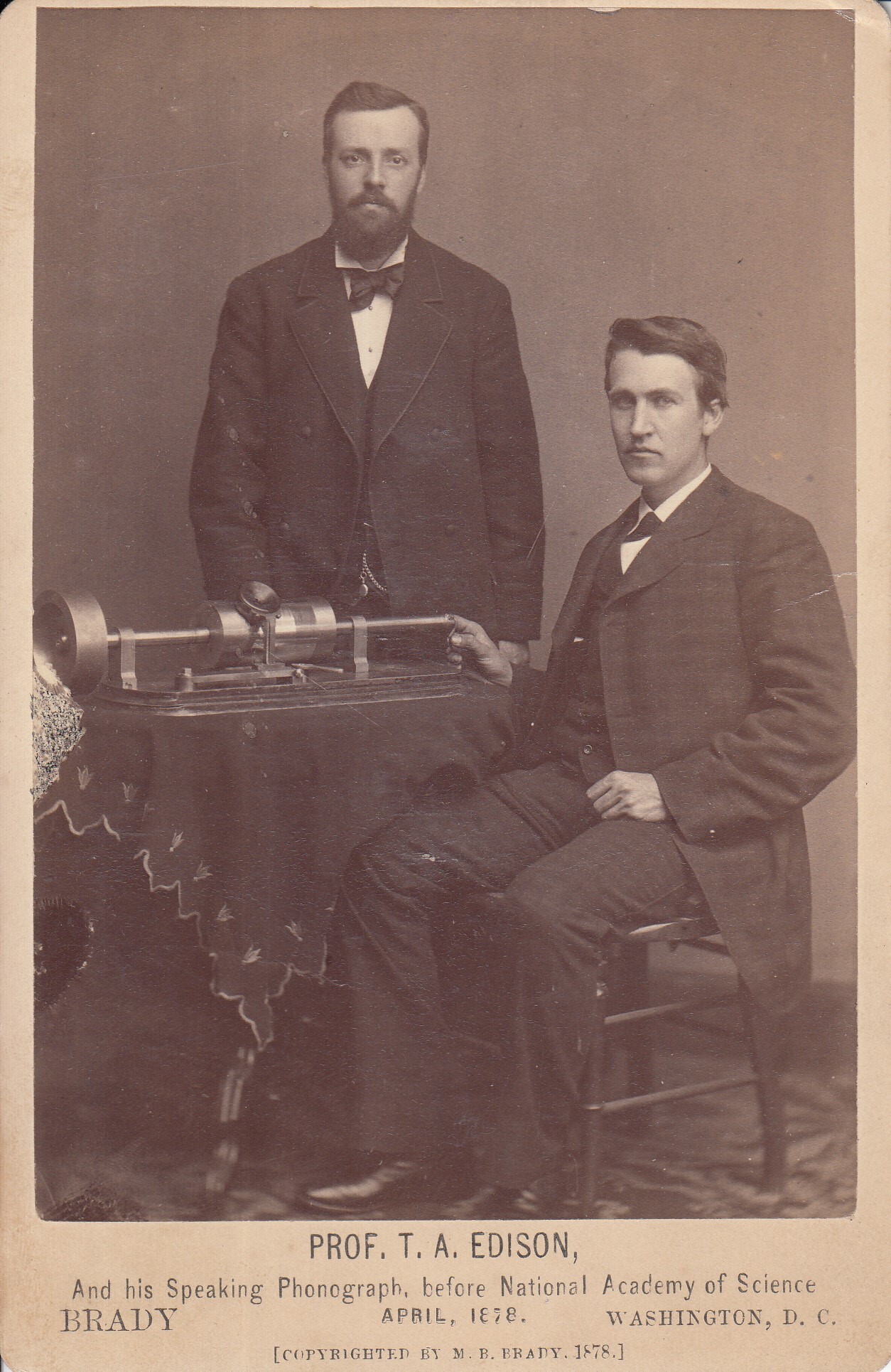
The phonograph made Edison famous with extraordinary speed. He demonstrated it to editors, scientists and politicians, and newspapers called him the “Wizard of Menlo Park”. He proposed uses ranging from dictation and talking books to recorded family voices. Most of those markets were premature. Tinfoil tore, playback wore down the recording and sound quality was poor. After the first excitement, Edison turned much of his attention to electric lighting.
During the 1880s, Alexander Graham Bell, Chichester Bell and Charles Sumner Tainter developed a wax-cylinder Graphophone. Edison returned to the field and improved his own cylinder machines, while employees and licensees helped turn them into dictation devices, coin-operated entertainments and home players. By the 1890s, recording had become an industry rather than a demonstration. For the full story of how tinfoil gave way to commercial cylinders and records, see how Edison invented the phonograph and the companion history of recorded sound on this site.
Electric light was a system, not a eureka moment
The electric light bulb is the invention most firmly fixed to Edison’s name, and the one most often misunderstood. Arc lamps were already illuminating streets and large buildings. Joseph Swan in Britain and several other inventors had demonstrated incandescent lamps before Edison. The problem was not proving that electrical resistance could make a filament glow. It was producing a lamp that would last, could be manufactured consistently and would operate economically in large numbers.
Edison approached the problem as a network. A high-resistance carbon filament allowed many lamps to be connected in parallel without demanding an impossible amount of copper. A strong vacuum prolonged the filament’s life. The Menlo Park team improved dynamos, sockets, switches, fuses, meters and underground conductors. Charles Batchelor supervised exacting experimental work; Francis Upton supplied mathematical analysis; John Kruesi built machinery; Ludwig Boehm blew glass. Edison selected the target, drove the programme and controlled the commercial organisation, but the result belonged to a laboratory.

At the end of 1879, visitors travelled by special trains to see Menlo Park lit by rows of small lamps. The more consequential event came on 4 September 1882, when the Pearl Street station began supplying customers in lower Manhattan. The station generated electricity, distributed it through underground conductors and measured use for billing. It turned electric light into a utility. Edison’s low-voltage direct-current system had a limited range and would soon face formidable alternating-current competition, but Pearl Street established a model for central power supply.
That is why saying that Edison “did not invent the light bulb” can conceal as much as it corrects. He did not originate incandescent light. He and his employees developed a commercially effective lamp and the larger system that made it useful. The detailed account is told in how Edison changed the world with electric light.
Motion pictures were the work of Edison’s laboratory
Moving images had a long prehistory: optical toys created the illusion of motion; Eadweard Muybridge photographed phases of movement; Étienne-Jules Marey recorded sequences on strips of sensitive material. Edison’s role began after he met Muybridge in 1888 and assigned William Kennedy Laurie Dickson to investigate a machine that would do for the eye what the phonograph did for the ear.
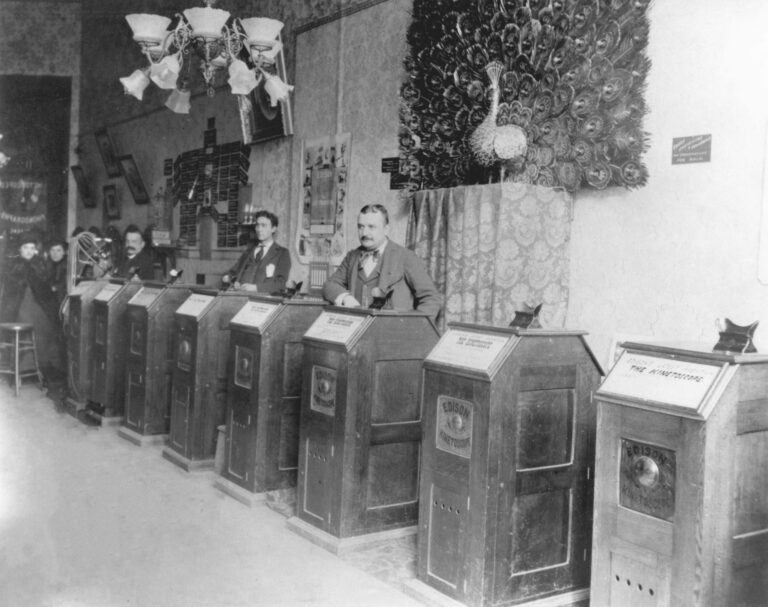
Dickson became the central experimental figure. With colleagues at West Orange, he developed a camera called the Kinetograph and a peephole viewer called the Kinetoscope. Flexible celluloid film supplied by George Eastman’s company made long strips practical. Perforations and a sprocket mechanism moved the film intermittently past the lens. Edison owned the laboratory, set the programme and held important patents; Dickson and the workshop staff did much of the hands-on design and testing.
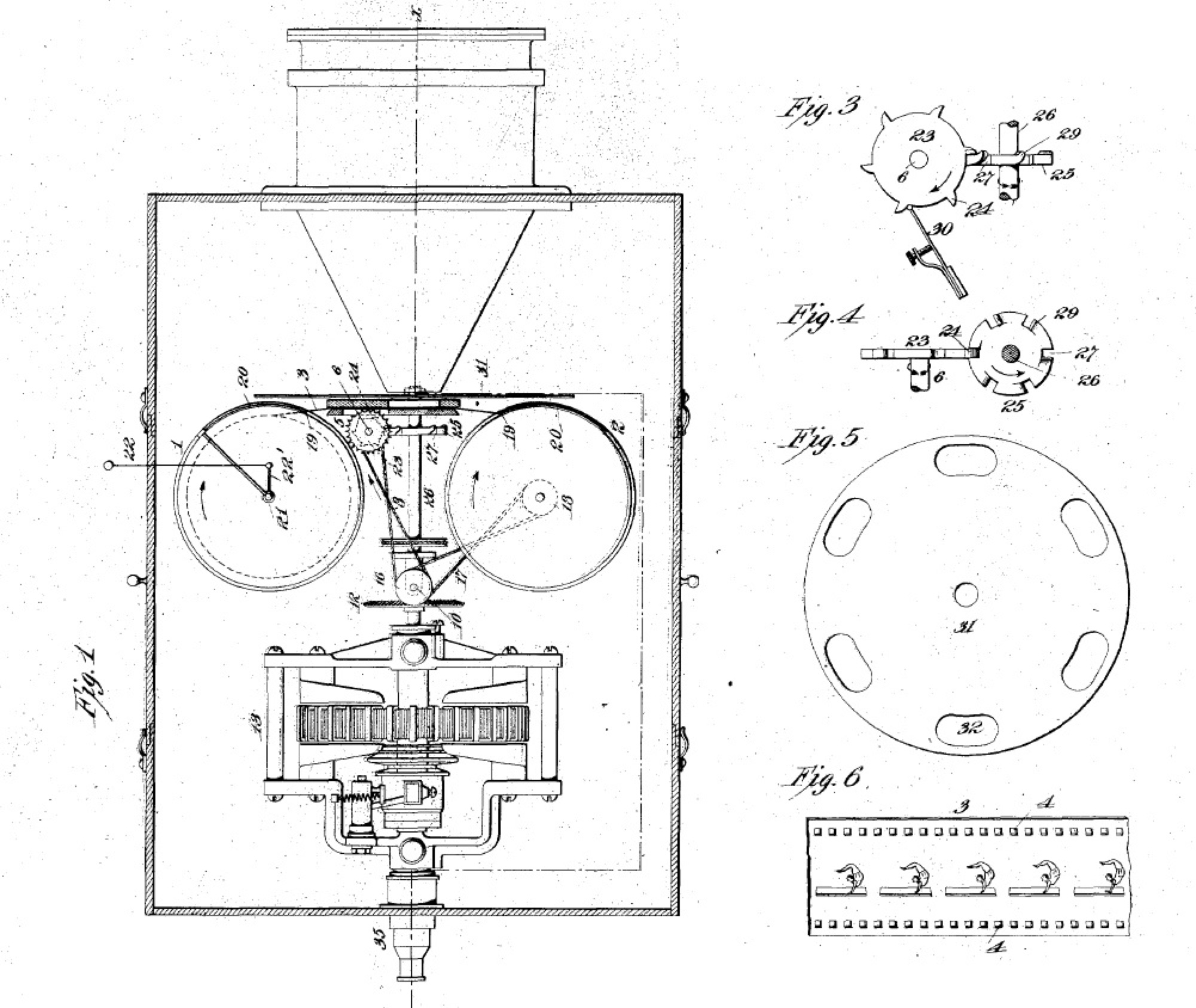
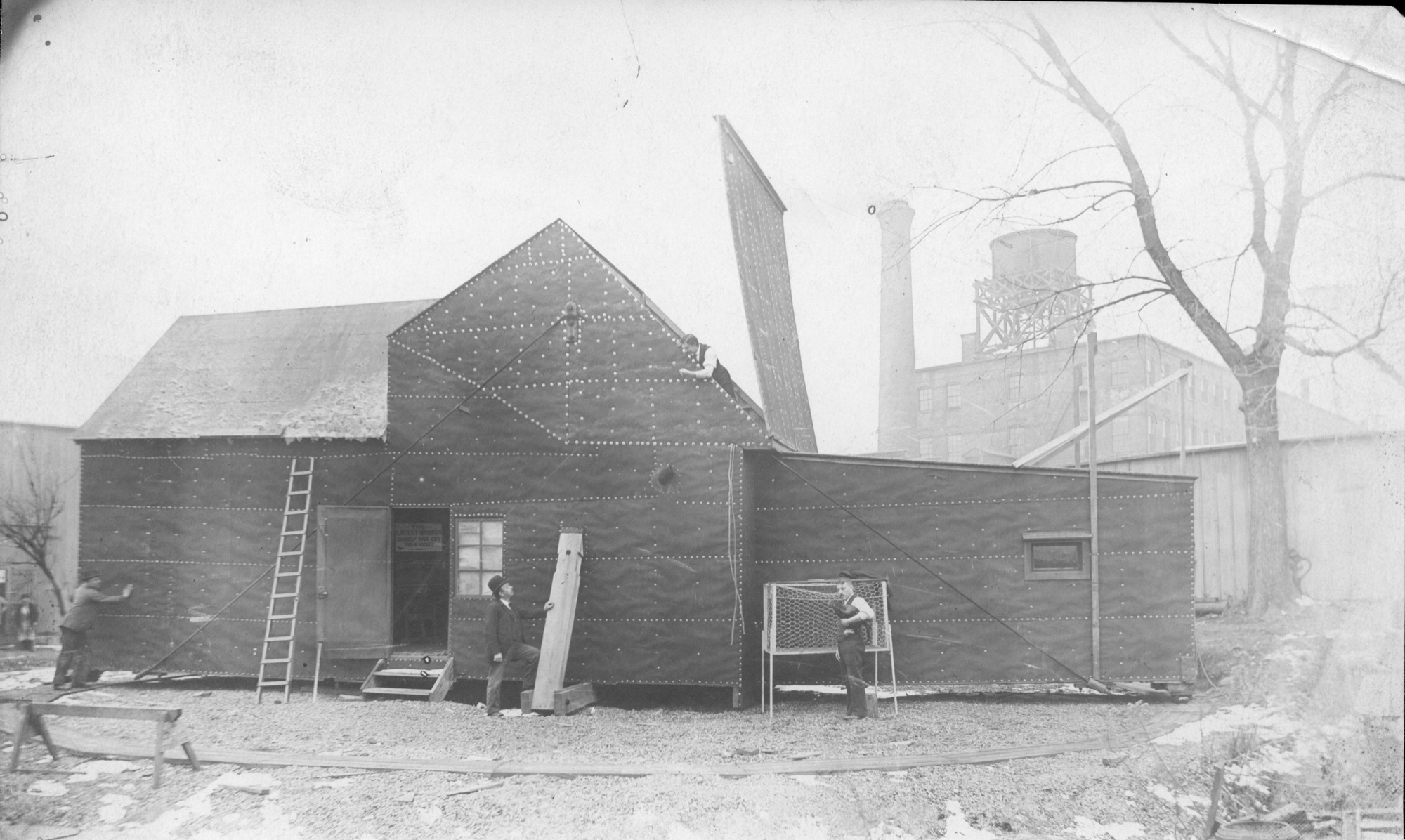
To supply films, the laboratory built the Black Maria at West Orange in 1893. The tar-paper-covered studio had a roof section that opened to daylight and stood on a rotating base so it could follow the sun. Athletes, dancers, vaudeville performers and laboratory employees acted before the Kinetograph. The films were short because the viewer held a limited loop and because exposure demanded powerful light.
Kinetoscope parlours opened in 1894, but Edison initially concentrated on individual viewing when projection was becoming the more important public form. His companies then acquired and adapted projector technology, produced films and defended patents aggressively. The Edison organisation helped establish motion pictures as a business, but it did not single-handedly invent cinema. European and American experimenters developed cameras, film systems and projectors along parallel paths.
The ore-milling failure that financed later success
Edison’s reputation is often built from successful products, yet one of the clearest views of his method comes from a failure. During the 1890s he invested heavily in separating low-grade iron ore with powerful electromagnets. At Ogden, New Jersey, rock was crushed, dried and passed through a tall processing plant while magnetic separators drew out the iron-bearing particles. Edison designed machinery on a scale that impressed visitors and consumed much of his electric-light fortune.
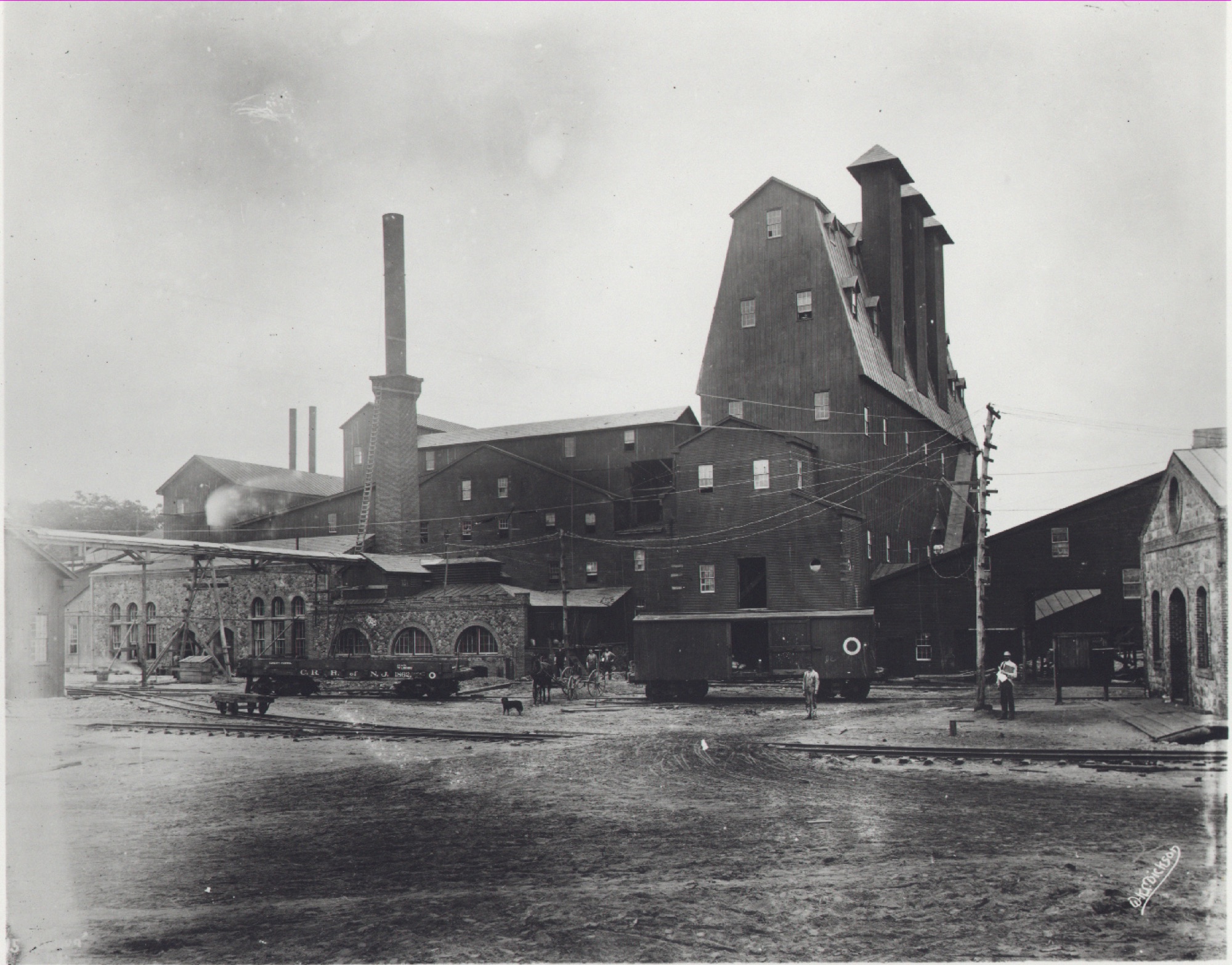
The engineering difficulties were severe, but the decisive blow came from the market. Rich iron ore from Minnesota’s Mesabi Range became cheap and plentiful. No amount of improvement could make Edison’s low-grade New Jersey product competitive. The works closed after years of investment. He later said that he was pleased to be rid of the money because it had taught him so much — a remark consistent with his public philosophy, though any exact wording should be treated cautiously when repeated from memory.
The failure was not entirely wasted. Knowledge gained in crushing and handling powdered material fed into the Edison Portland Cement Company. Even so, ore milling is a warning against treating perseverance as a guarantee. Edison could continue an experiment far longer than most inventors because he possessed capital and confidence. Those strengths sometimes became liabilities when the commercial premise was wrong.
The alkaline storage battery: ten years instead of one
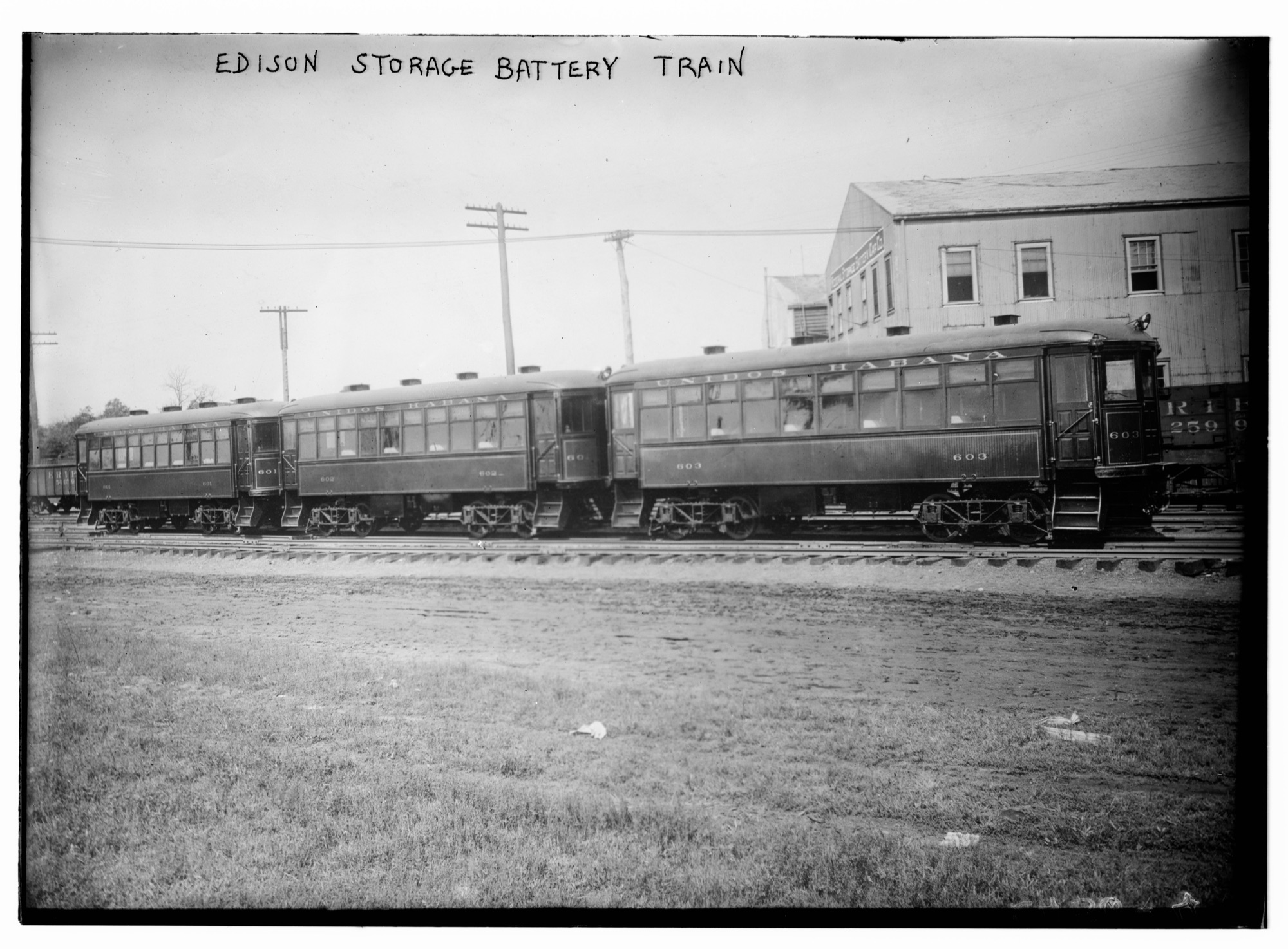
At the turn of the twentieth century Edison believed that electric vehicles required a lighter, tougher storage battery than the lead-acid cells then available. His nickel-iron alkaline battery used iron and nickel compounds with a potassium-hydroxide electrolyte. He announced the product before it was ready, and early cells leaked or lost capacity. Rather than defend them, Edison withdrew the battery and subjected revised designs to years of testing.
The work occupied roughly a decade. By the time a reliable version was marketed, petrol cars had defeated electric cars in much of the passenger market. The battery nevertheless found uses in railway signals, miners’ lamps, submarines, industrial vehicles and emergency power. According to the National Park Service, it became the most profitable product of Edison’s later career. The apparent missed opportunity turned into a durable business because the invention could serve needs beyond the one first imagined.
The battery also shows how differently Edison worked at West Orange. Menlo Park had been a relatively compact experimental community. The later laboratory complex combined research rooms, machine shops, chemical facilities, factories, offices and a library on an industrial scale. Hundreds of employees could contribute to products whose development, production and sale stretched over years.
Cement, concrete houses and an idea ahead of its customers
Edison entered cement after the ore venture left him with expertise in grinding rock. The Edison Portland Cement Company built enormous rotary kilns and supplied material for projects including Yankee Stadium. Edison then proposed pouring a complete concrete house in reusable iron moulds: walls, floors, stairs, bath and ornamental details formed as one structure. In theory, repeated use of the moulds would produce durable, fire-resistant housing at low cost.

The practical barriers were formidable. The metal forms were expensive, pouring an entire house demanded careful control of a large volume of concrete, and buyers did not necessarily want homes that looked identical. Several concrete houses associated with the scheme were built, but the system did not transform working-class housing as Edison predicted. Once again, technical possibility and customer desire were not the same thing.
What Edison’s patents do — and do not — prove
Edison received 1,093 United States patents and held additional foreign patents. The figure is impressive, but it should not be treated as a scoreboard of 1,093 completely separate inventions. A product might generate patents for a mechanism, material, manufacturing process and later improvement. Some applications were assigned to Edison even when employees had made substantial experimental contributions, reflecting employment agreements and business ownership rather than a modern statement of individual credit.
Nor does a patent prove that the device was the first of its kind, successful in the market or morally admirable. It grants limited legal rights to claims judged novel under the standards of the time. Patent litigation around the telephone, electric light and motion pictures shows how narrow wording, prior work and corporate power affected the outcome.
The better measure of Edison’s achievement is not a raw total. It is the combination of original ideas, improvements, coordinated laboratory work and systems that endured. His career includes the unmistakably original phonograph, the powerful carbon transmitter, the integrated electric-light network, important motion-picture machinery, a commercially useful storage battery — and failures that consumed fortunes.
So what did Thomas Edison actually invent?
Edison invented some devices, substantially improved others and helped create industries. He deserves credit for the first practical machine to record and reproduce sound; for decisive improvements in telegraphy and telephony; for directing the development of a workable incandescent-lighting system; for organising the laboratory in which Dickson and others produced important motion-picture technology; and for the persistent development of the nickel-iron battery.
He does not need to be given every precursor, every component or every idea produced by an employee. In fact, recognising Batchelor, Upton, Kruesi, Dickson and many less familiar workers makes Edison more historically interesting. His distinctive invention was also organisational: a laboratory where experiment, machine work, chemistry, patents, publicity and manufacturing could be directed towards a common commercial objective.
The objects on a list of Edison’s best-known inventions are therefore the beginning of the story, not its end. The stock ticker explains how he learned to serve a market. The phonograph shows genuine novelty without an immediate business. Electric light reveals the power of a system. Ore milling shows the limits of persistence. The battery shows a failed market finding another use. Together they explain why Edison mattered — not as a magician working alone, but as an inventor who learned to build the world around an idea.
Sources and further reading
- Thomas A. Edison Papers: Inventions of Thomas Edison — overview of Edison’s Newark, Menlo Park and West Orange work, including telegraphy, the phonograph, lighting, motion pictures, ore milling, batteries and cement.
- Thomas Edison National Historical Park: Edison Biography — laboratory chronology, ore-milling failure and alkaline-battery development.
- Thomas Edison National Historical Park: Timeline of Edison and His Inventions — dated guide to principal patents, laboratories and businesses.
- Smithsonian National Museum of American History: Edison’s Talking Machine — the tinfoil phonograph, proposed uses and later cylinder development.
- Library of Congress: Origins of Motion Pictures — Muybridge, Dickson, the Kinetograph, Kinetoscope and flexible film.
- Library of Congress: Early Motion Picture Productions — the Black Maria, Kinetoscope parlours and the first Edison films.
- Paul Israel, Edison: A Life of Invention (John Wiley & Sons, 1998) — scholarly biography placing Edison’s patents, employees and companies in their industrial setting.
- W. Bernard Carlson, Innovation as a Social Process: Elihu Thomson and the Rise of General Electric, 1870–1900 (Cambridge University Press, 1991) — useful comparison of invention, corporate laboratories and the electrical industry.