Thomas Edison has acquired two opposite reputations. In the older version he sits alone at a bench and invents the modern world. In the newer version he contributes almost nothing, employs other people to do the thinking and then steals their work. Both stories are satisfying. Neither describes how his laboratories, patents and companies actually operated.
Did Edison steal inventions? There is no honest one-word answer. He bought rights, employed collaborators, fought lawsuits, claimed broad patents and allowed publicity to concentrate credit on his name. He also conceived important devices, directed difficult programmes and recorded his own experimental work in extraordinary detail. To judge him fairly, “stealing” must be separated into several questions: who had the idea, who made it work, who legally owned it and who received the fame?
Why Edison’s name appeared everywhere
Edison obtained 1,093 United States patents. A patent did not certify that he alone built every component, nor did the name on a company prove that every product originated in his mind. A patent protected a claimed invention under law. Company ownership governed the work employees produced. Advertising created a public personality.
Edison understood all three systems. He signed agreements assigning patents to financial backers, purchased other inventors’ rights and required laboratory employees to keep careful notebooks. His businesses used “Edison” as a guarantee of novelty. Reporters preferred a single Wizard of Menlo Park to a list of machinists, chemists and draftsmen.
This arrangement could be productive and unequal at the same time. Employees received wages, responsibility and sometimes shares or patent credit. Edison controlled the programme and usually received the lasting public recognition.
The inventions Edison did not invent from nothing
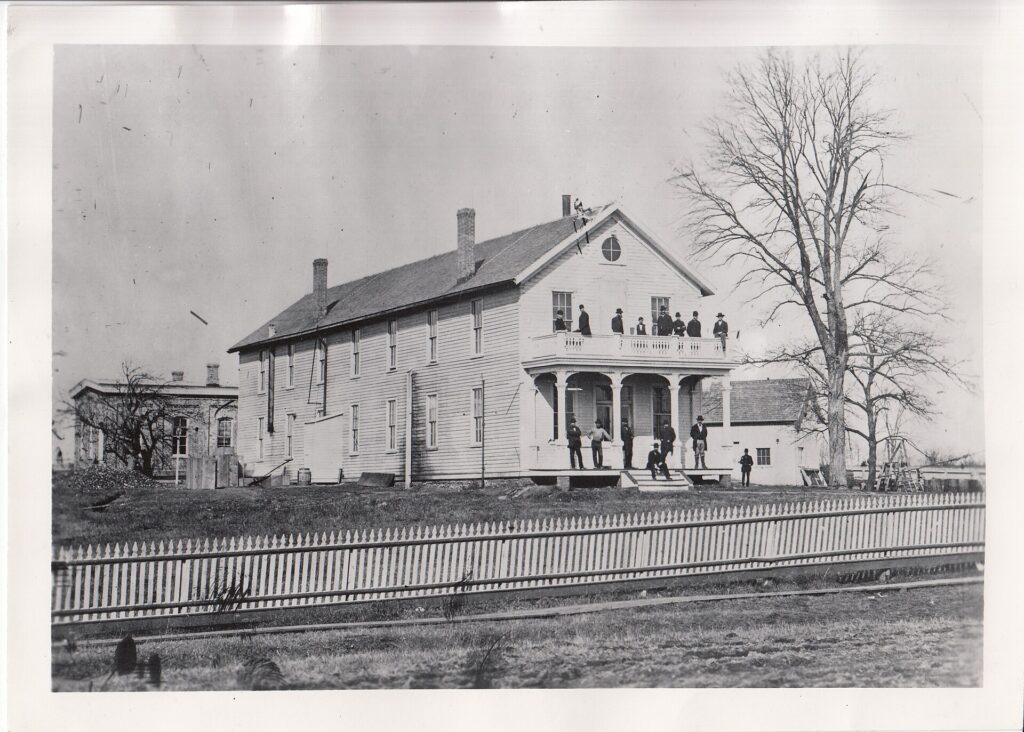
No serious historian claims Edison invented electric light itself. Arc lamps existed, and inventors including Joseph Swan had made incandescent lamps before the famous Menlo Park trials. Edison’s achievement was to develop a durable high-resistance lamp as part of a practicable central-station system: generators, wiring, sockets, fuses and meters as well as bulbs.
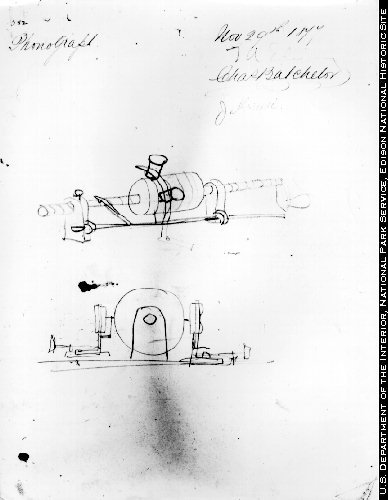
The phonograph was different. Surviving notebooks strongly document Edison’s conception of recording sound by indenting a moving surface. John Kruesi built the first successful tinfoil machine from Edison’s sketch; Charles Batchelor and others improved and demonstrated it. Giving Kruesi construction credit does not require pretending Edison stole the underlying idea.
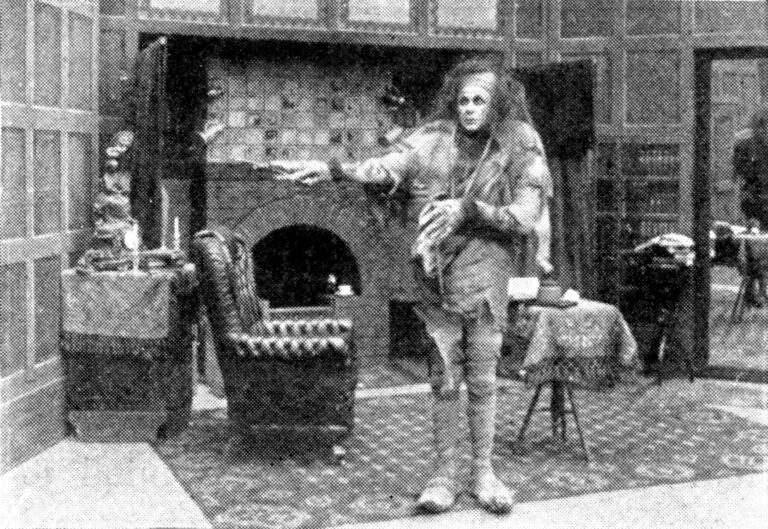
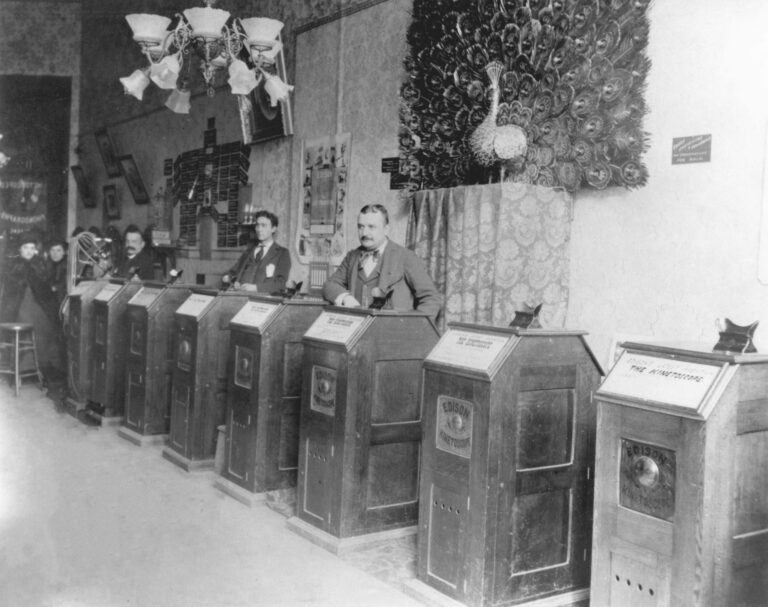
Motion pictures offer another division of labour. Edison proposed experiments linking images and sound, supplied money and facilities and controlled the patents. W. K. L. Dickson led much of the detailed camera and viewing work. Later publicity flattened that partnership into “Edison invented the movies”. The correction is to restore Dickson, not to replace one solitary genius with another.
Employment, ownership and credit
Modern readers sometimes treat an invention made by an employee as automatically stolen. Industrial research was already creating a different legal and commercial order. A laboratory hired people to solve company problems; contracts often assigned resulting rights to the employer. This could be harsh, but it was not secret theft in the ordinary sense.
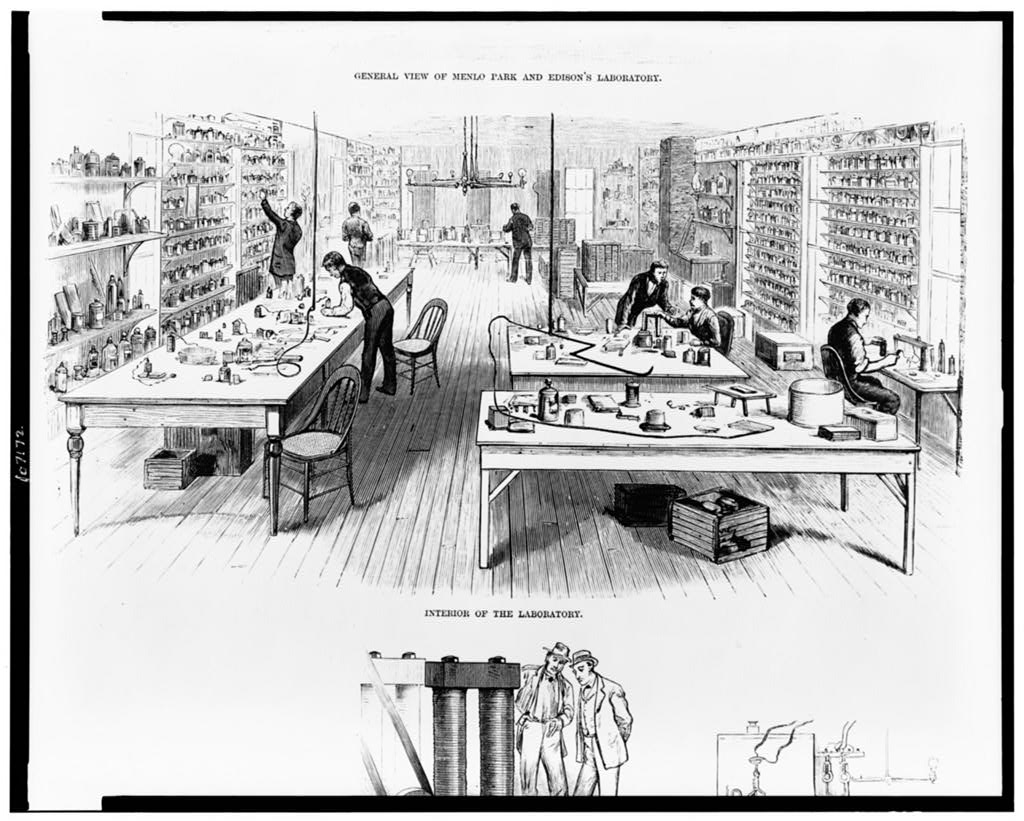
The notebooks show employees proposing alterations and conducting experiments under Edison’s direction. Some patents named staff members. Others named Edison where he was regarded as the inventor of the claimed combination. Disputes arose because a useful machine seldom emerged from a single mental flash. The legal system demanded precise claims while laboratory work flowed between people.
Three kinds of predecessor
Arguments about theft often place every earlier device in the same category. They should distinguish an invention that suggested the general objective, a component that solved part of the problem and a patent whose claims overlapped the commercial product. Joseph Swan’s lamps, for example, proved that incandescent lighting had several inventive lineages. They did not include Edison’s complete American distribution system.
In sound recording, Édouard-Léon Scott de Martinville’s phonautograph traced sound waves before Edison’s phonograph. It created visual records but was not designed to reproduce them. Charles Cros described a possible reproducible sound process in France in 1877 without constructing Edison’s machine. These predecessors matter enormously; neither fact turns the tinfoil phonograph into stolen property.
Invention histories become accurate when the claim is kept at the proper scale. “First to record a trace of sound”, “first to patent a practical incandescent combination” and “first successful central station” are different achievements. One sweeping verb—invented or stole—cannot carry them all.
What employees received
Men such as Batchelor and Kruesi advanced into management and held financial interests. Others remained wage workers or left quickly. Edison could reward a trusted lieutenant generously while the organisation as a whole still concentrated ownership at the top. There was no single bargain shared by every “mucker”.
We also possess more evidence for senior white male employees than for women, labourers and short-term workers. The absence of a name from the patent record should not be turned into an invented claim of authorship, but it should make any account of effortless individual genius impossible.
Francis Upton’s mathematics helped design the electric-light system. Batchelor’s mechanical judgement made experiments and production possible. Lewis Latimer, employed later by an Edison company and then General Electric, brought drafting and patent expertise. Their contributions were real. None supports the viral claim that Edison stole all his important inventions from one suppressed genius.
Tesla and the missing bonus
The most repeated accusation concerns Nikola Tesla. Tesla worked briefly for Edison Machine Works in New York in 1884–85. A later story says Edison promised him $50,000 for improving direct-current dynamos, then dismissed the promise as an American joke. The account comes primarily from Tesla’s autobiography, published decades later. Contemporary evidence confirming the exact bargain has not been found.
Tesla certainly left after a short and unhappy employment. He later developed a polyphase alternating-current system and sold patent rights to George Westinghouse. Edison did not steal those patents. The two men became symbols in the commercial contest between direct and alternating current, but the personal “war” commonly described online has been enlarged far beyond the surviving evidence.
It is possible that Tesla felt cheated and that a payment dispute occurred. It is not responsible history to convert a disputed recollection into a documented theft.
Patents, lawsuits and aggressive business
Edison could be a ruthless competitor. His companies used patent litigation to defend market position. The Motion Picture Patents Company attempted to control key equipment and film through a licensing system. Electric-light disputes consumed years and large sums. Broad claims could burden smaller rivals even when the final judgement narrowed them.
Yet being litigious is not proof that every patent was fraudulent. Edison’s electric-lamp patent survived a major challenge in the United States in a form that protected his particular carbon-filament combination, not the entire idea of incandescent light. Patent history is usually about boundaries: which material, arrangement or process was new enough to protect?
He also purchased inventions. The rights to patents were routinely sold, licensed or assigned. When a later Edison product incorporated acquired technology, ownership might be perfectly legal while public memory still credited Edison too broadly. Legal title and historical credit are related, but they are not identical.
What the notebooks reveal
The Edison Papers preserve millions of pages: laboratory notebooks, correspondence, drawings, account books and legal records. They do not reveal a man who merely waited for employees to hand him inventions. Edison appears constantly—setting problems, sketching mechanisms, selecting materials, reviewing results and shifting resources.
They also destroy the myth of isolation. Names, initials and different handwriting crowd the record. Experiments belonged to teams. Skilled workers supplied knowledge Edison did not possess. Some received substantial authority; many passed through the organisation and disappeared from popular history.
A fair account therefore uses active verbs carefully. Edison “directed development” where others performed much of the detailed work. A named employee “built”, “calculated” or “designed” when the evidence supports it. The company “introduced” a product when ownership and manufacture matter more than a single inventive act.

Why the theft story persists
The accusation is partly a reaction to exaggerated praise. If schoolbooks say Edison single-handedly invented the light bulb, exposing predecessors feels like exposing a fraud. But correction can become another legend. Earlier lamps do not erase the Menlo Park system; collaborators do not make direction meaningless; a purchased patent is not a stolen patent.
There is also a modern suspicion of the employer who becomes famous while employees remain obscure. Edison’s organisation deserves that scrutiny. His name was a commercial asset, and the culture around him magnified it. Restoring the team changes how invention is understood even when it does not change the legal inventor.
The most accurate verdict
Edison was neither the innocent solitary genius of the old textbooks nor the empty thief of internet folklore. He was an inventor, laboratory director and businessman who worked inside a developing system of corporate research. He sometimes shared credit, sometimes absorbed it and sometimes fought aggressively for more patent territory than courts ultimately allowed.
The best question is not “Did Edison steal everything?” It is “What exactly did each person contribute, and which kind of credit are we discussing?” When the evidence is followed invention by invention, the answer becomes less dramatic and far more interesting. Edison’s genuine ability remains; so do the hands, calculations and ideas of the people around him.
A useful verdict may therefore differ from invention to invention. Edison deserves unusually direct conceptual credit for the tinfoil phonograph; shared systems credit for electric lighting; programme and ownership credit beside Dickson’s detailed motion-picture development; and little or no inventive credit for technologies merely sold by a later company bearing his name. Precision is not indecision. It is the only way to replace mythology with history.
A practical test for popular claims
When a post says Edison stole an invention, ask for four things: the earlier device, its date, the precise feature allegedly taken and evidence that Edison knew of it. Similar objectives are not enough. Inventors often worked simultaneously on a problem made urgent by the same new materials or market.
Then ask what the later laboratory added. A predecessor may deserve priority for a component while Edison’s team deserves credit for a manufacturable system. Conversely, a company may have bought a mature technology and gained public credit it did little to earn.
This method is slower than a list of debunkings. It prevents admiration and hostility from deciding the answer before the documents are read.
Sources and further reading
- Thomas A. Edison Papers, “Inventions” – patent and invention essays based on the documentary record.
- Thomas A. Edison Papers, “Working at Menlo Park” – organisation and staff contributions.
- Thomas Edison National Historical Park, “The Gifted Men Who Worked for Edison” – key collaborators and specialist roles.
- Library of Congress, “History of Edison Motion Pictures” – Edison, Dickson and company film work.