Before Thomas Edison recorded a voice or illuminated Menlo Park, he attacked a problem measured in copper wire. Telegraph companies wanted to send more traffic without erecting more poles and stringing more lines. A circuit that carried one message at a time was an expensive road with a single lane.
Edison’s quadruplex telegraph allowed four messages to travel over one wire at once: two in each direction. It was not a single magical component. It combined earlier duplex principles with a difficult system of relays, current strengths and reversals of polarity. Making the apparatus work reliably required years of telegraph experience and an ingenious response to signals that interfered with one another.
The quadruplex became Edison’s most important telegraph invention. It saved Western Union money, increased his reputation and drew him into a bitter struggle over ownership. The title “the invention that made Edison’s fortune” is therefore true only with a qualification. Telegraph work gave him the money and commercial standing from which Menlo Park grew; the quadruplex itself also produced contracts, alliances and legal trouble.
Why one wire mattered
By the 1870s the telegraph had become essential to newspapers, railways, finance and long-distance business. Its physical network was costly. Each additional circuit meant wire, poles, insulation, maintenance and rights of way. Increasing the capacity of existing lines promised enormous savings.
Duplex systems sent two messages simultaneously, usually one in each direction. Joseph B. Stearns developed a practical duplex that Western Union adopted in 1872. Company president William Orton then employed Edison to investigate other multiple-telegraph methods, partly as protection against competitors obtaining control of them.
Edison already knew the problem from the operator’s side. He had spent years working telegraph offices across the Midwest and had experimented with repeaters, automatic transmission and duplex circuits. The quadruplex was not a leap into an unfamiliar science. It was the culmination of his first profession.
From duplex to quadruplex
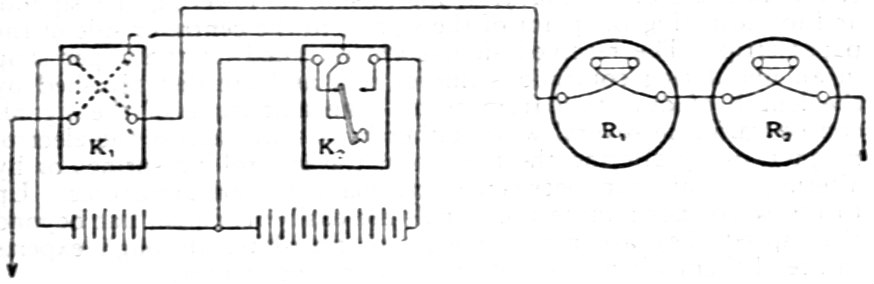
A duplex provided two channels. To obtain four, Edison combined two different ways of distinguishing signals. One pair depended upon changes in current strength; the other depended upon the direction, or polarity, of the current.
At the receiving station, a neutral relay responded to stronger and weaker currents without caring which way the current flowed. A polarised relay responded to reversals in direction. By operating appropriate keys, two senders at the same end of a line could control these different electrical characteristics. The corresponding receivers separated the combined signals.
The arrangement is easier to describe than to adjust. Telegraph lines acquired resistance, leakage and disturbances from weather and neighbouring circuits. Relays had to respond quickly to the intended signal without reacting falsely to the other channel. A system that worked across a workshop could fail over hundreds of miles.
Edison’s “bug trap”
The Thomas A. Edison Papers identifies a particularly revealing difficulty. When polarity reversed, the current passed momentarily through zero. The neutral relay could release during that instant and create a false break in the signal.
Edison did not eliminate the instant of zero current. Instead, he isolated its effect. He inserted a local relay adjusted to respond slowly enough that the momentary interruption disappeared before it could operate the final sounder. He called the arrangement a “bug trap”.
The solution shows a recurring feature of his inventive method. Rather than demand a theoretically perfect component, he sometimes allowed a defect to occur and designed the surrounding system so that the defect no longer mattered. The unwanted movement remained inside the apparatus but could not corrupt the message heard by the operator.

The young telegrapher behind the machine
Edison’s deafness and experience at the key shaped his attention to telegraph apparatus. He understood how operators adjusted relays, how lines behaved in poor conditions and how small irregularities became exhausting during a long shift. His early notebooks contain repeaters and devices for slowing recorded Morse signals so that a beginner could copy them.
By 1869 he had moved from operating other men’s systems to inventing and manufacturing improvements in New York and Newark. Printing telegraphs and stock instruments taught him that technical success had to survive duplication, installation and daily use.
The quadruplex grew from that accumulated craft knowledge. Edison was not merely demonstrating that four signals could be distinguished under ideal conditions. Western Union needed equipment that its operators could keep working on commercial lines.
William Orton, Western Union and Jay Gould
Commercial support came with conflicting loyalties. Western Union’s William Orton financed part of Edison’s multiple-telegraph research. Edison also dealt with the Atlantic and Pacific Telegraph Company, controlled by financier Jay Gould, Western Union’s aggressive rival.
The rights to the quadruplex became entangled in contracts, assignments and competing claims about which company owned what Edison had developed. Gould saw the invention as a means of strengthening Atlantic and Pacific. Western Union regarded work it had supported as its property. Edison attempted to benefit from both sides and discovered that large corporations employed formidable lawyers as well as engineers.
The resulting litigation was not a footnote. It demonstrated that an invention’s value could be determined as much by contracts and ownership as by the mechanism. A circuit capable of carrying four messages was useful; control of the right to use it across a national network was far more valuable.
Franklin Pope and the telegraph community
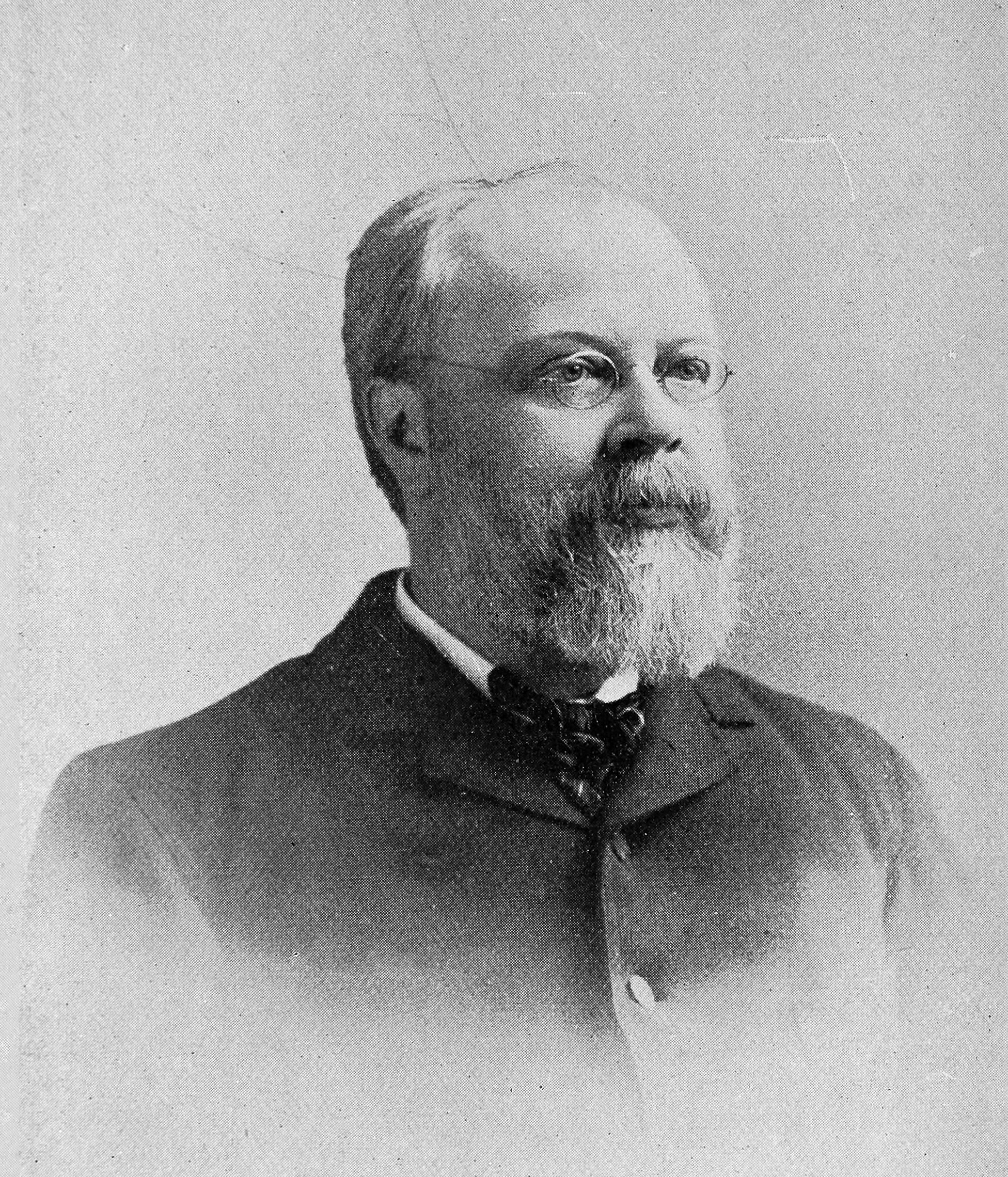
Edison’s early career depended on other telegraph specialists. Franklin Leonard Pope, an engineer, writer and patent expert, became a partner and helped Edison navigate both technical work and the professional world of electrical invention. Pope’s published writing brought attention to some of Edison’s first devices.
The quadruplex likewise rested upon a wider history. Stearns’s duplex was essential. Other inventors pursued diplex and multiple systems. Western Union engineers tested and adjusted commercial installations. Edison’s achievement was to combine principles and solve the interference problems well enough to create an effective system.
Calling him the inventor of the quadruplex is accurate. Calling the device an isolated creation without predecessors, colleagues or a corporate network is not.
How Western Union used it
Four channels gave Western Union several kinds of advantage. Busy routes could carry more messages without new wire. Seasonal peaks could be absorbed more efficiently. Spare capacity could be leased for private lines. A single physical asset produced additional revenue.
The apparatus also demanded skill. A contemporary cartoon preserved by the Edison Papers, “Trouble on the Quad”, jokes about the difficulty of keeping the system adjusted. Increased capacity came at the cost of more complicated relays and a greater need for careful maintenance.
Despite that complexity, quadruplex working continued into the twentieth century. Its long use is stronger evidence than a successful demonstration. Telegraph companies did not retain delicate equipment for sentimental reasons; they retained it because the economics justified the attention it required.
The saving was greatest on the busiest routes, where every additional circuit had an immediate value. A quadruplex did not make the physical wire carry four times as much information under every condition; bad weather, weak insulation and maladjusted relays could still reduce service. It did allow a company to treat a well-maintained line as four working channels rather than one. That distinction turns a laboratory ingenuity into an infrastructure technology.
Operators remained essential. The receiving instruments separated the electrical signals, but human telegraphers listened to sounders, copied messages and recognised when a circuit was behaving badly. Multiple telegraphy increased the capacity of the network without making it automatic. Its success depended upon a machine subtle enough to divide the current and a workforce experienced enough to keep the division intelligible.
Did Edison receive $40,000 for it?
Popular biographies often attach a neat payment story to Edison’s telegraph inventions. In one familiar version, an anxious young Edison is asked to name his price, hesitates, and receives $40,000 for stock-ticker rights. The anecdote is often transferred loosely to the quadruplex or used as though a single cheque financed everything that followed.
The historical record is less tidy. Edison did receive substantial income from telegraph contracts and assignments, and the proceeds enabled him to establish manufacturing and experimental shops in Newark. The quadruplex added major commercial value and reputation, but its rights were disputed between powerful companies.

It is safer to say that telegraphy made Edison financially independent as an inventor. The quadruplex was the crowning achievement of that period, not a fairy-tale transaction with one undisputed price.
From Newark to Menlo Park
The quadruplex did more than increase line capacity. It forced Edison to investigate electromagnetism, circuit balance, relay timing and the behaviour of signals under imperfect conditions. Those habits carried into telephone work, sound recording and electric lighting.
It also showed the benefit of separating experiment from routine manufacture. Newark’s shops contained machinists and laboratory space, but commercial orders constantly competed with research. In 1876 Edison moved to Menlo Park and created a more deliberate invention laboratory.
The money came from a broader telegraph career; the confidence came partly from solving the quadruplex. Edison had learned that a difficult electrical system could be divided into problems, attacked through repeated experiments and converted into a valuable commercial right.
Why the quadruplex deserves to be remembered
The phonograph and electric lamp are easier to display. A visitor can hear one and see the other. The quadruplex is hidden inside diagrams and relay boxes, and the communication world it improved has largely disappeared.
Yet it explains Edison’s development better than many famous curiosities. It joined operator experience, inventive experiment, manufacturing, corporate finance and patent conflict. It created value by improving a system rather than by producing a new consumer object.
Most importantly, it belongs to the period when Edison learned what sort of inventor he would become. Four messages on one wire were not merely a clever economy. They were the bridge between the young telegrapher and the director of an invention factory.
Sources and further reading
- Thomas A. Edison Papers, “Quadruplex Telegraph” – technical explanation, the “bug trap” and commercial significance.
- Thomas A. Edison Papers, “Trouble on the Quad” – contemporary cartoon and operational context.
- Thomas A. Edison Papers, From Workshop to Laboratory, June 1873–March 1876 – Gould alliance and legal conflict over rights.
- Thomas A. Edison Papers, “Itinerant Telegrapher” – Edison’s operator experience, repeaters and duplex experiments.
- Thomas A. Edison Papers, biography – Newark shops, telegraph work and transition to Menlo Park.
- United States Patent No. 209,241, Improvement in Quadruplex-Telegraph Repeaters – Edison’s 1878 patent specification for repeating quadruplex circuits.