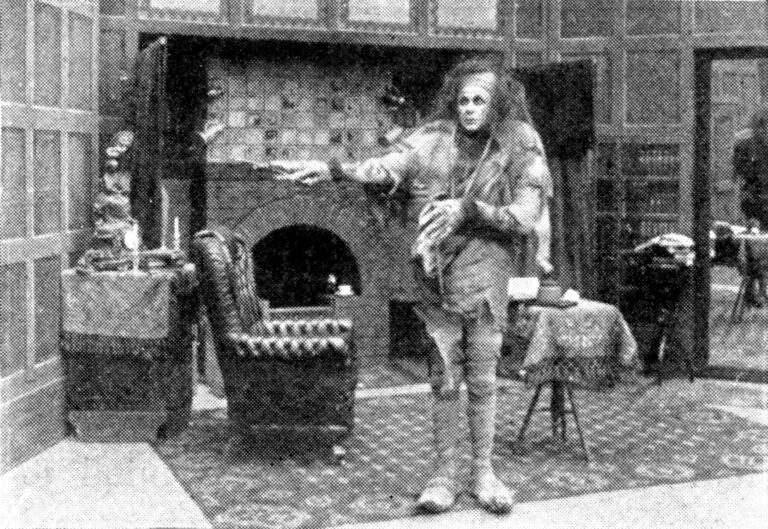
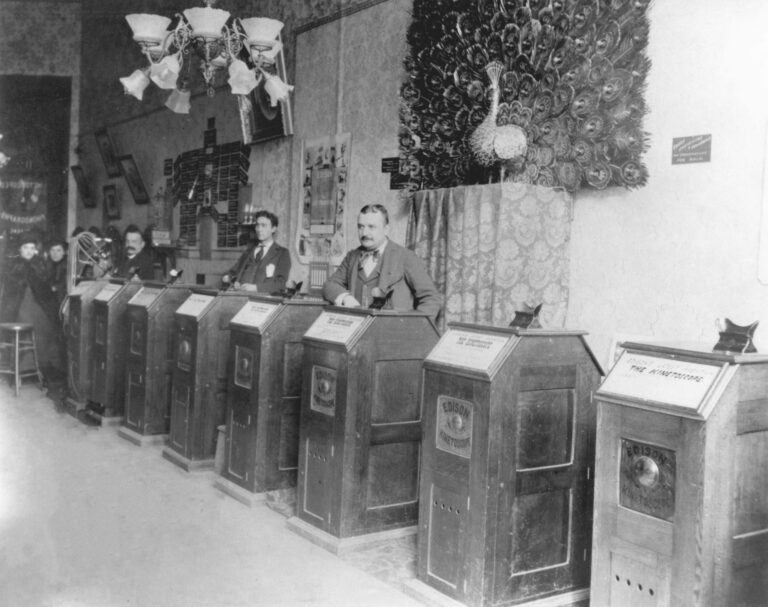
When the battleship Maine exploded in Havana harbour on 15 February 1898, motion pictures were still a novelty. Within months, Edison’s company was selling films of troops, ships, burials, camp life and supposed battles. Some had been photographed near the events. Others were staged in New Jersey.
The Spanish-American War was the first American war in which motion-picture cameras played a significant role. They did not record combat in the way later newsreels and television would. Cameras were heavy, film was short and battlefields were dangerous. Producers instead combined actuality, reconstruction and patriotic drama.
Edison did not personally carry a camera to Cuba. His company hired or licensed cameramen, acquired their films, copyrighted them and sold prints. The resulting catalogue helped make war a form of screen entertainment—and taught audiences how easily a moving image could look like eyewitness evidence.
The Maine and the demand for pictures
The cause of the Maine explosion was uncertain, but American newspapers rapidly blamed Spain. Sensational reporting about Cuba had already encouraged public anger. The destroyed ship became a symbol around which calls for war could gather.
Film companies recognised demand. Audiences wanted to see the wreck, naval vessels, soldiers and famous officers whose names filled newspapers. Edison Manufacturing and American Mutoscope & Biograph competed to supply them.
Not every advertised view was what its title implied. The Library of Congress records that Biograph retitled an existing film of the battleships Iowa and Massachusetts to suggest the Maine. The incident belongs to a commercial culture in which topical value could outrun accuracy.

William Paley goes south
Edison’s company engaged William Paley as a licensee to cover the developing crisis. Paley operated with a degree of independence but sold films to Edison, which then registered and marketed them.
Newspaper publisher William Randolph Hearst provided transport for Paley and reporter Karl Decker aboard the New York Journal dispatch yacht Buccaneer. The arrangement joined three expanding media: the mass newspaper, telegraph reporting and motion pictures.
At Key West, Paley filmed the burial of Maine victims and a staged race in which war correspondents rushed to a cable office. He then recorded military preparations at Tampa and travelled with American forces to Cuba. Illness limited his work there, and no Edison cameraman stood in the middle of the principal battles.
Troops, ships and preparation
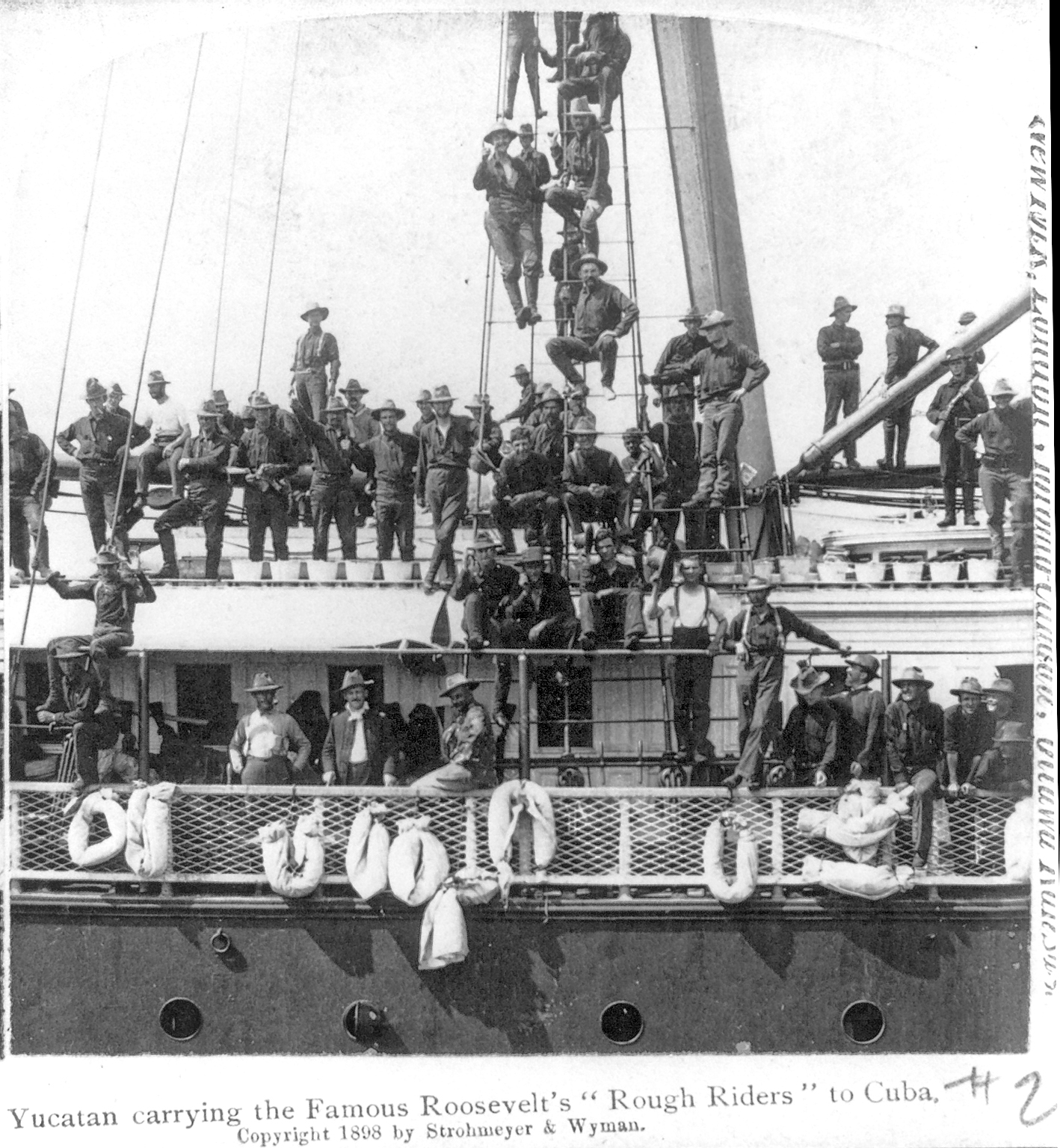
Much genuine footage showed the machinery around war rather than fighting: infantry leaving railway cars, supplies being unloaded, soldiers washing, cavalry horses, transports at dock and units embarking.
These scenes have documentary value precisely because they appear ordinary. They show uniforms, transport, camp organisation and the long periods of preparation excluded from heroic battle pictures. They also reveal segregation. Titles used by the companies identified Black troops according to the racial language of the period and marketed their movement as a distinct subject.
The camera’s limitations favoured stable, open scenes. A unit could march past a fixed lens; a ship could cross the frame; correspondents could perform a comic dash. The equipment recorded what could be placed before it.
How short films became a war programme
An Edison war film was usually not a self-contained documentary. Exhibitors bought or rented individual subjects and arranged them within a mixed programme. A view of troops embarking might be followed by a naval scene, a staged execution, a patriotic song or a lecturer’s explanation. Meaning emerged from the order and commentary as much as from one strip of film.
Company catalogues supplied concise descriptions designed to sell prints. They emphasised action, famous regiments and spectacular smoke. The same film could therefore be presented as news, education or patriotic entertainment according to the venue. A camera operator recorded a limited view; catalogue writers named it; exhibitors gave it a place in a larger story.
This flexibility helped war pictures travel. A theatre far from New York or Cuba did not need the complete history of the campaign. It needed several recognisable images and a presenter able to connect them with headlines the audience already knew.
Music could intensify the connection. Marches and patriotic songs turned an otherwise silent view into ceremony, while a spoken introduction supplied names, dates and judgements absent from the photographed frames. Two audiences could therefore see the same print and receive markedly different accounts of it.
Reconstructing battles in New Jersey
Actual combat was difficult to film. A camera stood on a tripod, required light and held a short length of film. A battlefield offered danger, smoke, distance and no opportunity to repeat an action.
Edison’s company therefore staged engagements after the event, often in the Orange Mountains near West Orange with New Jersey National Guard troops. Catalogues supplied titles that connected the scene to Cuba or the Philippines. Costumes, rifles and drifting smoke completed the illusion.
Shooting Captured Insurgents presented a Spanish firing squad executing Cuban prisoners. William Heise photographed the reenactment, probably in New Jersey. The Edison catalogue described the rifle flashes and smoke as a striking picture. Its commercial language treated represented death as visual effect.

Were audiences deceived?
The word “reenactment” was not always hidden. Catalogues sometimes described scenes as reproductions, and variety audiences were accustomed to staged spectacle. Yet exhibition practices differed. A lecturer could explain a scene accurately, embellish it or allow a topical title to speak for itself.
Early viewers also lacked settled categories separating news film, historical reconstruction and drama. A motion picture appeared to offer direct presence because movement had been mechanically photographed. That evidential power remained even when the action had been arranged for the camera.
The films should not be dismissed as primitive frauds. They belong to an emerging visual language. Producers were discovering how to represent events the camera had missed; audiences were learning that a photographed performance could carry the authority of news.
Surviving catalogues and production records now allow many distinctions that an original customer may not have made. Uniforms can be compared, locations identified and a New Jersey hillside separated from Cuba. This retrospective knowledge does not tell us exactly what every audience believed. It does show why source criticism must accompany the apparent immediacy of the image.
The Rough Riders on screen
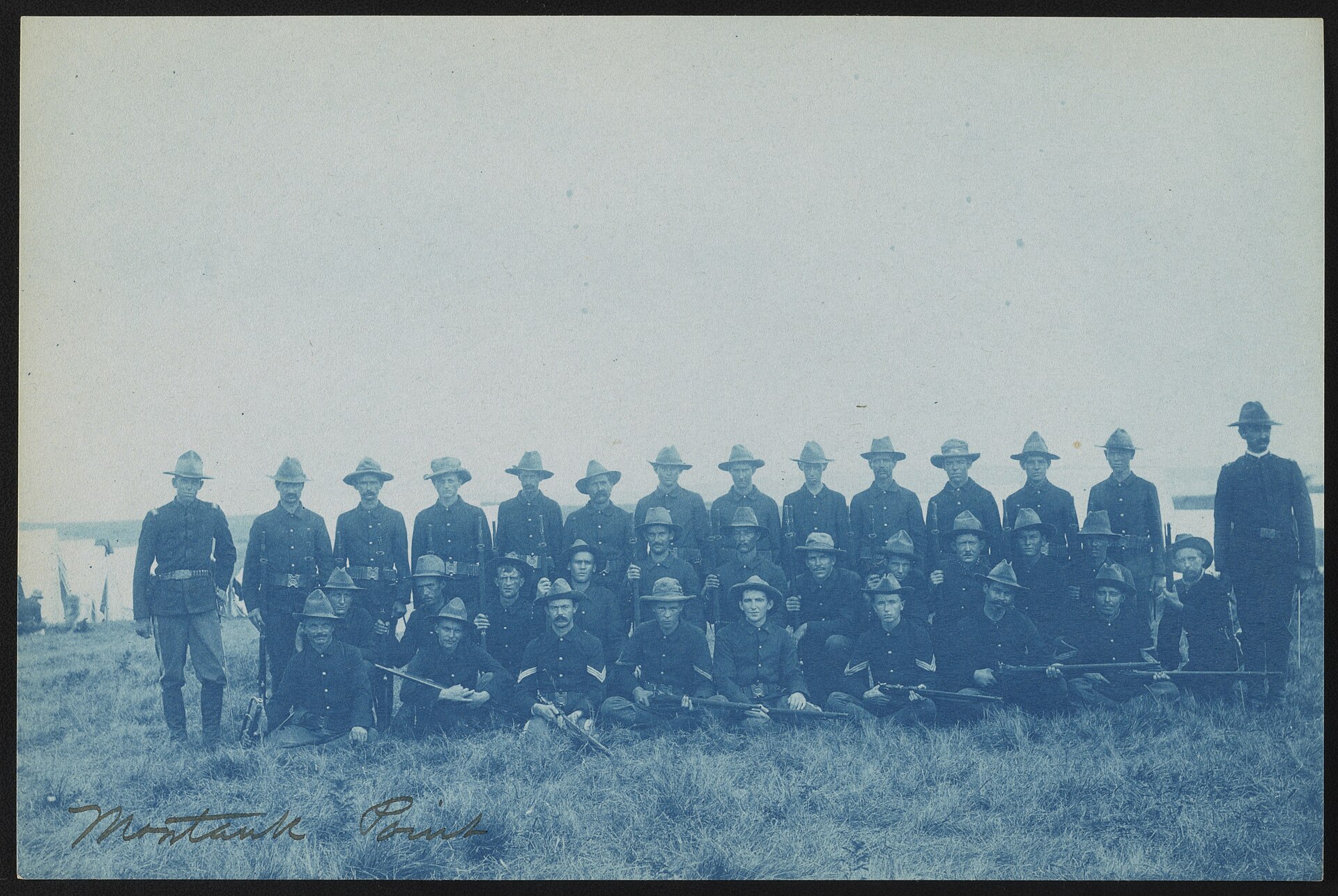
Theodore Roosevelt and the First United States Volunteer Cavalry became ideal film subjects. Their distinctive name, Western image and association with the fighting around Santiago made them commercially recognisable.
Cameras recorded units preparing, embarking and returning. Reenactments supplied battle action. The combination helped convert military service into public legend while Roosevelt himself moved rapidly towards the New York governorship and national office.
The screen did not create the Rough Rider myth alone. Newspapers, photographs, speeches and political campaigning reinforced it. Motion pictures added movement: horses, marching men and flags could be shown repeatedly far from the original event.
They also left out much of the war. Disease killed more American servicemen than Spanish fire, camp conditions were often poor, and Cuban participants did not occupy the centre of the American screen narrative. The camera catalogue favoured what could be photographed, staged and sold. Absence is part of its historical meaning.
Cuba, the Philippines and an expanding war
The conflict did not end as a simple liberation story. Spain ceded Puerto Rico, Guam and the Philippines to the United States, and the United States paid Spain $20 million under the Treaty of Paris. Filipino nationalists who had fought Spanish rule were excluded from determining their country’s future.
War between American forces and the Philippine Republic followed. Edison’s company made films associated with the Philippine campaign, including reenactments supervised by James White. New Jersey landscapes again stood for distant battlefields.
Some films presented American advance and Filipino defeat within the language of imperial triumph. Others recorded returning ships, parades and public celebrations. The catalogue transformed a contested colonial war into a sequence of saleable scenes.
News, commerce and propaganda
“Propaganda” can imply a centrally planned government campaign. The Edison films were principally commercial products made by a private company. They responded to patriotic demand and competition rather than a single official instruction.
They could nevertheless perform propagandistic work. Titles, selection and staging favoured American military action, dramatic victory and the spectacle of enemy defeat. The camera gave reconstructed scenes an appearance of actuality. Exhibitors could place them beside flags, songs and lectures that intensified the message.
A precise judgement therefore holds two facts together. The films are invaluable historical evidence, and they are not transparent windows onto the war. They reveal what happened before cameras, what companies reconstructed and what audiences were encouraged to feel.
How war helped establish cinema
War subjects drew customers into vaudeville theatres. The Library of Congress notes that their popularity helped motion pictures become a permanent element of American entertainment. News created the need for a continuing supply of new images rather than a one-time demonstration of the apparatus.
Edison’s earlier motion-picture work had concentrated on performers and brief actions. The war expanded cinema’s claim upon the present. A film programme could promise that distant history was arriving almost as it occurred.
That promise remained compromised by travel time, equipment and reconstruction. It was powerful enough to endure. Later newsreels, wartime documentaries and television reporting inherited the audience’s desire to witness war—and the producer’s ability to shape what witnessing meant.
Sources and further reading
- Library of Congress, “The Spanish-American War in Motion Pictures” – 68 films, production dates, companies and actuality/reenactment distinction.
- Library of Congress, “‘Remember the Maine’: The Beginnings of War” – Paley, Hearst, Key West, Tampa and competing film companies.
- Library of Congress, “Overview of Edison Motion Pictures by Genre” – actuality films, war reenactments and exhibition.
- Library of Congress, “The Philippine Revolution” – colonial context and Edison reenactments.
- Library of Congress, sources for “The Motion Picture Camera Goes to War” – company catalogues and scholarly film histories.