On the evening of 21 October 1929, Thomas Edison returned to a reconstruction of his Menlo Park laboratory and joined two wires. A replica lamp glowed. Across the United States, radio listeners who had dimmed their homes were invited to switch on their electric lights.
Henry Ford had designed Light’s Golden Jubilee as a fiftieth-anniversary tribute to Edison’s incandescent-lamp experiments and as the dedication of the Edison Institute, now The Henry Ford. President Herbert Hoover attended. Marie Curie, Orville Wright, John D. Rockefeller Jr and other prominent guests accepted invitations. Albert Einstein spoke by radio from Germany.
The event was history, theatre and friendship on a national scale. It honoured a genuine transformation while compressing collaborative electric-light development into one heroic night. Three days later Wall Street’s Black Thursday began the most notorious phase of the 1929 crash. The Jubilee stood at the brilliantly illuminated end of one American era.
Henry Ford builds a monument to Edison
Ford admired Edison as an inventor and friend. Their relationship had grown through holidays, public appearances and the automobile camping tours known as the Vagabonds. By the 1920s Ford was also collecting historic buildings, tools and machinery for a museum of American life and industry.
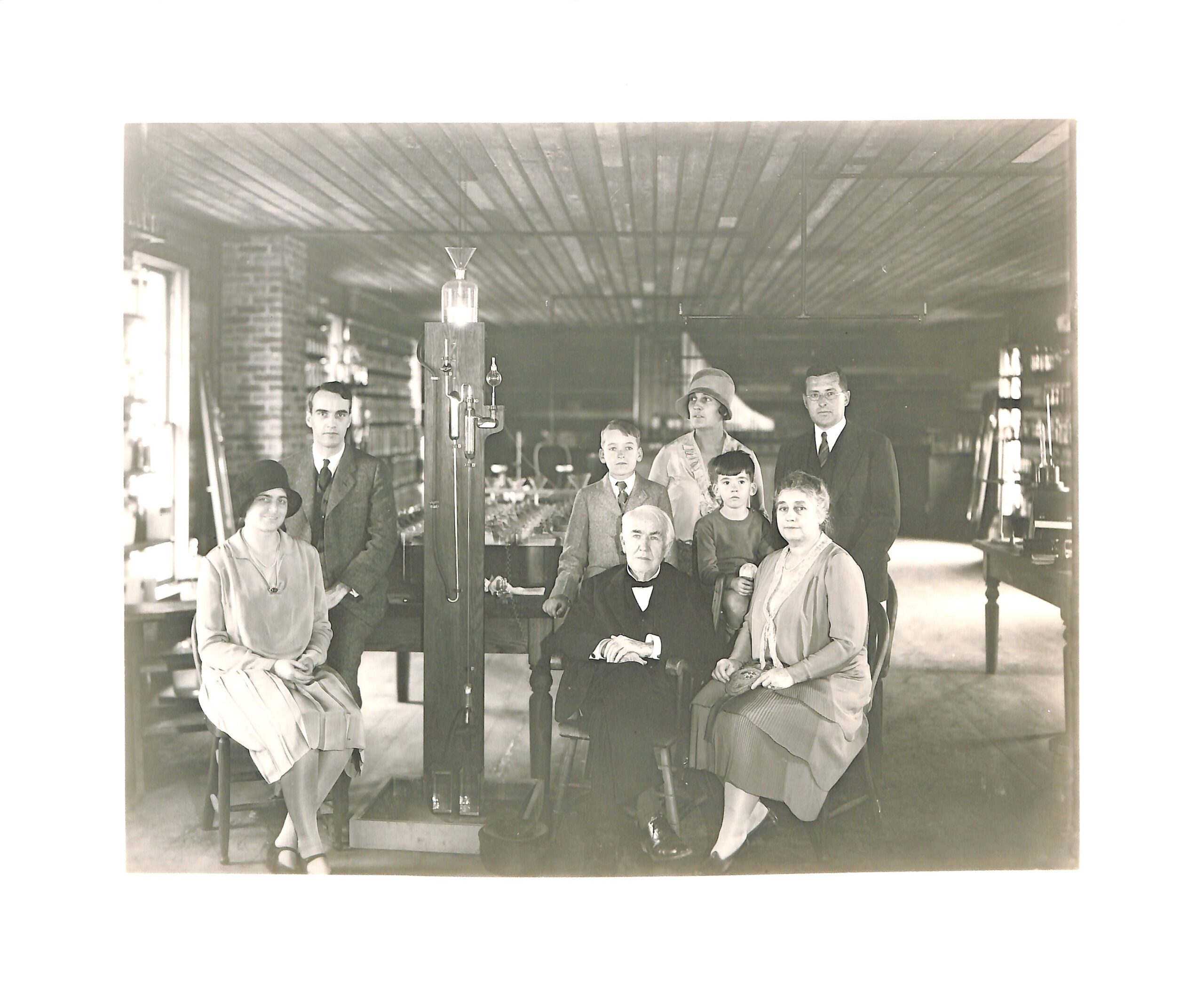
He acquired structures and material associated with Menlo Park and reconstructed the laboratory complex at Greenfield Village in Dearborn, Michigan. The buildings were presented not as ruins but as a functioning shrine, filled with equipment and materials intended to evoke the experimental workplace of 1879.
The reconstruction joined preservation with interpretation. Ford saved objects and buildings that might otherwise have disappeared, but arranged them to tell a story about practical American genius. Edison occupied the centre of that story.

A fiftieth anniversary with a convenient date
The celebration marked fifty years from October 1879, when Edison’s team obtained an extended burn from a carbonised cotton-thread filament. Electric-light development did not occur in one instant. Tests continued, bamboo replaced earlier filament materials and a complete supply system had to be designed.
Anniversaries require a date, and 21 October offered one. It made a long programme of laboratory work suitable for a national ceremony. The event could move from darkness to light at an appointed second.
The narrative also concentrated credit upon Edison. Francis Upton, Charles Batchelor, John Kruesi, glass-workers and other employees had contributed to the Menlo Park system. Joseph Swan and earlier lamp experimenters belonged to the wider history. The Jubilee acknowledged some assistants, especially Francis Jehl, but its public symbol was Edison.
The arrival at Smiths Creek
At ten in the morning, Edison, Ford and President Hoover arrived at Greenfield Village’s Smiths Creek depot in a railway carriage pulled by an 1858 steam locomotive. Their wives accompanied them. More than 500 invited guests greeted the party.
The scene deliberately recalled Edison’s youth on Michigan’s Grand Trunk Railway, when he sold newspapers and sweets aboard trains. Ford had moved the Smiths Creek station to Greenfield Village because of its association with the young Edison.
The journey turned biography into procession. The train boy arrived as an internationally celebrated inventor, accompanied by an industrialist and a president. Buildings collected from the past became scenery through which the life story travelled.
Rain, mud and the unfinished museum
The day was not as mechanically perfect as the programme. Rain turned Greenfield Village muddy. Ford supplied enclosed horse-drawn carriages so guests could tour the twenty-eight historic buildings already assembled.
Hoover received a tour of Ford’s vast Rouge plant. Edison, then eighty-two and easily tired, rested at Ford’s Fair Lane estate. The contrast was striking: an older inventor conserved his strength while the president inspected one of the largest modern factories in the world.
The museum’s front galleries had been hurried towards completion for the evening banquet. Ford’s commemoration was itself a feat of industrial organisation, involving transport, broadcasting, hospitality, construction and publicity.
The recreated experiment
After dinner, Edison, Ford, Hoover and Francis Jehl went to the reconstructed laboratory. Jehl had been a young Menlo Park assistant during the original lamp work and now helped Edison restage it.
NBC announcer Graham McNamee described the action to radio listeners. Edison handled the wires; the replica lamp lit. The museum building was illuminated, a replica Liberty Bell rang and an aeroplane passed overhead carrying “Edison” and the dates “79” and “29” in lights.
The experiment was not a scientific test. The result was known and rehearsed. It was a ritual of repetition, giving listeners the sensation that the decisive moment of 1879 had been recreated before them.

A nation waiting in the dark
Publicity encouraged households, shops and towns to dim their electric lights before the reenactment. Many used candles or gas lamps while they listened. At the signal they illuminated their buildings in tribute.
The gesture made absence visible. For a few minutes people were asked to imagine the domestic world before electric service, then restore modernity with a switch. It converted a complicated infrastructure—stations, cables, meters, maintenance and fuel—into an intimate act.
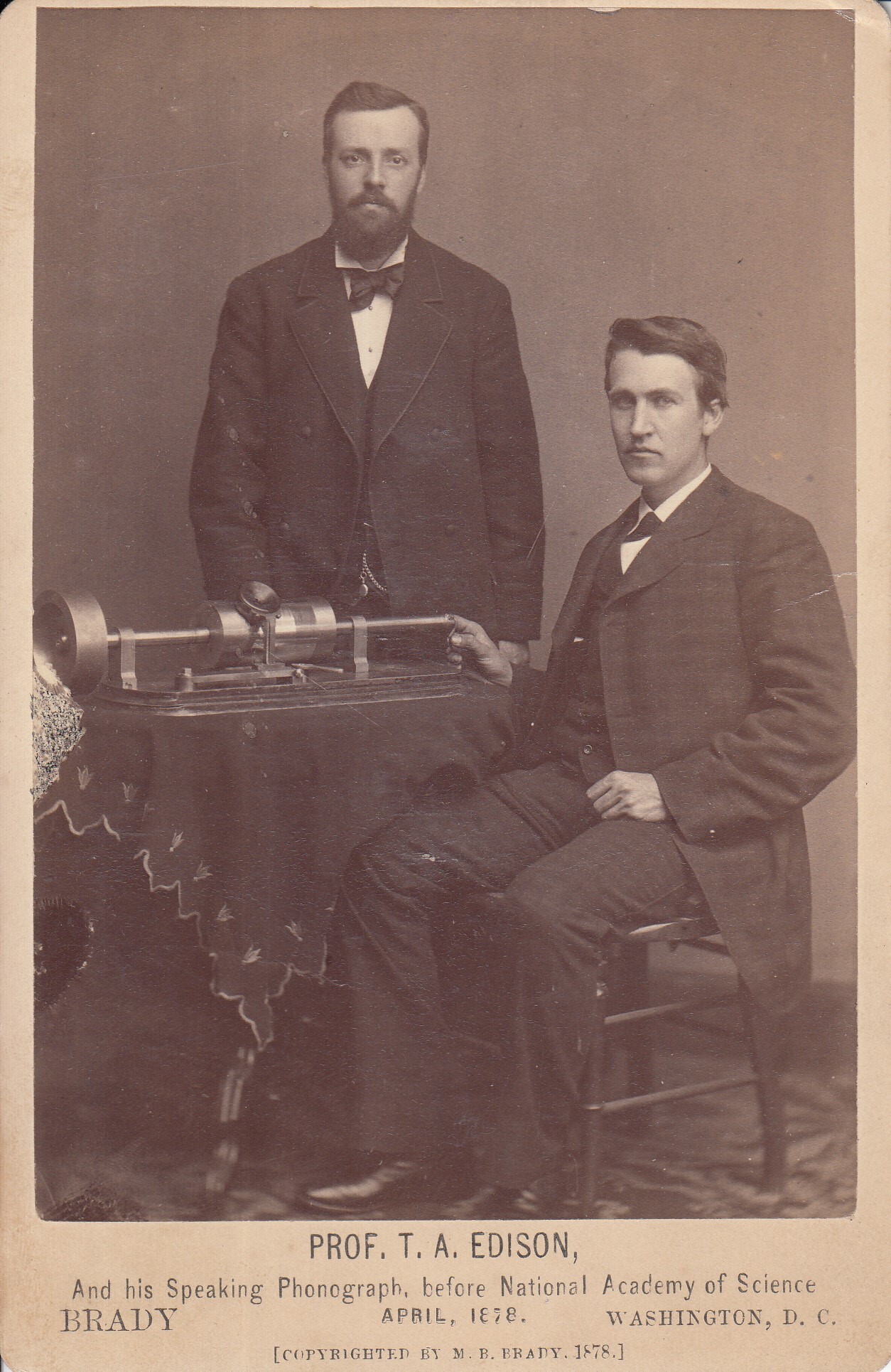
Radio made the event simultaneous. Edison’s phonograph had separated a voice from the time of performance; broadcasting now joined millions of listeners to a live ceremony. The celebration of one communications age used another.
It also depended upon electrical networks far larger than the Menlo Park system being commemorated. Microphones, telephone lines, transmitters, receiving sets and local power supplies carried the reenactment into homes. The simple act of switching the lights back on was possible because utilities had turned experimental central stations into regional infrastructure. The medium quietly supplied the historical argument: Edison’s lamp work belonged to a system that had become ordinary enough for a nation to coordinate its darkness.
Hoover, Einstein and the distinguished guests
The guest list gathered industrial, scientific and political prestige. Rockefeller and J. P. Morgan represented finance. Curie and Wright represented discoveries and inventions with fame comparable to Edison’s. Will Rogers brought popular entertainment.
After the laboratory scene, Hoover delivered the formal dedication of the Edison Institute. Einstein’s remarks came by radio from Germany. Nearly five hundred distinguished guests sat at the banquet, alongside Edison’s family and personal associates.
The assembled names did more than honour Edison. They presented invention, capital, government and celebrity as a shared national establishment. Greenfield Village turned industrial history into civic ceremony.
Edison’s emotional speech
Edison’s response was brief and deeply felt. He spoke of Ford’s friendship and struggled with emotion. The moment was effective because the public Edison was usually represented as tireless, practical and unsentimental.
Ford himself avoided a competing speech and restricted evening photography so attention remained on his guest. His control of the occasion was almost invisible within the tribute, yet every element—from the reconstructed laboratory to the railway arrival—expressed Ford’s interpretation of Edison.
The friendship was real. So was the act of image-making. Ford offered Edison a permanent place in a museum built around material progress, and Edison’s presence authenticated Ford’s reconstruction.
How accurate was the Menlo Park shrine?
Ford pursued original fabric and testimony with great energy, but Greenfield Village was not Menlo Park left untouched. Buildings had been moved or reconstructed, interiors arranged and missing items replaced. Edison is said to have joked that the recreated laboratory was too clean because his workers never swept it so thoroughly.
The remark captures the tension between workshop and museum. A working laboratory accumulates dirt, temporary apparatus and unfinished jobs. A historic display selects and orders. It can preserve objects while smoothing the disorder that produced them.
The Jubilee’s history was similarly curated. It accurately celebrated the enormous consequences of practical electric lighting. It simplified who contributed, how long development took and how deeply finance and public infrastructure shaped adoption.
Three days before Black Thursday
Light’s Golden Jubilee took place on Monday, 21 October 1929. On Thursday, 24 October, heavy selling shook the New York Stock Exchange; further collapses followed the next week. The celebration was not caused by or connected to the crash, but the proximity gives it an unavoidable retrospective meaning.
The Jubilee displayed confidence in invention, corporations, broadcasting and national progress. The crash exposed instability beneath the prosperity. Electric light did not cease to be transformative, and Ford’s museums endured, but the social world entering the Great Depression would read industrial achievement differently.
Edison lived for another two years. The 1929 event became the largest tribute he witnessed and one of the last occasions on which his public legend was assembled before him in physical form.
What the Golden Jubilee really celebrated
The lamp at the centre of the ceremony represented more than a filament. It stood for the electrical network, the industrial laboratory and a belief that invention could organise national progress. Ford’s museum extended that belief into memory: tools and workshops would teach future visitors how the modern world had been made.
The event also reveals the cost of a perfect symbol. One lamp and one inventor are easier to broadcast than a team, a patent dispute or a distribution system. The more spectacular the tribute, the more carefully a historian must restore the people and processes outside its beam.
For a few minutes in 1929, households darkened and waited for Edison. When the lights returned, they illuminated both an achievement and a legend.
Sources and further reading
- The Henry Ford, “Light’s Golden Jubilee Honors Thomas Edison and Dedicates a Museum” – chronology, guests, broadcast and reenactment.
- The Henry Ford, Light’s Golden Jubilee collection – invitations, programmes, photographs and artefacts.
- The Henry Ford, Light’s Golden Jubilee medallion – national commemorative context.
- Thomas A. Edison Papers, chronology 1921–1931 – Edison’s later years and the 1929 celebration.
- Thomas Edison National Historical Park, Edison biography – electric-light programme and later public fame.