In 1883, while investigating why carbon filaments blackened the inside of electric lamps, Thomas Edison placed a small metal plate inside a bulb. When he connected the plate to the positive side of the circuit, a current crossed the empty space. Reversing the connection stopped it. Edison had found a one-way electrical effect inside a vacuum.
He did not discover the electron, invent the radio valve or foresee digital electronics. He patented a possible meter and returned to the urgent problems of electric lighting. Yet the phenomenon later called the Edison effect became part of the route to vacuum tubes, radio and early electronic control. Its importance lies as much in what Edison missed as in what he saw.
The blackened lamp
Early incandescent lamps were improving rapidly, but they remained temperamental objects. Carbon evaporated from the hot filament and deposited on the cooler glass. The bulb darkened, reducing useful light and shortening commercial life.
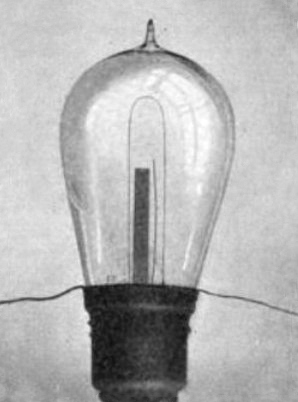
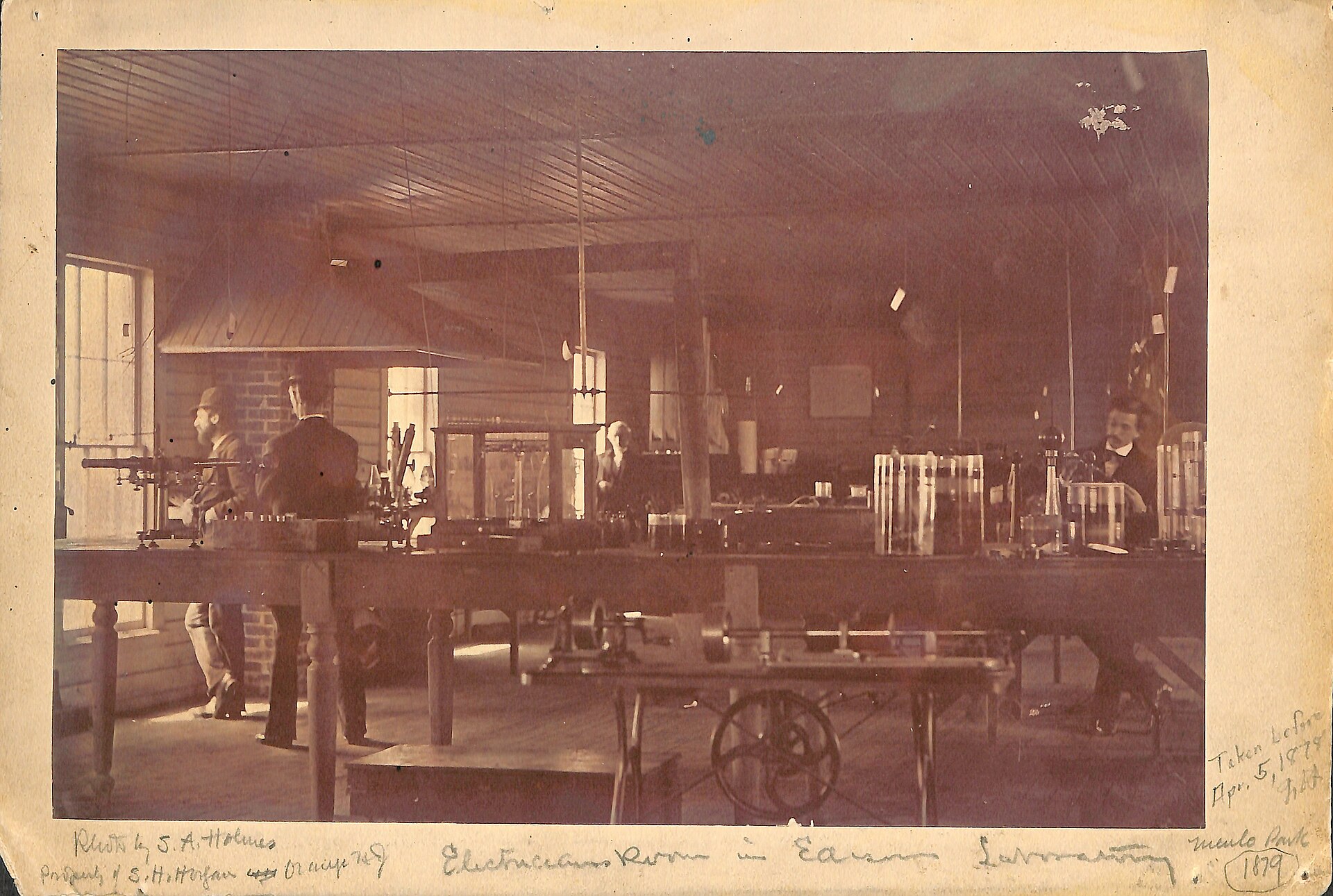
Edison and his staff tried to understand the process. A lamp was an unusually convenient experimental chamber: a sealed glass envelope containing a filament and a comparatively good vacuum. By introducing another conductor, they could examine electrical behaviour inside it.
The current behaved asymmetrically. It passed from the hot filament towards a positively charged plate, but not in the opposite arrangement. At the time there was no electron theory capable of explaining the movement clearly.
What Edison thought he had found
Edison treated the effect as a possible instrument for measuring electrical supply. His United States Patent 307,031, granted in 1884, described an “electrical indicator”. Connected to a lighting circuit, the auxiliary electrode might help show variations in electromotive force.
The patent was ingenious but not commercially transformative. Edison’s central stations needed dependable meters, and electrochemical meters offered a more immediate answer. The strange current inside the bulb remained a laboratory observation attached to a practical proposal that went nowhere.
The experimental difficulty of empty space
Nineteenth-century “vacuum” tubes still contained residual gas. Their behaviour changed with pressure, electrode material and temperature. A current inside a bulb might involve ions as well as electrons, and researchers lacked instruments capable of separating every process cleanly.
Edison’s lamp work had already improved vacuum technology because oxygen attacked a hot carbon filament. The same manufacturing skill created a chamber in which electrical discharge could be studied. Lighting and physics advanced through a shared piece of glassware.
The blackening that prompted the investigation also continued to matter commercially. Engineers wanted to know where filament material travelled and how to reduce it. Edison’s effect did not solve lamp darkening, but the attempt to diagnose one failure uncovered another phenomenon.

Why a one-way current matters
Alternating currents reverse direction many times each second. A device that conducts chiefly one way can rectify them, producing a signal with one polarity. In a radio receiver this makes the modulation carried by a high-frequency wave available to headphones or later amplification.
The Fleming valve had no moving mechanical contact. Its hot filament and plate controlled charge in a sealed envelope. That gave it advantages at frequencies where older detectors were unreliable. The later grid valve went further: a weak electrical variation could govern a stronger flow without mechanical motion.
For decades “wireless”, telephone and computing circuits were built around these glowing components. They consumed power, produced heat and failed, but electronic speed exceeded relays and mechanical devices. The glass bulb that had illuminated rooms became the form of a signal machine.
This is a useful correction to retrospective history. The phenomenon did not announce itself as electronics. Edison saw it through the needs of his lighting business. A discovery can be real even when its discoverer misunderstands its future.
From particles to electrons
During the following years, physicists investigated conduction in gases and vacuums. J. J. Thomson’s work in the 1890s established the electron as a constituent of matter. The one-way current could then be understood as negatively charged electrons escaping from a heated filament and moving towards a positive electrode.
This release is now called thermionic emission. Heating gives some electrons enough energy to leave a material’s surface. A positive plate attracts them; a negative plate repels them. The empty-looking space inside the bulb becomes part of an electrical circuit.
Edison’s experiment was therefore not an isolated curiosity. It was an observation of a physical process whose meaning became clear only after theory and measurement advanced.
John Ambrose Fleming sees a detector
British electrical engineer John Ambrose Fleming had consulted for Edison’s lighting interests and knew of the lamp experiment. Working for Marconi in 1904, he needed a reliable way to detect high-frequency wireless signals. He placed a second electrode inside a vacuum bulb and used its one-way conduction to rectify the alternating signal.
Fleming’s “oscillation valve” was a diode: two active electrodes, a heated cathode and an anode. It converted an alternating current into a pulsating direct current and served as a radio detector. Fleming, not Edison, made that practical electronic invention.
The distinction matters. Edison effect names the observed phenomenon. Edison’s electrical indicator was his proposed application. Fleming’s valve was a later device built with a new purpose and a more mature understanding.

The third electrode
In 1906 Lee de Forest added a wire grid between filament and plate. A small voltage on the grid could control a much larger current through the tube. The Audion could amplify as well as detect signals after engineers improved its vacuum and operation.
Amplification transformed communications. Weak telephone and radio signals could be strengthened; oscillators could generate continuous waves; electronic circuits could switch and control. Vacuum tubes entered broadcasting, sound reproduction, radar, scientific instruments and the first general-purpose electronic computers.
The line from Edison’s lamp to those systems is genuine, but it is not a straight personal achievement. Thomson supplied physical understanding; Fleming created the diode detector; de Forest introduced the grid; many engineers made the devices reliable. Edison’s role was the early observation and publication of the one-way effect.
Was it really an accidental discovery?
It is often called accidental because Edison was investigating lamp blackening, not electronics. The word can mislead. He did not stumble across a ready-made valve. The laboratory deliberately modified lamps, measured currents and pursued an anomaly.
Chance presented an unexpected effect; prepared investigation made it visible. Edison was particularly good at noticing a result that did not fit the immediate experiment. He was less interested in constructing a broad theory, and once no profitable lighting application emerged he moved on.
This pattern recurs in invention. Practical research generates facts whose most important use belongs to another field. The original laboratory may lack the language, components or commercial need to develop them.
Did Edison invent electronics?
No. Electronics is the control of electrons or other charge carriers in active devices, and it grew through many discoveries. Giving Edison sole credit erases the scientists and engineers who understood, harnessed and extended thermionic emission.
It is equally wrong to say the 1883 experiment meant nothing. The Edison effect was widely discussed, demonstrated that useful current could pass through a vacuum from a heated element and supplied Fleming with a known starting point. The Smithsonian preserves an experimental lamp because it marks a hinge between electric illumination and electronic technology.
A discovery larger than its patent
Edison’s patent imagined a meter for the electrical system he was building. The lasting application arrived in a different industry and in other hands. That gap is the most interesting part of the story.
The glowing plate inside a lamp did not contain radio or a computer in miniature. It revealed a controllable movement of charge. Once science could explain that movement and engineers could shape it with further electrodes, the vacuum bulb ceased to be merely a source of light. It became an active machine for signals.
Edison’s accidental discovery helped open that door. Others walked through it.
Solid-state transistors eventually replaced most vacuum tubes by controlling current inside semiconductor material. The direct technical line changed again, but the conceptual step remained: a small electrical condition can regulate a larger flow. Edison’s lamp experiment belongs near the beginning of that story, not at its triumphant end.
That position is more significant than the inflated claim that he invented electronics. It shows how a careful anomaly can outlive the purpose for which it was first noticed and become useful to people asking a different question.
The patent that preserved a clue
Edison’s decision to patent the electrical indicator ensured that the arrangement and proposed use entered a dated public record. The claim was framed around measuring an electrical circuit, not around a universal theory of thermionic emission. Later investigators could see both the phenomenon and the narrowness of its first application.
Patent language often makes retrospective reading difficult. It describes what an applicant wishes to protect, not every thought or observation made during experiments. Laboratory notes and surviving lamps supply the broader context.
Fleming’s familiarity with Edison lighting work illustrates how technical knowledge travels. He did not need Edison to predict radio. He needed to recognise that a known one-directional current could answer a new detector problem.
Why Edison did not pursue it
Edison’s organisation was under pressure to make central lighting reliable and profitable. Every experimental line competed for skilled workers and attention. An effect with no immediate meter or lamp advantage was easy to set aside.
The decision looks shortsighted only because later history is known. In 1883 there was no broadcasting market, no amplifier industry and no electron theory. Continuing indefinitely would have been speculation rather than obvious business sense.
His strength as a practical inventor and his limitation were the same: he asked what a phenomenon could do now.
Sources and further reading
- National Museum of American History, “Experimental Edison Effect Lamp” – object history and the path to Fleming’s valve.
- US Patent 307,031, “Electrical Indicator” – Edison’s 1884 patent.
- Science Museum Group, “One of Fleming’s First Thermionic Diode Valves” – Edison-effect experiments and thermionic valve development.
- Thomas A. Edison Papers, “1881–1890” – the lighting laboratory and patent context.