During the 1890s Thomas Edison spent years, and a large part of his personal fortune, trying to make the exhausted iron mines of the eastern United States profitable again. He built an enormous crushing and concentrating works in the hills of northern New Jersey. Rock went in; magnets, screens and conveyors were meant to separate a saleable iron product from millions of fragments of worthless stone.
The machinery was ingenious and some of it worked impressively. The business failed. Rich, easily handled ore from Minnesota reached eastern furnaces just as Edison’s costly low-grade concentrate was ready for market. His response was to improve the machinery, lower the cost and invest still more. It is one of the clearest examples of the quality that made him formidable as an inventor becoming dangerous in business: he believed that another experiment could solve almost any problem, including one being transformed by geology, transport and price.
Why Edison went looking for iron
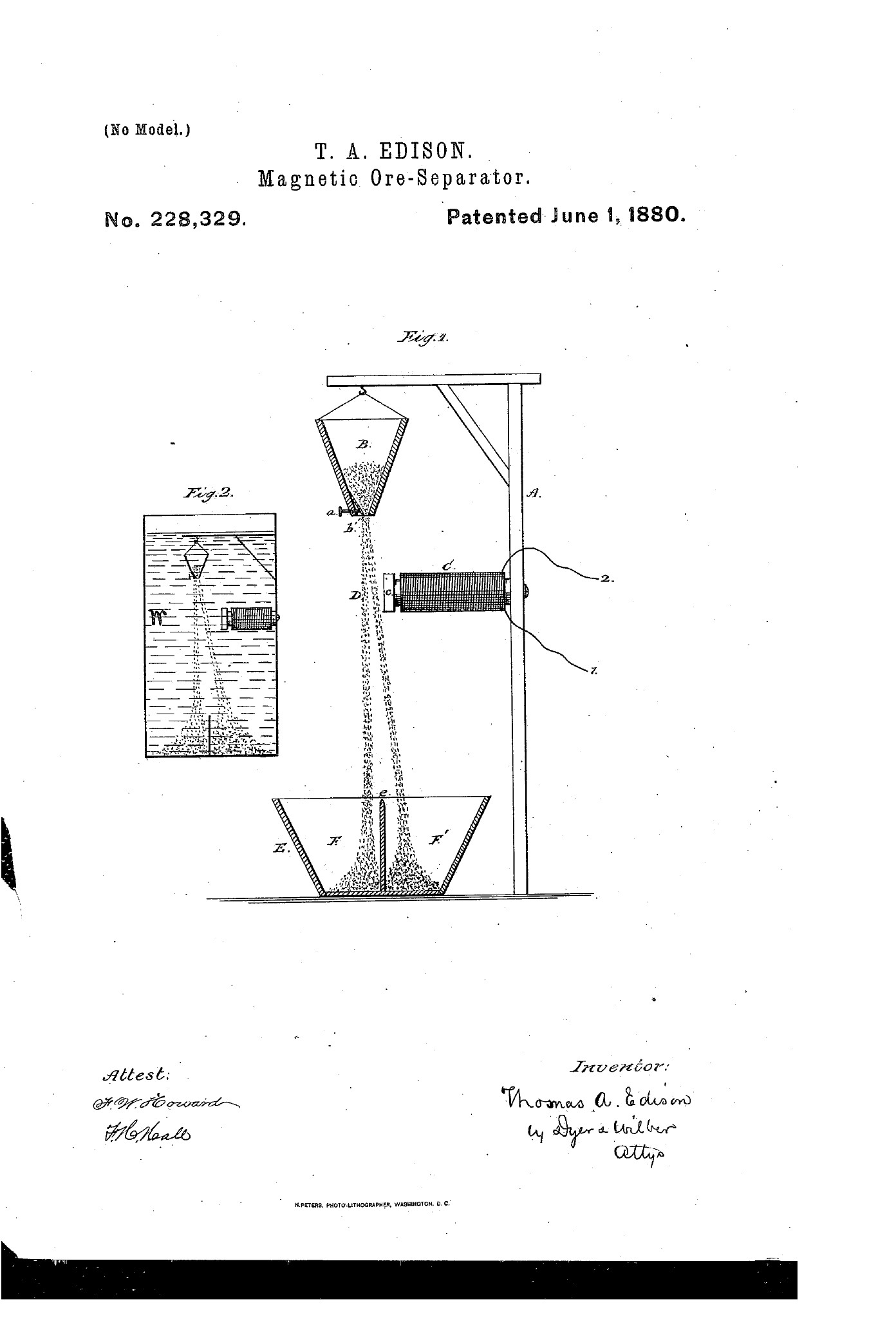
Edison’s interest in magnetic separation began before the great New Jersey venture. While developing electric light in 1879 and 1880, he needed metals and experimented with ways of separating magnetic particles from non-magnetic material. His patent of 1 June 1880 described a simple arrangement in which crushed material fell past a magnet. Magnetic particles were deflected into one receptacle; the remainder fell into another.
He first imagined recovering iron from black sand along the Atlantic coast. The quantity and economics disappointed him, but the principle remained attractive. Eastern iron districts had supplied American furnaces for generations. By the late nineteenth century, many mines contained large quantities of rock in which magnetite was present too thinly to be smelted profitably. If the rock could be pulverised and the iron concentrated, old deposits might acquire new value.
The proposition suited Edison’s habits. It required a chain of operations rather than one device: mining, transport, crushing, drying, screening, magnetic separation and finally the pressing of fine concentrate into briquettes that a blast furnace could use. As with his electric-light system, success depended upon making every stage work together.
From electrical celebrity to mine owner
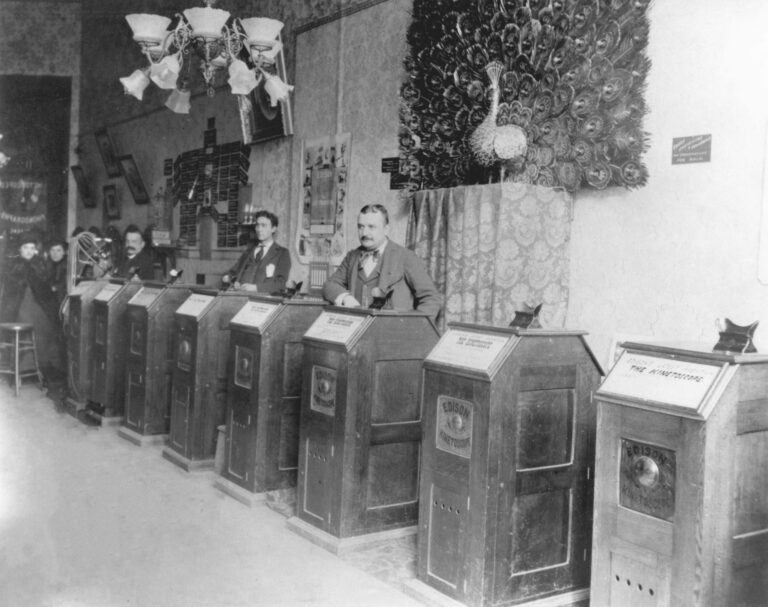
By this point Edison was famous and wealthy, although his wealth should not be confused with unlimited cash. Much of it lay in shares, patents and enterprises over which bankers and managers exercised increasing control. Telegraph inventions and the sale of his quadruplex rights had first made him prosperous; electric light made his name global. The stock ticker is a reminder that his fortune began with compact electrical machines, not mines and mountains.

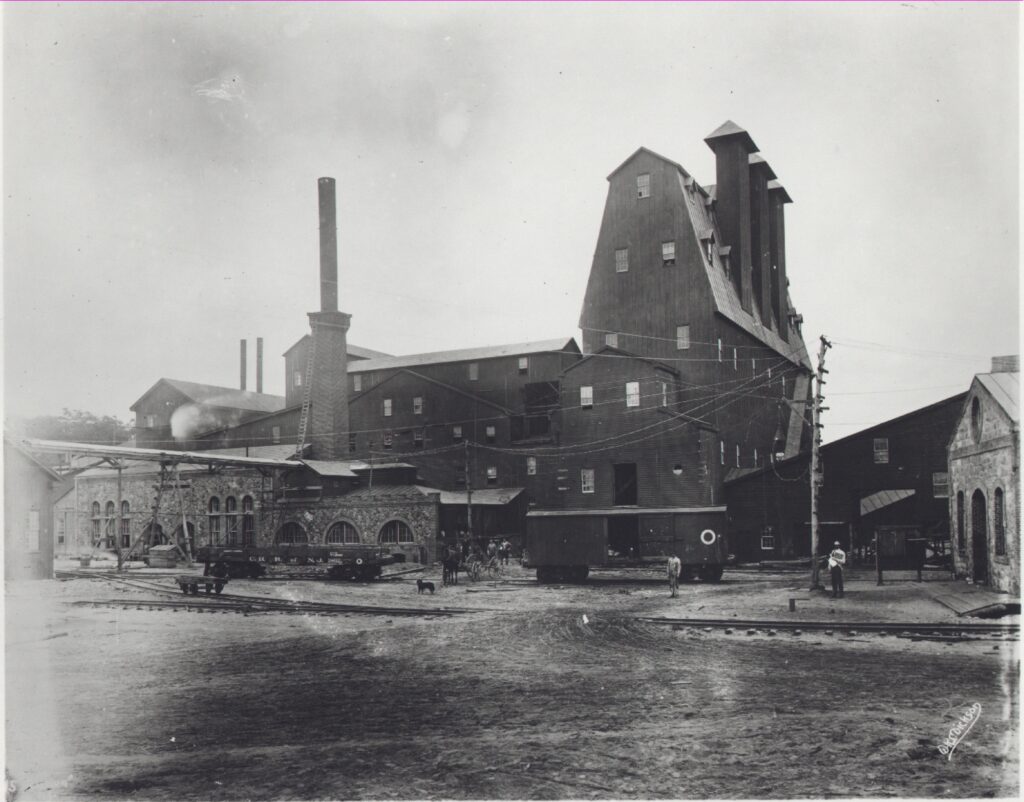
In September 1890 he purchased control of the Ogden Iron Company, owner of mines in Sussex County, New Jersey. The site lay near Ogdensburg and Sparta, roughly forty miles from West Orange. Edison enlarged it into one of the most ambitious mineral-processing plants of its day. Contemporary photographs show a severe industrial landscape of timber towers, stone buildings, tracks and elevated conveyors.
The popular name “Edison’s mine” hides the extent of the undertaking. Ore had to be blasted from the ground, broken by giant rolls, passed through successive crushing stages and dried so that damp dust did not clog the separators. Fine material then fell past banks of magnets of different strengths. The desired iron concentrate still needed to be formed into robust briquettes; otherwise it was too powdery for satisfactory furnace use.
An invention factory in the mountains
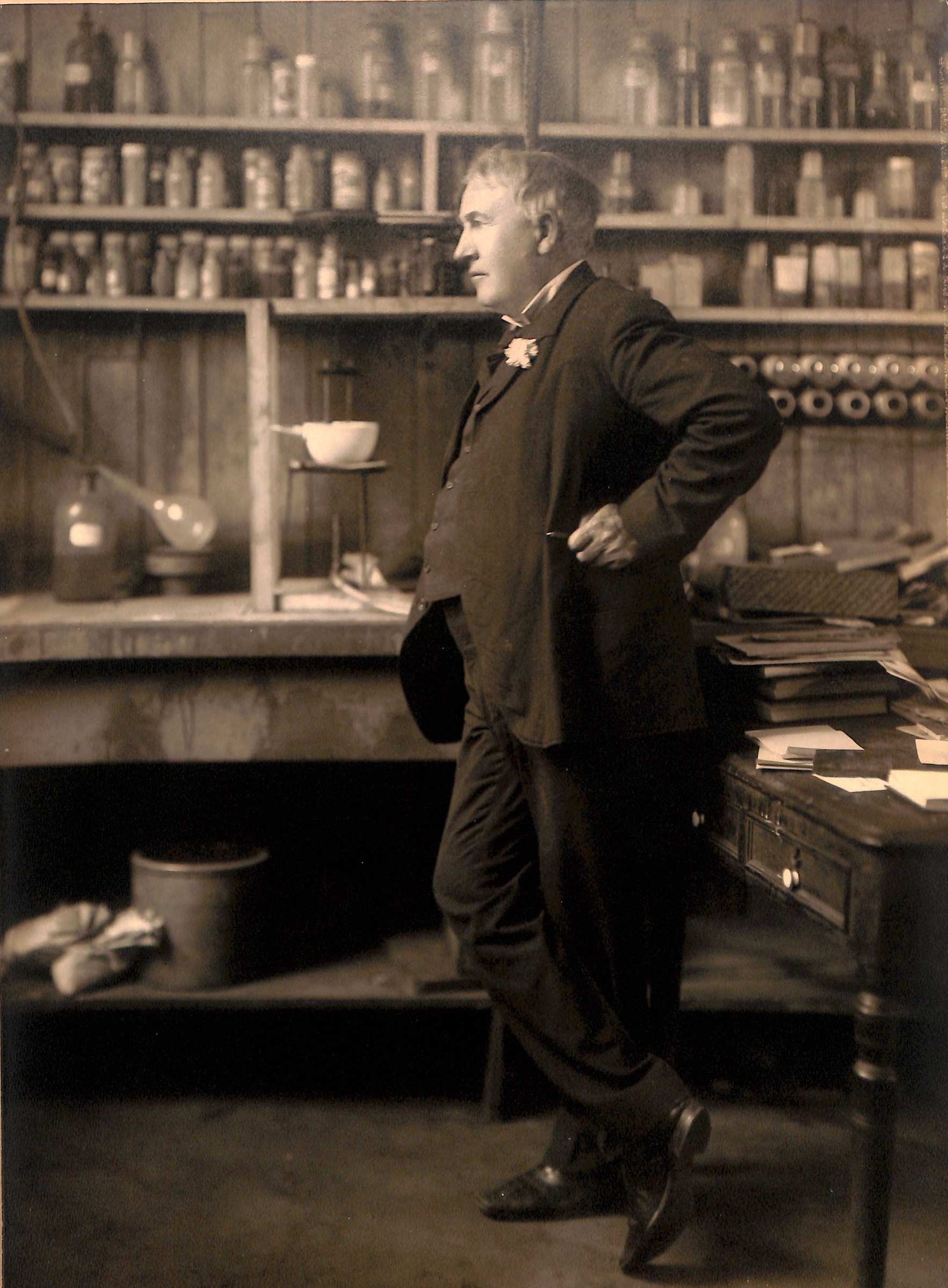
Edison did not leave the work to distant managers. He stayed at the site for long periods, slept little and treated the plant as an outdoor laboratory. The Thomas A. Edison Papers lists fifty-three patents connected with mining and ore milling. Some were solely his; others recognised collaborators, including William Kennedy Laurie Dickson on an 1890 separator. Credit belongs to the engineers, machinists, miners and chemists who turned his broad scheme into operating equipment.
Scale was central to Edison’s answer. Large crushers would reduce labour and process great quantities cheaply. Gravity would carry material down through the works. Continuous flow would eliminate handling. Where a separator lost too much iron, the material could pass another magnet. Where briquettes crumbled, binders, moisture and pressure could be altered.
This method produced real advances. Crushing rolls and conveying systems later proved useful in cement manufacture. The plant could concentrate magnetite. Yet technical performance was not the same as a competitive product. Every ton of iron required many tons of New Jersey rock to be blasted, moved, crushed and discarded. The energy and maintenance bills were relentless.
The market changes under Edison’s feet
While Edison attacked the eastern rocks, the Mesabi Range in Minnesota was transforming the American iron trade. Huge deposits of soft, high-grade ore could be mined cheaply, loaded into railway wagons, carried to Great Lakes ports and shipped east in bulk. Improvements in lake transport pushed the delivered price down. Steel companies did not need to admire Edison’s machinery; they needed the least expensive reliable feed for their furnaces.
That competition destroyed the premise upon which Ogden had been built. Edison’s concentrate might have been attractive against scarce or expensive high-grade ore. Against Mesabi ore, it was burdened by the cost of crushing, separation and briquetting before it even left New Jersey.
The timing was cruel. A substantial ore contract encouraged further expansion, but prices fell and expected customers withdrew or demanded terms the works could not meet. Edison kept reducing costs. He redesigned crushers, altered separators and experimented with briquette binders. Each improvement made the plant better at producing something the market valued less than before.
How much did Edison lose?
The Thomas A. Edison Papers states that he poured more than two million dollars of his own money into the venture. Other retellings give larger totals, sometimes by combining company investment, later expenditure and estimated value. Exact figures depend upon what is counted. It is safer to say that the loss consumed millions of contemporary dollars and a great part of Edison’s liquid fortune than to repeat a single spectacular total as certain.
He financed the work partly by selling shares in General Electric. This was a striking exchange: Edison converted an interest in the electrical industry he had helped create into machinery for an industry he did not control. His faith was not blind in the ordinary sense. He had test results, patents, a functioning works and experienced staff. What he underestimated was the speed at which an external source of rich ore could make technical ingenuity irrelevant.
There was also a personal element. Edison disliked abandoning a problem after investing his identity in it. At Ogden, the scale of previous expenditure became an argument for further expenditure. Modern economists call this a sunk-cost error, but the phrase can sound too tidy. The same refusal to stop had carried his battery programme through years of failure. Persistence is only distinguishable from obstinacy after the market delivers its verdict.
Closing Ogden
By the end of the decade the verdict was unmistakable. The main works ceased regular operation around 1899. The Ogden Iron Company itself lingered legally until 1918, but Edison’s attempt to revive eastern iron mining was finished. Machinery was sold, transferred or left to decay. Investors did not receive the return they had expected, and Edison could not recover the years spent in the hills.
The failure has sometimes been dressed up as a painless prelude to success: ore milling failed, so Edison used the crushers to make cement, and therefore nothing was wasted. That is too consoling. The mine was a disaster on its own terms. It consumed money and attention at a time when electrical companies bearing Edison’s name were consolidating beyond his control. Useful knowledge survived, but it did not refund the loss.
From crushed rock to Portland cement
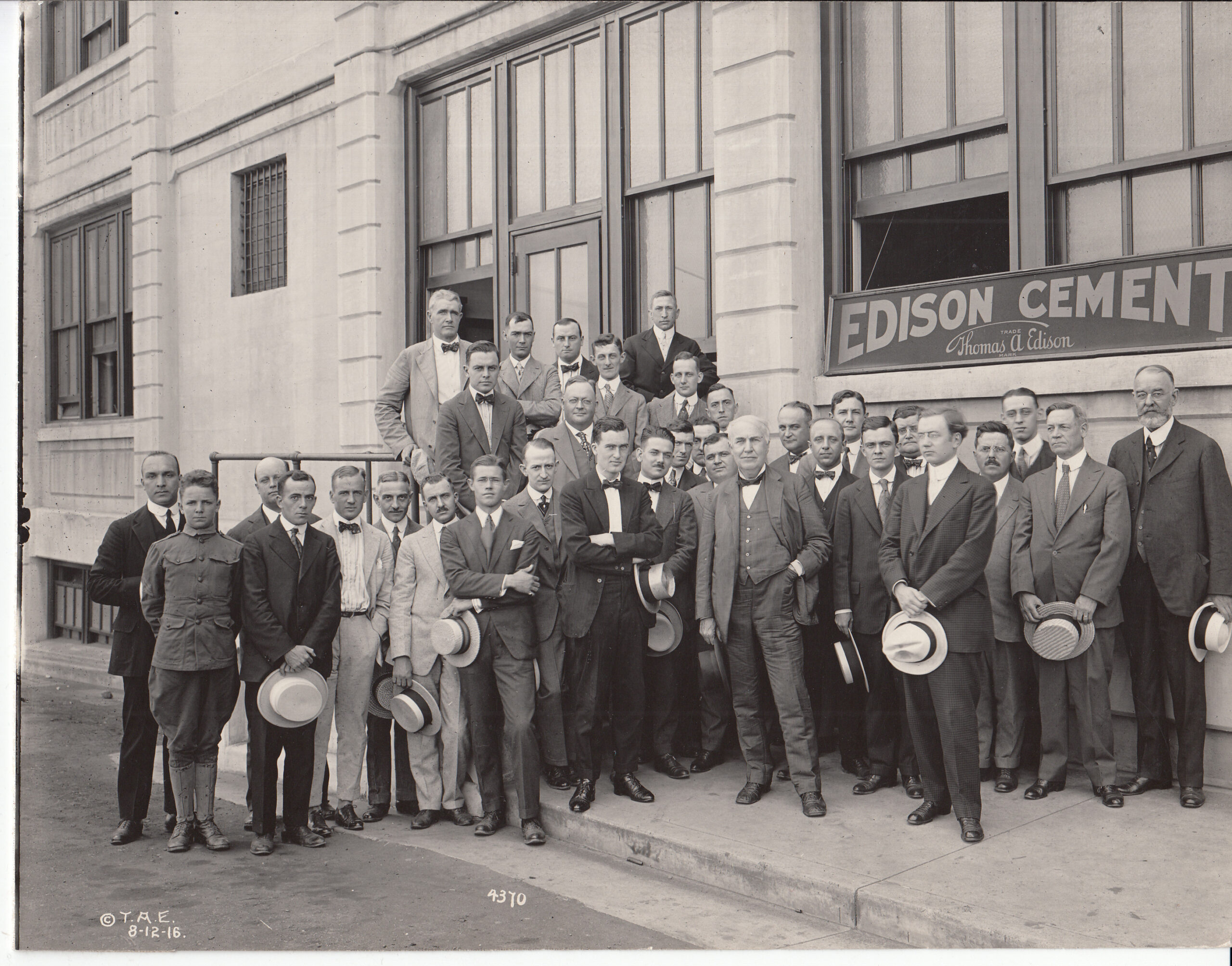
What survived most clearly was expertise in reducing rock to a uniform fine powder and moving enormous quantities through a continuous plant. Edison noticed that the waste sand from ore crushing could interest cement makers. In 1899 he organised the Edison Portland Cement Company and built a highly mechanised works at Stewartsville, New Jersey.
His long rotary kilns and production methods influenced the industry, although the cement company itself struggled for years before achieving a profit. Cement from the works went into roads, buildings, dams and the original Yankee Stadium. The connection is genuine, but it should not be allowed to turn the mine into a secret success. Edison extracted a second business from the wreckage of the first.
He also promoted ambitious uses for the material, including furniture and houses poured in concrete. A row of houses in Union, New Jersey, demonstrated that the idea was technically possible. It did not vindicate the original iron economics; it showed how readily Edison redirected equipment and publicity towards a new market.

The failure that best explains Edison
Ogden is valuable because it complicates both the heroic and hostile versions of Edison. He was not merely a publicity man attaching his name to other people’s work. He devoted extraordinary technical attention to an unglamorous industrial problem and produced substantial machinery. Nor was invention enough. A plant could operate, patents could be sound and the product could still lose to a cheaper natural resource.
The episode also shows the limits of the laboratory model. Edison excelled when a problem could be divided into tests and when better performance created a market advantage. Ore milling confronted him with prices set by mines, railways, steamships and steel companies across a continent. No separator in New Jersey could make the Mesabi Range disappear.
He emerged poorer, but not ruined. The phonograph, batteries, cement and other businesses sustained West Orange. The lesson he carried forward was not to experiment less; it was to reuse whatever a failed experiment had taught. That response was admirable. The loss remained real.
Sources and further reading
- Thomas A. Edison Papers, “Ore Milling” – process, investment and market failure.
- Thomas A. Edison Papers, “Ogden Iron Company” – ownership and corporate dates.
- Thomas A. Edison Papers, “Patent History by Subject: Mining and Ore Milling” – the range of Edison’s mining patents.
- US Patent 228,329, “Magnetic Ore-Separator” – Edison’s 1880 specification and drawing.
- Thomas A. Edison Papers, From Laboratory to Marketplace, 1890–1892 – the forced GE merger and early Ogden expansion.
- National Museum of American History, “Iron-ore mining facility at Ogdensburg” – plant scale and technological context.
- National Museum of American History, “Edison at the iron-ore mill, 1895” – Edison’s personal involvement at the works.
- Thomas A. Edison Papers, “Cement” – transfer of crushing technology and the later cement business.