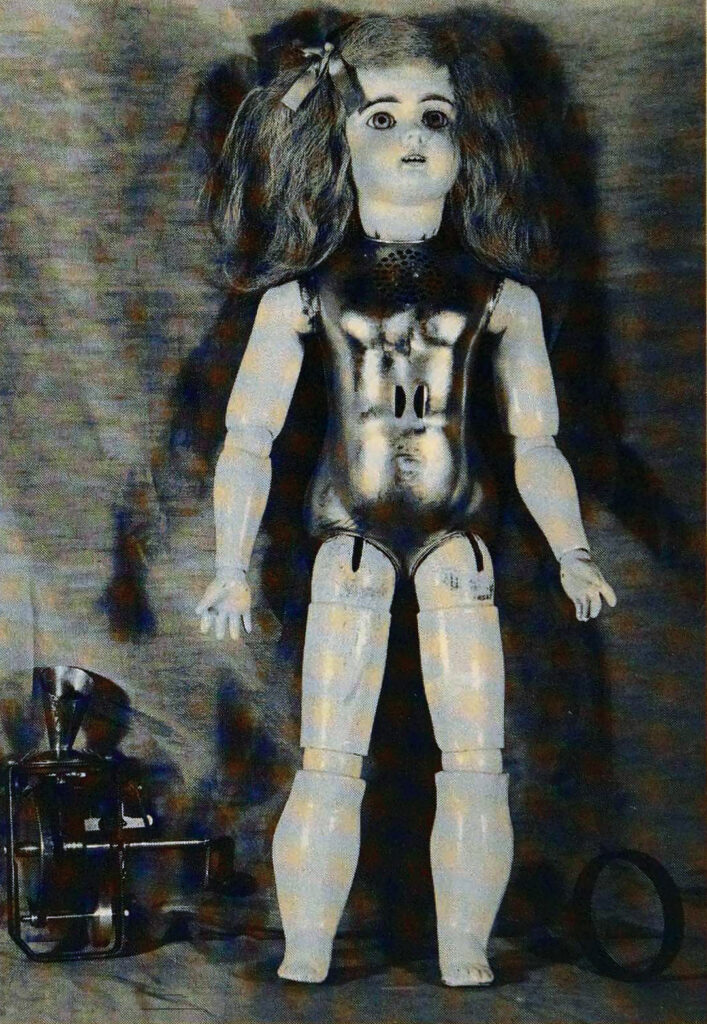
In 1890, Thomas Edison’s name appeared on one of the strangest toys ever offered to an American child. It was a large doll with a tiny phonograph hidden inside its metal body. Turn the crank protruding from its back and the doll would recite a nursery rhyme in the voice of a real woman.
The achievement was extraordinary. These were among the earliest recorded voices sold for entertainment, and the women who spoke into the wax cylinders became some of the first recording artists. The toy was also heavy, expensive, fragile and unsettling. Records wore out, mechanisms failed and the thin voices emerging from a doll’s chest could sound more haunted than comforting. The famous claim that children “hated” it is difficult to prove from children’s own testimony, but customers returned enough of them for the venture to collapse within weeks.
An idea almost as old as the phonograph
Edison did not add speech to a conventional doll as an afterthought. On 23 November 1877, while developing his first phonograph, he wrote that the principle might make dolls speak, sing, cry and produce other sounds. The note came before his celebrated demonstration of “Mary Had a Little Lamb”. Toys were present at the birth of recorded sound.
He initially licensed Oliver D. Russell to explore phonograph toys, but little resulted. The project revived in 1887 when William W. Jacques, a Boston electrical experimenter, showed a cheap talking-toy mechanism to Edison’s associate Edward H. Johnson. Because Edison controlled crucial phonograph patents, Jacques needed a licence. Agreements followed, and the Edison Phonograph Toy Manufacturing Company took shape.
The corporate arrangement was complicated. Edison supplied patent rights, laboratory development and eventually mechanisms; Jacques and other investors sought to manufacture and sell the dolls. Publicity attached the Wizard’s name to the product, but responsibility was shared among financiers, managers, doll makers and Edison employees.
Charles Batchelor and the mechanism
At West Orange, Edison assigned much of the technical work to his chief assistant Charles Batchelor. From late 1887 Batchelor experimented with diaphragms, records, styli, springs and compact mechanisms. The ordinary phonograph was already temperamental. Shrinking it until it fitted inside a doll while expecting a child to operate it made every weakness worse.
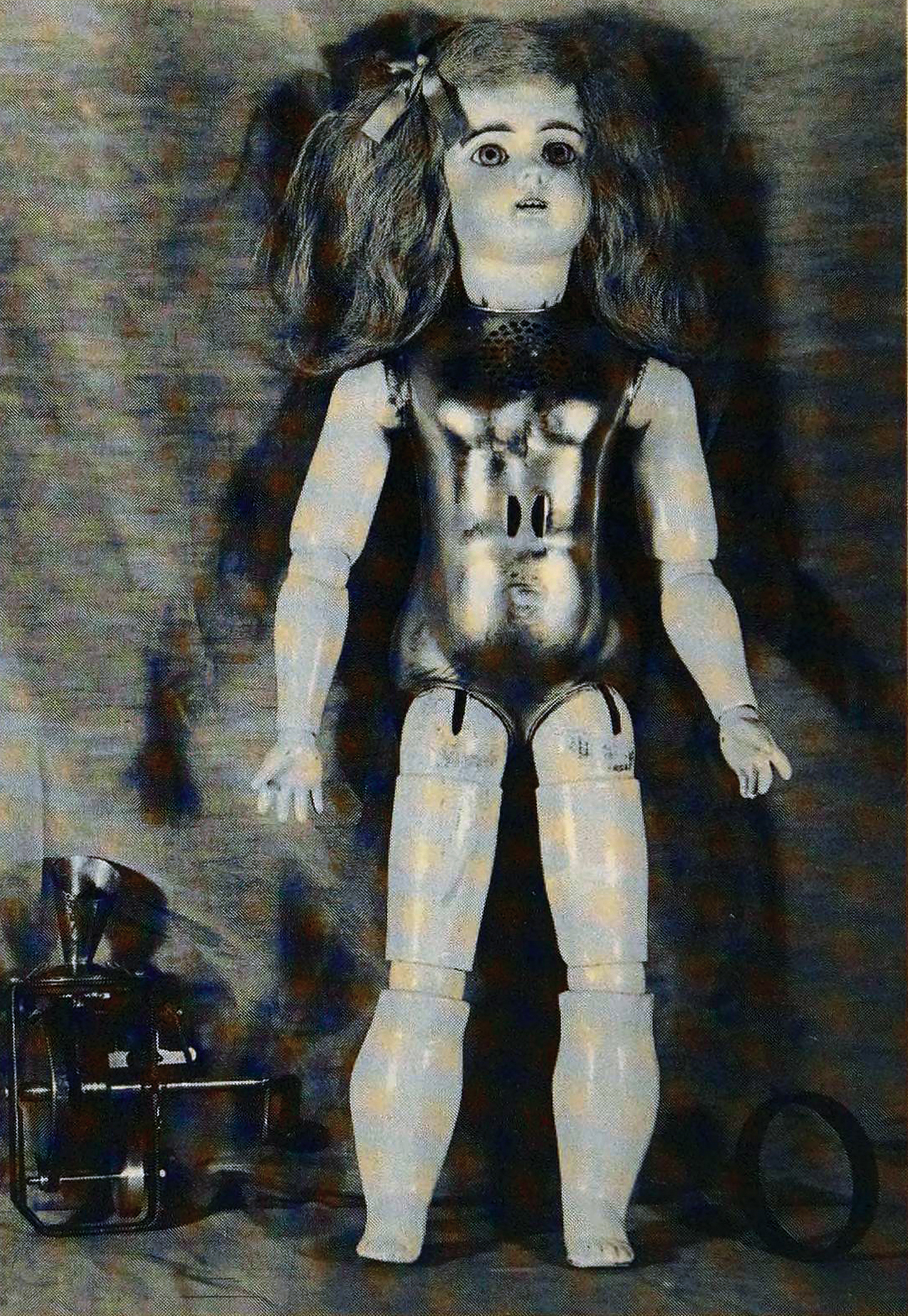
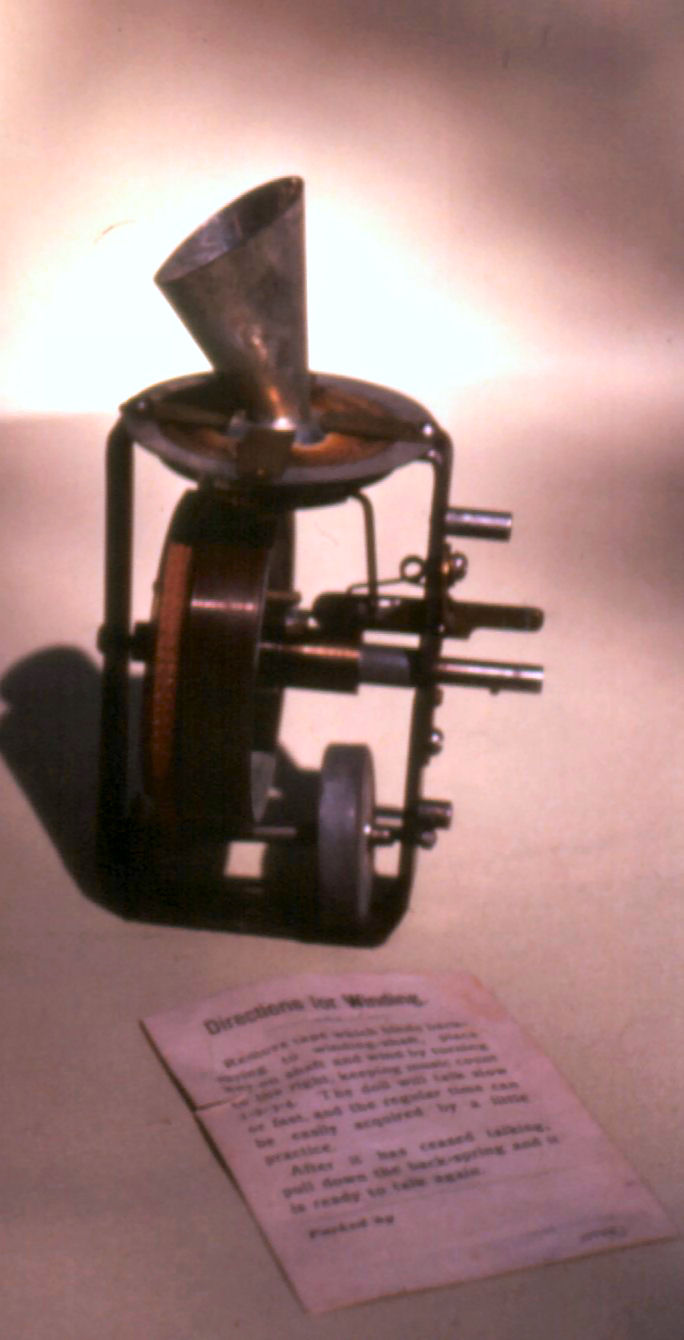
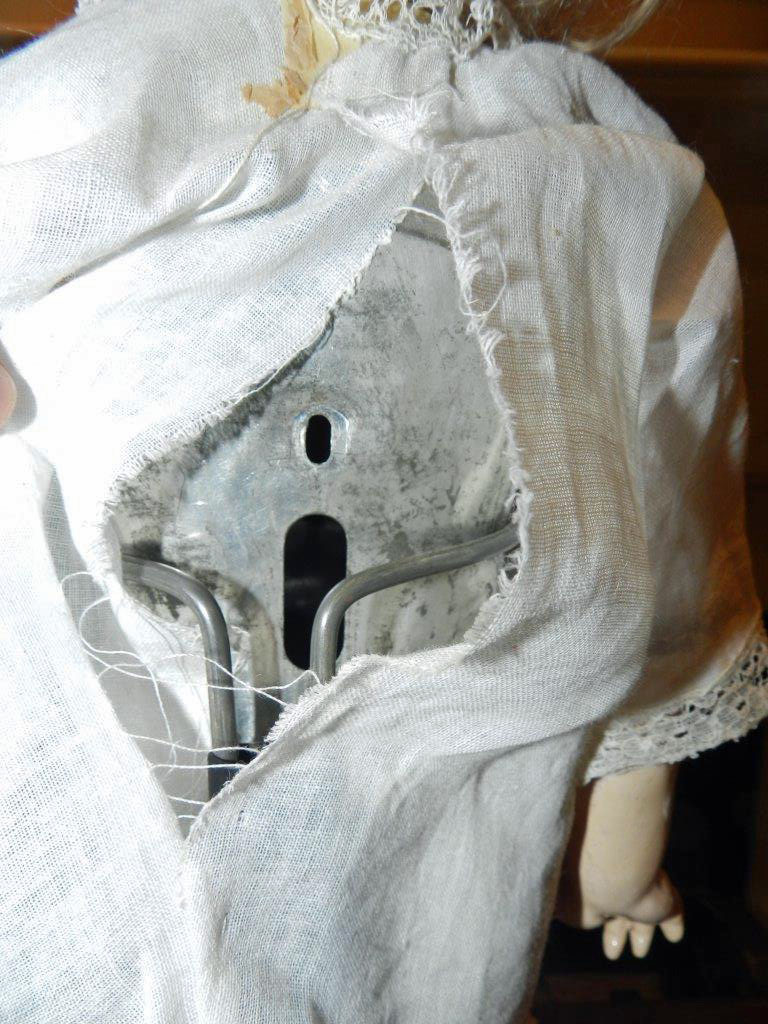
The commercial doll had a metal torso containing a miniature cylinder phonograph. A crank in the back rotated the record. A stylus traced the groove and transmitted vibration to a diaphragm; sound escaped through holes in the body. A lever reset the stylus at the end. The owner could not conveniently change the cylinder. Replacing one required substantial disassembly.
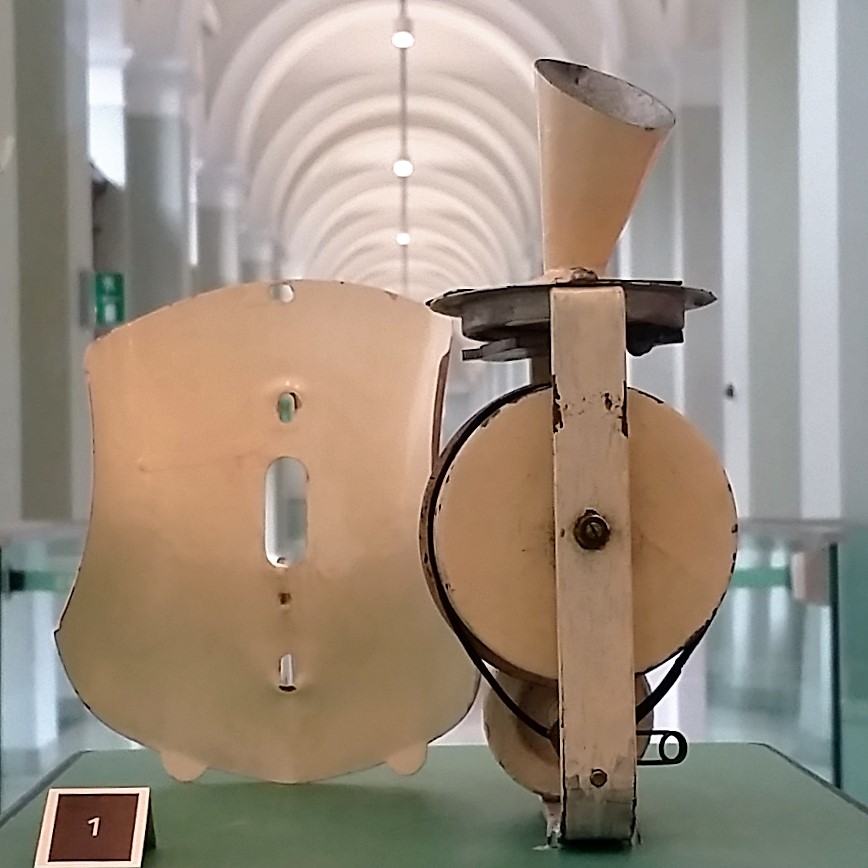
There was no electric motor or loudspeaker. The user supplied power by turning the crank at a reasonably even speed. Too fast and the recitation became shrill; too slow and it sagged. A child also needed enough strength and patience to hold a doll that could weigh about four pounds while operating a mechanism behind it.
The women in the recording room
The cylinders could not be duplicated from a master by the later moulding methods used for commercial records. Each talking-doll cylinder had to be recorded directly. Women sat at rows of machines and repeated nursery rhymes into recording horns, again and again. A production photograph shows them leaning towards banks of apparatus, manufacturing speech with their voices.
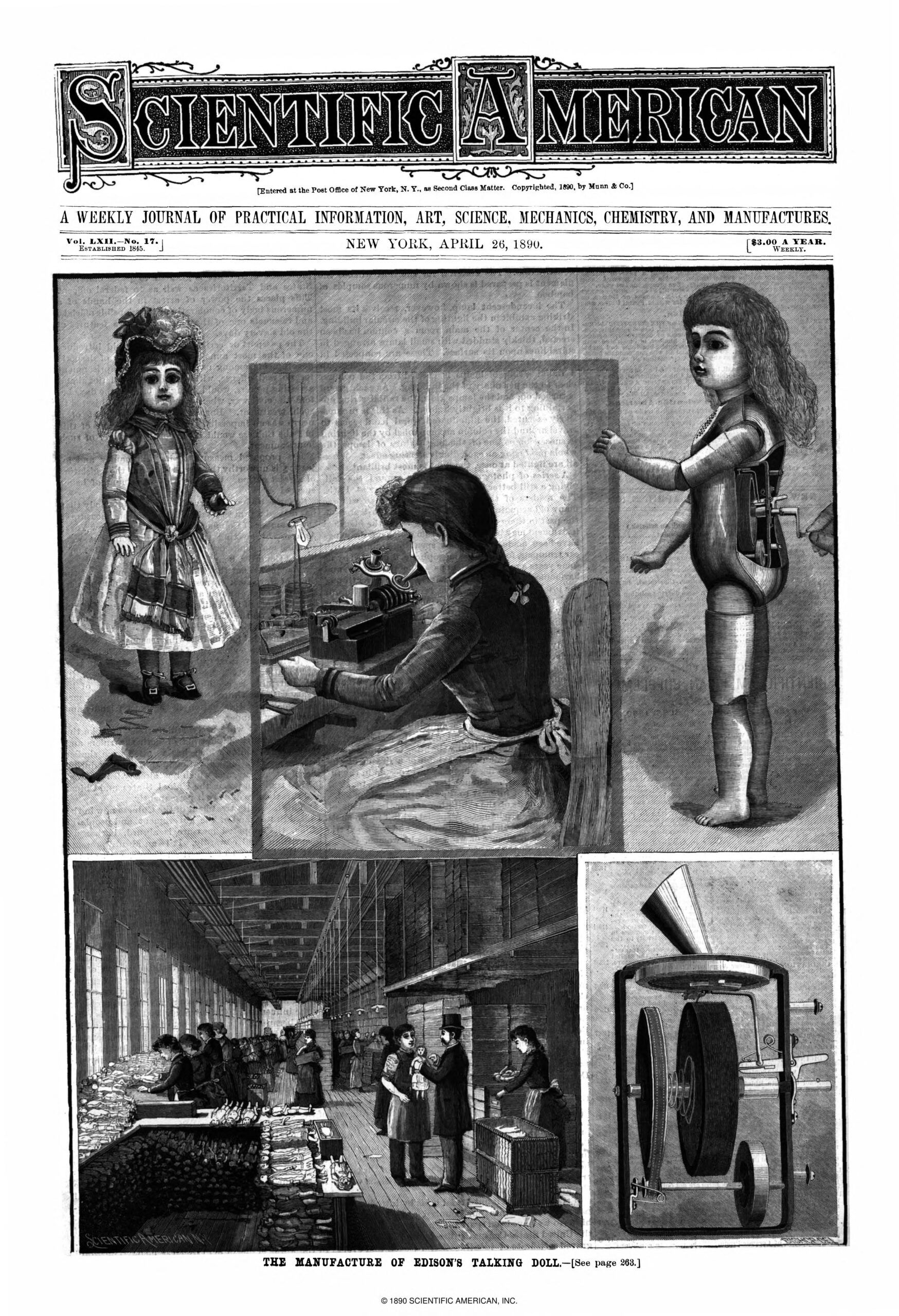
Their names were not advertised with the toys. For more than a century, many remained unidentified. Later archival and sound-recovery work restored some individuality to the performances, but the evidence is incomplete. Surviving recordings include “Twinkle, Twinkle, Little Star”, “Hickory Dickory Dock”, “Little Jack Horner” and “Now I Lay Me Down to Sleep”. The recitations are brief because the cylinders are small.
Calling these women recording artists is not an exaggeration. They created performances for repeated mechanical playback and sale. Yet their labour also resembles piecework. Each usable cylinder demanded another recitation, and a slip, weak groove or damaged blank meant doing it again.
Why the voice sounded so strange
A modern listener hears the restored recordings after expert scanning and digital processing. The original child heard a purely mechanical reproduction from a tiny cylinder through a small diaphragm inside a metal torso. The frequency range was narrow, volume limited and surface noise prominent. The speaker had to recite forcefully into the recording horn, producing an emphatic style.
That helps explain the modern impression of a ghostly voice. We should be cautious about projecting twenty-first-century horror films backwards. Nineteenth-century children were familiar with mechanical toys, dolls with staring porcelain faces and entertainments that modern viewers find eerie. Some purchasers were undoubtedly delighted by a doll that genuinely spoke.
Even so, the product’s voice was an obvious commercial risk. A nursery rhyme could be difficult to understand. The record degraded with use. If the stylus skipped or the crank speed changed, the doll ceased to sound like a human companion and became a rasping machine.
An expensive toy in a heavy body
The doll was sold in two principal versions. A dressed model cost about twenty-five dollars; an undressed one about ten dollars. At a time when many workers earned little more than a dollar or two for a long day, the better model was a luxury purchase. Edison and his partners were not testing a cheap toy for every household. They were asking prosperous families to pay a premium for mechanical novelty.
The body had to protect the phonograph, carry a porcelain head and still resemble a conventional doll. It did none of those jobs perfectly. The mechanism added weight. Transport could disturb delicate adjustments. Wax cylinders cracked or wore. A toy shop assistant might demonstrate the best specimen under controlled conditions; a child at home was less forgiving.
The brief commercial life of the talking doll
Production began in early 1890 and the dolls reached the market in April. Returns followed quickly. Mechanisms arrived broken or stopped working after little use. Edison halted manufacture in May. The venture had lasted long enough to generate newspaper excitement and surviving objects, but not long enough to establish a stable toy business.
How many were made and sold is not entirely settled. Figures in popular accounts vary because mechanisms, complete dolls, shipped dolls and accepted sales are different categories. The National Park Service’s documentary work is more reliable than neat unsourced totals. It is safest to say that several hundred complete dolls reached customers or dealers and that the commercial run was very short.
The failure produced conflict among the parties. Investors had paid for tooling, bodies, recording and promotion. Edison believed the mechanisms and manufacture needed improvement; business partners had expected a marketable product. Patent rights and technical control did not guarantee agreement about who should bear the cost of returns.
Did children really hate it?
The title survives because it captures something true about the mismatch between invention and use. The talking doll was designed around the astonishing fact that sound could be recorded. Children and parents judged a different question: was it a satisfying doll?
There is no systematic survey of children in 1890, and their letters have not supplied a chorus of complaints. “Children hated it” should therefore be treated as a vivid summary, not a documented vote. The commercial evidence is clearer. Families and dealers returned defective dolls, the price restricted demand and the company withdrew the product almost immediately.
The toy asked its user to accommodate the machine. The crank had to be turned steadily; the record could not easily be changed; the body was heavy; the voice was faint. Successful consumer products usually make machinery disappear behind the experience. In the Edison doll, machinery was the experience.
Its price made every defect more damaging. Depending upon dress and model, the dolls sold for roughly ten to twenty-five dollars at a time when many workers earned little more than that in a week. Parents were not buying a cheap novelty whose failure could be forgiven. They were purchasing an expensive, elaborately dressed object for a child, and the talking mechanism was the feature that justified the cost. When it broke, the whole proposition collapsed.
The recorded repertoire also narrowed the imagined child. Nursery rhymes were chosen because they were familiar and short enough for the cylinder, not because the performers could respond to a particular owner. The doll repeated one fixed recitation. That limitation made the early promise of a companion who could “speak” feel much more mechanical after the surprise wore off.
Why the failed doll still matters
As a toy, it was a disaster. As an object in the history of recorded sound, it is remarkable. It carried recorded voices out of a demonstration room and into a domestic relationship between a child and a doll. It employed women to make repeatable performances years before the recording industry routinely placed performers’ names on labels.
The survival of the cylinders has created a second life. Their grooves can be scanned optically without forcing a stylus through fragile wax. Researchers have recovered voices that were effectively unplayable, allowing us to hear not a modern imitation but an 1890 performance made for one particular toy.
The doll also corrects the idea that Edison succeeded because he always knew what the public wanted. He could identify a startling application and still misjudge price, reliability and use. The phonograph principle was sound; the product built around it was not ready. That distinction is one of the most useful lessons in the whole Edison story.
Sources and further reading
- Thomas Edison National Historical Park, “Talking Doll FAQ: Concept, Design and Technical Development” – Edison’s 1877 note, the Jacques licence and Batchelor’s work.
- Thomas Edison National Historical Park, “Talking Doll FAQ: Product Operation” – crank, cylinder, stylus and reset mechanism.
- Thomas Edison National Historical Park, “Edison Talking Doll Recordings” – surviving nursery rhymes and sound-recovery project.
- National Archives, NHPRC News, September 2015 – Edison Papers talking-doll documents and museum interpretation.
- Thomas A. Edison Papers, “1887” chronology – agreements and renewed phonograph-toy development.
- National Museum of American History, Edison Talking Doll – object history and surviving mechanism.
- New York Evening Sun, “Manufacture of Edison’s Talking Doll”, 26 April 1890 – contemporary view of the women recording cylinders.