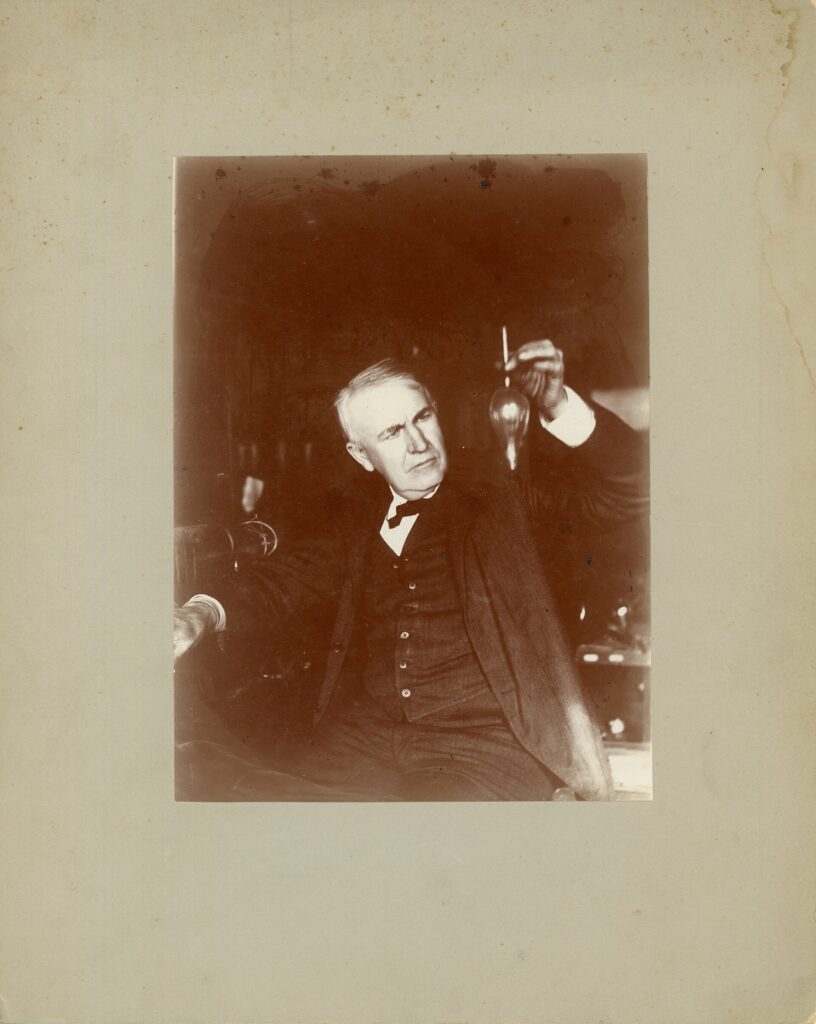
Ask someone to name a Thomas Edison invention and the electric light bulb will probably come first. It is an understandable answer. A glowing bulb is simple, memorable and easy to hold up as the moment darkness gave way to the modern world.
It is also an incomplete answer. Edison did not invent the first electric light, and he did not work alone. Humphry Davy had demonstrated electric arc lighting early in the nineteenth century; Warren de la Rue, Joseph Swan and several other experimenters produced incandescent lamps before Edison’s best-known work. What Edison and his Menlo Park team achieved was more ambitious than a single bulb. They developed a practical lamp as one part of a system that could generate electricity, carry it through underground conductors, divide it between customers, measure its use and allow each light to be switched on without extinguishing every other lamp.
That distinction matters. A laboratory bulb may prove that an idea is possible. A lighting system has to work every evening, in hundreds of rooms, at a price customers will pay. Edison’s greatest contribution to electric light was turning an experiment into a public utility.
Edison did not invent the first light bulb
The basic principle of incandescent light was already known. Pass enough current through a material and the resistance makes it hot; heat it sufficiently and it glows. The difficulty was making that glow useful. An exposed filament would burn away in air, while early vacuum pumps, generators and insulating materials placed severe limits on what inventors could build.
Arc lamps offered one answer. They made an intense light by maintaining an electrical arc between carbon electrodes and were already being used for streets and large public spaces in the 1870s. Yet an arc lamp was far too bright and troublesome for an ordinary sitting room. Domestic lighting needed a smaller, steadier lamp that could compete with the familiar gas jet.
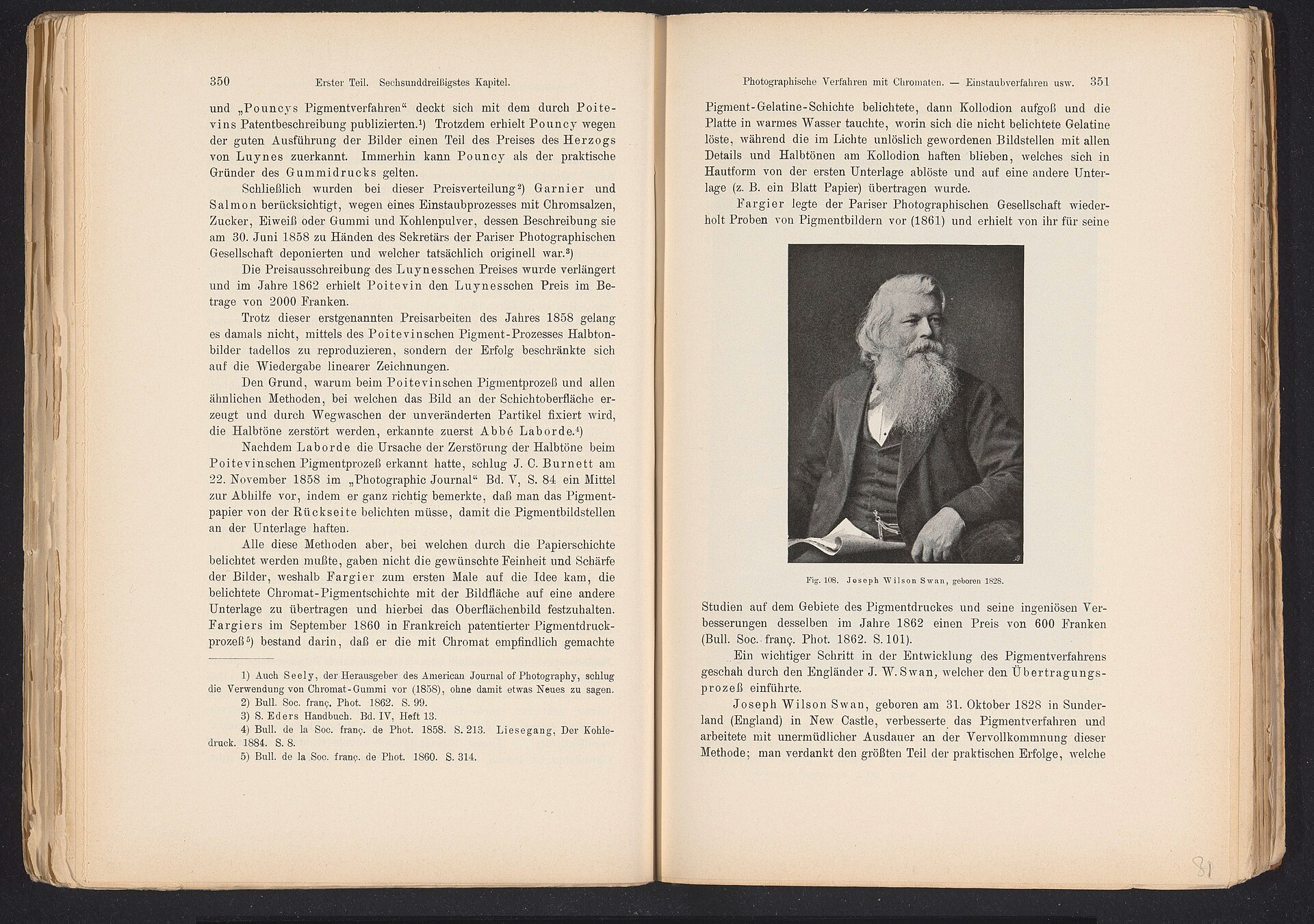
Joseph Swan came especially close. The British chemist had been experimenting with carbon filaments since the 1860s and demonstrated a working lamp at Newcastle in February 1879, months before Edison’s famous breakthrough. Swan’s early carbon rod had low electrical resistance. It could glow, but it demanded a heavy current and made an economical network of many independently operated lamps extremely difficult. After learning the importance of high resistance, Swan improved his design and built a successful British business. His patent position was strong enough that the British interests of the two inventors were joined in the Edison & Swan United Electric Light Company in 1883.
So why does Edison remain so closely associated with the light bulb? Part of the answer is publicity, but it is not merely publicity. Edison treated the lamp as an engineering and commercial problem involving the whole network. He wanted a high-resistance filament that used a modest current, a deep vacuum that protected the carbon, a durable glass envelope and a circuit in which lamps could operate in parallel. One customer could then turn off a light without plunging the building next door into darkness.
The challenge Edison announced in 1878
By 1878, the phonograph had made Edison internationally famous. He now promised to tackle electric light with the same aggressive confidence. The promise came before he possessed a satisfactory lamp, a habit that put his reputation under pressure but also attracted money and attention. The Edison Electric Light Company was formed in November 1878 with financial support from men including J. P. Morgan and members of the Vanderbilt family.
The work took place at Menlo Park, where Edison had developed the phonograph. It was not the solitary vigil shown in later heroic paintings. Charles Batchelor carried out painstaking lamp trials; Francis Upton, a Princeton-trained mathematician with further study in Germany, helped Edison calculate resistance, distribution losses and costs; John Kruesi and other machinists constructed experimental apparatus and generators; Ludwig Boehm blew the glass bulbs. Edison chose the direction, made decisions and drove the pace, but the practical light emerged from the skills of a laboratory team.
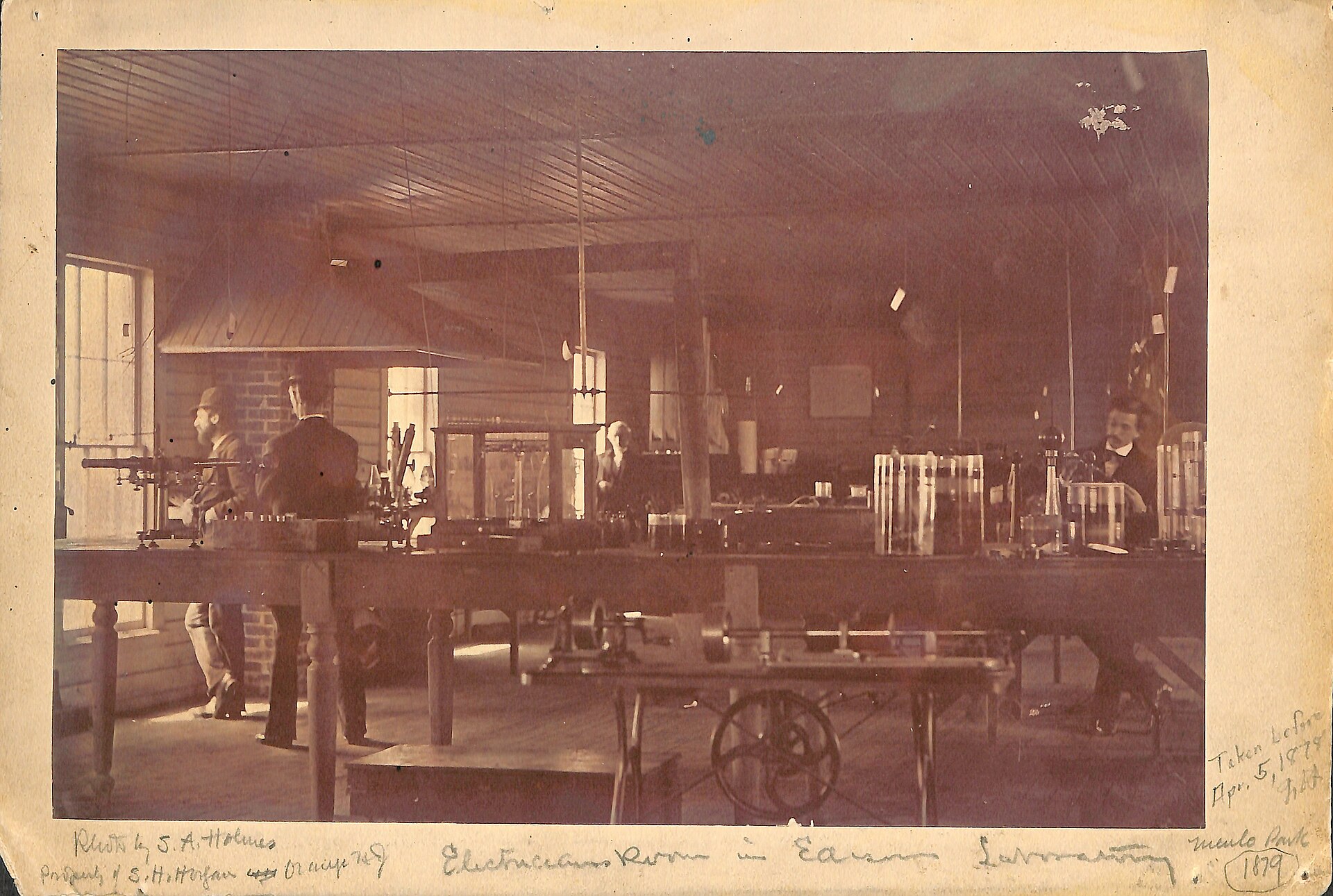
They did not simply try random substances until luck intervened. The team studied the economics of gas lighting, measured the output and life of experimental filaments, improved vacuum pumps, tested generators and calculated how much copper a distribution network would consume. Materials still mattered enormously. Platinum seemed promising because of its high melting point, but it was expensive and expanded when heated. Carbon offered a cheaper route if it could be made thin, uniform and strong.
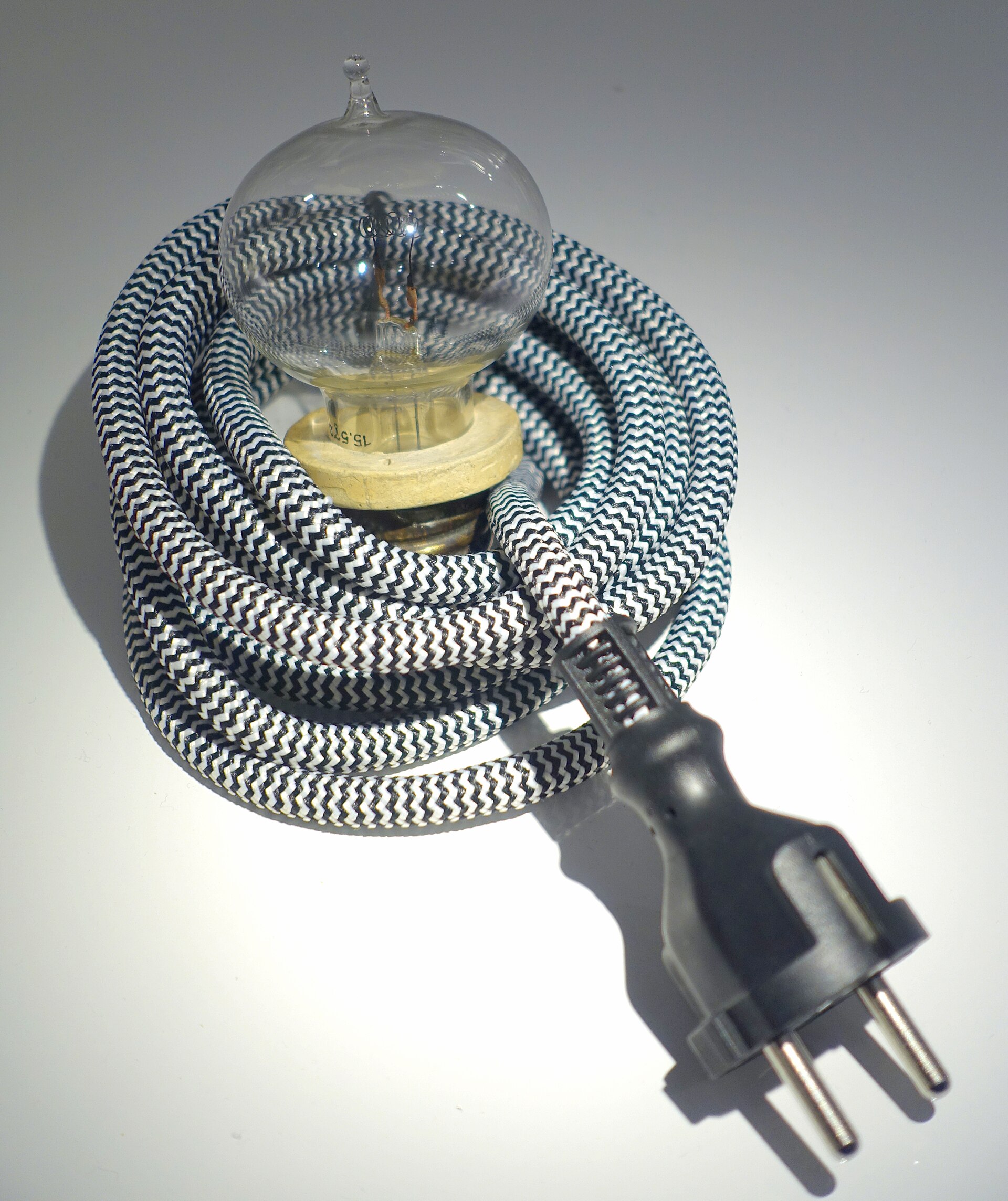
During the autumn of 1879, carbonised cotton sewing thread produced the result that entered popular history. A lamp burned for roughly thirteen and a half hours, long enough to show that the design had crossed an important threshold. The familiar date of 21 October is often repeated as if one perfect bulb suddenly appeared that evening. The surviving notebooks show a continuing sequence of experiments across 21 and 22 October, and the National Park Service now cautions against treating the traditional date and later burn-time claims as exact. The achievement was real; the tidy “eureka moment” was largely created in the retelling.
What Edison’s 1880 lamp patent actually covered
Edison filed the application that became United States Patent 223,898 on 4 November 1879. The patent was granted on 27 January 1880. Its importance lay in a carbon filament of high resistance, formed into a coil or loop and enclosed in an evacuated glass vessel. This was not a patent on the abstract idea of making a material glow. It was a particular answer to the practical problem of producing a durable incandescent lamp for an economical distribution system.

The legal story did not end with the grant. Swan and other inventors held earlier patents on elements of incandescent lighting, and Edison’s companies spent years defending the American patent against competitors. Patent history rarely supports the classroom picture in which one inventor owns an entire idea from the beginning. It records narrower claims, overlapping experiments and expensive arguments over which combination had become commercially workable.
Nor did the cotton-thread lamp end the search for a better filament. Edison’s staff tested vegetable fibres from many parts of the world. Carbonised bamboo proved more durable and became a standard filament in early Edison lamps. The material was later shaped and treated more consistently, while twentieth-century lamp makers moved to metal filaments, especially tungsten. The household bulb continued to change long after 1879.
Menlo Park becomes a public spectacle
A useful invention still needed customers. At the end of December 1879, Edison lit the Menlo Park laboratory buildings and surrounding grounds for a public demonstration. Special trains carried visitors from New York and Newark. Reporters described rows of small, steady lights that could be turned on and off individually. The display allowed people to see not just a bulb but the outline of an electrical future.
Edison understood that spectacle could make an unfamiliar technology less alarming. Electricity was invisible, associated with startling arc lights and imperfect insulation, and not yet trusted inside the home. Menlo Park presented it as controlled, quiet and convenient. The following year, the steamship Columbia received an Edison isolated lighting plant, an important commercial test away from the laboratory. A lamp factory at Menlo Park began the difficult work of making bulbs in quantity rather than one at a time.
Even so, supplying one ship, hotel or factory from its own generator was not the final objective. Edison wanted to sell light in much the same way gas companies sold gas: produced at a central works, distributed beneath the streets and paid for according to use.
The system beyond the bulb
Every part of that proposal created another problem. Dynamos had to generate current efficiently and maintain a steady voltage as customers switched lamps on and off. Copper conductors had to carry power without wasting too much energy. Feeders and mains had to divide the load. Junction boxes, fuses and insulation had to make the network maintainable and safe. Fixtures required switches and sockets. The company needed meters so that it could send a bill.
Edison and his employees developed or improved each element. Kruesi’s machine shop helped build the large “Jumbo” dynamos used in central stations. Edison devised an electrochemical meter that measured consumption by the amount of metal deposited on electrodes. The team designed underground conductors partly to avoid the forest of overhead telegraph and arc-light wires already crowding city streets.
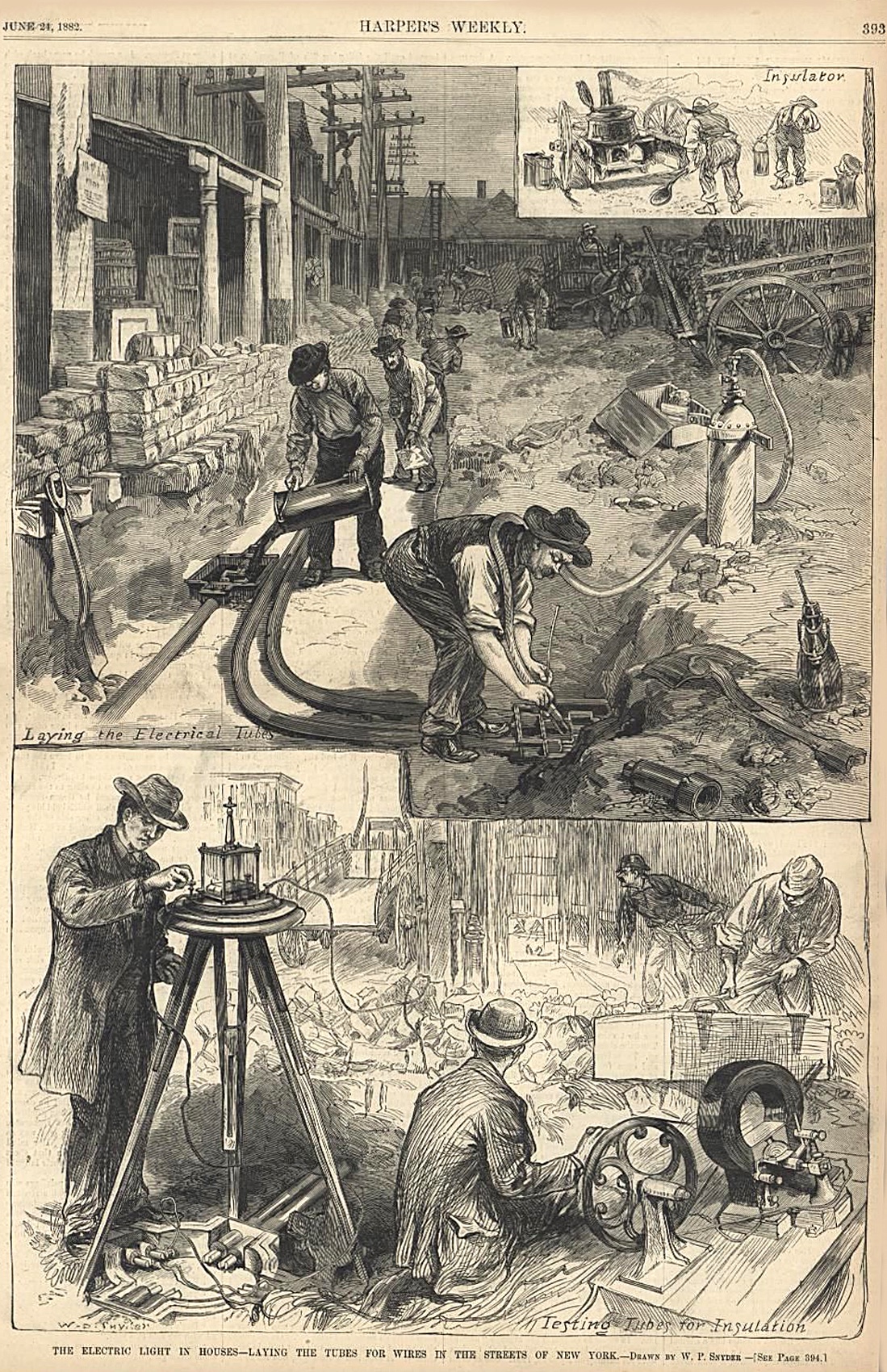
The design also had limits. Edison’s low-voltage direct current could not be transmitted economically over a great distance with the technology then available. A central station therefore had to sit close to its customers. Copper was costly, digging up streets required permission, and the generating machinery demanded a major investment before the first bill could be collected. This was not a light bulb with a very long wire attached. It was a new urban infrastructure.
Pearl Street and the birth of the electric utility
Edison chose lower Manhattan for the decisive test. The district around Wall Street contained banks, newspapers, offices and wealthy customers whose adoption could give electric light status. At 255–257 Pearl Street, an ordinary commercial building was reinforced to carry heavy steam engines and dynamos. Crews laid thousands of feet of copper conductors beneath the surrounding streets and wired hundreds of lamps inside customers’ buildings.
On 4 September 1882 the station began regular service. About 400 lamps were lit on the first day. The event was quieter than the Menlo Park demonstration, but its consequences were larger. Electricity was now being generated at a central plant and sold through a neighbourhood network. Customers did not have to own a dynamo or understand its operation; they could buy the result.

Pearl Street was a technical demonstration rather than an immediate financial triumph. Construction and operating costs were high, the station did not make a profit for several years, and its direct-current service area was small. Yet it proved that a central station could regulate a changing load, meter customers and keep a complex urban network running. Within a year it had expanded to thousands of lamps. Similar Edison systems appeared in other American cities and abroad.
The experience also produced improvements. A three-wire distribution system reduced the amount of copper required. Larger generating stations lowered costs. Electric motors and appliances gradually gave customers reasons to use power during the day as well as light at night. The business was becoming an electricity supply industry rather than a lamp company.
How electric light changed everyday life
The change was neither instant nor equally shared. Gas lighting remained a powerful competitor and improved in response. Many factories and affluent urban buildings obtained electricity long before rural homes. According to the National Park Service, only in 1925 did half of American households have electric power. A date such as 1879 or 1882 marks a breakthrough, not the morning when everybody woke to an electrified world.
Where dependable electric light arrived, however, it altered the rhythm of work and domestic life. It removed the exposed flame and combustion fumes of many oil and gas lamps, although early wiring introduced dangers of its own. Shops could display goods after dark. Factories could organise longer shifts with steadier illumination. Theatres, hotels and streets became showcases for the new technology. Most importantly, the generating network created for lighting could later power lifts, fans, machinery and household appliances. The lamp encouraged customers to connect; the network made other electrical uses possible.
There was also a cost to this apparently clean light. Pearl Street burned coal, and electrification demanded copper, construction, capital and a labour force that popular accounts often leave out. The light inside a room concealed a chain of mines, boilers, engines, wires and workers beyond the wall. Edison’s system changed where smoke and risk were located; it did not make them disappear.
What Edison deserves credit for
It is inaccurate to say that Edison invented the first light bulb. It is equally misleading to conclude that he contributed nothing because other people made incandescent lamps before him. His achievement lay in recognising which kind of lamp an economical network required, organising a team to solve the connected problems, defending and manufacturing the result, and building a central station that placed electricity on tap.
That work also reveals the mixture at the centre of Edison’s career: engineering, business, theatre and relentless experiment. The confidence encouraged by Edison’s mother, Nancy, had grown into an ability to announce an audacious target before he knew precisely how it would be reached. Menlo Park supplied the people and equipment to turn that target into hardware. Investors supplied the capital. Customers and city workers made the network real.
The famous bulb therefore remains an appropriate symbol, but not because it sprang fully formed from one man’s mind. It is the visible end of a much larger system. Edison changed the world with electric light when the lamp, the laboratory, the factory, the generating station and the street beneath the customer’s feet finally worked together.
Sources and further reading
- Thomas Edison National Historical Park: Frequently Asked Questions — concise explanation of earlier lamp inventors and Edison’s complete electric-light system.
- Thomas Edison National Historical Park: Edison Biography — Menlo Park experiments, public demonstration and Pearl Street chronology.
- Smithsonian National Museum of American History: 19th Century Competition — Joseph Swan, gas lighting, rival systems and the technical importance of high resistance.
- Smithsonian National Museum of American History: 19th Century Promotion — the Menlo Park demonstration, the Columbia, Holborn Viaduct and Pearl Street.
- Thomas A. Edison Papers: Electric Light notebook entry, 22 October 1879 — digitised laboratory record of the carbon-filament experiments.
- U.S. Patent 223,898: Electric-Lamp — Edison’s patent, granted 27 January 1880.
- Robert Friedel and Paul Israel, Edison’s Electric Light: Biography of an Invention (Rutgers University Press, 1986) — scholarly account of the lamp as part of an experimental, economic and distribution system.