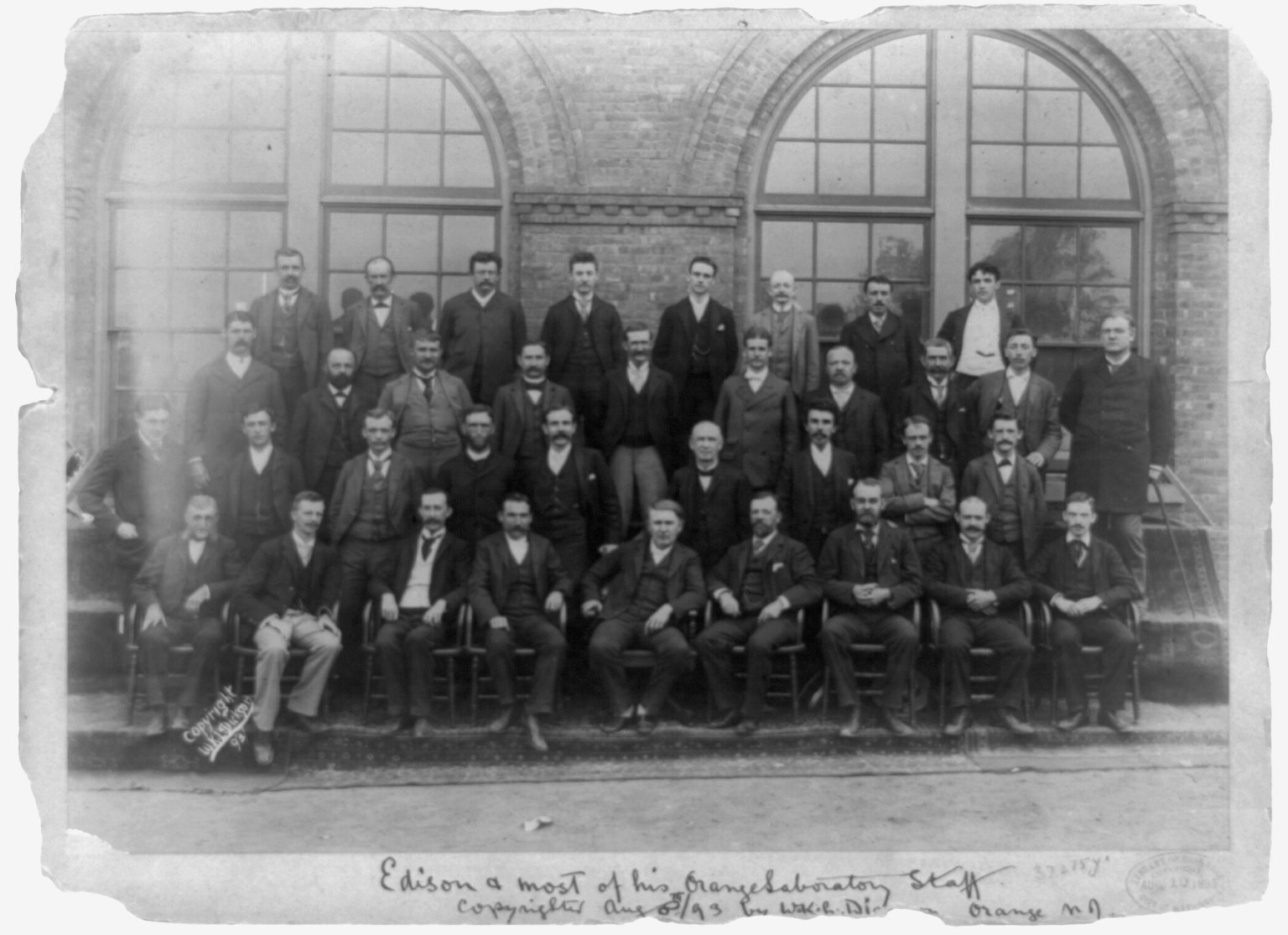
Thomas Edison wanted a machine that would “do for the eye what the phonograph does for the ear”. The phrase was his, the laboratory was his and the patents were generally filed in his name. Yet the person who carried out most of the photographic experiments was William Kennedy Laurie Dickson, an employee whose contribution was obscured for much of the twentieth century.
The distinction is essential. Edison did not invent moving images from nothing, and the first successful products of his programme were not cinema as we know it. The Kinetograph was a heavy camera; the Kinetoscope was a cabinet in which one customer watched a short film through a peephole. Projection arrived later, using a machine developed outside Edison’s laboratory and advertised under his famous name.
Even so, the West Orange work helped establish the 35mm film strip, a production studio, a market for filmed performances and an American film business. The story runs from Muybridge’s horses to the Black Maria, Kinetoscope parlours, a projector called the Vitascope and the patent battles of the early industry. Edison set the project in motion. Dickson and many others made the pictures move.
Moving pictures before Edison
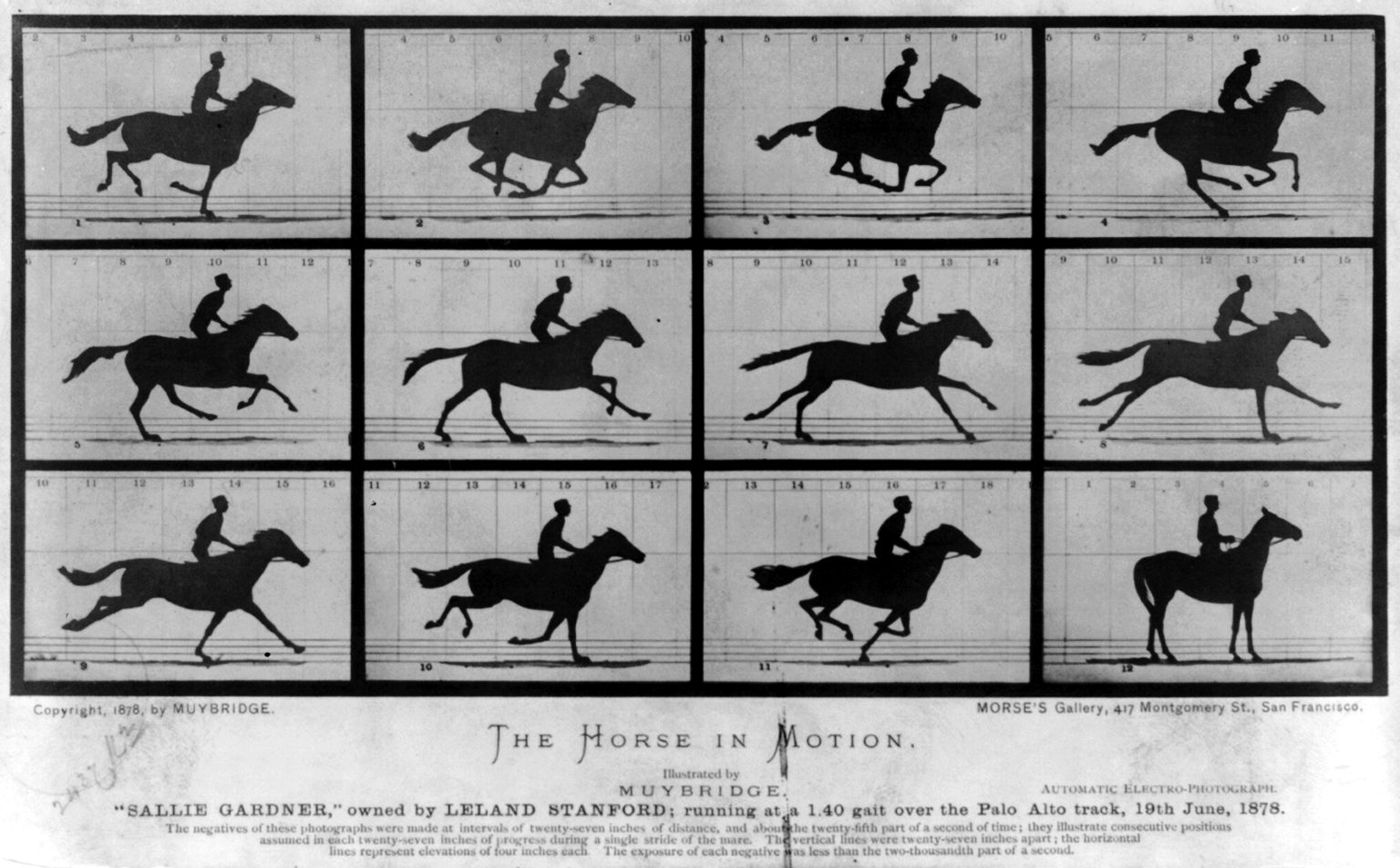
By the 1880s, audiences already understood the illusion of movement. Magic lanterns projected painted or photographic slides. The phenakistiscope and zoetrope presented sequences of drawings through slots. Eadweard Muybridge used a row of cameras to photograph successive phases of a horse’s stride, then projected drawings based on his photographs with a device called the Zoopraxiscope.
Étienne-Jules Marey in France recorded phases of movement for scientific study, first on a circular plate and then on a strip. Louis Le Prince used paper and film in experimental cameras during the late 1880s. Celluloid makers including John Carbutt and the Eastman company developed flexible photographic material capable of carrying a longer sequence. No one device suddenly created motion pictures. Cameras, sensitive emulsions, intermittent mechanisms, projection and durable film arrived through overlapping work in Europe and America.
Muybridge visited Edison at West Orange in February 1888 and proposed combining projected motion with the phonograph. Edison did not accept the partnership, but the meeting sharpened his interest. On 17 October 1888 he filed a caveat with the United States Patent Office describing a device to record and reproduce objects in motion. His first conception borrowed too literally from the phonograph: tiny photographs arranged around a cylinder and examined as it revolved. It could not carry enough clear images to produce a useful show.
Dickson turns an idea into machinery
In June 1889 Edison assigned the motion-picture problem to W. K. L. Dickson. Born in France to a Scottish family and raised partly in Britain, Dickson had joined the Edison organisation in the 1880s and possessed practical photographic knowledge. Charles Brown assisted him at first; William Heise later became a crucial colleague. Edison provided money, workshop resources, electromechanical experience and final authority. Dickson directed most of the day-to-day experimentation.
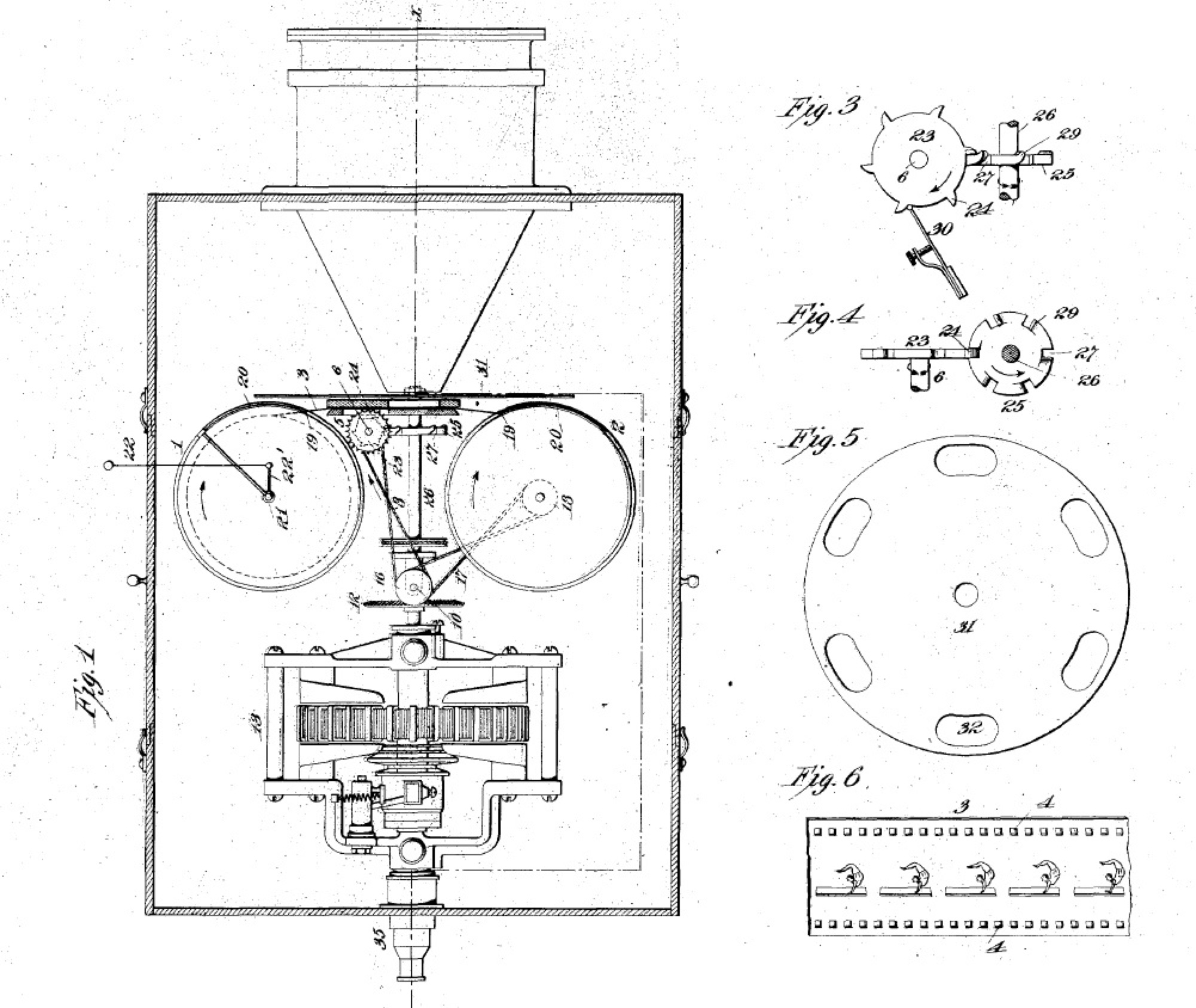
Progress accelerated when the team abandoned the image cylinder for flexible film. Dickson bought Eastman film and experimented with the width, feed and perforation pattern. The Kinetograph camera stopped each frame briefly behind the lens, exposed it, then pulled the strip forward. Perforations along the edges allowed a sprocket to control the movement. The mature strip was approximately 35 millimetres wide with four perforations beside each frame, dimensions that helped shape a film standard lasting far beyond the Edison company.
A demonstration on 20 May 1891 showed a small horizontal-film prototype to visitors from the National Federation of Women’s Clubs. Dickson bowed, smiled and raised his hat in a few seconds of movement now called Dickson Greeting. The later system ran wider film vertically. Edison filed applications covering the Kinetograph camera and Kinetoscope viewer on 24 August 1891. The camera was not a personal snapshot device. Driven by an electric motor and initially confined to the laboratory, it was a piece of industrial machinery.
How the Kinetoscope worked
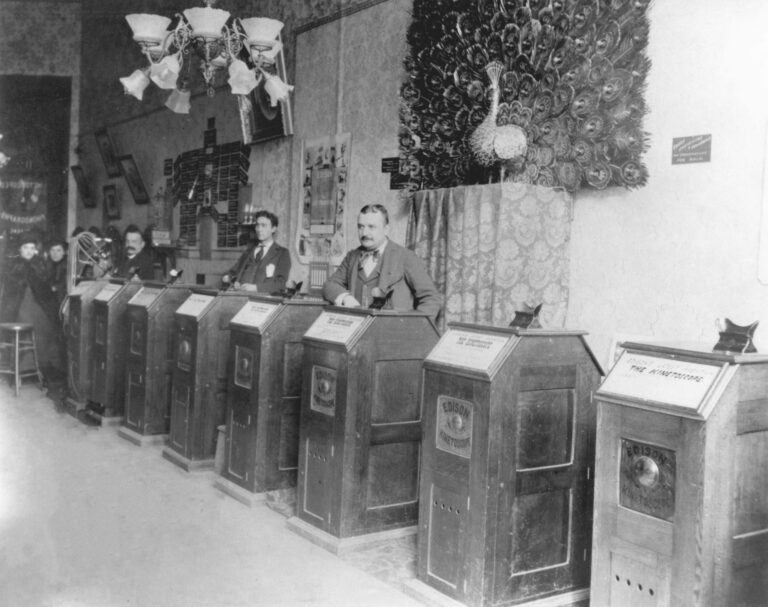
The finished Kinetoscope was a tall wooden cabinet with a viewing lens in the top. Inside, about fifty feet of film formed a continuous loop around rollers. An electrically driven sprocket pulled the film beneath the lens and over a lamp. A fast revolving shutter admitted an instant of light for each passing frame. The viewer’s eye retained the image long enough for the next one to join it, creating the appearance of motion.
Only one person could look through the peephole at a time. There was no projected image, no auditorium and usually no story in the later sense. A film lasted seconds. The cabinet nevertheless offered a stable, repeatable display that could be installed in a commercial room. The Kinetograph and Kinetoscope formed a system: one made the film, the other turned it into a paid experience.
The first public demonstration of the mature Kinetoscope took place at the Brooklyn Institute of Arts and Sciences on 9 May 1893. It showed Blacksmith Scene, in which three Edison employees hammered at an anvil, paused and shared a drink. The action was staged, but its simplicity was part of the appeal. Ordinary movement became worth watching when a machine could preserve it.
The Black Maria: a studio built around sunlight
Commercial viewers required a regular supply of films. In December 1892, construction began on a studio beside the West Orange laboratory. Completed in February 1893, it was covered with black tar paper and soon nicknamed the Black Maria after the dark police vans of the period. The cramped building stood on a circular track and could rotate to follow the sun. A section of its roof opened so that strong daylight reached the stage.
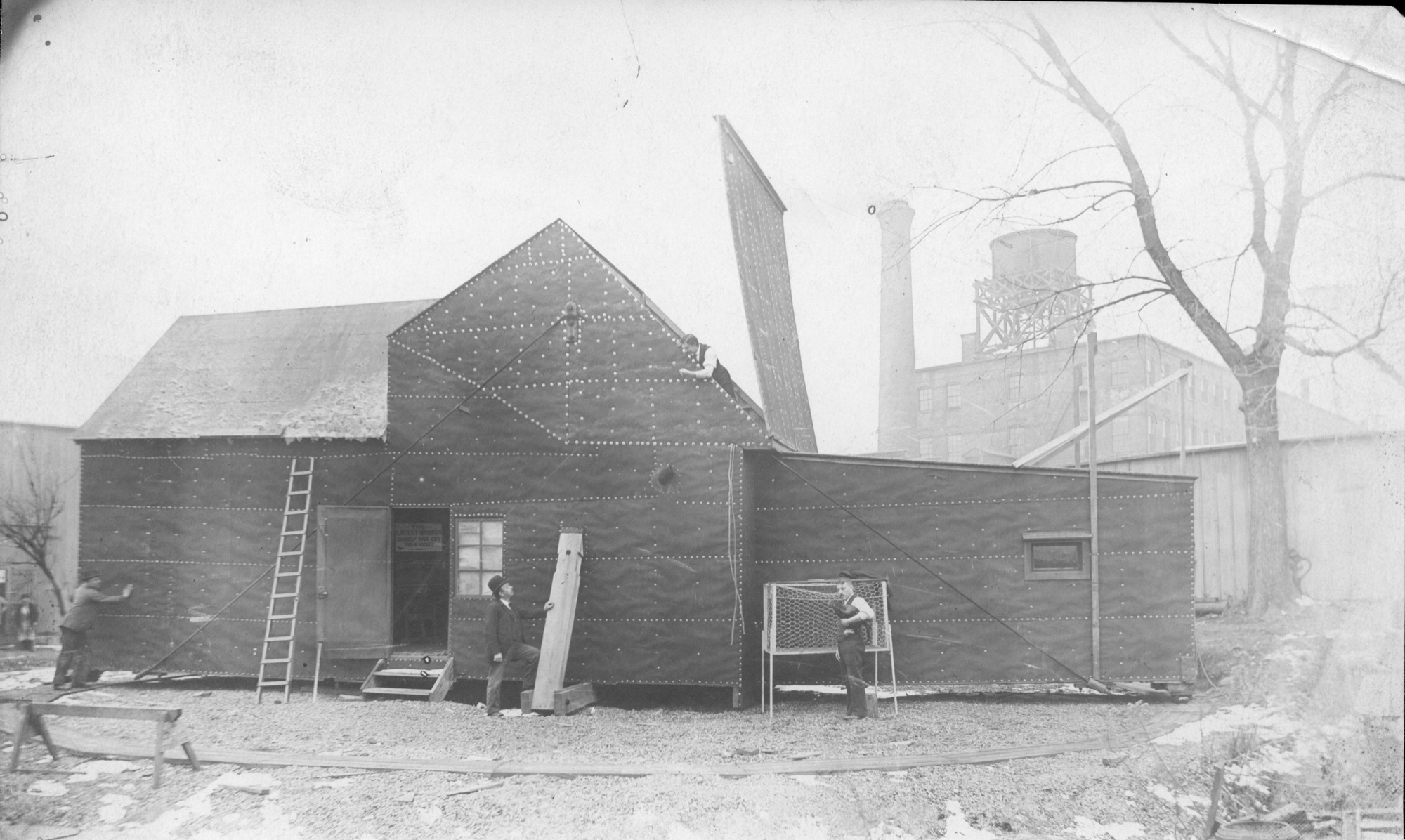
The design arose from the film stock rather than theatrical eccentricity. Early emulsions needed abundant light, and the Kinetograph was difficult to move. Performers came to the camera. Vaudeville artists, athletes, dancers, acrobats and employees stood against a dark background while Dickson and Heise recorded a compact action that could be read through the Kinetoscope peephole.
Eugene Sandow displayed his muscular poses. Carmencita performed a Spanish dance. Annabelle Whitford presented a skirt or butterfly dance that was later hand-coloured in some prints. Members of Buffalo Bill’s Wild West show performed a Buffalo Dance and Sioux Ghost Dance. Those films are valuable documents of performance, but their titles and staging also reflect how Indigenous people were packaged for a paying white audience. The camera preserved; the company selected and sold.
Fred Ott sneezes — and a film becomes a legal deposit
One of the shortest Black Maria films became one of the best known. Fred Ott, an Edison employee with a talent for comic sneezing, took a pinch of snuff and sneezed before the camera in January 1894. Dickson arranged the action as a succession of frames on a photographic print. It was registered for copyright as Edison Kinetoscopic Record of a Sneeze, often called Fred Ott’s Sneeze.
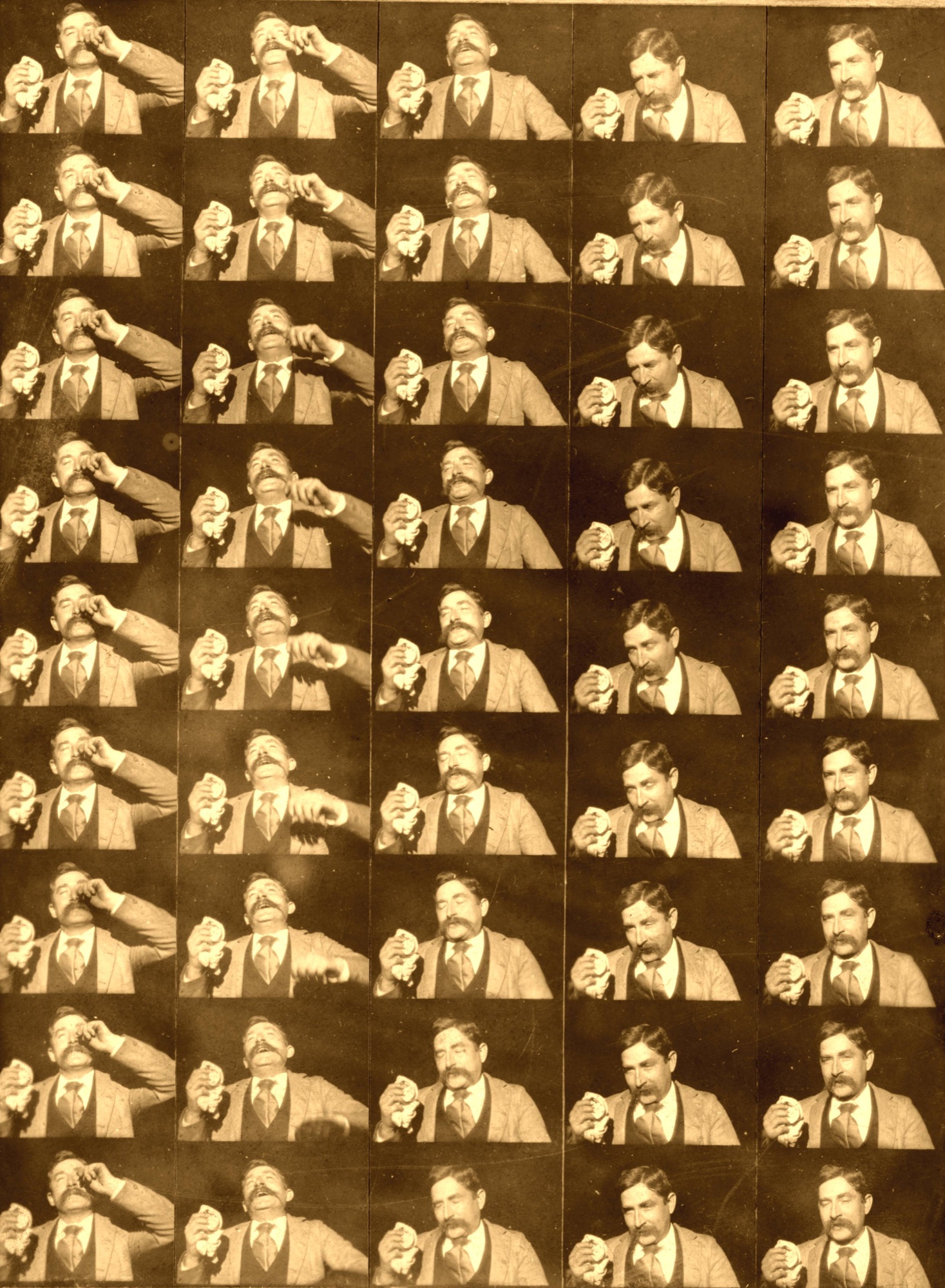
The episode is sometimes described as the first copyrighted motion picture in the United States. More precisely, Dickson deposited a paper photographic record because copyright practice had not yet developed a separate motion-picture category. Edison’s company later sent positive paper rolls of its films to the Library of Congress. Those awkward deposits became historically precious. Nitrate film decomposed or burned; the paper prints survived and allowed many early films to be reconstructed.
The first Kinetoscope parlours
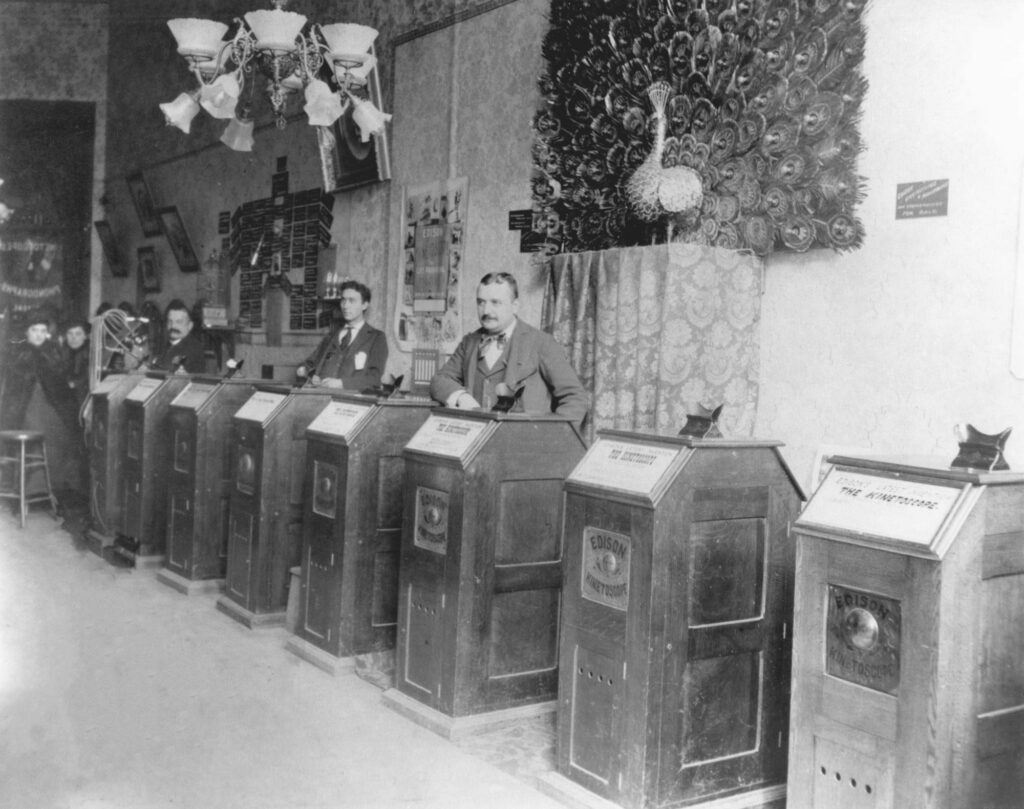
On 14 April 1894 the Holland brothers opened a commercial Kinetoscope parlour at 1155 Broadway in New York. Cabinets stood in rows, each carrying a different film. Customers moved from one peephole to another rather than sitting through a programme chosen by an exhibitor. Parlours soon appeared in Chicago, San Francisco, London, Paris and other cities.
The arrangement resembled the coin-operated phonograph business. It made each customer pay for an individual encounter and sold multiple machines to a single venue. For a brief period that was highly profitable. It also encouraged Edison’s organisation to undervalue projection. If one Kinetoscope earned money from one viewer at a time, a screen visible to hundreds threatened the sale and rental of cabinets.
The public did not wait. Robert Paul in Britain, the Lumière brothers in France, Max and Emil Skladanowsky in Germany, Woodville Latham and his sons in the United States, and other inventors developed cameras or projectors. The Lumière Cinématographe projected films to paying audiences in Paris in December 1895. There is no single uncontested birthday of cinema; different claims depend on whether the emphasis falls on photography, a camera, projection, a paying audience or a continuing commercial programme.
The Vitascope was not invented by Edison
Projection reached Edison’s company through outsiders. C. Francis Jenkins and Thomas Armat developed a projector called the Phantoscope and demonstrated it in Atlanta in September 1895. The two men separated and disputed credit. Armat then approached Raff and Gammon, who had sold Kinetoscopes. They recognised that projection could revive a declining business and brought the machine to Edison.
The Edison Manufacturing Company agreed to manufacture it and supply films on the condition that it was advertised as a new Edison invention called the Vitascope. That condition used Edison’s name as a commercial guarantee. It did not make him the projector’s designer.
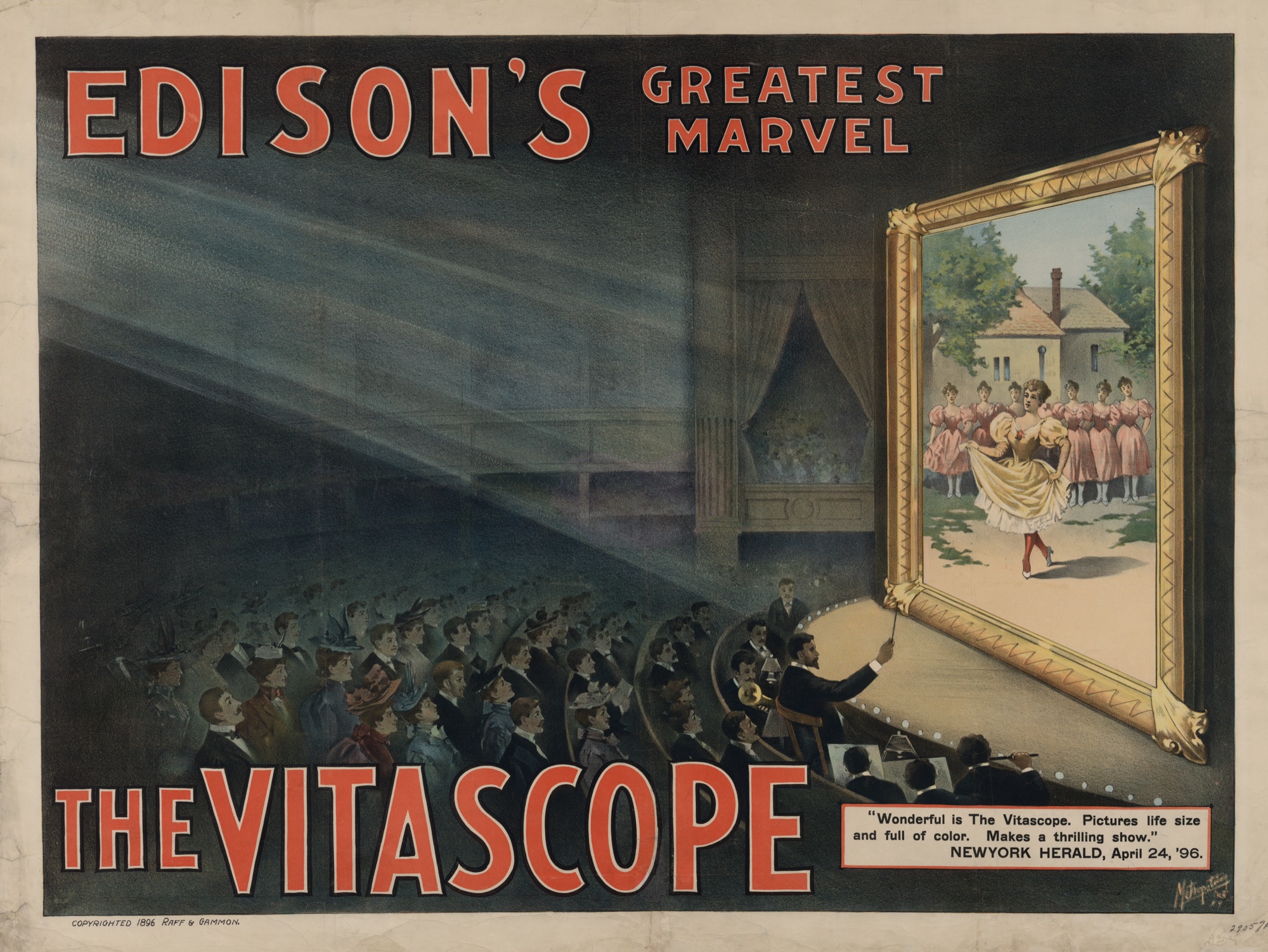
The first theatrical Vitascope exhibition took place at Koster and Bial’s Music Hall in New York on 23 April 1896. Films were now enlarged on a screen for a collective audience. Competing projectors appeared rapidly, and Edison’s company soon manufactured its own Projecting Kinetoscope. The peephole cabinet did not vanish overnight, but the centre of the business had moved from machine sales towards film production, distribution and exhibition.
Taking the camera beyond West Orange
A more portable camera allowed Edison crews and licensees to leave the Black Maria. They filmed railway trains, waterfalls, city streets, parades, police and fire services, military exercises and foreign travel. These “actualities” offered audiences a view of movement and distant places rather than a developed plot. The novelty lay partly in recognition: smoke drifted, waves broke, people passed through a familiar square.
James White and Frederick Blechynden travelled through the American West in 1897 with support from railway companies that understood film’s value as tourism promotion. White later filmed in Mexico, Japan, China and Hong Kong. William Paley covered preparations for the Spanish-American War and travelled to Cuba. He did not film the principal battles. Edison catalogues also sold staged reenactments made in New Jersey, a distinction often blurred when the images are presented as documentary combat footage.
Authorship was dispersed. Edison owned the company and his name appeared on catalogues, but camera operators, licensees and managers chose or executed much of the work. The Thomas A. Edison Papers notes that Edison himself had relatively little to do with day-to-day filmmaking. Treating every Edison Company film as “a film by Thomas Edison” is like calling every modern studio picture a film by the person whose name is on the corporation.
Edwin S. Porter and The Great Train Robbery
Edwin S. Porter joined the Edison organisation in 1900 and became its best-known filmmaker. Drawing on practices already developing in British, French and American film, he arranged shots to carry action across different spaces. The Life of an American Fireman and Jack and the Beanstalk helped move Edison production from brief spectacles towards narrative.
The Great Train Robbery, made in November 1903, combined studio interiors with locations in New Jersey and along the Lackawanna Railroad. Bandits seize a telegraph office, rob a train, flee on horseback and are pursued. The famous close view of Justus D. Barnes firing a revolver at the camera could be placed at the beginning or end by the exhibitor.
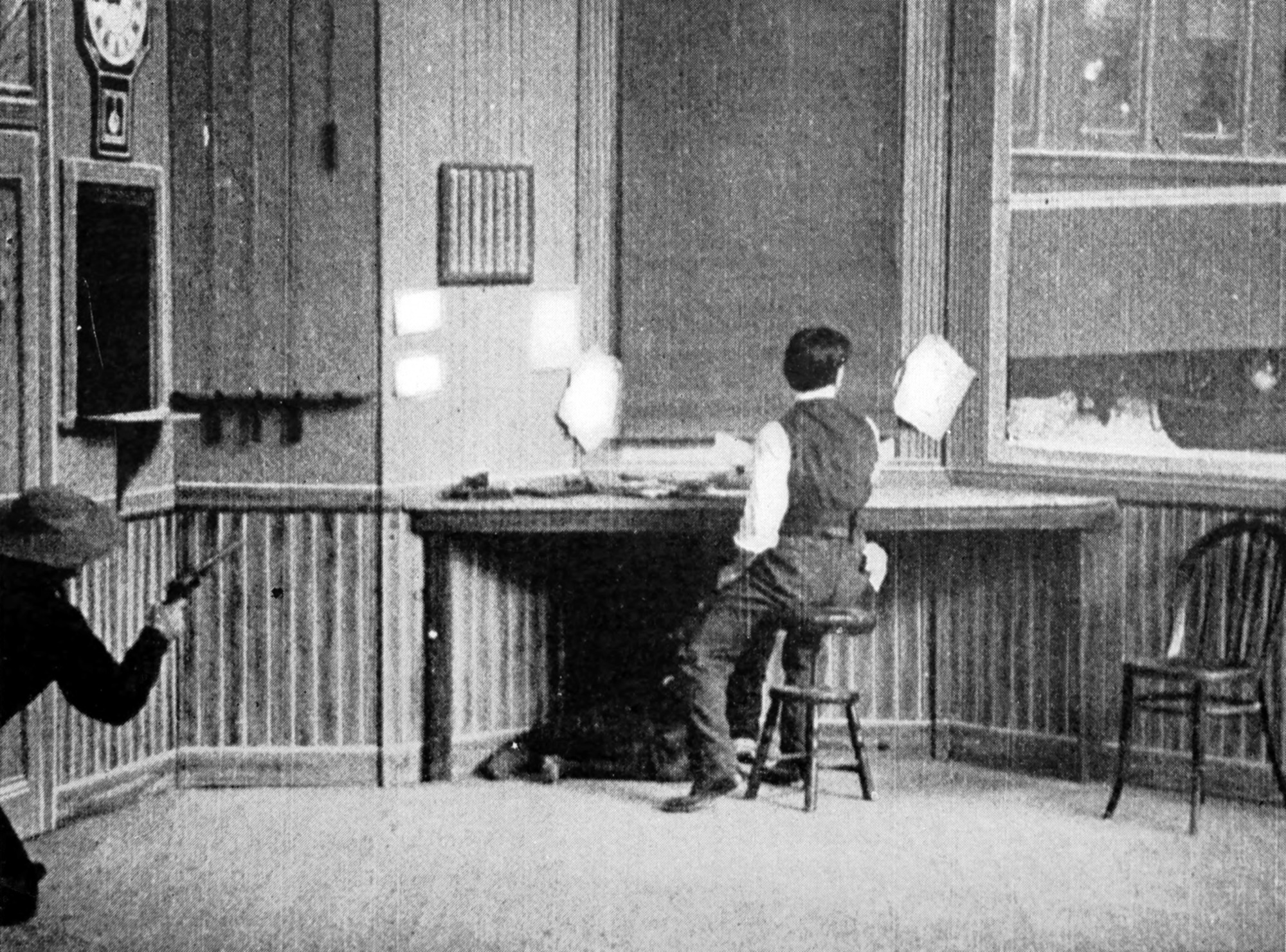
It is often called the first story film or the first Western. Neither claim survives close scrutiny: filmmakers had already staged narratives, chases and western subjects. Its importance lies in its commercial impact and forceful combination of location work, action and multiple shots. It showed how an Edison company film could become an attraction for its story rather than merely for the fact that it moved.
Patents, licensing and the Motion Picture Patents Company
Motion pictures became a field of aggressive litigation. Edison’s companies sued competitors over camera patents, winning some decisions and losing or narrowing others. A 1901 victory against Biograph was reversed on appeal in 1902. Biograph possessed important patents of its own and had been founded by Dickson with Herman Casler, Henry Marvin and Elias Koopman after Dickson left Edison in 1895.
In December 1908 the Edison and Biograph interests joined with major producers and an importer in the Motion Picture Patents Company, incorporated that September. The organisation pooled patents and licensed approved producers, distributors and exhibitors. Agreements with film suppliers and exchanges attempted to impose order while making it difficult for independent companies to obtain stock or reach theatres.
The “Trust” never achieved complete control. Independent producers built businesses outside it, and film production shifted towards longer pictures, star performers and new centres, especially southern California. The federal government filed an antitrust suit in 1912. Courts ruled against the company in 1915 and 1916. Edison’s patents helped organise an industry, but the effort to control that industry also encouraged competitors to escape the system.
The unsuccessful search for synchronised sound
Edison’s original ambition joined sight and sound. In 1894 or 1895 Dickson played a violin before a recording horn while two men danced, creating an experimental film with a related wax-cylinder recording. The surviving film and cylinder were reunited digitally more than a century later. At the time, keeping two independent machines in step was extremely difficult.
An early Kinetophone placed a phonograph inside a Kinetoscope cabinet without true synchronisation. A projected Kinetophone system introduced in 1913 connected projector and phonograph mechanically, but a skipped frame, damaged groove or operator’s error could throw dialogue and movement apart. Sound also had to fill a theatre without electrical amplification. The system was abandoned in 1915. Edison did not invent the later talking picture, though his laboratories demonstrated the problem remarkably early.
Why the Edison film company declined
By the 1910s audiences expected more complex narratives, recurring actors and longer programmes. Edison production did not adapt as quickly as several rivals. Porter was moved away from camera work and left the company in 1909. A stock company of actors and new studios could not restore leadership. The patent organisation lost legal power just as independent companies were building feature-film businesses.
The Edison studio ceased production in February 1918 and its Bronx property was sold the following month. The company’s exit is sometimes treated as proof that Edison lacked imagination about film. A more useful conclusion is that inventive leadership and cultural leadership are different. His laboratory helped make cameras and viewers practical. Filmmakers, performers, distributors and audiences then transformed the medium faster than his organisation did.
What Edison deserves credit for
Edison deserves credit for setting an ambitious research programme, financing it, recognising a commercial opportunity and building the organisation that produced the Kinetograph, Kinetoscope and Black Maria. His company established important film dimensions, created an early market, supplied a remarkable catalogue and employed people who developed new ways of recording and arranging action.
Dickson deserves the major experimental credit for turning the concept into working motion-picture machinery. Heise, Brown, Armat, Jenkins, Muybridge, Marey, Eastman, Porter and many others belong to the same history. The familiar image of Edison personally inventing the movie camera, projector and film studio compresses several different achievements into one marketable legend.
That does not make the West Orange story smaller. It makes it more human. Inside the Black Maria, a new medium was being assembled from chemistry, metalwork, photography, performance and business. The camera recorded movement; the peephole sold it; the screen made it communal. As the broader account of what Edison actually invented shows, the organisation around a machine was often as important as the device. Edison opened one door to motion pictures, but cinema began when a crowd of inventors and audiences walked through.
Sources and further reading
- Library of Congress: Origins of Motion Pictures — Muybridge, Marey, Dickson’s role, film experiments, Kinetograph, Kinetoscope and Black Maria.
- Library of Congress: Shift to Projectors and the Vitascope — Latham, Jenkins, Armat, the Vitascope premiere, actualities and paper-print deposits.
- Library of Congress: Fictional Films Dominate — Edwin S. Porter, The Great Train Robbery, litigation, licensees and the Motion Picture Patents Company.
- Library of Congress: Decline of the Edison Company — narrative competition, Porter’s departure and later production.
- Thomas A. Edison Papers: Motion Pictures — Edison’s conception, Dickson’s photographic work and Edison’s limited day-to-day role in filmmaking.
- Thomas A. Edison Papers: The Peephole Kinetoscope — demonstration chronology, commercial viewing and Black Maria construction.
- Thomas A. Edison Papers: Motion Picture Patents Company — incorporation, patent pooling and antitrust dates.
- Library of Congress catalogue: The Great Train Robbery — production credits, locations, copyright and surviving copies.
- Charles Musser, The Emergence of Cinema: The American Screen to 1907 (University of California Press, 1990) — scholarly history of early American production, exhibition and Edison’s place in the industry.