In May 1880 a small electric locomotive moved along a rough track at Menlo Park. It pulled cars past the laboratory, powered not by batteries or a steam engine but by current supplied from a central dynamo. Thomas Edison believed electric railways might become another branch of the system he was building around generators.
The experiment did not create the first electric railway, and Edison’s particular arrangement did not conquer the industry. It helped demonstrate that useful traction could be supplied through the rails and gave his laboratory practical experience with motors under heavy, changing load. The line was an invention at full scale: machinery, track, passengers, breakdowns and all.
Why build a railway at Menlo Park?
By 1880 Edison’s team was developing incandescent lamps, dynamos and distribution. Lighting created strong evening demand, but generating equipment would be more valuable if it served other purposes. Electric motors and transport promised daytime loads.
Railways already used electricity for signalling, and inventors in Europe and America were experimenting with electric traction. Werner Siemens demonstrated an electric railway at the Berlin industrial exhibition in 1879. Edison saw both a technical challenge and a market.
Menlo Park provided space for a track and a power house close to the laboratory. The first line was about half a mile long and included curves and grades intended to test performance rather than provide public transport.
The first locomotive
The experimental locomotive drew current through the running rails. A dynamo supplied electricity, while a motor on the vehicle converted it back into rotation. Early arrangements used mechanical transmission to the axles.
Edison invited reporters, financiers and railway men to ride. On 13 May 1880 the locomotive made a public trial. The machine could pull passengers, but operation was not smooth. Electrical contact, insulation, gearing and control all required improvement.
Using the rails as conductors avoided a separate overhead wire. It also made the system vulnerable to dirt, water and leakage into the ground. Safe urban operation would later favour other conductor arrangements.
Riding an experiment
Visitors to Menlo Park became part of the trial. A passenger load changed the demand on the motor; a curve tested wheel and track; a grade exposed inadequate torque. Reporters supplied descriptions that no electrical measurement could provide—the jerk at starting, the apparent speed and the unnerving absence of steam.
Demonstration was also finance. A potential backer who rode behind the locomotive could imagine a commercial line more easily than one shown a motor on blocks. Edison turned his laboratory grounds into a provisional railway company with customers who paid in attention.
The spectacle could conceal faults, but it also forced the team to confront them. A stranded party or derailed car was public evidence that a mechanism needed revision.
Power from a central station
Edison’s lighting system and railway shared an economic ambition. A generating station required expensive engines and dynamos. Supplying motors when lamps were lightly used could raise utilisation and spread fixed costs across more electricity sales.
Traction, however, imposed abrupt currents when a vehicle started or climbed. Those peaks could disturb lamps on the same network. Generators, conductors and controls had to be designed around combined loads rather than treated as independent inventions.
The railway therefore expanded the meaning of the central station. Electricity was not merely illumination delivered through wire; it was general power capable of being sold as motion.
Accidents and alterations
The line produced the kind of trouble a bench model conceals. A locomotive could derail, a motor could overheat and a transmission could fail under load. Edison and his staff rebuilt equipment and tried different designs.
At least three locomotives were associated with the experiments. The most famous was nicknamed the “Electric”. Later machines improved weight distribution and motor arrangement. The track was extended to roughly three miles, reaching towards nearby settlements and offering a more substantial trial.
The involvement of staff matters. Charles Batchelor, John Kruesi and other machinists and electrical workers turned Edison’s scheme into motors, frames, contacts and track. As with electric lighting, “Edison’s railway” describes a programme under his direction rather than solitary construction.
Stephen Field and the commercial venture
Inventor Stephen D. Field had important electric-railway patents and became connected with Edison’s work. Their relationship produced cooperation and conflict over rights and priority. The Edison Electric Railway Company was formed to develop the technology commercially.
Patent history in electric traction is crowded. Frank Sprague, Charles Van Depoele, Siemens and others developed motors, controls and supply systems that proved influential. It is misleading to draw a straight line from the Menlo Park track to every electric streetcar.
Edison’s company pursued proposals including mining and main-line applications, but a large commercial installation did not follow immediately. The experimental line was dismantled in the early 1880s as Edison’s attention and capital concentrated elsewhere.
The problem of electrical control
A railway motor faces a demanding load. It must deliver high torque from rest, accelerate smoothly, climb grades and survive frequent changes. A lighting dynamo supplies comparatively steady lamps; a traction system experiences sudden peaks.
Speed control was primitive. Resistance could limit current but wasted energy. Motors and generators needed better magnetic design, commutation and insulation. Later inventors, especially Frank Sprague in the 1880s, developed practical multiple-unit and street-railway systems.
The Menlo Park track was therefore valuable even when its exact equipment did not become standard. It made load behaviour visible at a scale no table experiment could simulate.
Did Edison invent the electric train?
No. Electric locomotion had earlier demonstrations, and the practical urban railway emerged through many inventors and companies. Edison did build and patent significant experimental railway apparatus and publicly demonstrated central-station traction in 1880.
The distinction protects both accuracy and achievement. “Not first” does not mean “unimportant”. Edison’s programme connected rail transport to his wider vision of generated electricity sold for many uses.
From rails to batteries
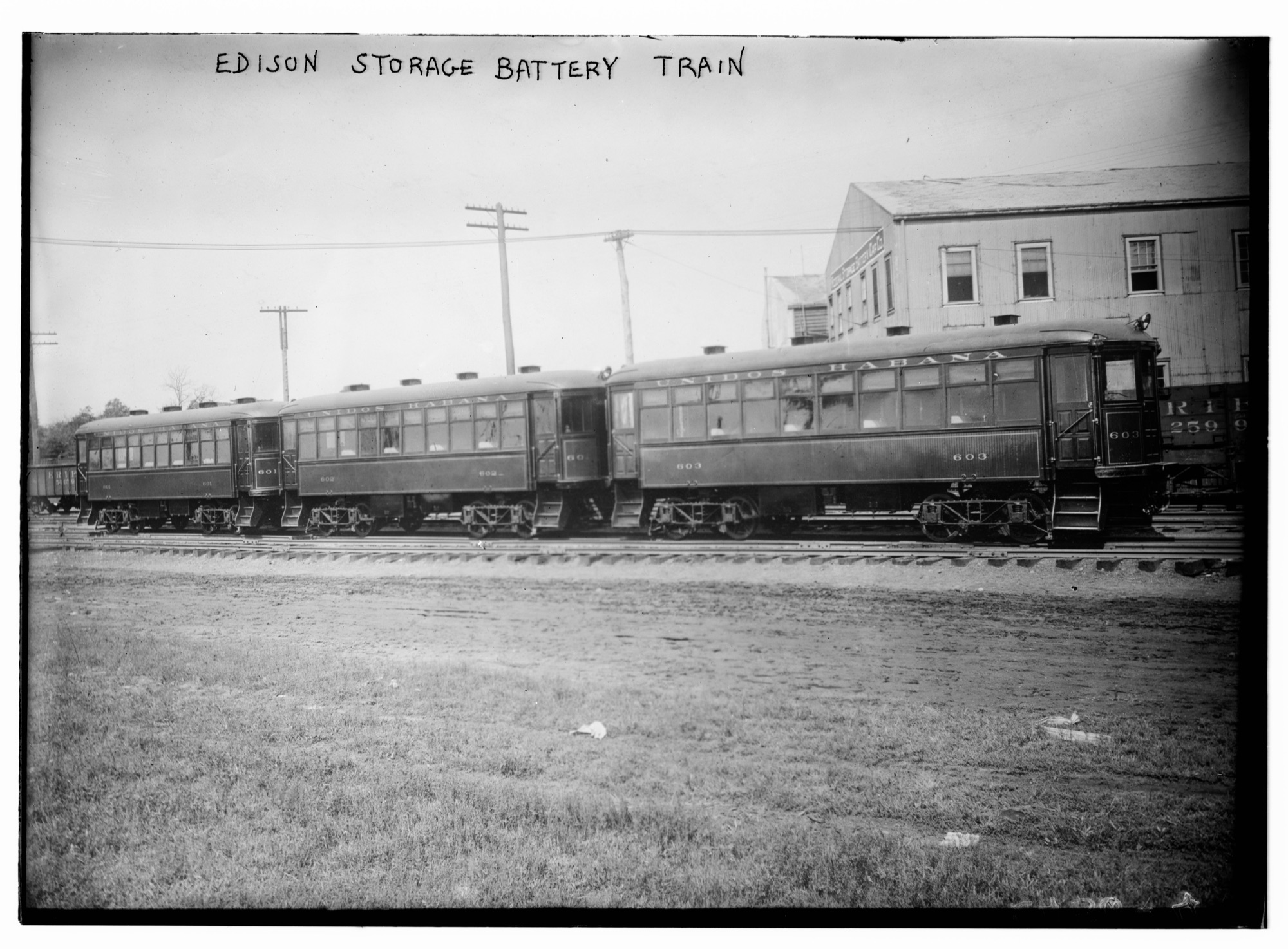
Edison later returned to electric transport through storage batteries. He promoted nickel-iron cells for vehicles and supplied battery railcars used on some routes. These machines carried their energy instead of drawing current continuously from track or wire.
The later battery work addressed a different infrastructure problem. A self-contained car could operate where electrifying an entire line was uneconomic. Once again Edison aimed at the point where power technology and a transportation business met.
The railway behind the laboratory
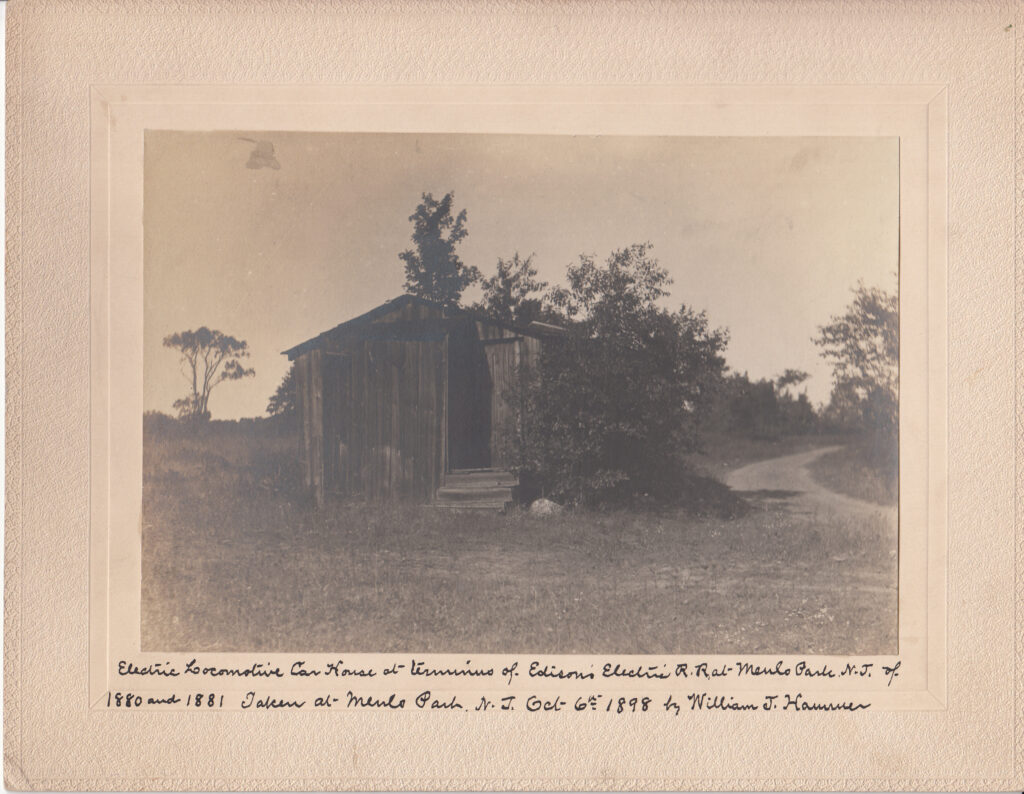
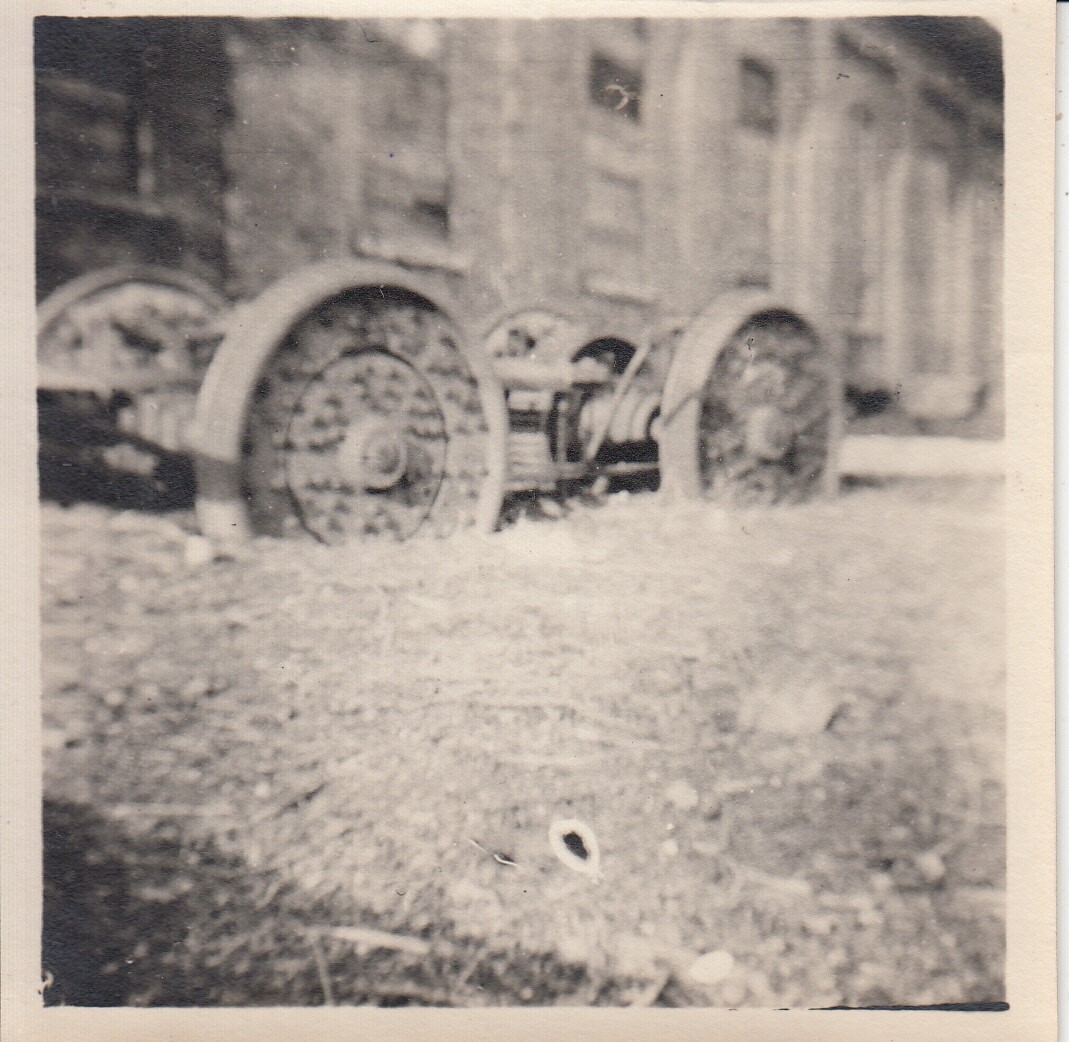
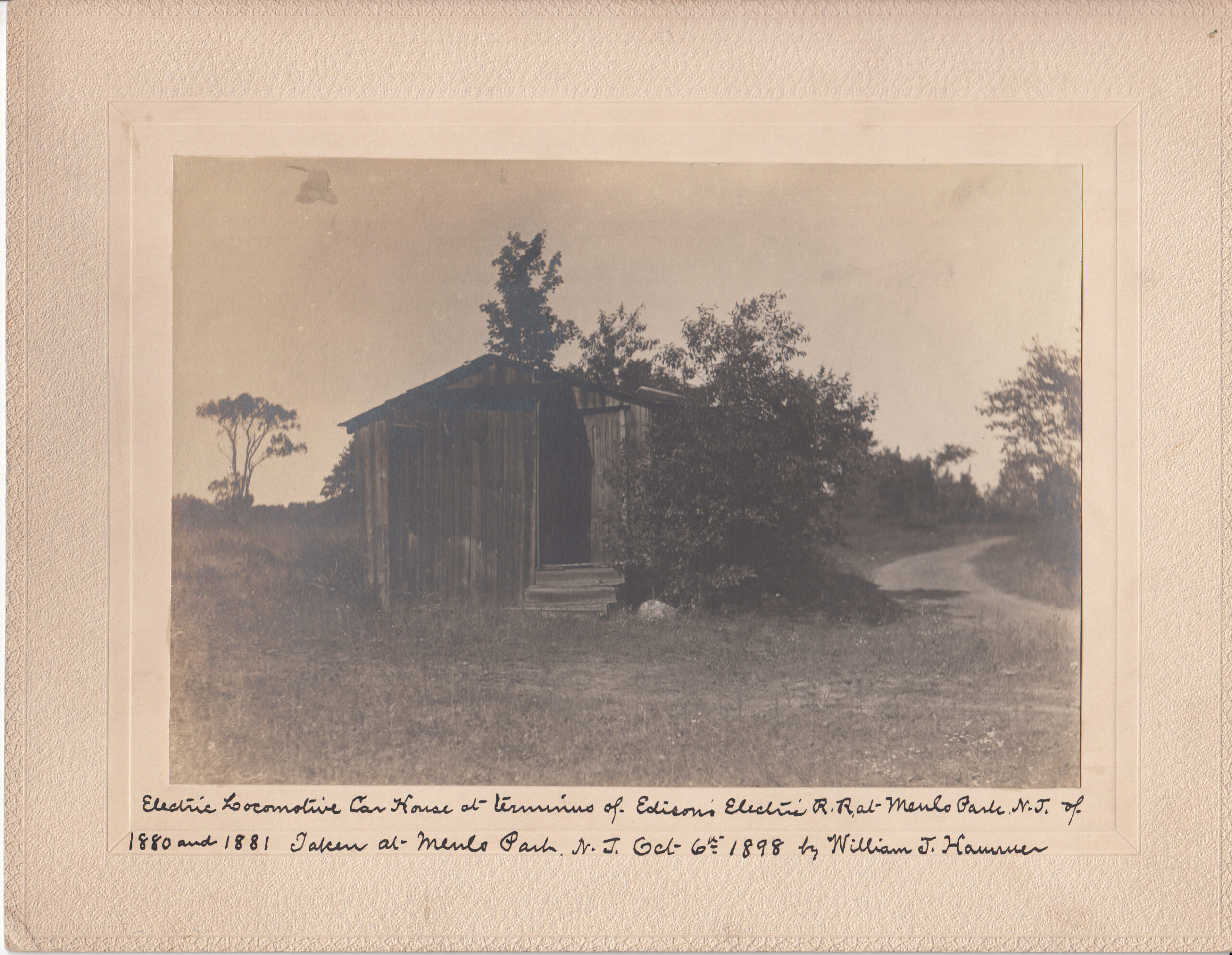
Photographs of the abandoned car house and locomotive remains make the experiment look like a curiosity. In 1880 it was a serious attempt to extend Edison’s electrical system beyond illumination.
The line did not become a railway empire. It revealed hard engineering problems, attracted investment and placed passengers inside a new kind of vehicle. Most importantly, it showed Edison thinking in systems: generation at one end, useful motion at the other and a network between them.
The little locomotive’s journey was short. The electrical railway’s future was not.
Later streetcars transformed urban growth, allowing people to live farther from work and creating new corridors of land development. Those systems owed more directly to Sprague and other traction specialists, but they fulfilled the broad market Edison had recognised.
Menlo Park’s rails belong in that prehistory: not the first track and not the final design, but a serious proving ground where the electrical system left the laboratory building and pulled its observers along.
Patents and shared priority
Edison’s railway patents covered particular arrangements of supply and apparatus. They did not confer ownership of all electric traction. Patent claims in the field overlapped with earlier and contemporary inventors, producing negotiations as well as disputes.
Stephen Field’s relationship with the Edison venture is a warning against giving one company a clean genealogy. Field brought independent ideas and legal rights. Later engineers selected useful elements without preserving every partnership behind them.
The mature street railway became a system assembled from motor design, trolley collection, track bonding, control and power distribution. No single Menlo Park patent contained it whole.
Why overhead wire won in the street
Supplying current through the running rails was simple on a private experimental track. In a public street, mud, rain, horses and pedestrians made insulation difficult. Leakage wasted power and could create hazards.
An overhead trolley wire separated the live conductor from the road while the rails provided return. It brought visual clutter and required switches at junctions, but proved maintainable. Conduit systems placed conductors below the street in some cities at greater cost.
The winning arrangement depended on place. Electric-railway design became civil engineering and municipal politics as well as a motor problem.
What the line taught Edison
Traction reinforced his interest in efficient generators, motor control and storage batteries. It also showed how much capital lay between an experimental ride and a railway franchise. Track rights, street permissions and maintenance networks could outweigh the locomotive itself.
Edison continued to patent transport ideas, but he did not devote the concentrated organisation to railways that he had given electric light. Other specialists accepted the long work of standardising an urban system.
The decision was not proof that the Menlo Park experiment lacked value. It was an allocation of attention—perhaps the scarcest resource in Edison’s laboratory.
The physical remains acquired a second life as evidence. Long after the rails stopped carrying current, photographs of the car house and discarded locomotive fixed the experiment in the landscape. They show technology after publicity has left: timber weathering, metal stripped and a once-futuristic system reduced to components.
Sources and further reading
- Thomas A. Edison Papers, “1871–1880” – public trial of 13 May 1880 and railway development.
- Thomas A. Edison Papers, “Working at Menlo Park” – experimental setting and staff.
- US Patent 273,489, “Electric Railway” – Edison’s rail-supply arrangement.
- US Patent 273,490, “Electric Railway” – related Edison railway apparatus.