In 1910 Thomas Edison gave an interview that seemed to deny the existence of the human soul. Newspapers condensed his argument into a more explosive label: atheist. Clergymen replied, admirers protested and Edison spent years being quoted as either an enemy of religion or a secret believer.
He was neither comfortably orthodox nor easy to place in a single philosophical box. Edison doubted personal immortality, rejected conventional theology and spoke of “Nature” as the intelligence governing matter. He also disliked the word atheist and later allowed that some form of survival after death might be possible. His views changed in expression and remained speculative rather than systematic.
A household of different traditions
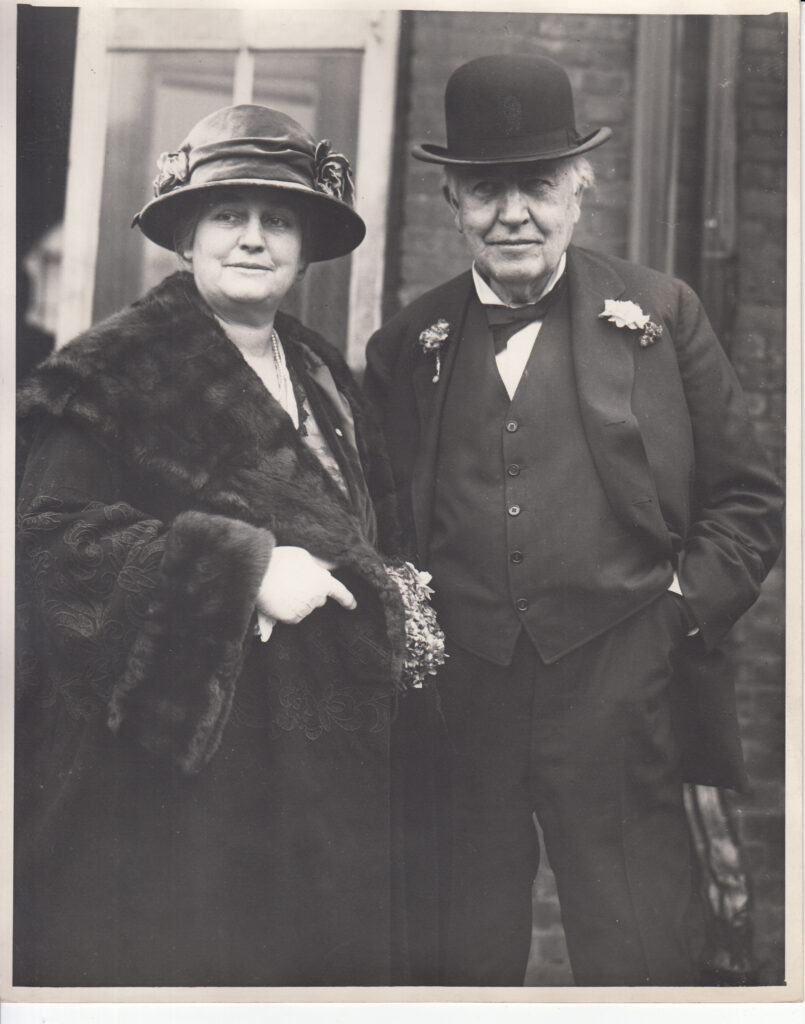
Edison was raised in a Protestant American culture but did not become a regular churchman. His second wife, Mina Miller Edison, came from a devout Methodist family. Her father, Lewis Miller, helped found the Chautauqua movement, where religious education, lectures and culture met.
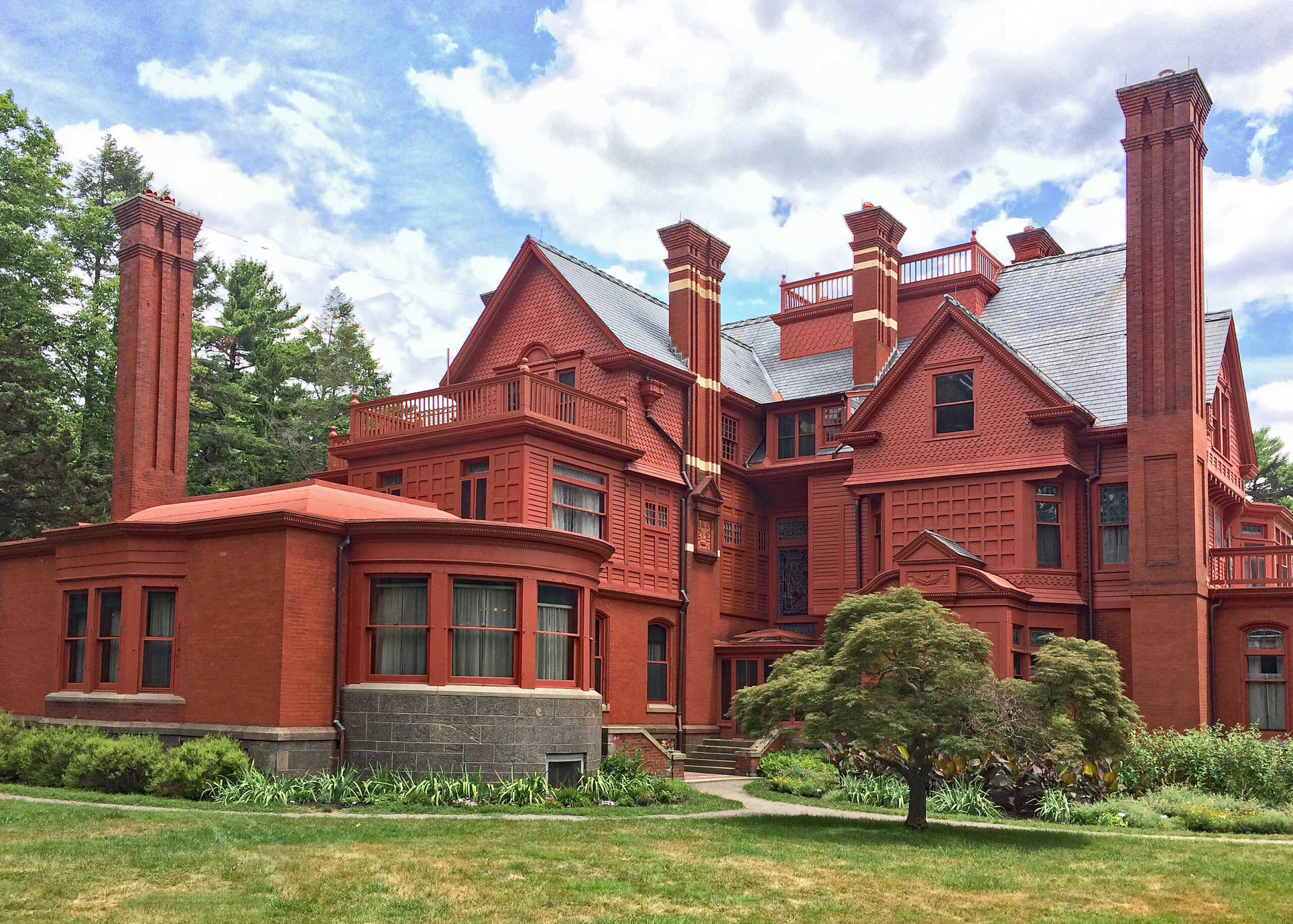
Glenmont therefore contained both Edison’s sceptical talk and Mina’s active faith. He attended religious occasions and maintained friendships with believers without accepting their doctrines. Family practice should not be mistaken for personal conversion, just as disagreement did not require domestic warfare.
The 1910 interview
In an interview published by the New York Times Magazine in October 1910, Edison argued that the body was composed of countless entities and that memory and personality depended on its organisation. When the organisation ended, he saw no evidence that an individual consciousness continued.
His language was materialist. Human beings were not exempt from the processes governing the rest of nature. Edison demanded evidence for an immortal soul and believed none had been demonstrated.
The public response focused on the word atheist. Edison objected that he believed in a supreme intelligence expressed through nature, though not in a personal God who intervened in human affairs. This position resembled deism or pantheistic naturalism more than orthodox Christianity. Labels remain imperfect because Edison did not build a formal philosophy.
What Edison meant by “Nature”
Edison often capitalised Nature and described it as immensely intelligent, unsentimental and governed by law. He saw no convincing evidence that it was merciful. Organisms were created and destroyed in quantities that made human ideas of providential care difficult for him to accept.
This language allowed him to affirm order without accepting a personal deity. Admirers sometimes quote “I believe in the existence of a Supreme Intelligence” as proof of conventional belief. Critics quote his denial of the soul as proof of categorical atheism. Each selects one side of a deliberately uncomfortable position.
His laboratory habits shaped the argument. Claims ought to produce observable evidence. But metaphysical questions cannot always be tested like filaments, and Edison sometimes carried experimental language farther than the experiment could go.
Newspapers make a creed
Interviewers knew that Edison’s name sold papers. A provocative sentence could be detached from a long conversation and printed beneath a headline about the soul. Religious editors then answered the headline, prompting another round of quotation.
Edison participated willingly. He liked compressed analogies and enjoyed challenging conventional authority. When criticism followed, he sometimes refined the language or blamed the summary without abandoning the underlying doubt.
This does not mean the interviews are worthless. It means they record a public exchange shaped by publication. Repeated statements across different occasions carry more weight than a single perfect-sounding quotation circulated without date or source.
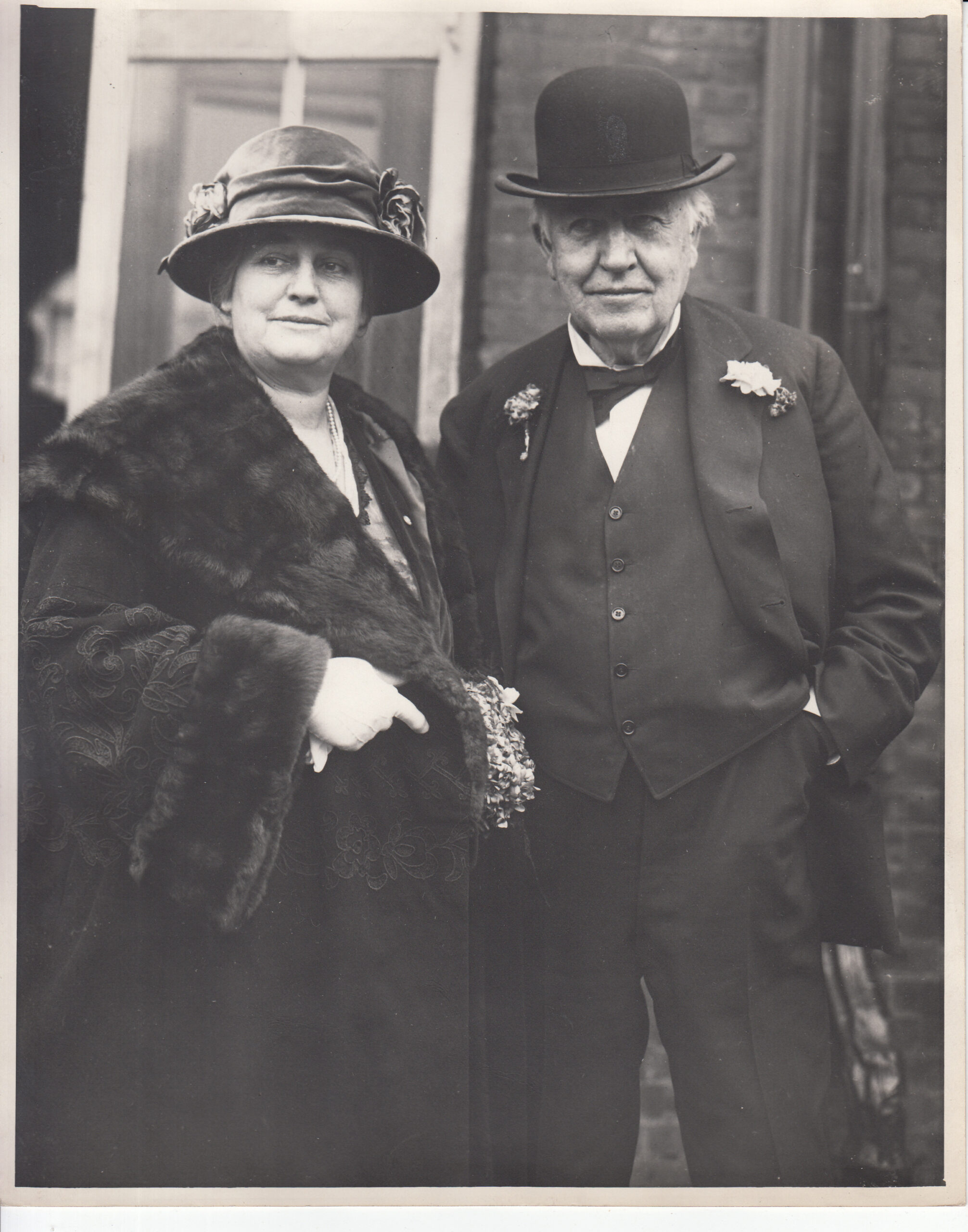 Thomas and Mina Edison in 1925. Mina’s Methodist faith and Edison’s scepticism coexisted within their marriage. Thomas Edison National Historical Park; public domain.
Belief, morality and organised religion
Edison did not argue that disbelief in immortality removed moral obligation. He valued work, honesty, usefulness and responsibility in largely secular terms. His own business conduct can be judged against those values without assuming theology supplied them.
He was critical of dogma and clerical certainty but could support religiously connected civic and charitable activities. Mina’s Chautauqua world demonstrated that faith, education and modern science were not always enemies.
The question “Was he an atheist?” can therefore hide several questions: Did he belong to a church? Did he accept a personal God? Did he believe consciousness survived death? Did he think nature displayed intelligence? Edison’s answers were not the same to each.
Was Edison an atheist?
If atheist means a person who rejected belief in a personal, providential God and doubted life after death, the label captures important parts of his outlook. If it means someone who denied any intelligence or order beyond material processes, Edison denied that the word fitted him.
The safest historical description is that he was a religious sceptic and naturalistic thinker who rejected orthodox doctrine. He did not accept Christianity’s usual account of soul and resurrection. He did not present himself as certain that reality contained nothing beyond matter.
We should also allow a person to be inconsistent. Interviews occurred across decades, questions were phrased by reporters and Edison enjoyed provoking an audience. A single quotation is evidence, not a complete creed.
The alleged “spirit phone”
After the First World War, newspapers reported that Edison was considering an apparatus capable of communicating with surviving personalities after death. The story has grown into claims that he built a secret spirit telephone.
Edison discussed a hypothetical “spirit communicator” in interviews. His reasoning was conditional: if personality consisted of tiny enduring units, a sufficiently sensitive instrument might detect their activity. He preferred a machine to séances and mediums because an apparatus could be tested.
No verified working device has been found. The surviving accounts describe speculation and perhaps proposed experiments, not a completed machine that contacted the dead. His interest does not prove belief in spirits; it demonstrates willingness to frame even that question as a detection problem.
A change in old age?
In 1926 Edison was reported as admitting that the soul might exist. The wording is often treated as a deathbed conversion. He still expressed uncertainty and did not embrace a church doctrine. Advancing age and criticism appear to have softened the confidence of his earlier denial rather than reversed his outlook completely.
He continued to value evidence and remained wary of organised claims about the afterlife. There is no reliable basis for stories that he renounced his scepticism at the last moment.
When Edison died in 1931, ministers took part in memorial observances and his family’s religious world surrounded the event. Public ritual tells us how a society mourned him, not precisely what he believed.
Religion in the age of invention
Edison’s views belonged to a wider nineteenth- and early-twentieth-century argument. Evolution, geology, biblical criticism and industrial science challenged inherited certainties. Some scientists remained devout; others separated natural law from revelation; spiritualists claimed that new instruments might expose an unseen world.
The phonograph and motion picture made voices and bodies appear after the performer had left. Electrical forces acted invisibly. It is unsurprising that the public imagined invention crossing the boundary of death. Edison’s name gave those hopes unusual authority.
The limits of a quotation
Edison did not leave a systematic theological book. He left interviews, letters, reported conversations and provocative remarks. They show a man hostile to dogma, doubtful of personal survival and impressed by the order he called Nature.
Calling him simply an atheist may be defensible under one definition but conceals his own objection and his language of supreme intelligence. Calling him a believer conceals far more. The honest answer is that Edison stood outside conventional religion and refused certainty where he believed evidence was absent.
That answer lacks the force of a label. It has the advantage of resembling the man.
It also prevents the later “spirit phone” from becoming evidence of a supernatural conversion. Edison could doubt survival and still ask what evidence would change his mind. A testable possibility was more attractive to him than a séance precisely because he mistrusted testimony without apparatus.
His uncertainty in old age was not weakness. On a question he once answered too confidently, it may have been the most scientific part of his position.
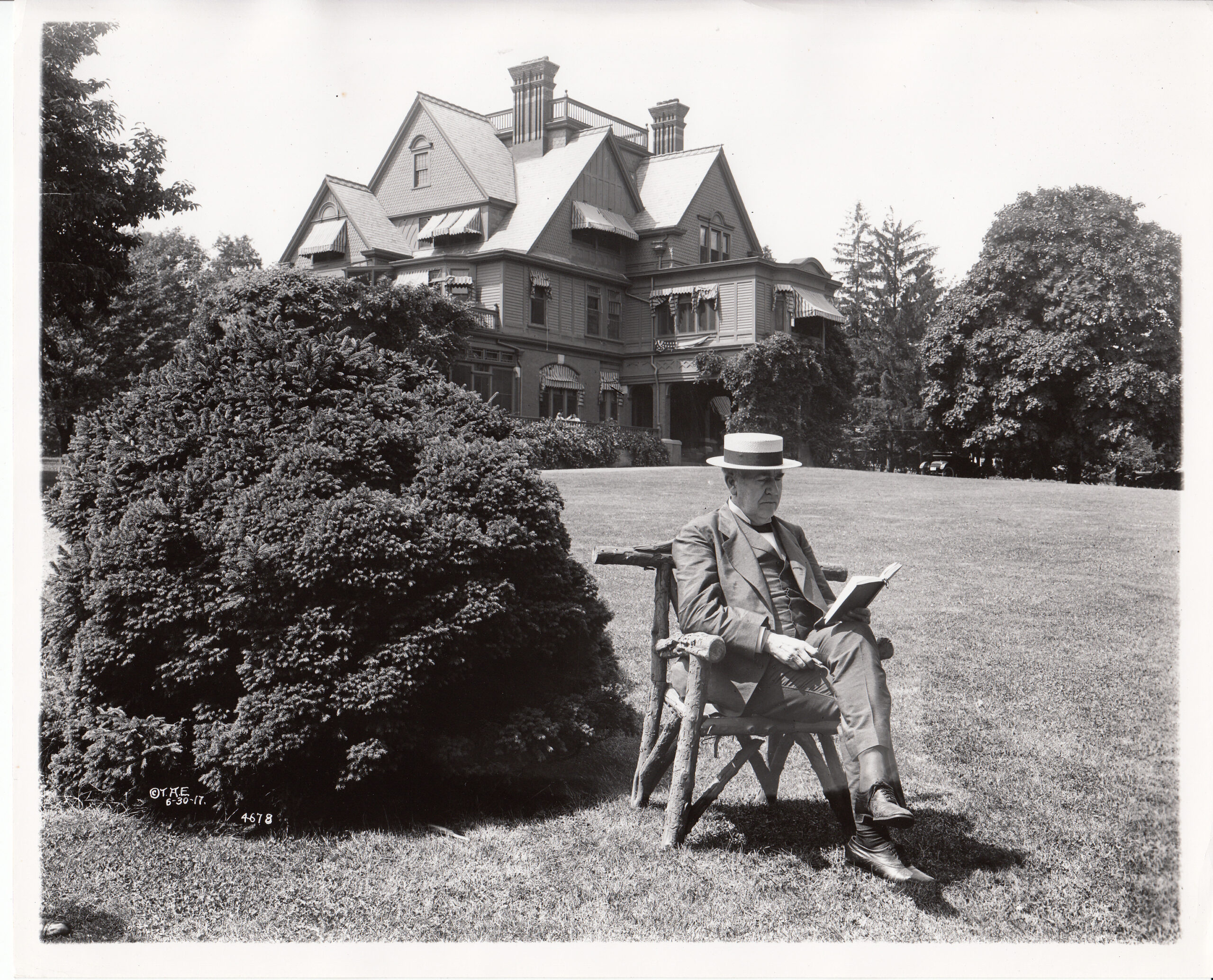 Edison reading at Glenmont in 1917. His public statements on religion appeared mainly in interviews rather than a systematic philosophical work. Thomas Edison National Historical Park; public domain.
Quotations Edison probably did not say
Famous figures attract sentences designed to sound like them. Edison is credited online with polished declarations about God, the soul and energy that circulate without a contemporary interview, letter or notebook. Repetition is not provenance.
A reliable quotation needs a dated source and, preferably, the surrounding exchange. Newspaper text may still contain editorial compression, but it is stronger evidence than an image carrying no citation. Where wording varies, paraphrase is safer than quotation marks.
This caution matters especially in religious debate because both believers and unbelievers have an incentive to recruit a famous inventor. Edison’s authority in electricity cannot settle metaphysics, and a manufactured sentence should not be allowed to try.
How Mina responded
Mina’s surviving life demonstrates continued religious commitment. She supported church and charitable activities and maintained connections with Chautauqua. Accounts of the marriage suggest she worried about her husband’s views and hoped for belief.
We should not invent private arguments the record does not preserve. The couple shared family, social and business responsibilities despite metaphysical difference. Edison’s willingness to participate in Mina’s world did not necessarily signify assent.
Their household is a useful correction to a culture-war portrait. Religious conviction and scientific scepticism met at breakfast, in illness and in decisions about children. They were lived relationships before they were labels.
Death and the light left burning
After Edison died, electric lights were briefly dimmed in parts of the United States as a public tribute. The gesture is sometimes given spiritual meaning, but it commemorated the industry associated with him rather than stating his belief about an afterlife.
Public mourning transforms a person into symbol. Edison became light itself, while the private uncertainty he expressed was harder to memorialise. Historical biography has to return from the symbol to the unresolved words.
Sources and further reading
- Thomas A. Edison Papers, “1910” chronology – the interview and resulting controversy.
- Thomas A. Edison Papers, “The Spirit Phone” – Edison’s speculative afterlife apparatus.
- Thomas A. Edison Papers bibliography – contemporary interviews and published statements.
- “Edison Now Admits the Soul May Exist” (1926 newspaper text) – the qualified later statement.