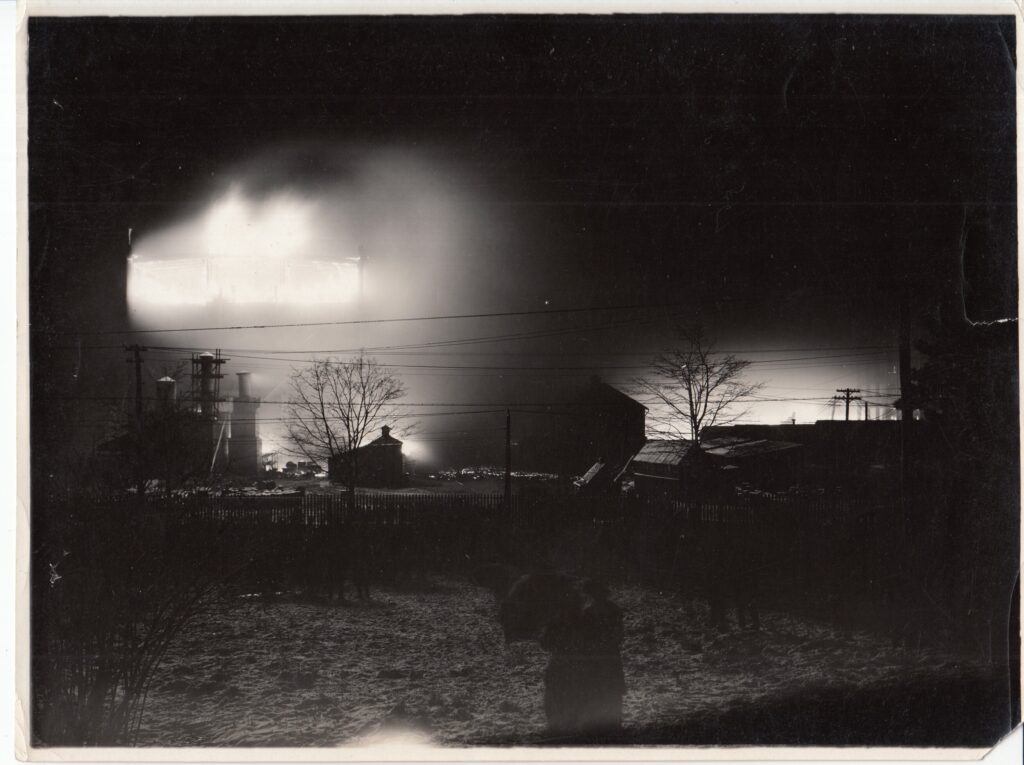
At about half past five on the cold evening of 9 December 1914, an explosion in a film-inspection building at Thomas Edison’s West Orange works turned an industrial accident into a spectacle visible for miles. Nitrate film fed the first flames. Fire leapt through wooden window frames, crossed alleys and entered buildings filled with phonograph materials, chemicals and machinery. Within hours, much of the factory surrounding Edison’s great laboratory was burning.
The story is often reduced to a single heroic sentence: Edison, aged sixty-seven, watched his life’s work disappear and announced that he would start again the next morning. The reality was more interesting. The fire did not consume everything, the exact loss was disputed, and the concrete factory buildings were not quite as “fireproof” as their owners had believed. One employee died, firemen were injured and thousands of workers faced an uncertain Christmas. Edison’s response was energetic, but it depended upon an organisation that could salvage, borrow, reorganise and rebuild at remarkable speed.
The industrial city around the laboratory
By 1914, West Orange was no longer merely a laboratory in which a famous inventor and a few assistants tried ideas. The red-brick main laboratory opened in 1887, but factories, stores, railway sidings and specialist shops had spread around it. Phonographs and records were manufactured on a large scale. Motion-picture film was inspected and processed. Batteries, office equipment and other Edison products passed through a complex that employed several thousand men and women.
This distinction matters. Contemporary reports sometimes said that “Edison’s laboratory” had been destroyed. In fact, the fire-resistant laboratory buildings on the other side of the yard survived, as did the storage-battery works across the street. The severest damage fell upon the Phonograph Works and associated manufacturing buildings. Edison lost a great industrial plant, not the whole of his experimental establishment or every record of his work.
The factory’s contents made fire a constant threat. Early motion-picture film used cellulose nitrate, which burns fiercely and can sustain combustion with little outside oxygen. Record manufacture brought other combustible substances into close proximity with timber fittings and ordinary glass. Reinforced-concrete floors and walls reduced the amount of structural material available to burn, but they did not seal one department from another.
How the fire began
The most reliable modern accounts place the beginning in the Film Inspection Building. The Thomas A. Edison Papers chronology records an explosion there on 9 December. A later National Park Service study describes a building containing motion-picture film stock. Surviving reports do not justify an elaborate theory about the person or precise action that caused the first ignition. What is certain is that the fire found exceptionally dangerous fuel almost at once.
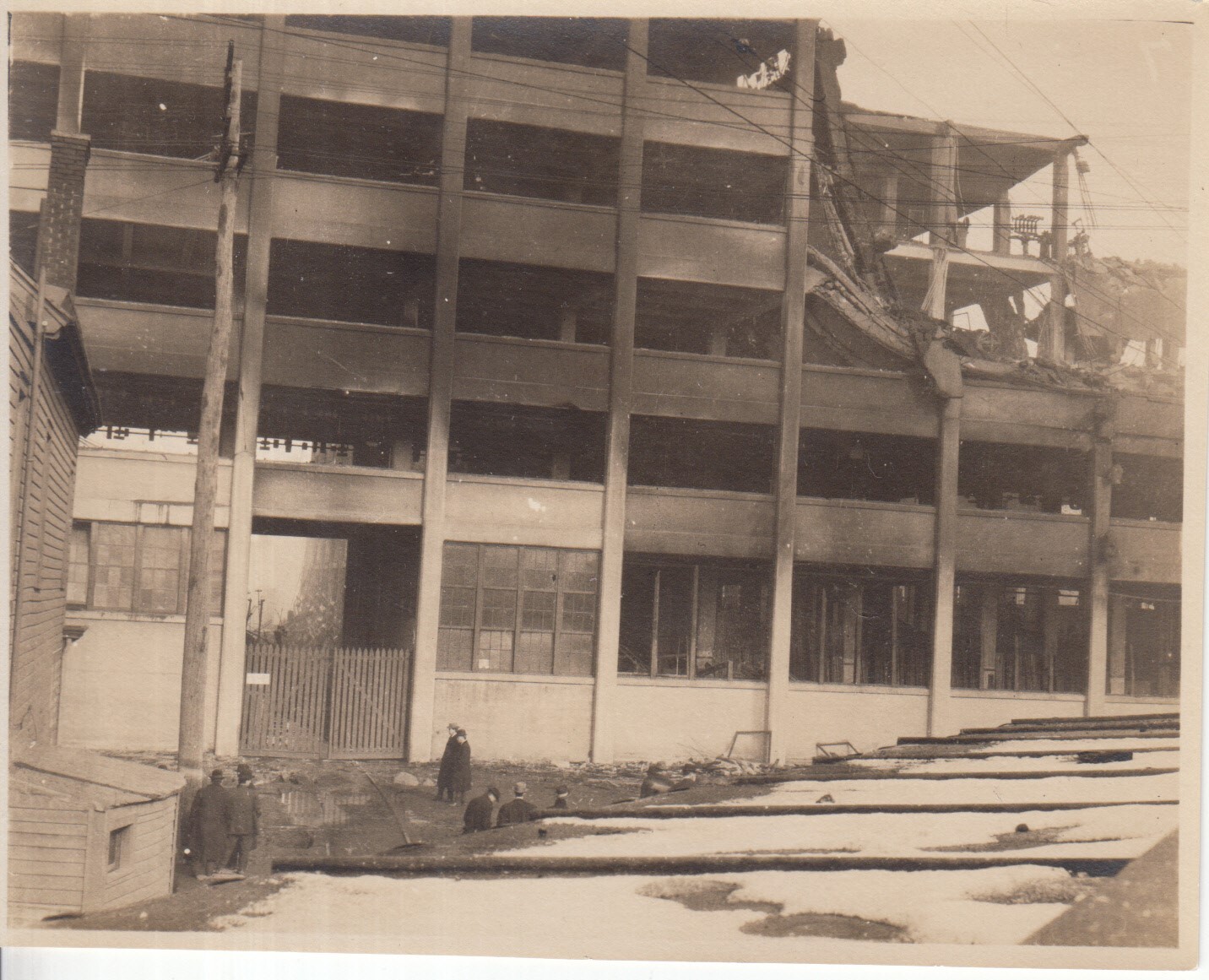
Flames and burning material escaped through windows. Intense heat shattered ordinary glass across the narrow spaces between buildings; fire then entered fresh rooms through their wooden sashes. The concrete shells did not burn, but their openings admitted fire as readily as the mouths of furnaces. An engineering assessment published shortly afterwards made the uncomfortable point that a non-combustible frame was not the same thing as a fireproof factory.
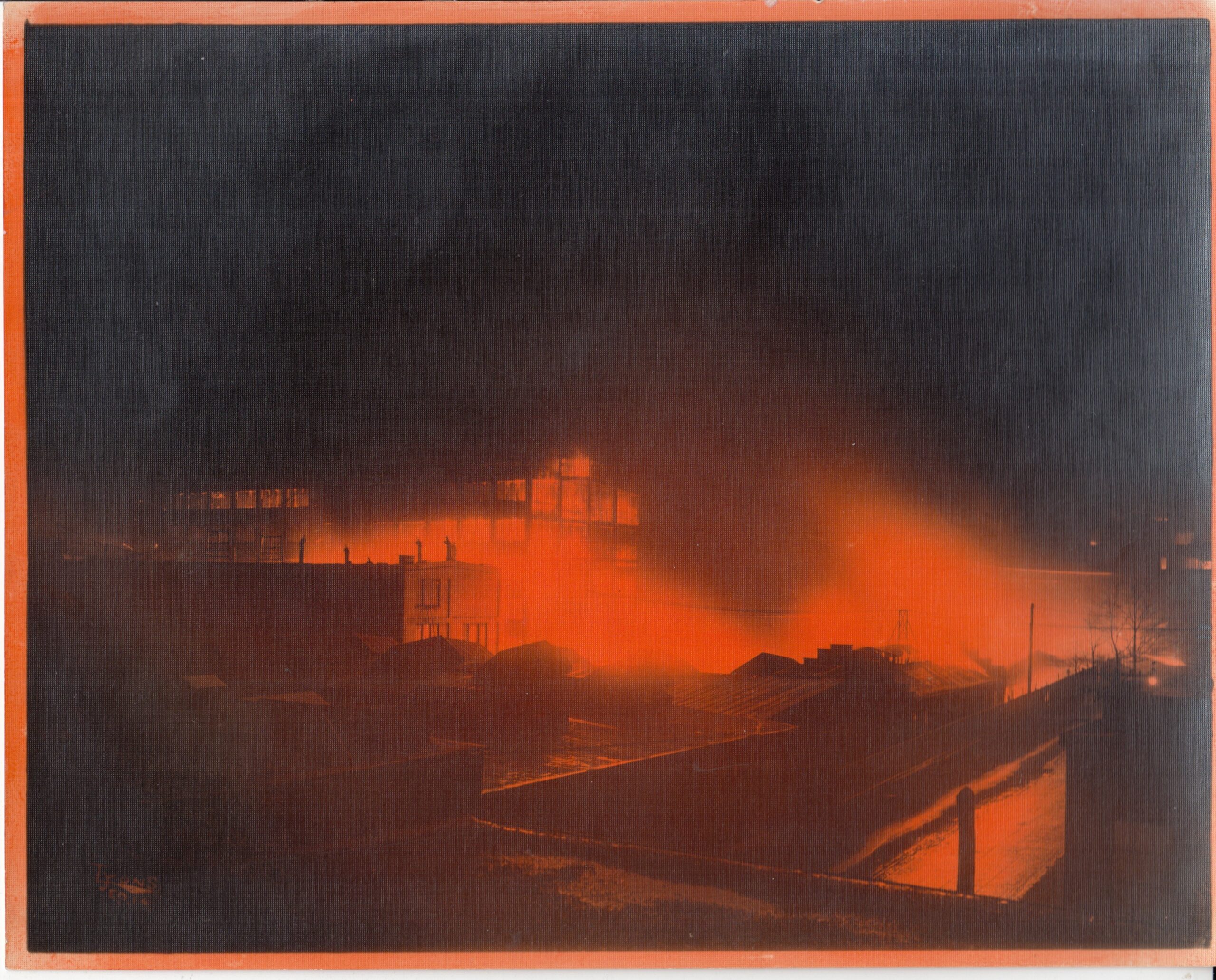
Local brigades were joined by firemen from neighbouring towns. Water froze on ladders and clothing in the winter air. Chemical containers burst, walls failed and the glare drew crowds towards West Orange. Four firemen were reported injured. One Edison employee, William Trost, died after the collapse of a floor or roof while he was fighting the blaze from within the works. His death is easily lost when the event is told only as a parable about Edison’s optimism.
What burned—and what remained
Newspaper estimates varied wildly. Some reports put the loss at seven million dollars; insurance and engineering accounts produced lower figures. The National Park Service’s later historical study says that fifteen of the twenty-two Phonograph Works buildings were badly damaged or destroyed. Headlines written while the ruins were still hot cannot be treated as audited accounts.
The photographs are more useful than the biggest numbers. They show collapsed walls, twisted machinery, ruined record racks and concrete rooms blackened by fire. Building 24, a six-storey manufacturing block, suffered heavily. Record-making facilities and stocks were lost. Yet portions of several concrete buildings remained structurally usable. Edison’s library, notebooks and central experimental shops escaped the worst. The battery business could continue, and work could be moved into spaces that had survived.
The fire therefore tested two different Edison systems. It exposed defects in the physical system of factory construction, especially the reliance on timber sashes and plain glass. At the same time, it demonstrated the resilience of the organisational system: shops, managers, purchasing arrangements, skilled employees and laboratories that could be redirected towards recovery.
Edison in the yard
Edison arrived while the fire was raging and stayed through much of the night. His son Charles later remembered being summoned to see a spectacle that would not come again. Variants of the famous exchange differ in wording, which is reason enough not to place a polished quotation in Edison’s mouth without qualification. The consistent element is that he refused to treat the disaster as final. Newspapers reported him saying that, although he was more than sixty-seven, he would start over.
That was partly temperament and partly public management. Edison had spent decades turning setbacks into demonstrations of persistence. Reporters were present; employees and creditors needed reassurance. His confidence did not restore machinery, but it made clear that the organisation was not being wound up. At a moment when thousands of workers could reasonably fear dismissal, the promise of reconstruction had practical force.
He also understood what had survived. The laboratory, stores and battery works gave the company a foundation from which to act. He was not beginning again with a pencil and an empty room. He was directing an experienced industrial concern through a severe but containable emergency.
The morning after
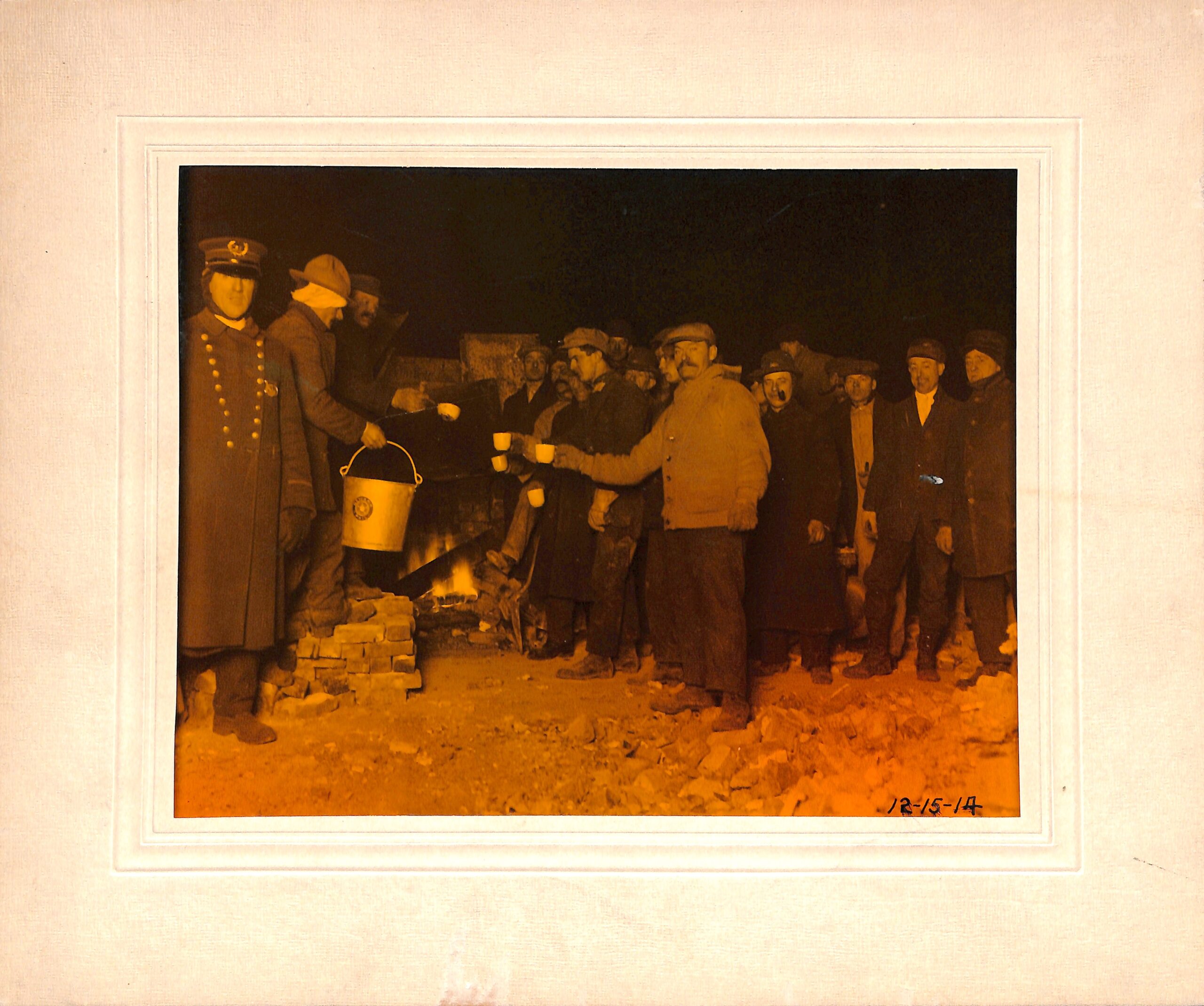
Salvage began almost immediately. Men cleared debris, recovered equipment and identified floor space that could be used. A photograph taken less than a week later shows a night gang pausing for sandwiches and coffee. It is a more honest image of reconstruction than the solitary-Wizard legend: recovery was dirty, cold, collective work.
Edison sought machinery from manufacturers and competitors, rearranged production and took advantage of insurance. Some workers were temporarily displaced, but reconstruction moved quickly. The timing, just before the United States became a major supplier to countries already at war in Europe, soon brought new demand for chemicals and electrical products. The West Orange complex would reach its highest employment during the First World War.
Rebuilding did not mean recreating the old plant unchanged. Steel-framed windows with wire glass replaced vulnerable wooden sashes in important buildings. Emergency exits and improved hydrants followed. Fireproof vaults were constructed for disc masters and Blue Amberol moulds. Those metal masters were commercially precious: without them, a record catalogue could disappear even if presses and mixing equipment were replaced.
Was the factory really fireproof?
The phrase “fireproof factory” appeared frequently after the disaster, usually with an air of accusation. Reinforced concrete had been promoted as a safer alternative to timber-framed industrial construction, and Edison himself had become a forceful advocate of cement. The West Orange fire did not show that concrete was useless. It showed that a building is a system, not simply a material.
Concrete walls and floors generally endured better than combustible construction would have done. They limited some collapses and allowed sections to be repaired. The failures lay at openings, compartments and contents. Plain glass broke under heat; wooden frames ignited; unprotected routes carried fire between densely stocked rooms. A concrete box full of nitrate film, solvents and timber fittings could still become an oven.
This is why the fire belongs in the history of Edison’s concrete ambitions as well as his phonograph business. His confidence in an industrial material was not wholly misplaced, but the event forced a more complete understanding of fire protection. The lessons lay in steel windows, wired glass, separation, exits, hydrants and protected storage—not in a magical building substance.
The survival pattern also explains why early newspaper loss estimates must be handled cautiously. Reporters saw a spectacular wall of flame and quoted figures before inventories could be examined. Fifteen of the twenty-two Phonograph Works buildings were badly damaged or destroyed, yet the main laboratory and important battery buildings escaped. The financial loss was severe, not the total destruction of every Edison facility sometimes implied by anniversary retellings.
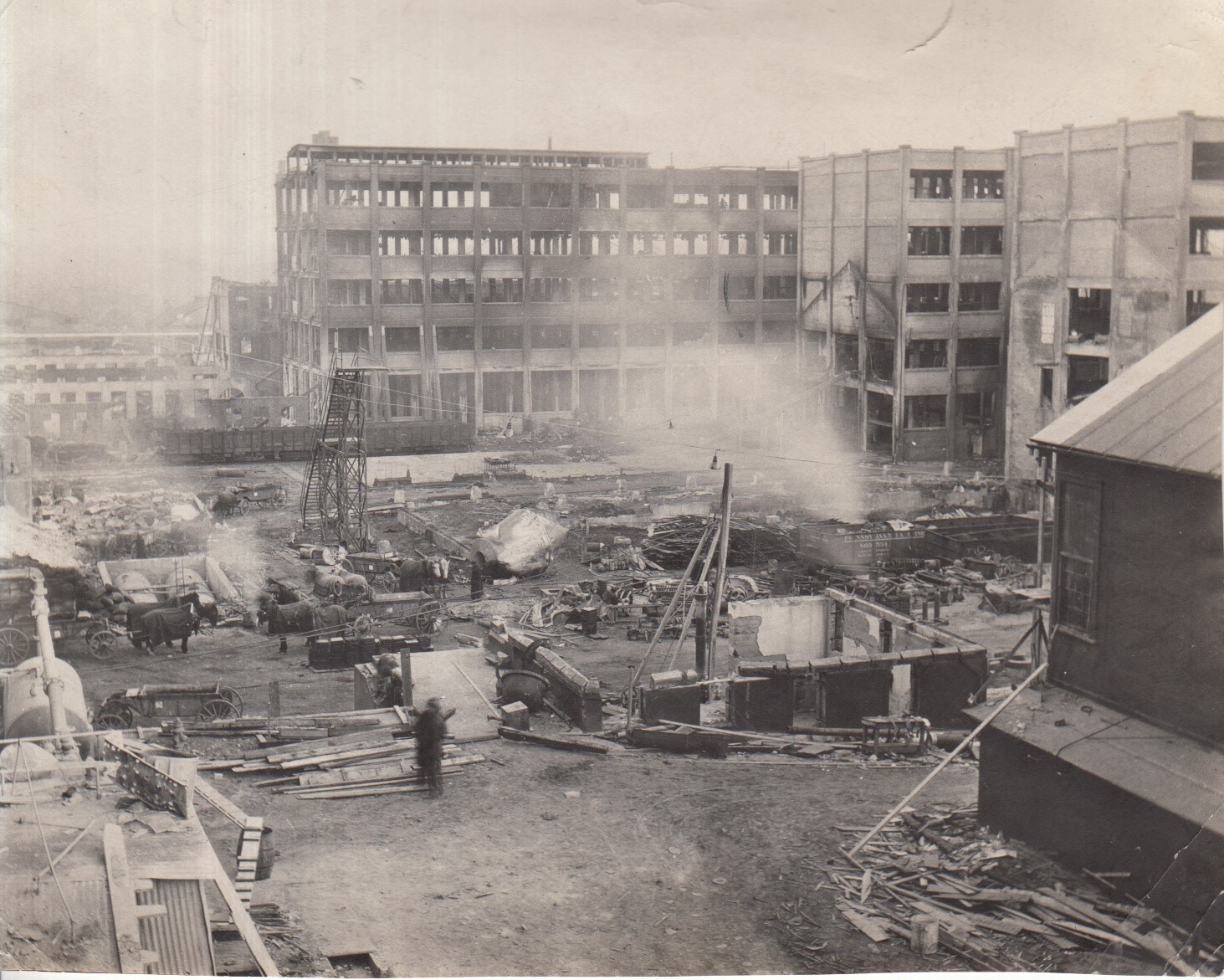 The Phonograph Works under reconstruction on 10 December 1914, with damaged Buildings 7, 11, 13 and 15 visible. Thomas Edison National Historical Park; public domain.
What the fire reveals about Edison
The West Orange fire is sometimes used as a motivational anecdote: everything burned, Edison smiled, and a greater factory rose from the ashes. That version removes the death, the workforce, the insurance, the surviving laboratory and the practical lessons. It also makes Edison’s achievement smaller by turning a complicated recovery into a slogan.
His real strength was not cheerfulness in front of flames. It was the ability to see an industrial organisation as something that could be reassembled. Buildings were damaged, but skills, relationships, designs and markets remained. He mobilised those resources rapidly and accepted changes that the fire had proved necessary. The rebuilt works continued to make records and other products, while wartime expansion soon filled West Orange with more employees than before.
At dawn on 10 December, the Edison empire was wounded rather than erased. The laboratories still stood, men were already inspecting the ruins and the inventor understood that reputation itself could be used as capital. The night is memorable because Edison did begin again. It is historically important because thousands of other people began again with him.
Sources and further reading
- Thomas A. Edison Papers, “1914” chronology – date, origin in the Film Inspection Building and contemporary sequence.
- Thomas A. Edison Papers, “Edison Phonograph Works” – company history and reconstruction.
- National Park Service, Thomas Edison National Historical Park registration study – buildings damaged, surviving complexes and fire-safety changes.
- Thomas Edison National Historical Park, “Fire at Edison Laboratory at night” – dated archival photograph and rights record.
- Hopkinsville Kentuckian, 12 December 1914 – a contemporary newspaper report, including early loss and employment estimates.
- Edison Phonograph Monthly, January 1915 – company response and contemporary engineering discussion of the concrete buildings.
- Thomas Edison National Historical Park, “Disc Record Vault” – post-fire storage of disc masters.