When the Lusitania was torpedoed in May 1915, the United States was still neutral in the European war. Thomas Edison responded by arguing that the country needed a permanent government laboratory devoted to military science. Josephus Daniels, Secretary of the Navy, then asked the most famous inventor in America to lead a civilian board of engineers and scientists.
The Naval Consulting Board sounded like an invention factory mobilised for national defence. Its results were mixed. It screened a flood of proposals, surveyed American industrial capacity and helped establish the principle that the Navy required organised research. It also became entangled in bureaucracy, disputes over a proposed laboratory and inflated expectations of what Edison personally could deliver. His most sustained wartime experiments took place outside the board, using his own staff and vessels to attack problems of submarines, torpedoes, sound ranging and camouflage.
Edison and the Navy before 1915
Edison’s interest in naval technology did not begin with the board. Storage batteries offered power for submarines, and his chief engineer Miller Reese Hutchison pursued military applications. Edison cultivated relations with Daniels and Navy officers before the United States entered the war.
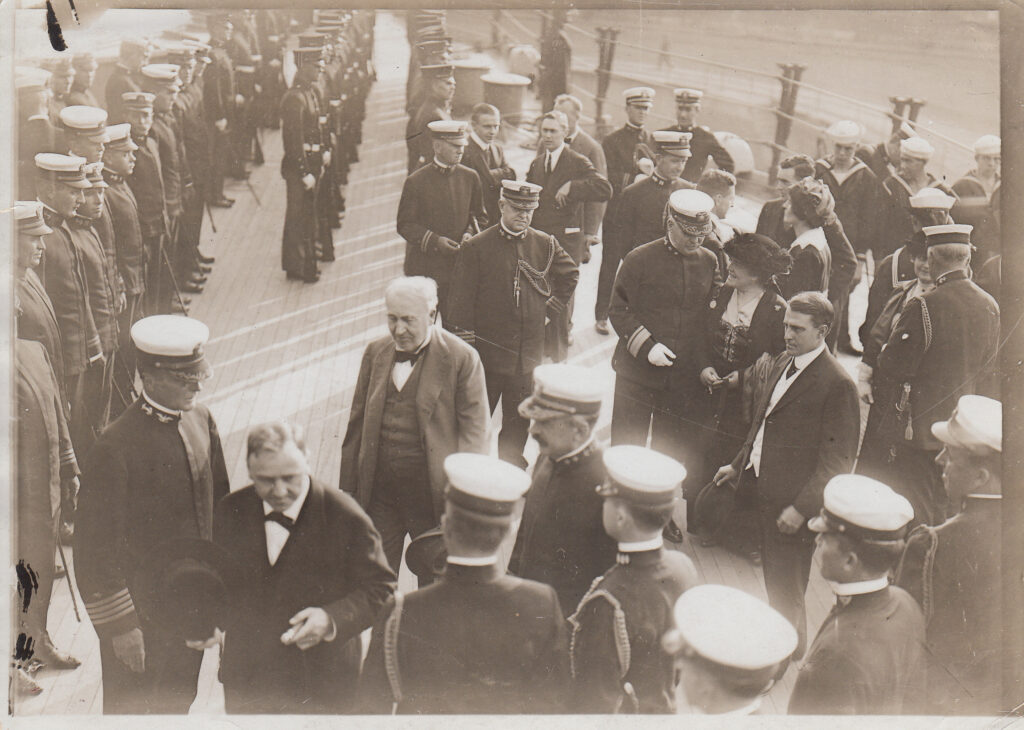
On 12 October 1914, Edison, Hutchison and members of the family visited the Brooklyn Navy Yard and went aboard the battleship USS New York. Photographs place Edison among machinery and officers rather than at a desk. The visit occurred only weeks after war began in Europe and helped associate his laboratory with preparedness.
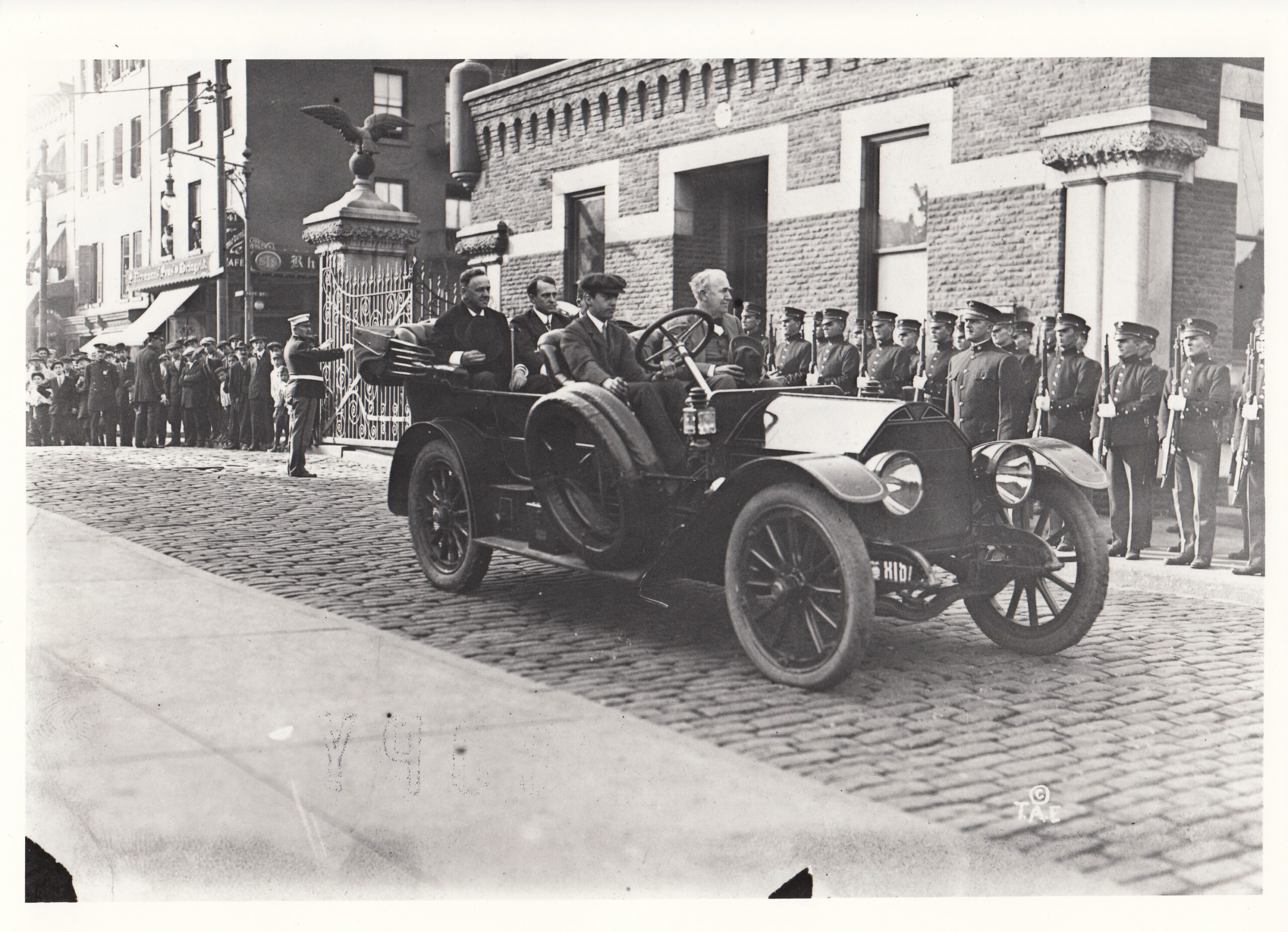
American neutrality did not mean indifference. German submarines, wireless communication, aircraft and industrial warfare demonstrated that the next conflict would depend upon science and manufacturing. Edison believed the Navy was too dependent upon occasional advice and should employ researchers continuously.
The Naval Consulting Board is formed
Daniels announced the board in September 1915 with Edison as chairman. Major engineering societies nominated representatives, producing a group of roughly two dozen members drawn from electrical, mechanical, mining and chemical fields. Names included Peter Cooper Hewitt, Frank Sprague, Willis Whitney and Hudson Maxim. The board was civilian and advisory; it did not command ships or replace the Navy’s technical bureaus.
The appointment was excellent public theatre. Edison represented practical invention rather than academic abstraction. Daniels hoped his name would attract talent, reassure the public and encourage useful submissions. Newspapers, however, could imply that the “Wizard” was now personally inventing a weapon to end the submarine threat.
The board’s formal tasks evolved. It evaluated ideas sent to the Navy, advised on technical questions, promoted research and conducted an industrial inventory. The country did not yet have a single institution capable of connecting universities, corporations, independent inventors and naval officers on this scale.
A flood of inventions
War stimulated thousands of proposals from the public. Some were plausible improvements; others ignored basic physics. Devices promised to detect submarines at impossible distances, make ships invisible or destroy fleets with mysterious rays. The board and its committees had to separate ideas worth testing from drawings that could not work.
This screening function was unglamorous but necessary. A rejected inventor might accuse officials of suppressing a decisive weapon. A promising idea still required engineering, materials, trials and integration with ships. Edison knew from commercial development that an idea alone was not a product, yet public discussion often treated patentable novelty as the whole of invention.
The board also organised an industrial preparedness survey. It gathered information about factories, tools, labour and materials that might be mobilised in war. This may have been less exciting than a torpedo detector, but it addressed the reality of modern conflict: ships and munitions depended upon a national production system.
The argument for a naval research laboratory
Edison’s most durable policy contribution was his insistence that the Navy needed a permanent laboratory. Research should not begin only after an emergency, he argued, and naval officers should work alongside civilian scientists and engineers. Daniels and the board supported the principle, but agreement dissolved when the location and control were discussed.
Edison favoured a site at Sandy Hook, New Jersey, close to New York harbour and his West Orange resources. Others preferred Annapolis or Washington, where the laboratory would be near the Navy Department. The war, appropriations and institutional rivalry delayed the project. Edison resigned from the board in January 1921 after a prolonged dispute over its mission and location.
The Naval Research Laboratory eventually opened in Washington in 1923. It would be too simple to call it an Edison invention; many officers, scientists and legislators shaped the institution. His advocacy helped make permanent naval research a public and political priority.
America enters the war
After the United States declared war on Germany in April 1917, Edison devoted more of his time and staff to defence. The West Orange complex was already expanding because wartime disruption had cut off German chemicals. Edison built plants for phenol, benzene derivatives and other materials required by industry and explosives manufacture.
He accepted the rank of civilian expert rather than a naval commission and spent long periods working from the coast. The Navy provided vessels and access; Edison provided experimenters, apparatus and a willingness to test repeatedly. His surviving lists contain dozens of projects, but a list of problems is not a list of successful inventions.
Searching for submarines
The German U-boat was the central fear. Edison explored ways to detect a submerged submarine through sound, changes in water or other physical effects. Hydrophone technology was developing rapidly, but the sea is a noisy environment. Engines, waves, currents and the detecting ship itself obscured weak signals.
He conducted trials from vessels off the Atlantic coast, especially around Long Island Sound and the approaches to New York. Work included directional listening, sound ranging and methods for determining the position of gunfire. Some ideas overlapped with research by universities, Allied navies and companies such as Western Electric.
No single Edison device defeated the U-boats. Convoys, depth charges, improved hydrophones, patrol aircraft, intelligence and mine barriers acted together. His experiments contributed observations and prototypes, but claims that he invented a complete modern sonar system during the war go beyond the evidence.
Torpedoes, lookouts and camouflage
Edison investigated methods of protecting ships and improving their weapons. He considered torpedo control, periscopes, smoke screens, ship camouflage and systems for spotting vessels at night. He studied the visibility of ships against different backgrounds and explored ways to reduce the chance of collision in convoy.
Some projects were practical modifications rather than patent-worthy machines. Better procedures, lookout arrangements or training could save ships without creating a dramatic artefact. This suited Edison’s systems thinking, though it disappointed reporters expecting a secret weapon.
He also examined the detection and ranging of enemy guns by sound. Artillery on the Western Front had made acoustic measurement an urgent science. The Navy’s coastal and shipboard problems differed, and results had to be translated into equipment sailors could operate under combat conditions.
The factory goes to war
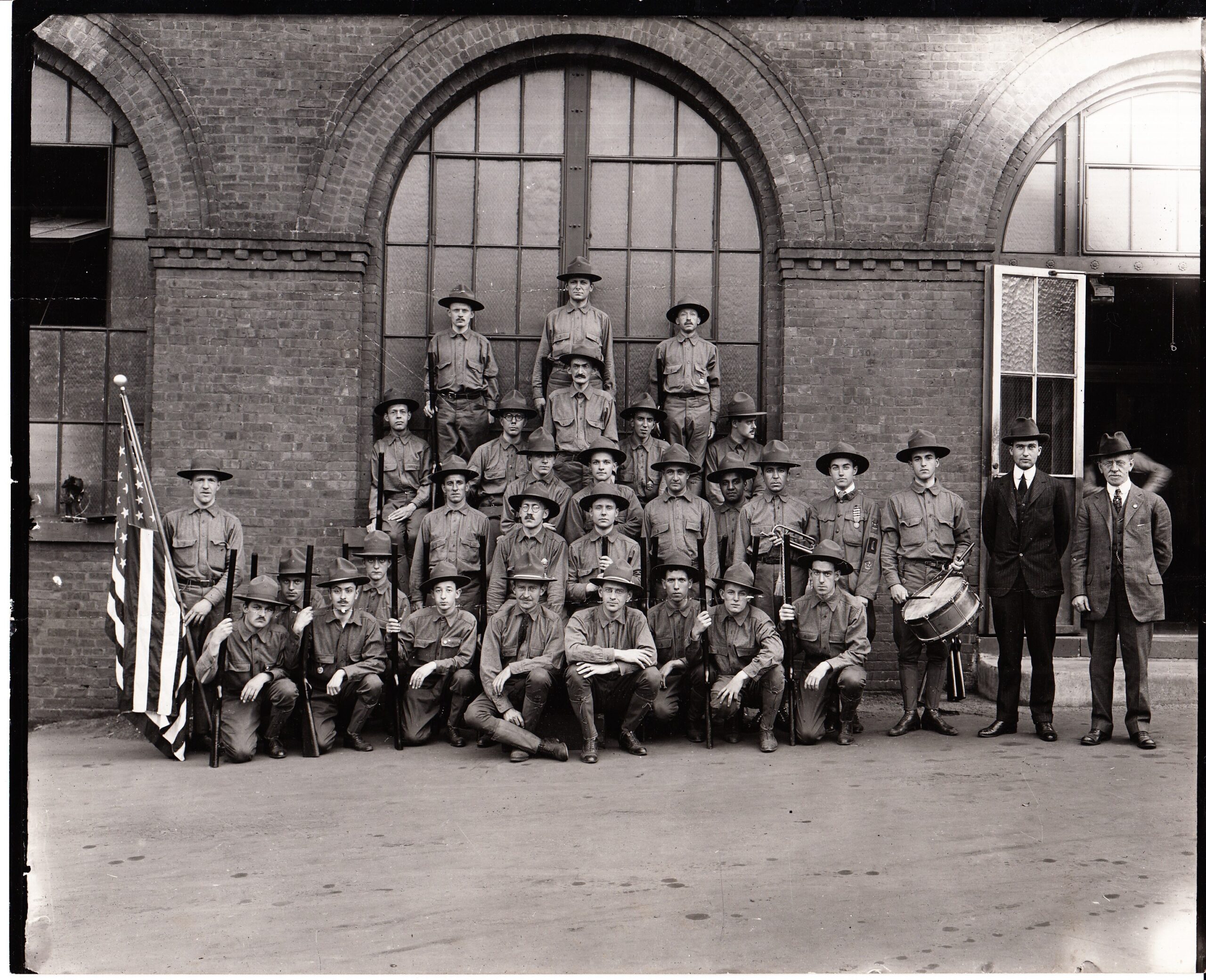
War changed daily life at West Orange. Employment rose to roughly 10,000 or more at the peak, depending upon which associated plants are counted. The company organised guards and participated in Liberty Loan campaigns. Family members, executives and factory bands appeared at patriotic events.
This expansion did not mean that all employees designed weapons. They made batteries, chemicals, phonographs and office equipment while plants adapted to shortages and contracts. Women formed an important part of the wartime factory workforce. The mobilisation was industrial before it was heroic.
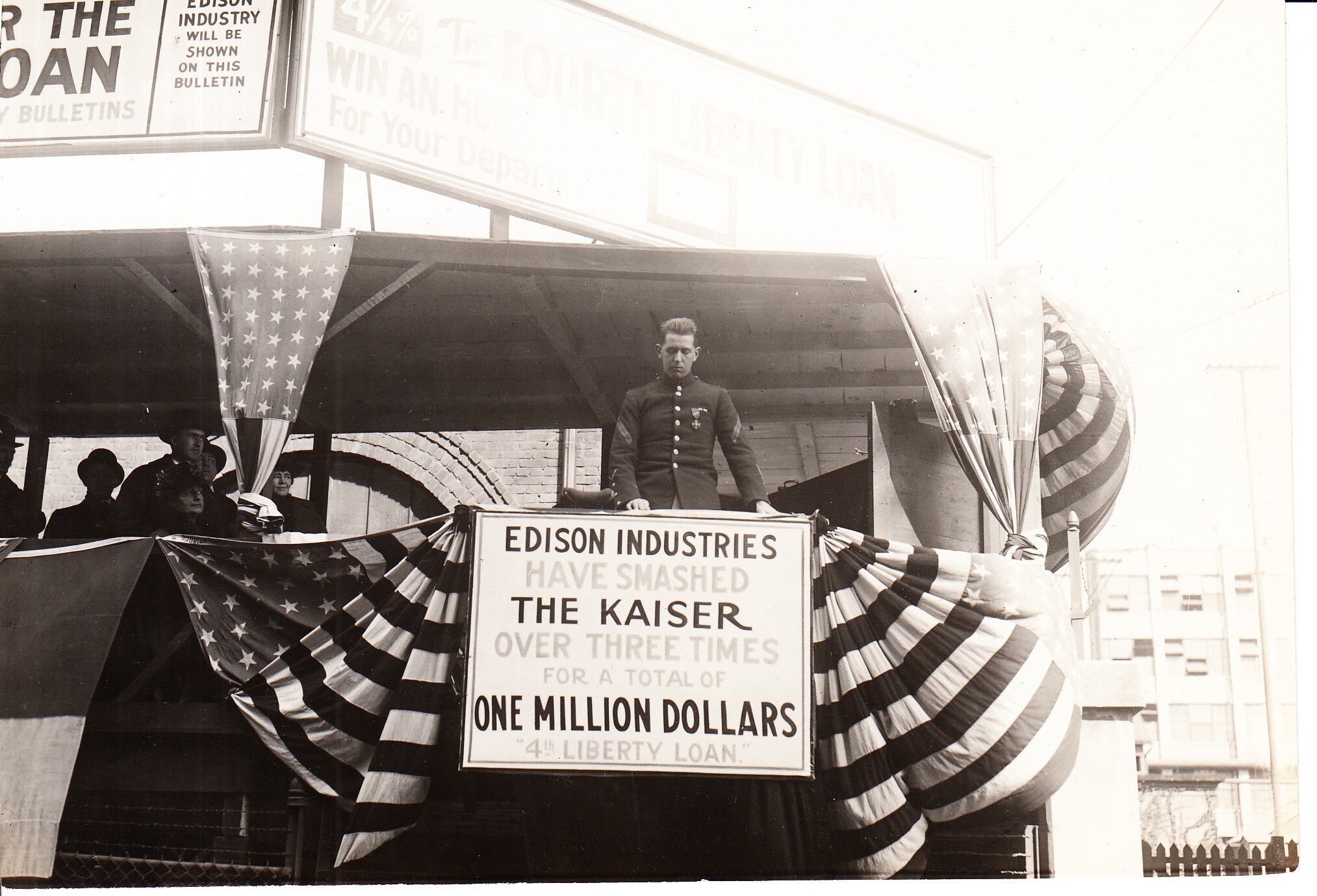
Edison’s public support for the war included bond drives after American entry. He had previously criticised unpreparedness and promoted technical defence. The rallies connected his private company to the national cause and helped maintain morale at a complex working long hours.
How successful was Edison’s war work?
Edison later expressed frustration that the Navy did not adopt more of his proposals. Officers complained in turn that civilian inventors underestimated service requirements. Both sides had reason. Naval bureaucracy could be slow and protective; laboratory prototypes could also fail when exposed to salt water, vibration and crews with limited training.
The board’s achievements were institutional rather than miraculous. It brought engineering societies into formal consultation, screened inventions and completed valuable industrial surveys. Its advocacy helped the eventual Naval Research Laboratory. Edison’s personal experiments generated a large record of tests but few weapons identified publicly with his name.
That is not evidence of laziness or fraud. Military research has a high failure rate, secrecy complicates later assessment and success often comes through combined work. Edison gave the Navy time, staff and reputation. What he could not give it was a solitary invention that made submarines obsolete.
The proper place of Edison’s war service
The First World War found Edison at the transition between two ages of invention. The independent, famous inventor still mattered, but military technology increasingly required government laboratories, university science, corporate research and operational testing. The Naval Consulting Board was an imperfect bridge between those worlds.
Edison’s instinct—that defence research must be organised before a crisis—was sound. His belief that a practical laboratory could cut through naval administration was less realistic. Ships were not phonographs, and the Navy was not an Edison company.
The lasting result was therefore not a ray, torpedo or submarine detector. It was a public argument for permanent scientific capacity. When the Naval Research Laboratory opened after the war, it embodied a principle Edison had promoted: modern national defence could no longer wait for an emergency and then hope that a lone genius arrived with the answer.
Sources and further reading
- Naval History and Heritage Command, Chief of Naval Operations and OPNAV Centennial – formation, membership and industrial survey work of the board.
- Naval History and Heritage Command, Space and the United States Navy – Edison, Daniels and the proposed research laboratory.
- Naval History and Heritage Command, “History of the Bureau of Engineering During the World War” – contemporary institutional and technical context.
- Thomas A. Edison Papers, “Biography” – Naval Consulting Board and Edison’s defence experiments.
- Thomas A. Edison Papers, “1921–1930” – Edison’s resignation after the laboratory dispute.
- Thomas Edison National Historical Park, “Edison Biography” – wartime growth of West Orange and later-life context.
- Thomas Edison National Historical Park, Edison and Daniels aboard USS New York – dated archival photograph and public-domain record.