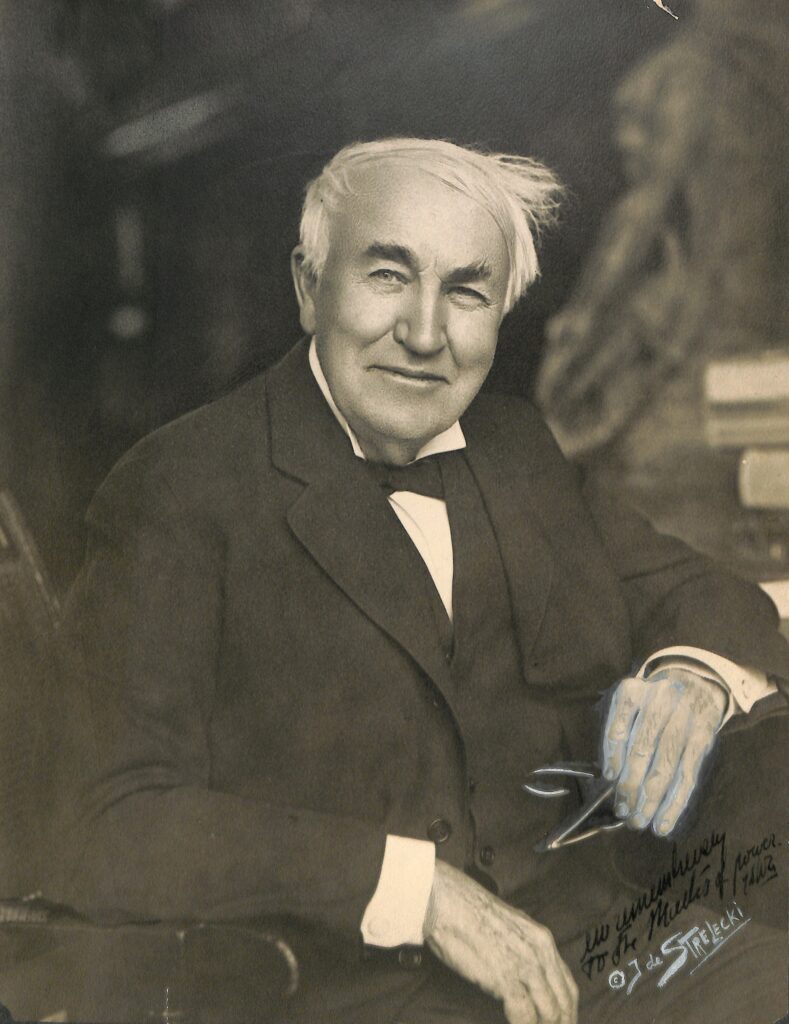
Old age did not persuade Thomas Edison to leave the laboratory quietly. In his seventies and eighties he searched thousands of plants for a domestic source of rubber, judged scholarship candidates in public examinations, received presidents and industrialists, and watched Henry Ford turn Menlo Park into a national shrine. He was no longer the man who could control an experiment for forty hours without sleep, but his image had become almost as valuable as any invention.
The final decade contained decline as well as honour. Radio displaced the phonograph as the centre of home entertainment. Edison’s companies passed to his son Charles. Diabetes, stomach trouble and kidney disease reduced his strength. By the time he died on 18 October 1931, the inventor had become an American institution—and the process of converting a difficult, collaborative life into legend was already well advanced.
An inventor becomes a public philosopher
Edison entered his seventies during the First World War. He had more than a thousand United States patents, financial security and an international reputation. Reporters no longer visited only to see a new machine. They asked for opinions on education, religion, diet, immortality, politics and the future.
He usually obliged. Short answers, paradoxes and forceful generalisations suited newspapers. Some remarks were carefully considered; others were playful or contradictory. The public Edison became an “inventor-philosopher”, expected to pronounce on subjects far from his experience.
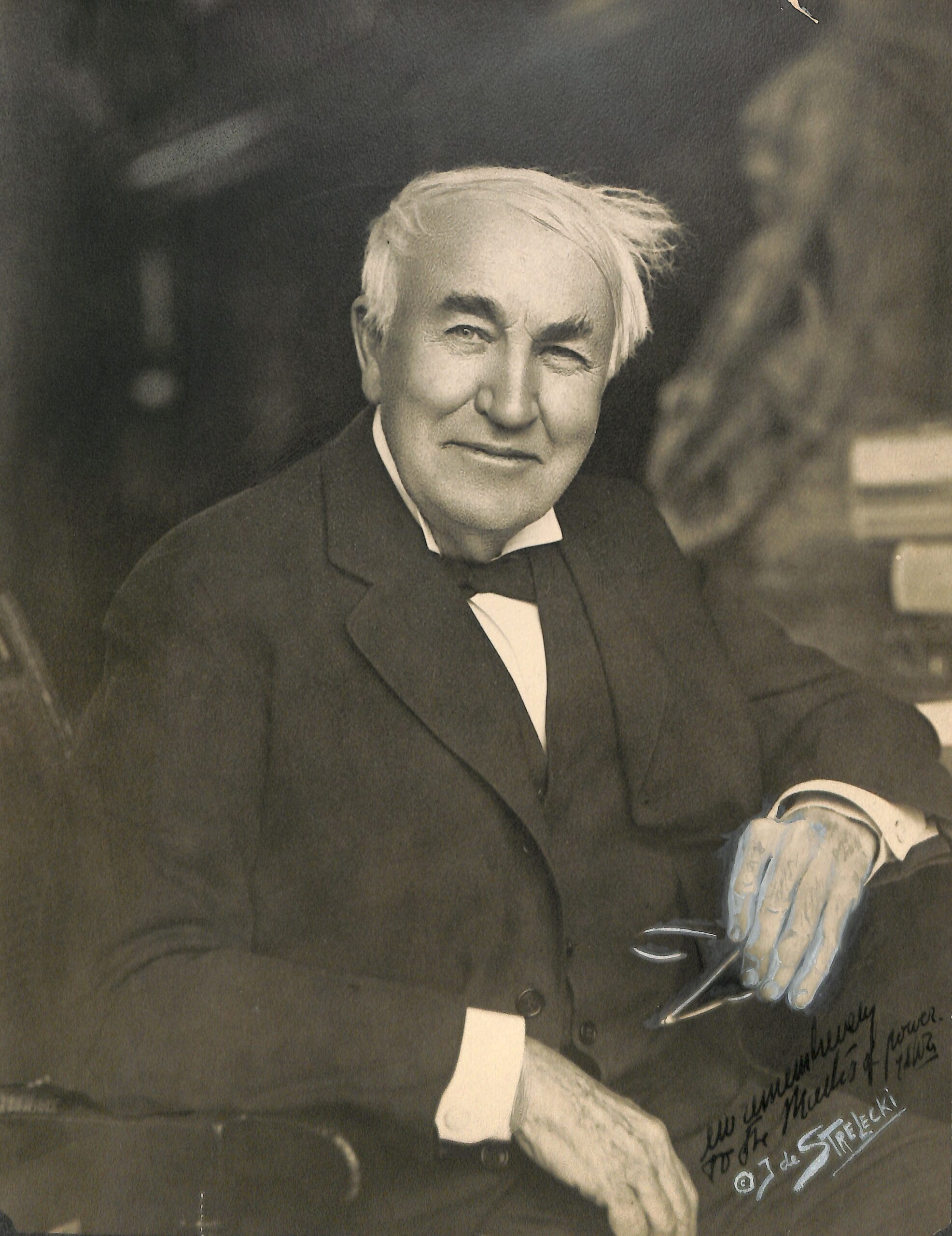
This celebrity could conceal the organisation around him. Secretaries answered correspondence, laboratory staff prepared demonstrations and Mina Edison controlled access at Glenmont. William H. Meadowcroft and later Arthur L. Walsh helped preserve records and shape official accounts. The old inventor’s spontaneity required careful management.
Charles takes control of the company
Thomas A. Edison, Incorporated, faced hard choices in the 1920s. Cylinder records had given way to discs, electrical recording improved sound and radio offered entertainment without purchasing a record. Edison had dismissed broadcasting as a fad before accepting that it was changing the market.
His hearing loss did not prevent him judging recordings, but it encouraged an idiosyncratic acoustic standard. He preferred direct comparison with live voices and emphasised faithful tone. Competitors moved more quickly towards microphones, amplifiers and fashionable artists.
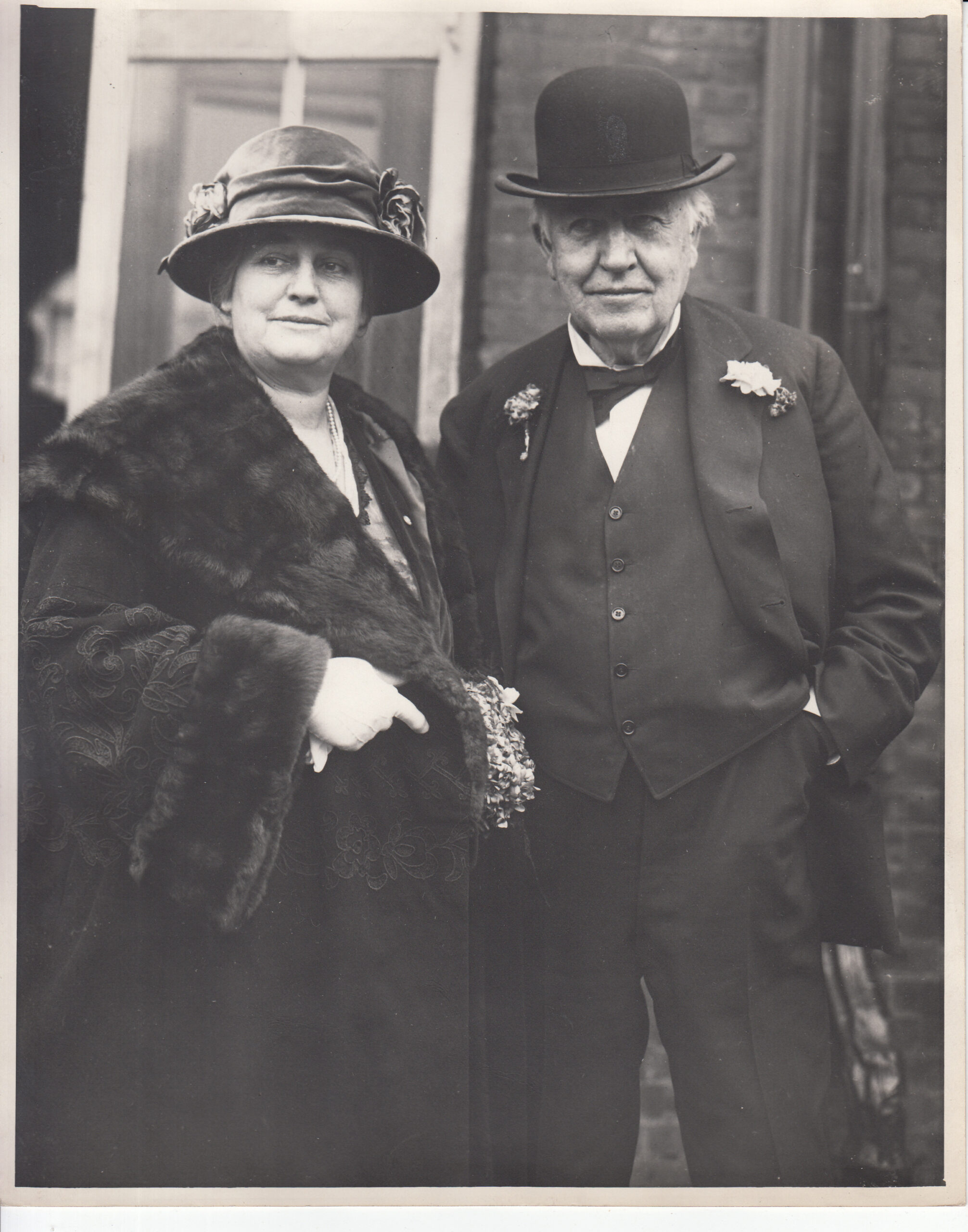
In 1926 Charles Edison became president of the company. His father remained an imposing presence, but daily authority had shifted. The decision recognised health and organisational reality. Charles was expected to rationalise businesses formed around one man’s interests.
The company introduced a radio-phonograph and finally adopted electrical recording, but it entered these markets late. Edison record production ended on 28 October 1929. The decision closed the commercial history of the invention that had made him instantly famous in 1877.
Honours and the Edison scholarship test
Edison’s birthdays became public occasions. Industrial organisations awarded medals, towns held dinners and reporters requested annual reflections. In 1928 Congress authorised a gold medal recognising his services to the nation. President Calvin Coolidge presented it at the West Orange laboratory.
Honour did not make Edison less opinionated. He distrusted educational systems based on recitation yet possessed a formidable memory for facts. In 1921 he publicised a questionnaire used to test prospective employees, asking about history, science, geography and culture. Critics mocked the range and argued that memory was not intelligence.
Eight years later he organised a national scholarship contest. Boys from across the country came to West Orange for examinations, interviews and laboratory exercises. The spectacle reflected generous interest in technical education, but also Edison’s confidence that he could identify practical talent through personal judgement.
The return to Menlo Park
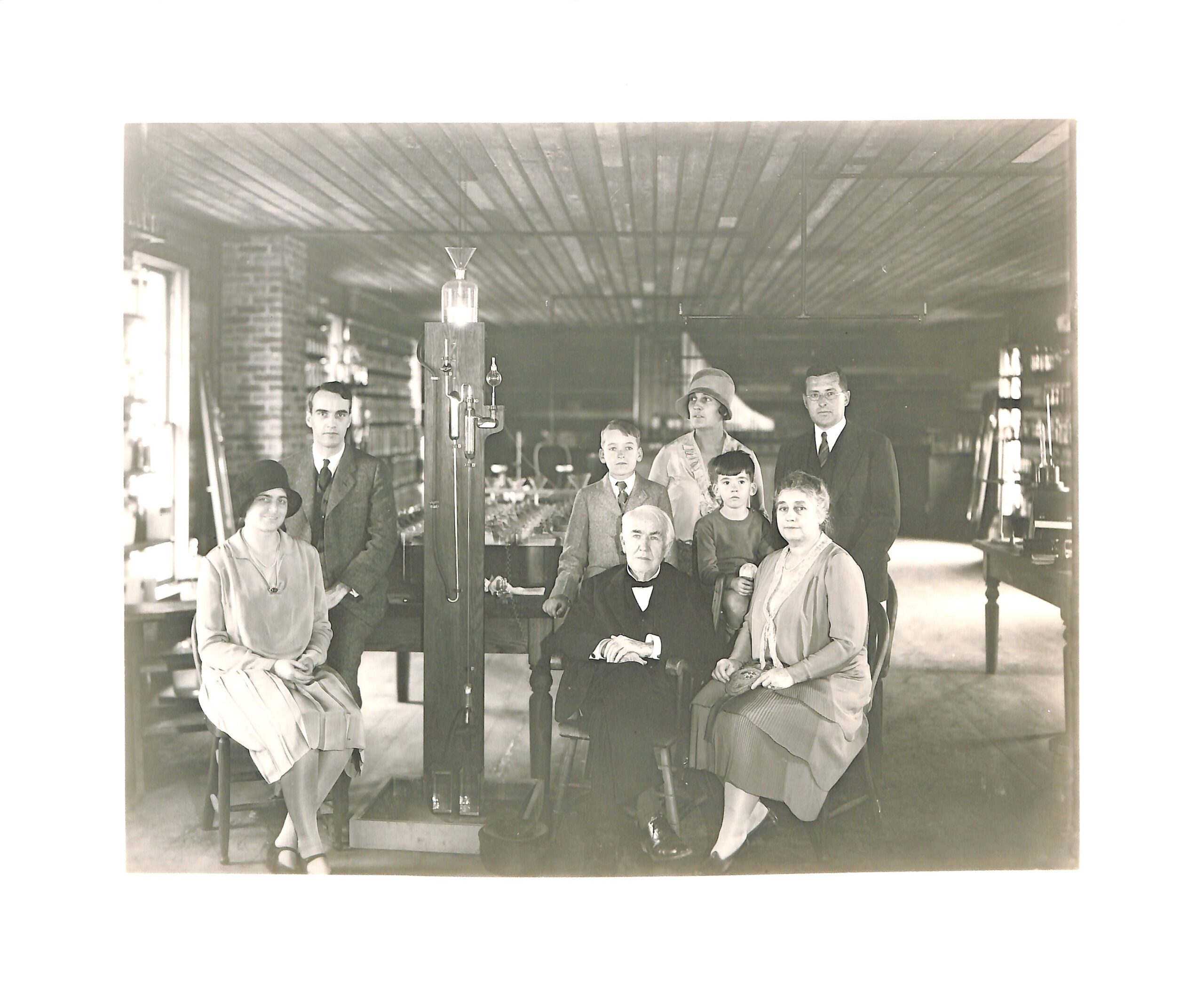
Henry Ford made Edison’s past into a physical monument. Ford had long collected machinery, buildings and objects associated with American industry. At Greenfield Village in Dearborn, Michigan, he reconstructed the Menlo Park laboratory complex using original material where possible and replacements where necessary.
The climax came on 21 October 1929, the fiftieth anniversary of the successful lamp experiment as the celebration defined it. President Herbert Hoover, Marie Curie, Orville Wright, Will Rogers and leaders of industry joined Edison and Ford. Radio networks carried the ceremony across the country.
Edison reenacted the lamp test in the reconstructed laboratory. At a signal, electric lights were extinguished or dimmed in many communities, then illuminated again. The event was called Light’s Golden Jubilee. It compressed years of team experiment and system building into one dramatic night, but its emotional force was undeniable.
The timing was striking. The New York stock market began its catastrophic fall days later. The jubilee celebrated the confidence of the electrical-industrial age just as the Great Depression began to expose its vulnerability.

The search for American rubber
Edison’s last great experiment arose from friendship and strategic anxiety. The United States depended heavily upon tropical rubber controlled through overseas plantations. Henry Ford needed tyres; Harvey Firestone’s business depended upon rubber. They wanted a domestic plant source that could be cultivated on a large scale.
In 1927 the three men established the Edison Botanic Research Corporation, with work centred at West Orange and Fort Myers, Florida. Collectors sent plants from across the country. Staff dried, ground and chemically tested specimens for latex content.
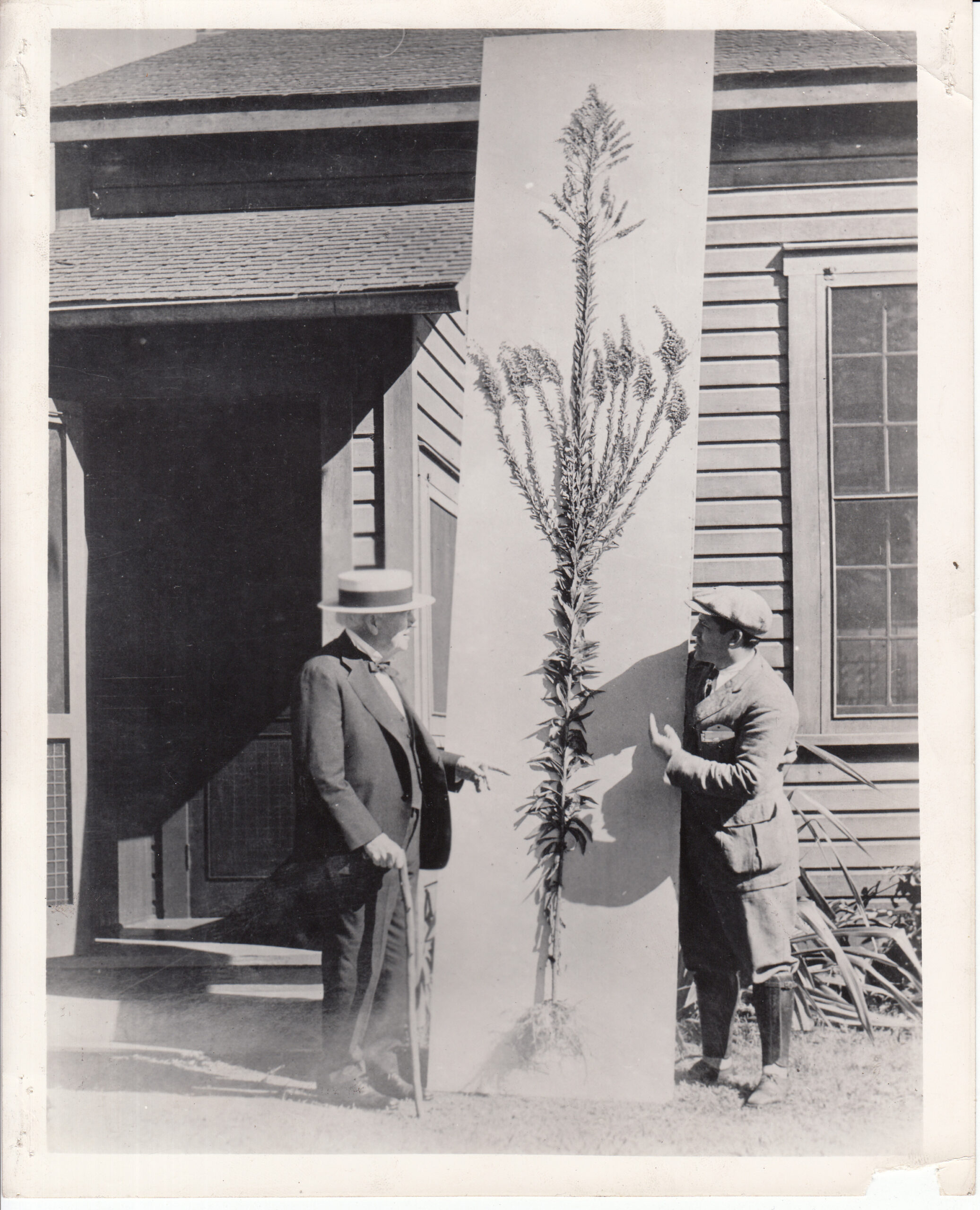
Goldenrod emerged as the leading candidate. Through selection, cultivation and processing experiments, Edison’s team produced tall strains with higher latex content than ordinary plants. Reports vary on the precise number screened—approximately fourteen thousand plant species or many thousands of samples appear in institutional accounts—but the scale was enormous.
The project did produce rubber. It did not produce it cheaply enough. Tropical rubber trees yielded a superior product within an established plantation economy. Goldenrod latex remained difficult to extract, and commercial acreage would have been vast. The work continued after Edison’s death for several years before being abandoned.
This was not the pastime of a retired celebrity. Edison worked obsessively on grinding, solvents, seed selection and yields. The project returned him to a familiar pattern: choose a nationally important material, conduct thousands of trials and assume persistence could force an economic result. As with ore milling, economics proved less obedient than the apparatus.
Health and the narrowing laboratory
Edison suffered from diabetes, which was far harder to manage before modern insulin treatment became widely established. He also experienced gastric ulcers and kidney problems. His weight fell and periods of illness lengthened.
He continued to visit the laboratory when able, often resting in familiar surroundings. The vast complex was quieter than during the peak phonograph and battery years. Charles and company officers managed operations while Mina dealt with doctors, visitors and anxious correspondence.
Edison’s last patent application concerned a holder for an object during electroplating. US Patent 1,908,830 was issued after his death, in 1933. Counting patents is complicated by foreign equivalents and joint applications, but the continued paperwork shows that invention never became merely ceremonial.
The death of Thomas Edison
During 1931 Edison’s condition worsened. Newspapers issued bulletins from Glenmont, and crowds gathered for news. He slipped into a coma and died at 3.24 a.m. on Sunday, 18 October. He was eighty-four.
President Hoover asked Americans to turn off their electric lights for one minute on the evening of the funeral, then accepted advice that a complete national blackout could endanger essential services. Instead, lights were dimmed in many places as a symbolic tribute.
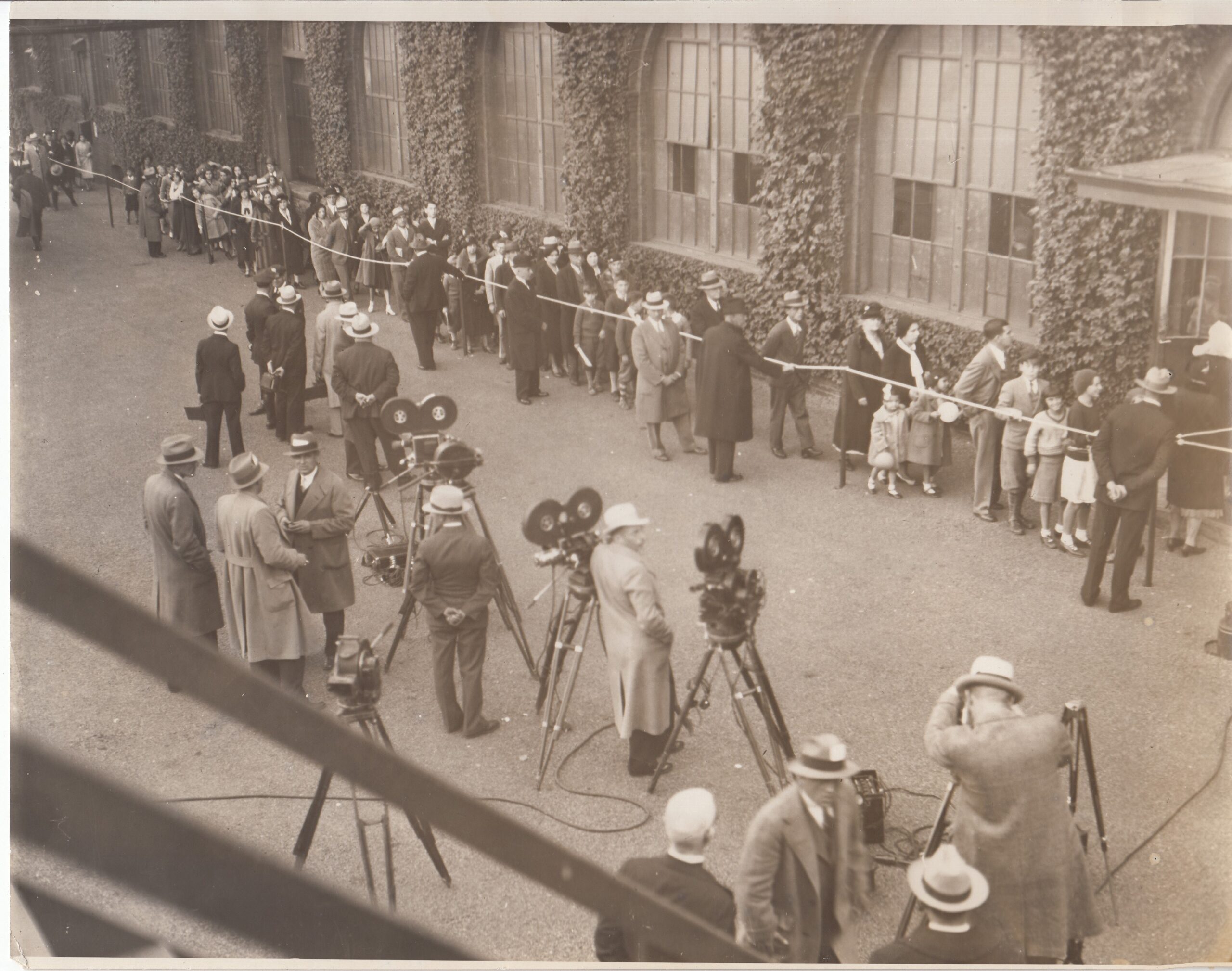
Edison’s body lay in state in the library of the West Orange laboratory on 19 and 20 October. Tens of thousands passed through the gates. Factory workers, schoolchildren and dignitaries entered the same building in which he had directed experiments.
The funeral took place at Glenmont on 21 October, the anniversary associated with the practical incandescent lamp. Hoover, Ford, Firestone and other national figures attended. Edison was buried behind the house; Mina, who died in 1947, was later buried beside him.
Did anyone bottle Edison’s last breath?
Among the most repeated deathbed stories is that Henry Ford asked Charles Edison to capture his father’s last breath in a test tube. A sealed tube associated with Edison is held by The Henry Ford museum. Charles later explained that test tubes stood open in the dying man’s room and that, after the death, he asked the doctor to seal several with paraffin; one was sent to Ford.
That account differs from the more theatrical claim that a tube was deliberately held to Edison’s lips at the final moment. The object is authentic as a family memorial, but “last breath” is a poetic description, not a scientifically verifiable contents label.
The story survives because it unites two friends, a laboratory vessel and the human wish to hold what cannot be kept. It also demonstrates how quickly artefact, memory and legend became inseparable around Edison.
The final transformation
Edison’s death ended a life of extraordinary range, but not the organisations built around it. General Electric had long since moved beyond him. Thomas A. Edison, Incorporated, continued under Charles. The West Orange buildings and collections eventually became a national historic site. Ford’s Menlo Park reconstruction taught generations a carefully arranged version of the invention story.
The last years helped define that version. Medals, jubilees, photographs with presidents and homely sayings presented Edison as the nation’s practical sage. Failed markets, patent litigation, collaborators and harsh business conflicts receded behind the glowing lamp.
Yet the rubber work complicates the monument. At eighty-four he was still surrounded by crushed plants, chemical samples and disappointing yields. Fame had frozen the Wizard of Menlo Park in 1879; Edison himself remained unable to stop experimenting.
Sources and further reading
- Thomas A. Edison Papers, “1921–1930” – company succession, rubber research, honours and the Golden Jubilee.
- Thomas A. Edison Papers, “1931–1940” – final patent application, illness, death and funeral.
- Thomas A. Edison Papers, “Detailed Biography” – public fame and the late invention programmes.
- Thomas Edison National Historical Park, “Rubber Research” – Edison Botanic Research Corporation, plant testing and goldenrod.
- The Henry Ford, “Test Tube Containing Edison’s Last Breath” – object record and Charles Edison’s account.
- Matthew Josephson, Edison: A Biography (McGraw-Hill, 1959) – later life, public ceremonies and death.