General Electric carries no inventor’s name, yet it grew directly from companies once advertised as Edison enterprises. The change is sometimes told as a corporate coup: bankers seized Thomas Edison’s business, merged it with a rival and erased him from the industry he created. There was conflict and loss in that transformation, but the simple version gives Edison both too much control at the beginning and too little responsibility for what followed.
Edison built a complete electric-lighting system, but he did not finance, manufacture or operate it alone. From the first central stations he depended upon investors, managers and separate companies. By 1889 those interests were consolidated into Edison General Electric. Three years later it merged with Thomson-Houston to form General Electric. Edison was not asked to lead the new corporation. He had helped make the industry possible; he had never truly controlled all the capital and institutions that carried his name.
An invention larger than a laboratory
The Menlo Park lighting programme produced a high-resistance incandescent lamp, an improved dynamo, distribution conductors, sockets, fuses, meters and other parts of a central-station system. Demonstrations at Menlo Park in 1879 and 1880 proved the principle. Commercialising it demanded another kind of invention.
Copper had to be purchased, factories equipped, patents defended, generating stations built and streets excavated. Local illuminating companies needed franchises. Engineers had to calculate loads and train station staff. Even Edison’s personal energy could not substitute for large amounts of patient capital.
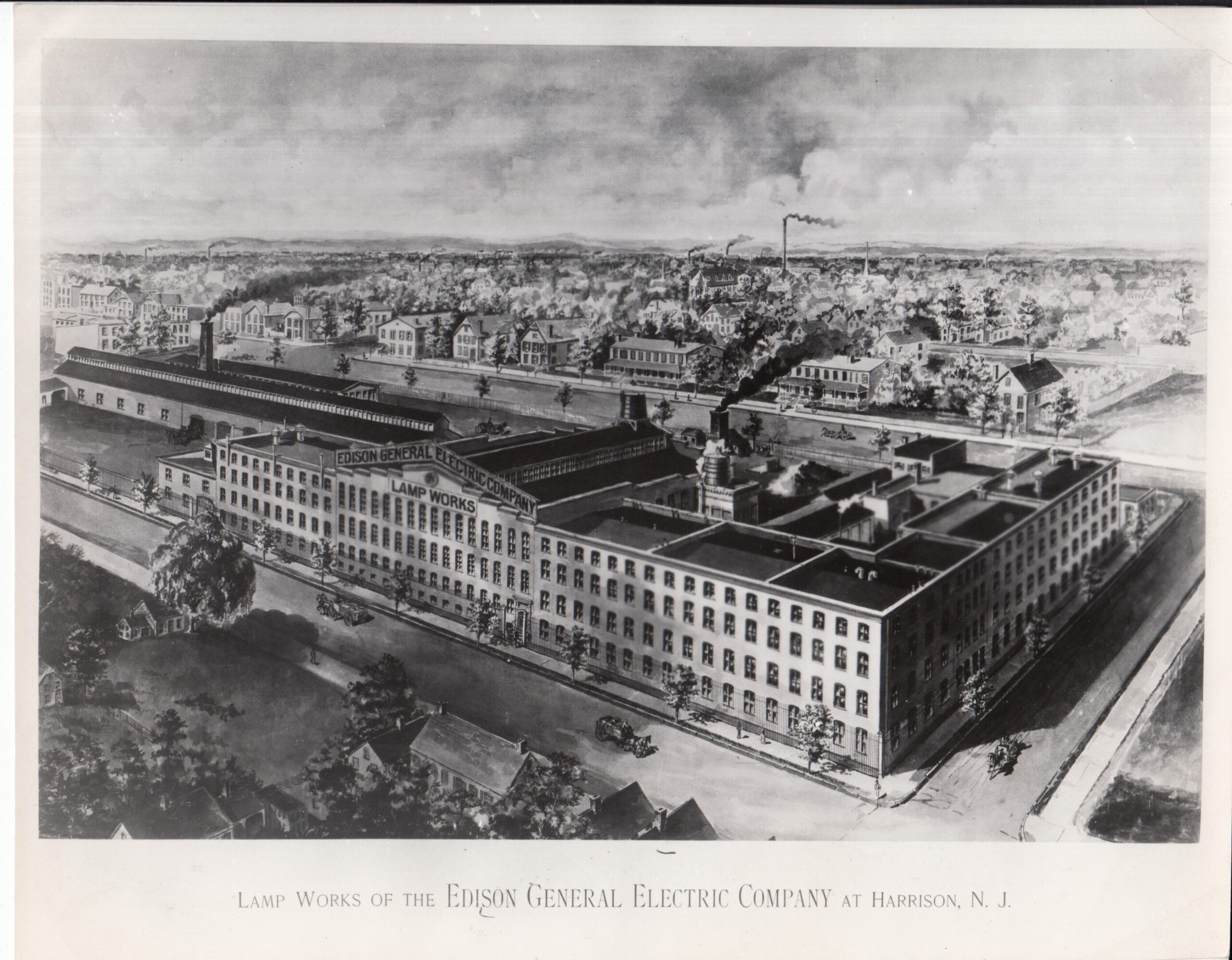
Edison organised separate concerns for different purposes: the Edison Electric Light Company held important patents; the Edison Lamp Company manufactured lamps; the Edison Machine Works built dynamos; Bergmann & Company made fixtures; local companies sold service. Edison owned interests, but so did financiers and managers. Agreements differed, and control was fragmented.
The bankers behind the Edison system
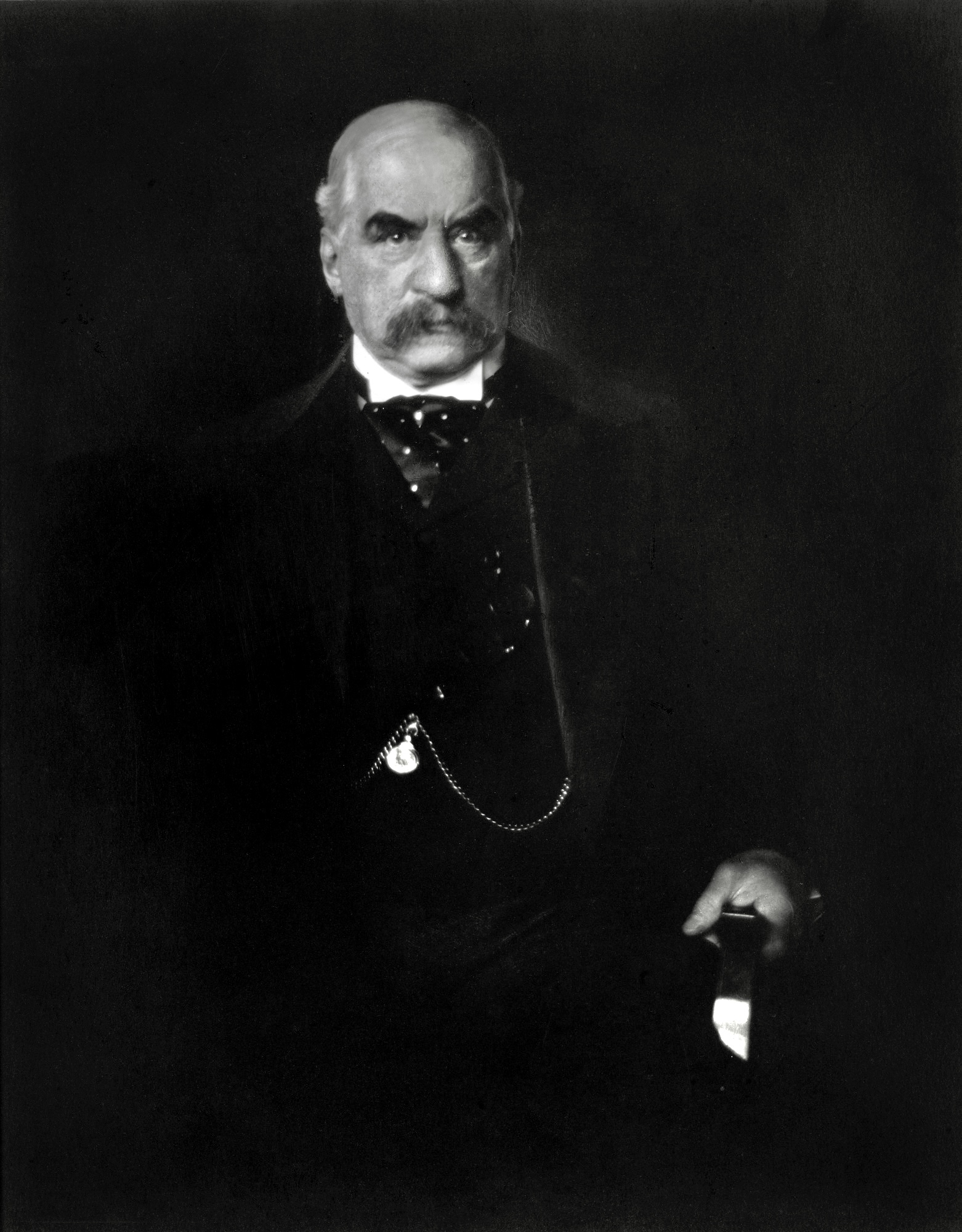
J. P. Morgan invested in the Edison Electric Light Company and had an Edison installation in his New York house. Other backers included members of the Vanderbilt circle and Western Union interests. They were not patrons donating money to a solitary inventor. They expected property, managerial discipline and returns.
Edison could be a difficult business partner. He pursued technical improvements after investors wanted standardisation, disliked financial detail and dispersed attention across projects. His instinct was to solve production problems by further experiment. Bankers wanted reliable accounts and unified management.
This tension should not be reduced to creators against parasites. Without Edison’s system there was little to finance. Without finance there was no Pearl Street station, manufacturing capacity or urban network. The disagreement concerned who should direct an industry once it required more capital than any inventor could supply.
Direct current meets an expanding market
The Edison system used direct current. It performed well in dense districts near a generating station, as Pearl Street demonstrated from 1882. Its economic radius was limited because low-voltage current could not be transmitted long distances without heavy losses and expensive copper.
Alternating current could be transformed to high voltages for economical transmission and reduced again near customers. Thomson-Houston and Westinghouse developed powerful AC businesses during the 1880s. Edison attacked high-voltage AC as dangerous, and genuine public-safety concerns became part of the War of the Currents.
The commercial problem was not that direct current suddenly ceased to work. DC motors, traction systems and urban networks remained important. The problem was that a national electrical company needed an AC portfolio and a management structure capable of competing across markets.
Henry Villard consolidates the Edison companies
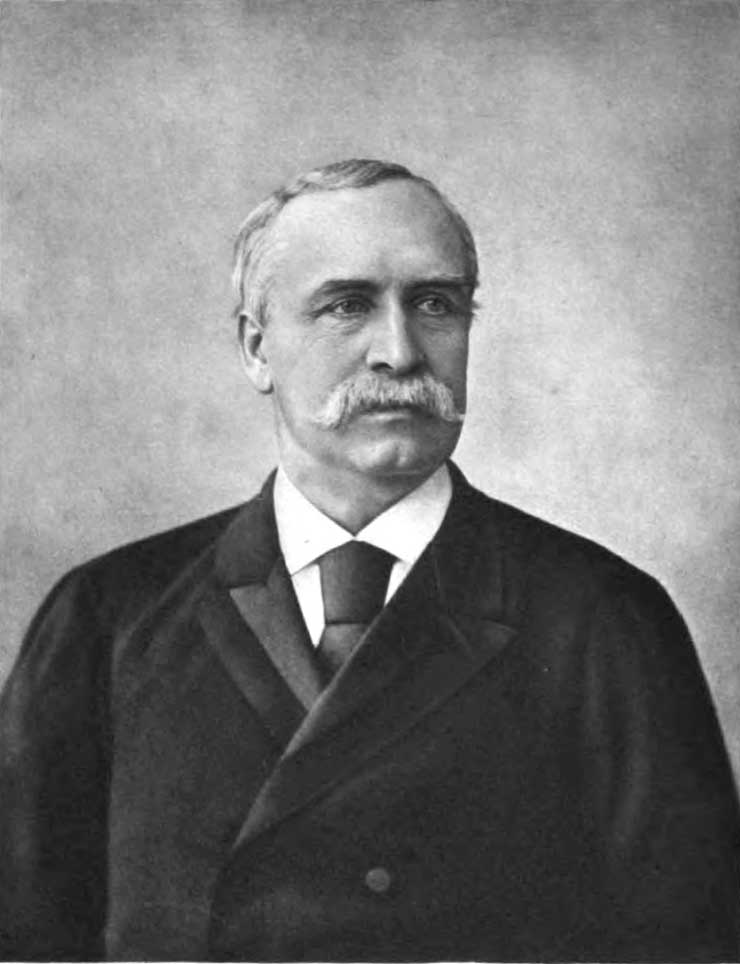
Henry Villard, a financier with railroad experience, became the driving force behind consolidation. He believed the Edison companies wasted money competing or duplicating functions and were too scattered to challenge Thomson-Houston. His access to German capital, including interests connected with Deutsche Bank, strengthened the plan.
Edison General Electric was incorporated on 24 April 1889. It brought together the Edison Machine Works, Edison Lamp Company, Bergmann & Company and interests controlled through the Edison Electric Light Company. The name implied a unified Edison empire; in practice, the consolidation reduced Edison’s direct influence over formerly separate concerns.
Edison did not welcome every term. He lost the ability to treat a factory as an extension of his laboratory, and professional managers increasingly decided investment. Yet he agreed to the arrangements and received shares. He was not dispossessed without compensation.
The new company still faced problems. Its electrical position was strong but its management was unsettled and its AC offerings lagged behind Thomson-Houston. Villard’s financial difficulties weakened his influence. The logic of another merger grew stronger.
Why Thomson-Houston mattered
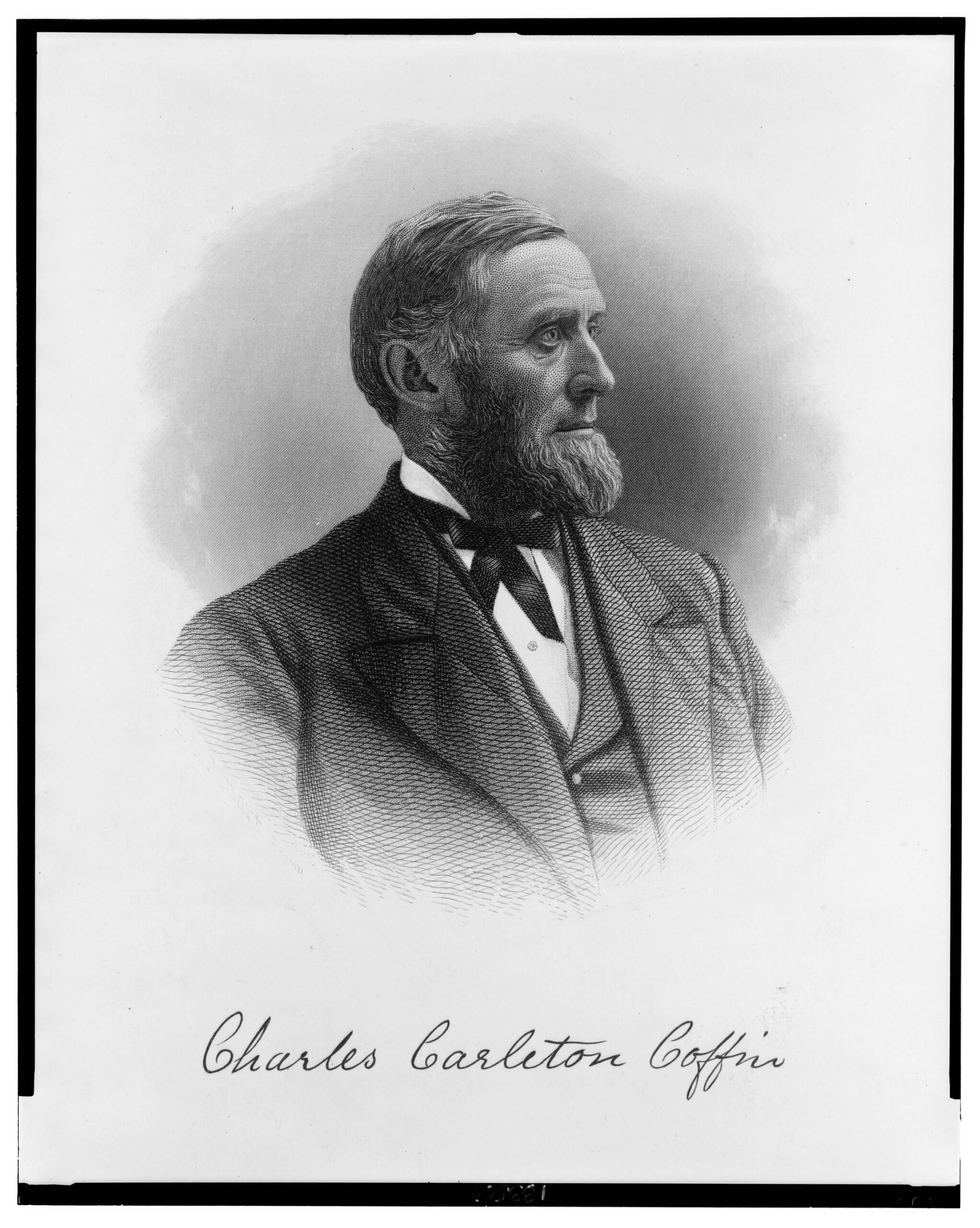
Thomson-Houston was not a minor rival absorbed into Edison’s organisation. Founded around the inventions of Elihu Thomson and Edwin Houston, it had been built into an aggressive company by Charles A. Coffin. It accumulated patents, acquired competitors and sold both arc-lighting and alternating-current systems.
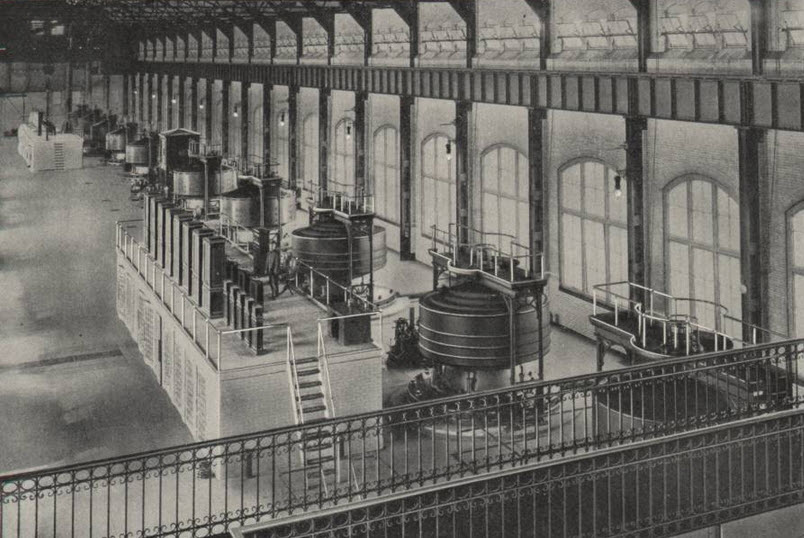
Coffin was an organiser rather than a laboratory celebrity. He understood sales territories, finance and consolidation. Thomson-Houston’s factory at Lynn, Massachusetts, and its AC expertise complemented the Edison operations at Schenectady and elsewhere.
Patent warfare also encouraged combination. Electrical companies held overlapping rights and threatened one another with injunctions. A merged company could pool patents and stop spending resources on some internal battles. Morgan interests helped arrange the agreement.
The formation of General Electric
Edison General Electric and Thomson-Houston merged on 15 April 1892 to form the General Electric Company. Coffin became president. The principal manufacturing centres were at Schenectady and Lynn. The corporate name contained neither Thomson nor Edison, signalling that the new concern was intended to stand above its founders.
Edison was not given an executive role. He remained a director briefly and was a significant shareholder, but his attention had already moved towards ore milling, the phonograph and motion pictures. He sold much of his General Electric stock and poured money into the New Jersey iron-ore venture.
That decision was consequential. GE developed into one of the world’s dominant electrical corporations; Edison’s ore enterprise consumed a fortune and failed commercially. Hindsight makes the exchange appear irrational. Edison believed his magnetic separation and crushing system could unlock an enormous low-grade resource, and he preferred a technical gamble he directed to a corporation managed by others.
Did J. P. Morgan force Edison out?
Morgan’s role makes him a convenient villain. His financial interests supported consolidation, and the new structure reduced Edison’s authority. There is no need to soften the power of bankers: they protected capital and favoured managers more predictable than Edison.
But the claim that Morgan personally stole Edison’s company compresses years of agreements among numerous investors and firms. Edison never owned all the Edison companies, and Thomson-Houston was sufficiently strong to bargain as an equal. Villard, Coffin, Deutsche Bank interests, company directors and patent considerations all mattered.
Edison also chose not to become a corporate executive. He disliked committees and routine administration. General Electric required exactly those things: budgets, sales organisations, manufacturing standards and compromise between technologies.
What happened to Edison at General Electric?
The relationship did not end in permanent hostility. GE retained Edison patents, employees and manufacturing traditions. Schenectady became a major research and engineering centre. Charles Proteus Steinmetz, one of its great electrical scientists, had cordial relations with Edison and visited him.
Edison’s public association with electric light remained commercially valuable. GE participated in the 1929 celebration of the lamp’s fiftieth anniversary and treated him as a founding figure. Such ceremonies did not return managerial power, but they contradict the idea that the corporation tried to erase him entirely.
Technically, GE followed a plural path. It developed AC generation and distribution while continuing to supply DC equipment and lamps. The eventual electrical system was not a simple victory of Tesla and Westinghouse over Edison; it combined inventions, patents and engineering practices from many companies.
GE also institutionalised research in a way that both extended and superseded Menlo Park. Its laboratory at Schenectady, formally established under Willis Whitney in 1900, employed scientists and engineers within a permanent corporate structure. Edison had shown that sustained experimental teams could serve a business system. GE detached that method from the daily authority of a celebrated founder and made research one department of a diversified company.
The contrast was visible in career paths. Edison’s senior assistants often depended upon a personal relationship with him; GE researchers could work within an organisation designed to outlast any individual. That development was not an insult to Edison. It was one of the industrial consequences of the invention-factory idea.
How Edison lost control
Edison lost control gradually because “his” industry required other people’s capital, because the separate companies carrying his name were consolidated, because AC competition demanded broader technology, and because a professional manager was better suited to the resulting corporation. He disliked parts of the process but accepted shares and turned to projects where he could again command the laboratory.
General Electric was therefore both Edison’s legacy and the end of the Edison model in electrical power. Menlo Park had shown that invention could be organised. GE showed that organised invention would increasingly belong to corporations whose lives did not depend upon one inventor.
The irony is not that Edison was robbed of a perfect kingdom. It is that his own systems approach helped create an industry too large for personal rule. The electric light escaped the laboratory, and the company that carried it into the twentieth century no longer needed his name on the door.
Sources and further reading
- Thomas A. Edison Papers, “Edison General Electric Company” – incorporation, constituent companies and merger.
- Thomas A. Edison Papers, “Detailed Biography” – finance, consolidation and Edison’s changing role.
- Thomas Edison National Historical Park, “Thomas Edison Biography” – Edison’s dependence upon capital and the fact that he never controlled every company bearing his name.
- General Electric, “Edison and the Birth of GE” – corporate chronology and merger context.
- Jill Jonnes, Empires of Light (Random House, 2003) – Edison, Westinghouse, Thomson-Houston and the commercial contest over electrical systems.