Thomas Edison bought a rough stretch of land beside Florida’s Caloosahatchee River in 1885, before he had chosen the site of his West Orange laboratory and before he married his second wife, Mina Miller. Fort Myers was then a small Gulf Coast settlement reached more easily by boat than by railway. Edison imagined a warm refuge from northern winters. In old age, it became the headquarters of his last great experiment.
The story joins three different Edisons: the wealthy inventor constructing a tropical retreat; the public celebrity holidaying with Henry Ford and Harvey Firestone; and the eighty-year-old experimenter learning botany in search of an American source of rubber. The goldenrod plants that towered over him in publicity photographs never freed the United States from imported latex, but the work was neither a whim nor a simple failure. It was an attempt to apply industrial research to a problem of national supply.
Buying land at the edge of Fort Myers
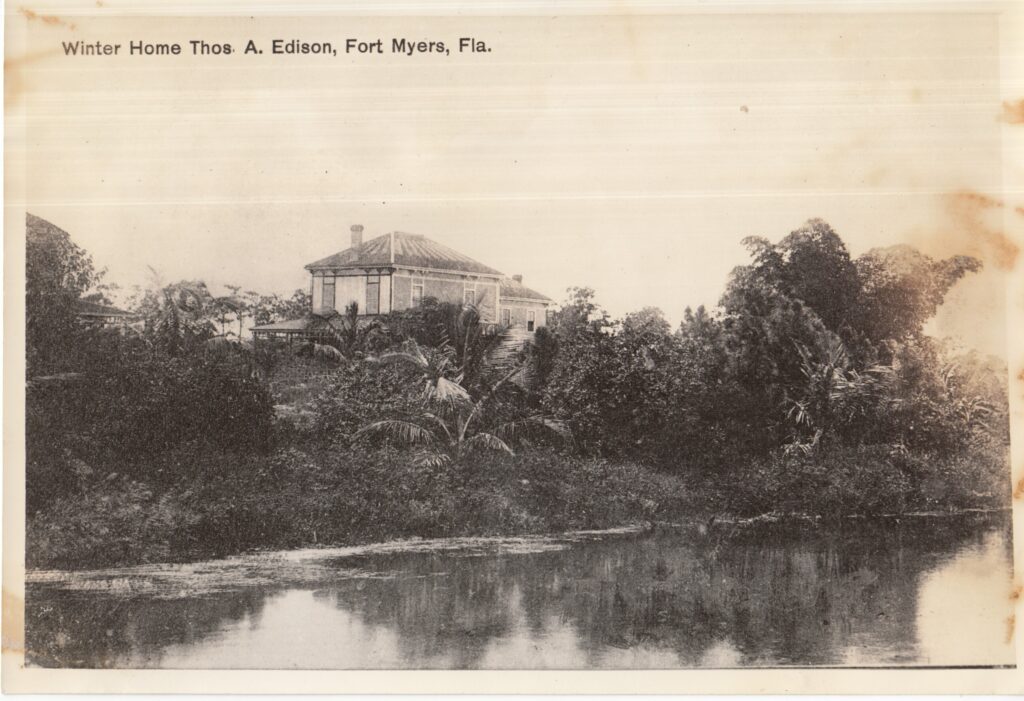
Edison first visited Florida while seeking bamboo and other plant materials for incandescent-lamp filaments. He bought approximately thirteen acres at Fort Myers in 1885. The riverfront position offered transport, fishing and a climate very different from New Jersey. Local infrastructure was limited; materials for the houses were cut in Maine and shipped south.
The estate became known as Seminole Lodge. It consisted of two principal timber houses, one for the family and one for guests, joined by a covered walkway. Edison also erected a laboratory and electrical plant. He brought one of the first residential electric-light systems to the area, making the retreat an advertisement for modern technology without turning it into a second Menlo Park.
Mina and Thomas spent part of their honeymoon there in 1886. Their use of the property was intermittent, especially while the children were young and West Orange demanded Edison’s attention. Nevertheless, Fort Myers remained in the family for the rest of his life.
A garden assembled from the tropics
Edison planted the estate with palms, bamboo, fruit trees and ornamentals. Some plants reflected scientific curiosity; others supplied shade, privacy and the theatrical character expected of a winter home. A line of royal palms eventually framed the road now associated with the estate.
Gardening was not simply Edison’s private hobby. Mina was active in bird, tree and garden organisations, and the grounds were managed by staff. Edison walked, fished, read and inspected plants, but he did not personally perform every act of cultivation. As at the laboratory, his environment depended upon organised labour.
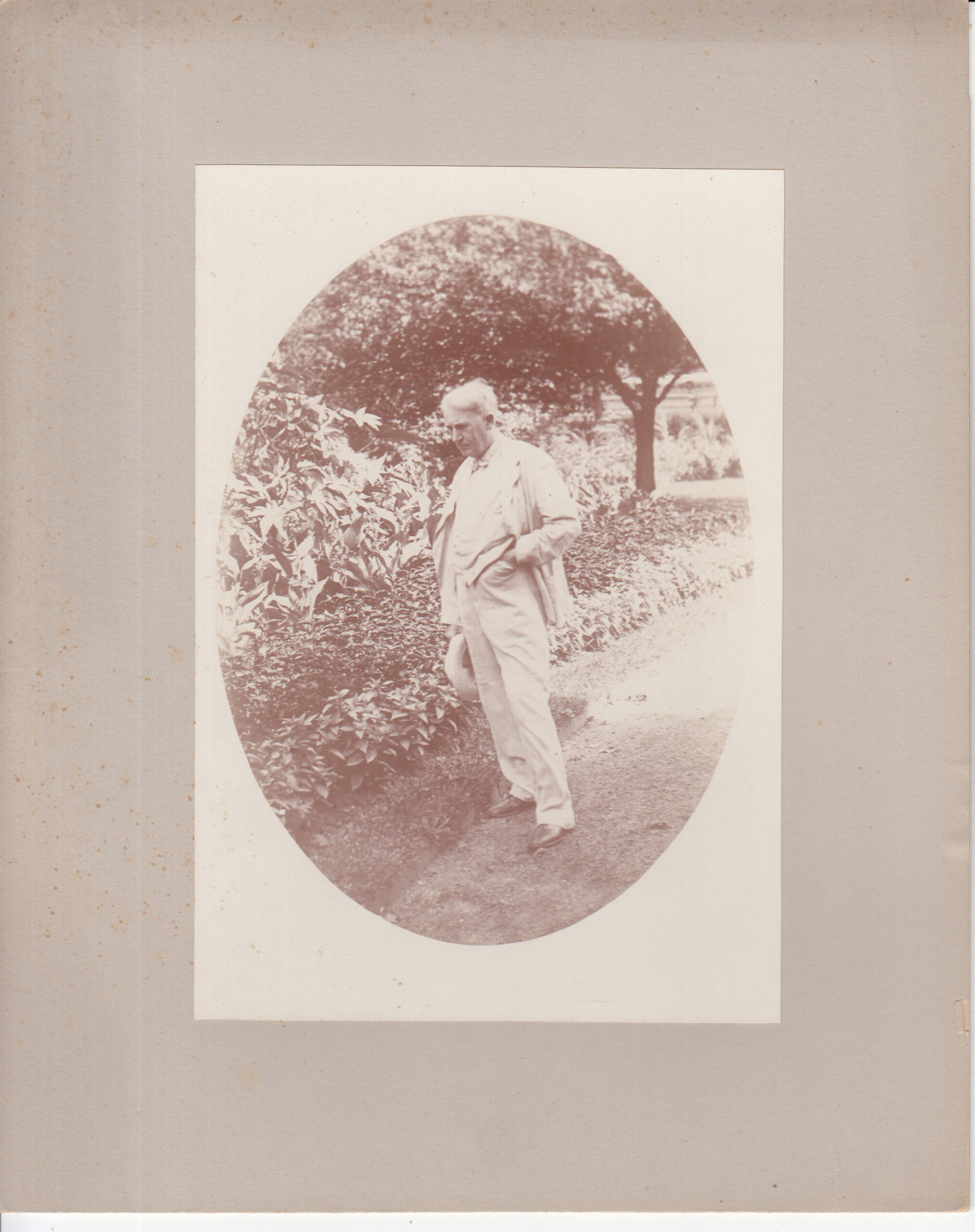
The estate also connected him to Florida’s developing tourist economy. Wealthy northerners were beginning to build seasonal homes, railways were changing travel, and Fort Myers used Edison’s presence as evidence of progress. His birthday visits became public occasions attended by reporters and local dignitaries.
Henry Ford moves next door
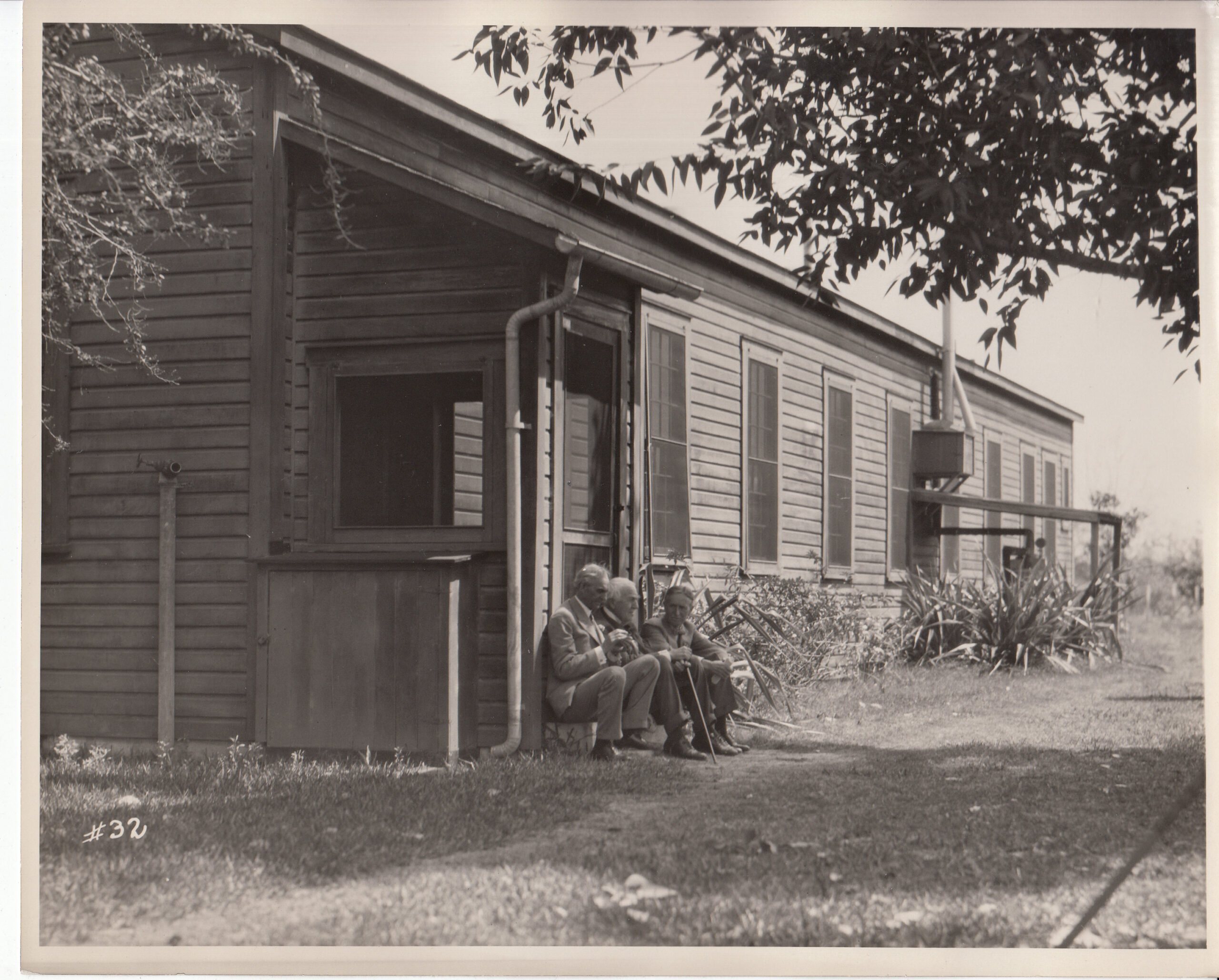
Henry Ford first joined Edison in Florida in 1914 with the naturalist John Burroughs. Their excursion into the Everglades helped inspire the later Vagabonds camping trips. In 1916 Ford bought the house next to Seminole Lodge. The neighbouring estates made friendship visible in the landscape.
Ford and Edison did not spend every winter side by side. Their travel schedules and businesses intervened. Yet Fort Myers became a reliable meeting place for the two families and for Harvey Firestone, whose tyre company depended upon rubber. The three industrialists were photographed on the laboratory steps so often that the images can appear almost ceremonial.
Ford’s interest in Edison’s past extended to the property itself. In 1928 he had the older Fort Myers laboratory dismantled and carried to Dearborn, where it formed part of the Menlo Park reconstruction at Greenfield Village. Mina then arranged for a smaller office or laboratory to be built at the Florida site.
Why rubber became urgent
Natural rubber was essential to tyres, belts, hoses, insulation and numerous military products. American industry obtained most of it from plantations in South-East Asia. The First World War had shown the vulnerability of long international supply chains. Ford and Firestone worried that a future conflict or foreign cartel could cut off the raw material upon which the motor industry depended.
They were not seeking synthetic rubber in the modern petrochemical sense. Their project looked for latex in plants that could be grown rapidly inside the United States. The aim was strategic self-sufficiency: an emergency crop capable of expansion within roughly eighteen months.
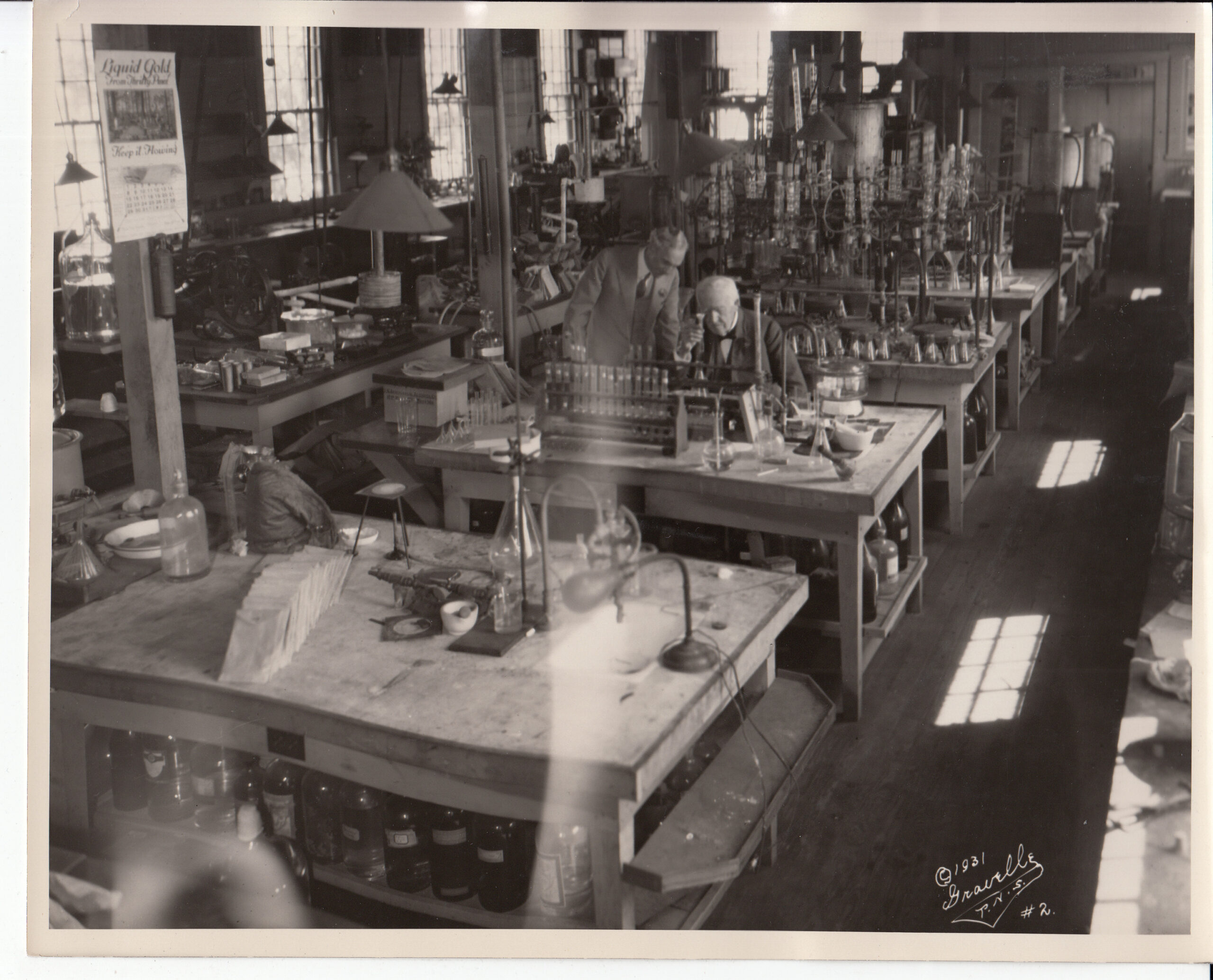
In 1927 Edison began systematic work, supported financially by Ford and Firestone. The Edison Botanic Research Corporation was organised in 1928. Collectors, agricultural stations and correspondents sent specimens from across the country. Fort Myers offered land and a long growing season; West Orange provided a larger chemical laboratory for analysis.
Turning botany into an industrial search
Edison approached plants as he had approached lamp filaments. Gather a wide range, devise a repeatable test, record results and concentrate effort on promising candidates. Staff dried and ground samples, extracted rubber-bearing material with solvents and measured yields. The programme eventually examined thousands of species and varieties.
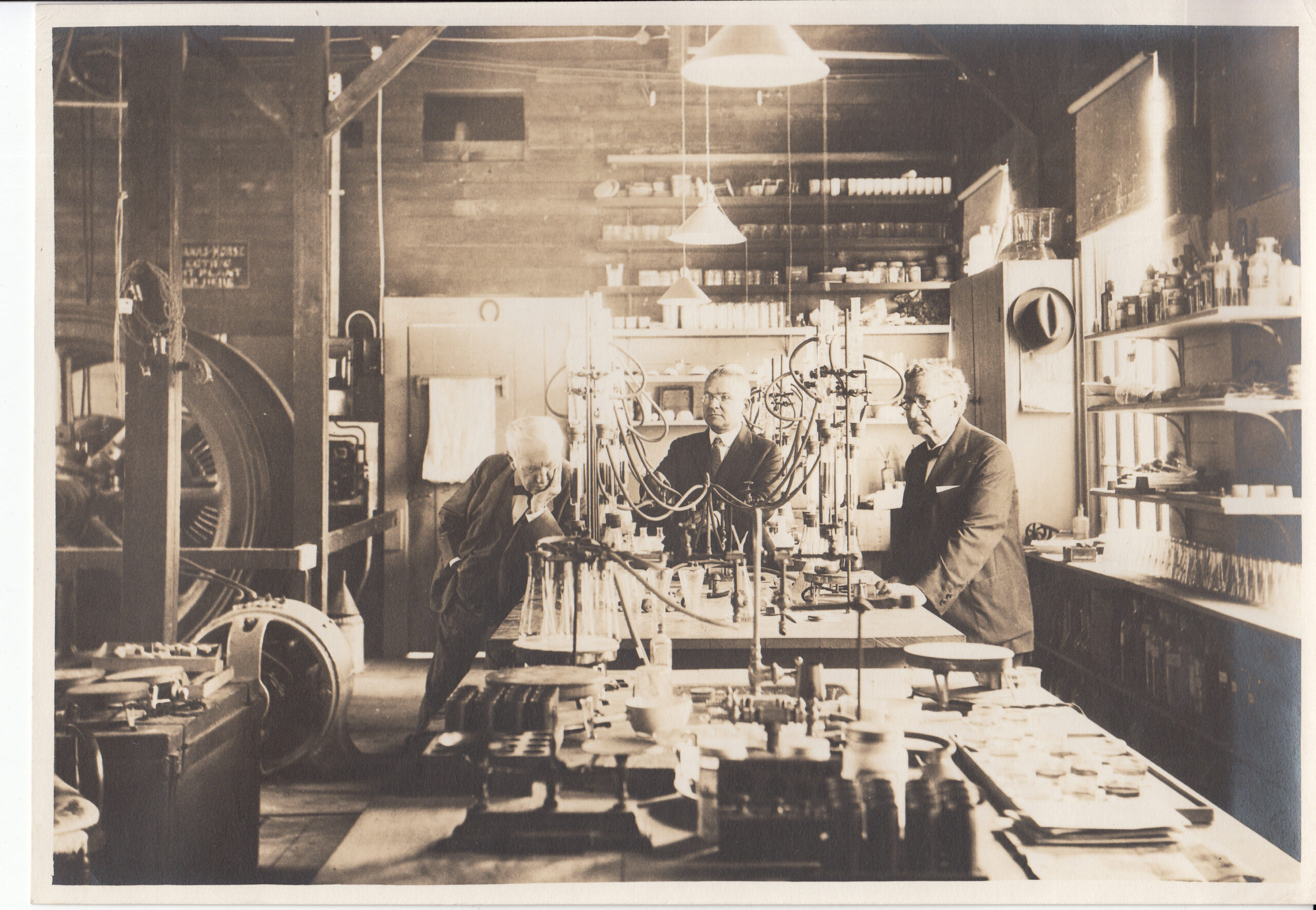
Published totals differ. A later National Park Service oral-history recording said that 17,000 kinds of plants were tested, while the National Register study of the estate gives approximately 14,000. The figures may count specimens, species and repeated tests differently. It is better to report the scale as many thousands than to pretend that one number is certain.
Edison’s staff included trained botanists and a chemist. He learned botanical vocabulary in his eighties, but the research was not a solitary old man boiling leaves in a shed. Field collectors identified plants, gardeners raised them, laboratory workers prepared samples and Ford and Firestone supplied money and industrial advice.
Why goldenrod won
Many plants contained traces of rubber. Edison needed more than presence. A candidate had to grow quickly, tolerate different American climates, produce abundant biomass and yield latex that could be extracted economically. Goldenrod was common, vigorous and capable of breeding for size and rubber content.
He selected forms of Solidago, cross-bred them and produced plants far taller than ordinary roadside goldenrod. Reports associated the improved plants with latex contents of around twelve per cent under favourable tests. The celebrated photographs, in which Edison stands beside great stems, showed agricultural progress while avoiding the harder question of cost per usable pound.
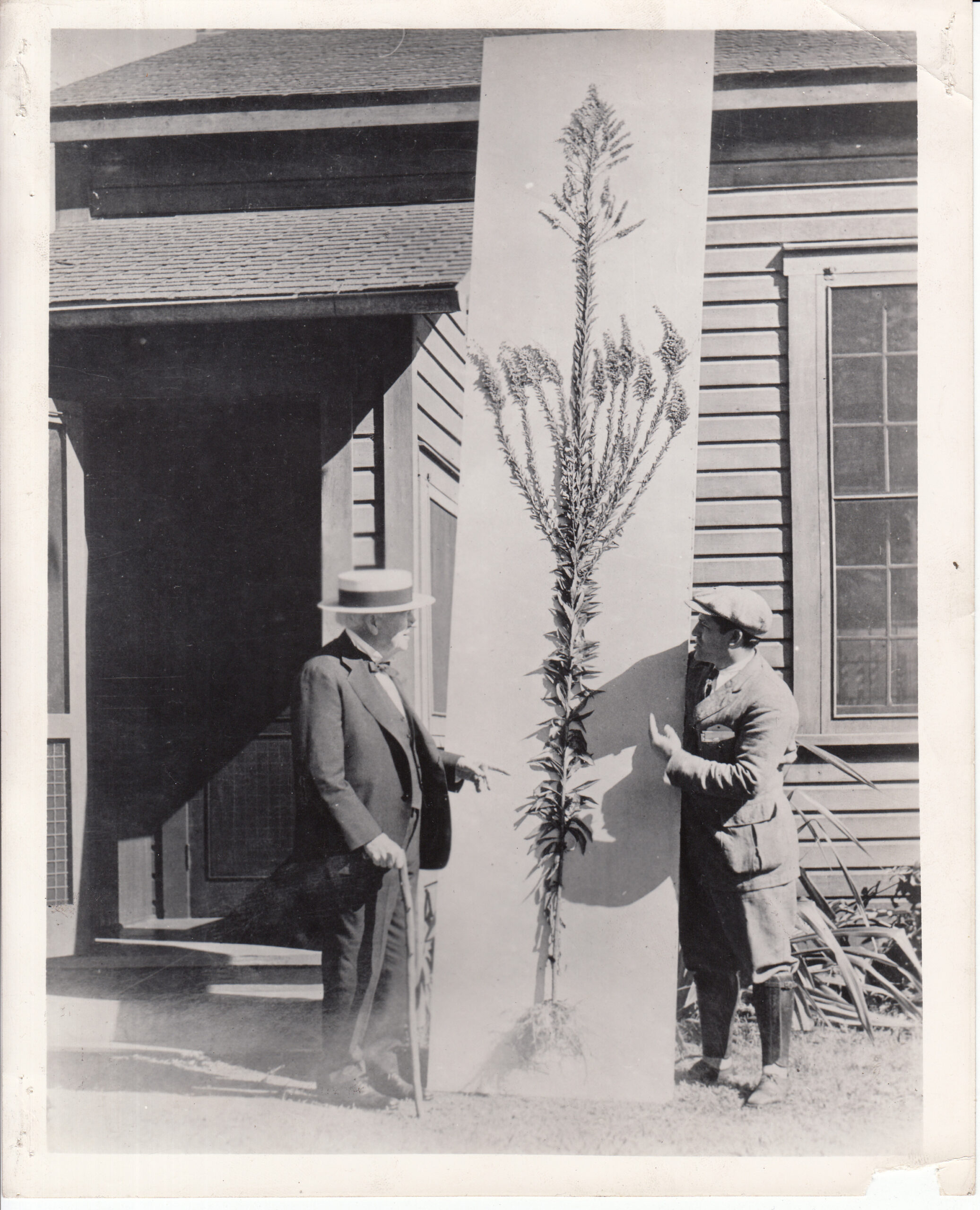
Goldenrod rubber was not imaginary. The plant produced it and experimental extraction succeeded. The difficulty was that the yield, processing expense and quality could not compete with latex tapped from tropical rubber trees. A strategic reserve crop might tolerate a higher price than an everyday commercial product, but it still needed credible cultivation and processing economics.
Fort Myers and West Orange divide the work
Popular accounts often place the entire rubber programme in Florida. Fort Myers was the botanical base, with plots, specimens and the smaller laboratory. Much analytical work also occurred at West Orange, where Edison had better equipment and a permanent staff. Seeds and samples travelled between the sites.
The arrangement suited his late life. Winter months in Florida offered public celebrations and outdoor work; New Jersey retained the industrial laboratory. Ford and Firestone could visit the Florida plots and appear in photographs, but the slow routine of drying, grinding, extraction and weighing continued out of sight.
Botanical selection introduced a timescale unfamiliar from a machine shop. A promising gear could be remade overnight; a promising goldenrod plant had to flower, set seed and produce another generation. Weather, soil and pests varied the result. Edison responded with measurement and aggressive breeding, but the annual cycle placed a biological limit on his favourite method of rapid successive trials.
It also required gardeners and field workers whose contribution rarely entered the inventor-centred publicity. They planted, labelled, harvested and kept separate the specimens on which every laboratory percentage depended.
The last season
Edison’s health deteriorated during 1931. He still travelled to Fort Myers, posed with the rubber plants and attended public events, but fatigue and illness narrowed his activity. The goldenrod programme had not reached commercial production when he died at Glenmont on 18 October.
Staff continued parts of the work until 1934. During the Second World War, American researchers again examined domestic rubber sources, including goldenrod, but large-scale synthetic rubber made from petroleum and related chemical feedstocks proved more practical. Edison’s botanical route did not become the emergency industry he had imagined.
What remains in Florida
Mina gave the Edison estate to the City of Fort Myers in 1947. The adjoining Ford home was later incorporated into the site, now known as the Edison and Ford Winter Estates. Buildings, gardens and a botanical laboratory preserve a part of Edison’s life that West Orange alone cannot show.
The grounds resist the familiar picture of Edison as a man belonging only to soot, wire and machine shops. He treated living plants as raw material for experiment, but he also valued the retreat itself: warm weather, fishing, family and friendship. His desire to measure and improve never entirely switched off.
The rubber search was his final large research campaign. It failed commercially, but it reveals the consistency of his method across half a century. Faced with dependence upon a distant resource, Edison did not begin with a grand theory. He ordered thousands of specimens, devised a test and kept narrowing the field. At Fort Myers, the invention factory became a garden.
Sources and further reading
- National Park Service, Edison Winter Estate National Register documentation – estate development, laboratory removal and rubber programme.
- Thomas Edison National Historical Park, “Edison’s Quest for Rubber” – collaboration with Ford and Firestone and the selection of goldenrod.
- Thomas Edison National Historical Park, “Goldenrod” audio-guide transcript – Norman Spieden’s 1961 recollection and specimen totals.
- Thomas A. Edison Papers, “1921–1930” – organisation of the Edison Botanic Research Corporation and final public years.
- Thomas A. Edison Papers, “Detailed Biography” – Edison’s later research and public life.
- The Henry Ford, “Camping with Henry Ford and the Vagabonds” – the Florida excursion and wider friendship.
- Thomas Edison National Historical Park, Fort Myers photographic collection – dated public-domain images of the estate, laboratory and rubber work.