In the spring of 1903, Thomas Edison told a reporter that he was afraid of X-rays. This was an extraordinary admission from a man who usually met a dangerous experiment by demanding another test. His fear had a name: Clarence Madison Dally, the loyal glassworker who had spent years exposing his hands and body while Edison’s laboratory tried to make the new rays useful.
Dally’s injuries became one of the earliest American warnings about radiation. They also complicate the tempting story in which Edison invented a medical marvel and then wisely abandoned it. Edison improved the fluorescent screen used in early examination, patented apparatus and promoted the fluoroscope. Dally performed much of the repetitive, hazardous work. Neither man understood the risk at first; both continued after the damage had become alarming.
A strange light from Germany
Wilhelm Conrad Röntgen announced his discovery of X-rays late in 1895. The rays passed through flesh more readily than bone and produced shadow pictures on photographic plates. News travelled with unusual speed. Doctors saw a way to find bullets and fractures without surgery, while physicists and inventors rushed to reproduce the effect.
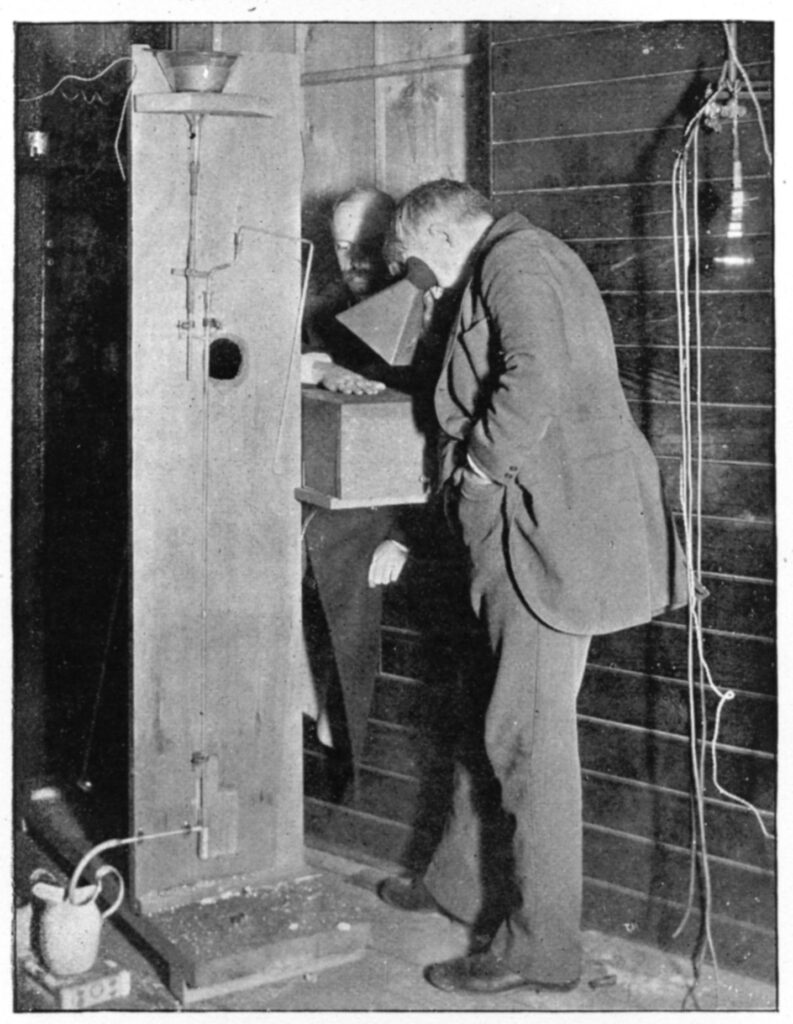
Edison entered the field in 1896. He was less interested in taking a single photograph than in seeing through the body as the rays were being produced. A fluoroscope placed a fluorescent screen between the observer and the hidden object. When X-rays struck the screen it glowed, creating a live but faint image. The observer looked through a hood to exclude outside light.
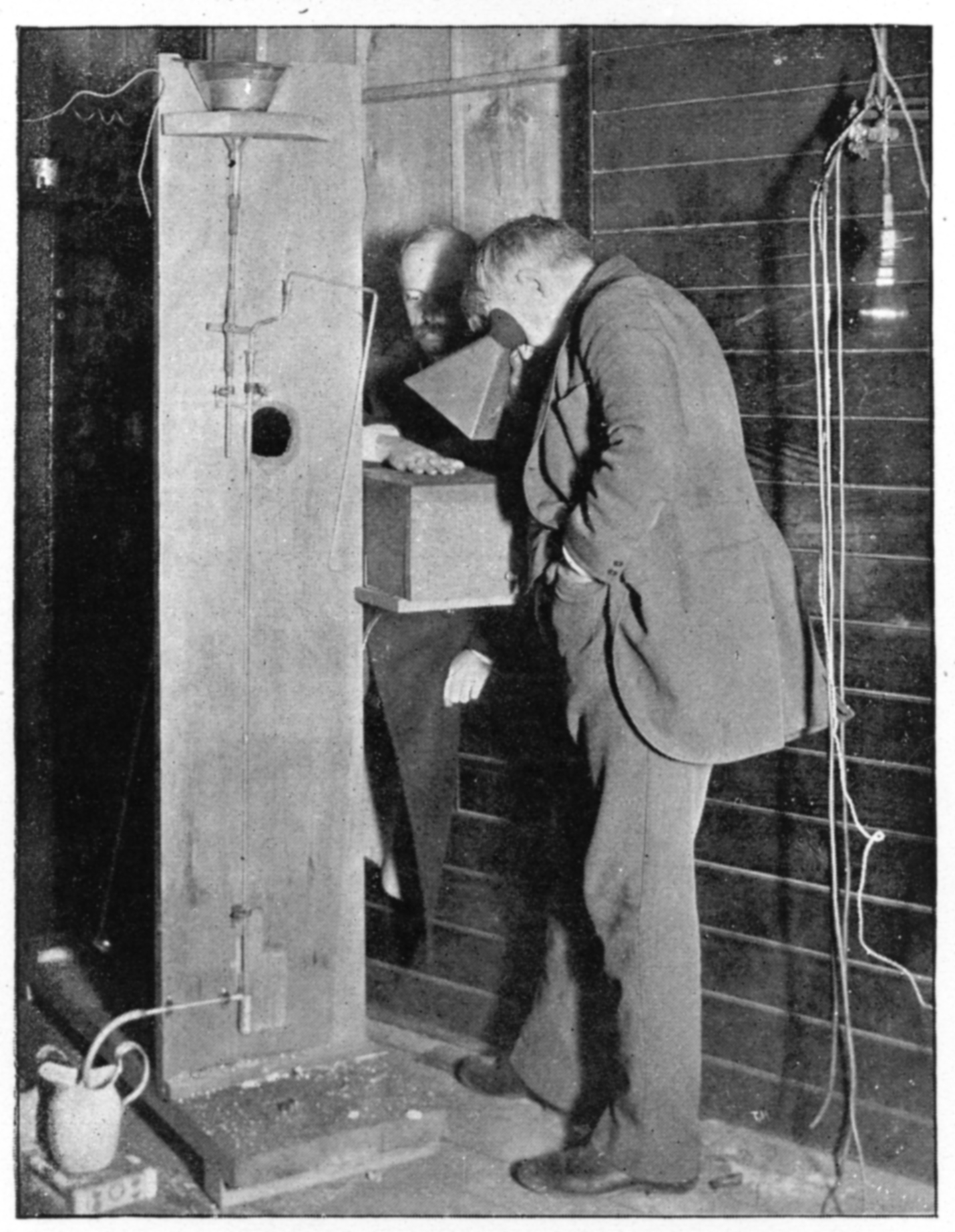
The first screens commonly used barium platinocyanide. Edison’s laboratory tested thousands of compounds and found calcium tungstate more effective for the purpose. Brighter fluorescence meant a more intelligible image. It did not make the X-rays safe.
Who was Clarence Dally?
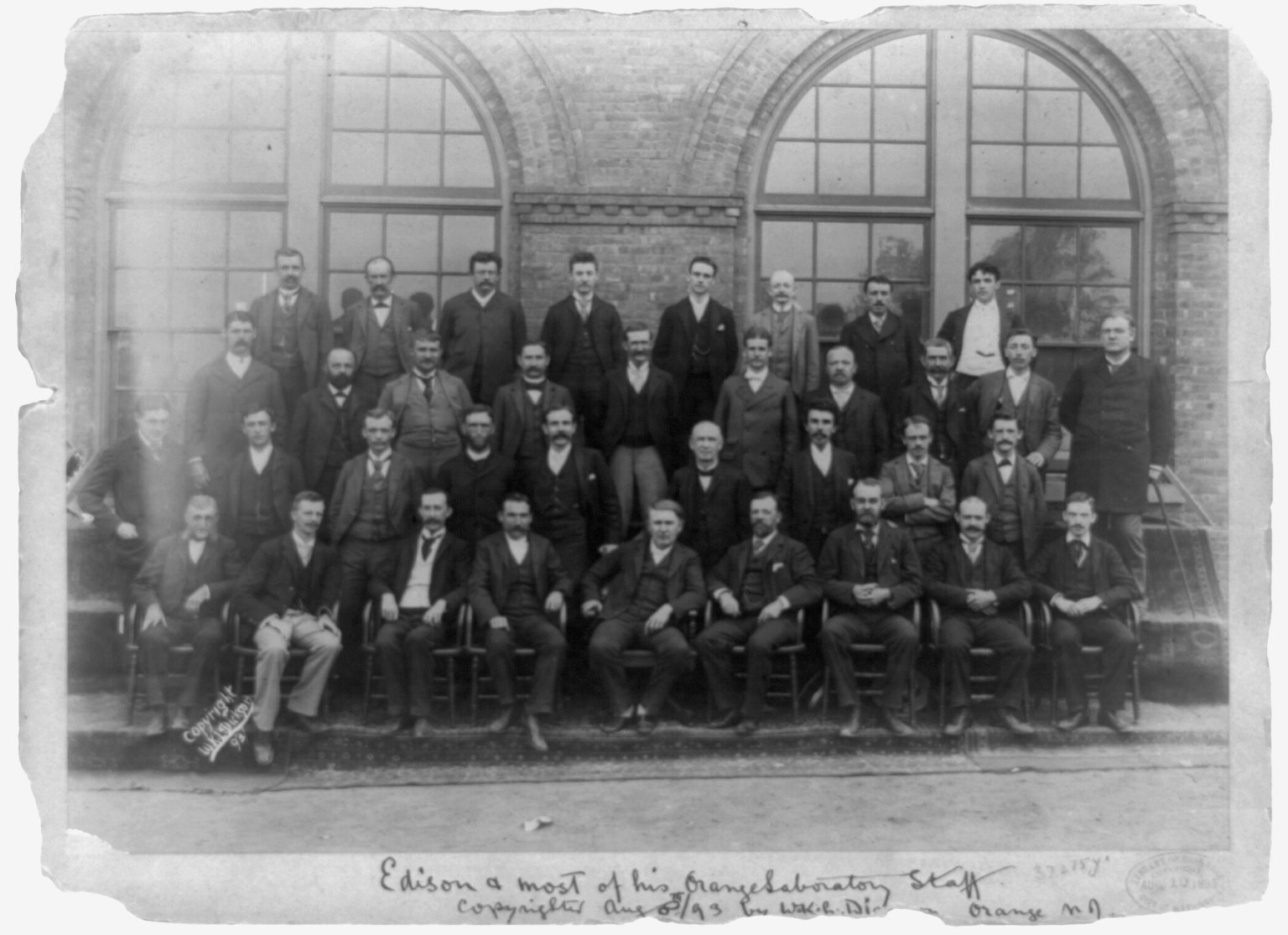
Clarence Dally was born in 1865 and served in the United States Navy before joining Edison’s West Orange works. He and his brother Charles were skilled glassblowers. Their craft was essential because experimental X-ray tubes had to be made, evacuated, sealed, operated and replaced. Small variations in a tube could alter the result.
Dally became Edison’s principal assistant in the X-ray investigations. He repeatedly put his hands in the beam while apparatus was adjusted and tested. The exposures were not the brief, carefully limited procedures used in modern radiology. Early experimenters lacked reliable dose measurements, protective shielding and an agreed safe practice. A fluoroscope encouraged continued observation: the longer one looked, the more opportunity there was to interpret a dim picture.
The work belonged to Edison’s collaborative laboratory system. Edison chose the objective and publicised results; chemists screened fluorescent substances; glassworkers made tubes; Dally tested the apparatus. Calling the fluoroscope simply “Edison’s invention” conceals these different contributions, but saying Edison had nothing to do with it is equally misleading.
Success before safety
Edison exhibited his fluoroscope publicly and visitors marvelled at the bones inside their own hands. Shoe shops later used related machines to show customers the position of feet inside footwear. In medicine, fluoroscopy developed into a valuable diagnostic technique. During its first years, however, fascination ran far ahead of knowledge.
Skin changes were among the earliest warnings. Experimenters reported reddening, hair loss, ulcers and damage resembling severe burns. Some treated these effects as temporary irritations. X-rays could not be seen or felt as they passed through the body, which made the danger harder to judge than heat, acid or a moving machine.
Dally’s hands became inflamed and ulcerated. Rest brought only partial relief. He returned to the work and sometimes used the other hand when one was too painful. The chronology is important because it prevents a comforting claim that all exposure occurred in complete ignorance. The earliest exposures were innocent of the long-term risk. Later ones continued amid mounting evidence that the rays were doing serious harm.
A slow and terrible injury
Dally’s condition progressed from burns to cancers. Surgeons amputated fingers and then an arm in attempts to halt the disease. His left arm was eventually removed as well. He died on 2 October 1904, aged thirty-nine. The Thomas A. Edison Papers describe the cause as radiation burns suffered during the laboratory’s X-ray experiments.
He is often called the first American to die from radiation exposure. That description is reasonable when carefully qualified: he was among the earliest recognised American occupational deaths caused by X-ray work, and his case received widespread attention. Claims of an absolute worldwide “first” are harder to sustain because many experimenters suffered poorly recorded illnesses.
Dally’s suffering was not an instantaneous laboratory accident. It was occupational injury accumulated through repeated exposure, made worse by uncertainty, enthusiasm and the pressure to continue useful work. That makes the case feel unexpectedly modern.
What responsibility did Edison bear?
Edison did not order Dally into a danger that he privately understood to be fatal. He exposed himself during demonstrations and suffered eye and stomach trouble that he associated with the rays. The science of radiation injury was new. Yet Edison was the employer, the programme’s director and the public name attached to the apparatus. The imbalance of authority matters even when both men shared the initial ignorance.
By 1903 Edison had withdrawn from X-ray research. Speaking to the New York World, he warned people not to talk to him about X-rays and said he was afraid of them. The remark is sometimes presented as if he immediately recognised the peril and saved others. In truth, it came after years of experimentation and after Dally’s devastating injuries were apparent.
Edison reportedly promised that Dally and his family would be cared for. Sympathy was real, but it did not restore what the work had taken. Dally’s name should not survive merely as the victim in someone else’s biography. He was a skilled experimenter whose labour helped establish the practical fluoroscope and whose death forced the new field to confront its cost.
The fluoroscope after Edison
Edison’s departure did not stop radiology. Physicians and physicists developed shielding, exposure limits, dosimetry and safer equipment. Calcium tungstate screens found uses in radiographic imaging for decades. The principle of converting invisible radiation into visible light became fundamental.
Doctors, demonstrators and patients
The first X-ray rooms occupied an uncertain territory between physics laboratory and medical clinic. Physicians bought tubes from electrical suppliers, adjusted their own coils and judged exposure by experience. Operators sometimes tested a tube by placing a hand before the screen. A patient’s dose could vary enormously with the apparatus, distance and length of examination.
Fluoroscopy had a special attraction because it appeared immediate. A radiograph required exposure and development; the fluorescent image seemed to let a doctor look directly into a living body. Its weakness was the dim screen. The operator adapted his eyes to darkness and might continue the exposure while trying to distinguish detail. Patients, doctors and assistants all stood close to equipment that leaked radiation in several directions.
By the first years of the twentieth century, reports of damaged hands and chronic sores had become difficult to dismiss. Researchers tried metal screens, greater distance and shorter exposures. Protection developed unevenly because the same rays that injured tissue also promised diagnosis and treatment. Dally’s case gave the abstract warnings a human form that newspapers and medical men could not easily ignore.
The episode also warns against judging the past only by present safety rules. Early workers lacked modern knowledge, but they were not incapable of recognising patterns. Once injuries repeatedly followed exposure, caution became a choice as well as a scientific question.
From exposure to a safety culture
Early protection often began with individual improvisation. Operators shortened sessions, placed lead between tube and body or delegated adjustment while standing farther away. Professional organisations gradually collected injury reports and turned scattered experience into recommendations. The concept of an occupational dose emerged only after workers had already accumulated it unknowingly.
Dally’s case was frequently cited because cause and effect appeared brutally clear. His hands had occupied the beam, the injuries began there and the cancers followed repeated work. That visibility helped persuade people who might otherwise dismiss a delayed hazard.
Modern accounts should resist making him useful only as a warning. He had a family, a trade and a career before the injuries. The loss belongs to him first, not to the eventual progress of radiation medicine.
The episode therefore contains both achievement and failure. The laboratory found a better fluorescent material and helped make live X-ray examination practical. It failed to protect the man who performed the most dangerous tests. Those facts belong in the same account.
A warning written in one man’s body
The familiar heroic history of invention concentrates on the first successful demonstration. Dally’s story asks what happened during the hundreds of unsuccessful and repeated tests that made success possible. It asks who stood nearest the apparatus and who carried the injury away from the laboratory.
Edison’s fear of X-rays was well founded, but it came too late for his assistant. The enduring lesson is not that dangerous research should never be attempted. It is that uncertainty about a hazard is not evidence of safety, and that the labour hidden behind a celebrated invention deserves both credit and protection.
Clarence Dally left no memoir capable of competing with Edison’s interviews. Most accounts reach him through the laboratory that employed him and the illness that killed him. His skill as a glassworker should remain visible beside his suffering: without men who could make and continually modify vacuum tubes, the fluoroscope programme could not have advanced.
Modern radiology saves lives using methods far removed from the West Orange demonstrations. Remembering Dally does not condemn that achievement. It records the price paid before dose was measured, shielding expected and the experimental worker treated as someone whose future mattered as much as the result.
Sources and further reading
- Thomas A. Edison Papers, “1901–1910” – Dally’s death and Edison’s later work.
- National Museum of American History, “Edison’s Fluorescent Electric Lamp” – calcium tungstate experiments and fluoroscope context.
- US Patent 865,367, “Fluorescent Electric Lamp” – Edison’s later patent record.
- Thomas Edison National Historical Park, history and collections – West Orange laboratory setting.