A singer entering Thomas Edison’s recording studio did not meet a microphone. She faced a metal horn, an unseen recording machine and a company that believed musical quality could be tested scientifically. The accompanists crowded into positions determined by loudness. A quiet violin moved closer; a trumpet retreated. If Edison listened, the most famous man in recorded sound might reject a fashionable voice because he disliked its tremolo.
Inside the studio, art and manufacture met. Performers supplied interpretation, engineers manipulated acoustics and managers considered what the catalogue could sell. Edison insisted that fidelity mattered more than celebrity. His studio made remarkable records, but his attempt to judge taste from the laboratory eventually left the company behind.
A room built around a horn
Before electrical recording, sound energy itself moved the cutting stylus. A performer sang or played into a horn. At its narrow end, a diaphragm vibrated and drove a stylus through the wax master. No amplifier rescued a weak sound.
Studio balance was therefore geography. Musicians stood on platforms, bent towards horns or stepped back. Bells and drums could overpower the groove. Double bass parts might be played by brass instruments capable of registering more clearly. The resulting performance was shaped for the machine rather than simply captured by it.

Walter Miller and the recording staff
Walter H. Miller joined Edison’s organisation as a young man and became a central recording expert. He understood diaphragms, styli, wax, room arrangement and the behaviour of performers before the horn. While Edison’s name appeared on the product, Miller and his staff conducted much of the daily recording work.
The studio kept logs, audition reports and test records. A successful take had to survive processing into a commercial master. Technicians compared pressings, listened for defects and repeated selections when necessary.
This chain makes the word “recorded” look deceptively simple. A performance passed through acoustic arrangement, groove cutting, moulding, pressing and reproduction. Every stage could add noise or reduce clarity.
Auditioning for Edison
Edison took a personal interest in auditions. His deafness was severe, but he could hear some frequencies and sometimes used a special listening arrangement or bit the cabinet to sense vibration. He rated tone, clarity and what he considered naturalness.
He disliked pronounced vibrato and distrusted artists whose fame appeared greater than their vocal quality. Audition forms could reduce a human performance to ranked characteristics. This was partly quality control and partly Edison’s conviction that preference could be disciplined by experiment.
Artists did not encounter a neutral judge. Edison’s taste favoured certain voices and genres. A technically secure singer might be rejected because she did not suit his ideal, while customers increasingly wanted names they had heard in opera houses and newspapers.
Recording without a star system
Victor built prestige around celebrity artists, most famously Enrico Caruso. Edison’s company promoted the phonograph’s power to recreate any approved voice. It employed excellent performers, including soprano Anna Case, but often made the machine the leading personality.
The policy saved large fees and supported the “re-creation” argument. It also made the catalogue harder to market as celebrity culture grew. Buyers did not always want an abstractly correct performance; they wanted a favourite artist’s record.

The famous tone tests
From 1915, Edison artists appeared in halls beside Diamond Disc phonographs. The singer performed with a record and then stopped, or alternated passages, while the audience was challenged to identify the change. Newspaper advertisements reported that listeners could not tell artist from machine.
The tone tests were skilful theatre. Artists practised matching pitch, timing and volume to the record. Rooms, selections and playback conditions were chosen carefully. An audience eager to participate in a scientific wonder supplied its own attention.
None of this makes the demonstrations fraudulent. The machine could reproduce a voice impressively for its time, and matching a live performance demanded considerable ability. The tests prove the persuasiveness of the event, not literal acoustic identity.
What was recorded?
The Edison catalogue included popular songs, dance music, comic monologues, marches, opera, hymns, language instruction and ethnic material marketed to immigrant communities. Spoken-word cylinders and discs preserve jokes, political speeches and domestic sentiment as well as music.
The choices reflect both demand and gatekeeping. Offensive racial stereotypes appeared in the commercial recording world, including Edison catalogues. Historical value does not remove that harm. Catalogue language and performance styles reveal the prejudices sold as popular entertainment.
The people just outside the catalogue
An audition could end with a rating and no contract. Rejected tests preserve performers who otherwise left little trace, but the reason for rejection may be terse or subjective. A voice judged unsuitable for Edison was not necessarily poor; it may have conflicted with his taste, recording limitations or current sales plan.
Accompanists, arrangers and studio technicians were also less visible than featured artists. They learned how to alter instrumentation for the horn and repeat a selection consistently through multiple takes. Their names sometimes survive in logs rather than on labels.
The archive therefore contains a shadow catalogue: music considered, attempted or technically unsuccessful. It helps distinguish what Americans performed from what one company chose to sell.
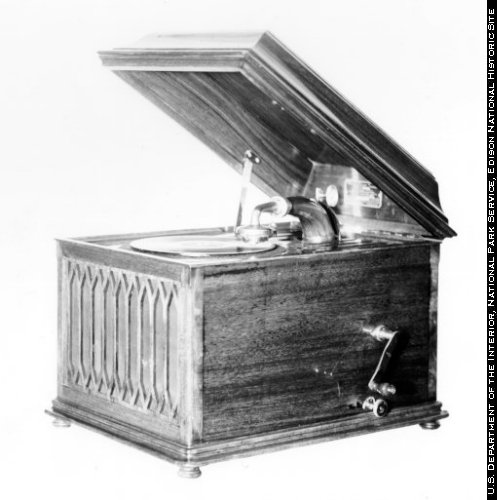 An Edison Diamond Disc phonograph. Studio, record and reproducer were designed as one controlled chain. Library of Congress; public domain.
Listening with Edison’s deafness
Edison’s hearing loss makes his authority over auditions seem paradoxical. He did not experience sound in the same way as most customers. By placing his teeth against a phonograph cabinet or piano, he could sense vibration through bone conduction, and he concentrated on frequencies he retained.
This gave him a distinctive, not superhuman, form of listening. It may have sharpened attention to rhythm and certain distortions while limiting judgement of other tonal qualities. Employees could respect his acuity and still disagree with his conclusions.
The company’s scientific language sometimes treated Edison’s verdict as objective. Historical fairness requires a more human picture: an experienced, severely deaf listener using unusual methods and strong preferences to make commercial artistic decisions.
Conversely, recordings preserve performers and traditions that might otherwise be unheard. The archive is evidence of American cultural life, not a neutral list of its best music.
From acoustic to electrical recording
Electrical recording in the mid-1920s replaced the horn as the first stage. A microphone converted sound to current; amplifiers strengthened it; an electromagnetic cutter made the groove. Musicians could be arranged more naturally, and a broader range of frequencies reached the record.
Edison hesitated. His company had invested its identity in acoustic “re-creation” and in a system he believed superior. It adopted electrical methods after rivals, while radio was already changing how families heard music.
The studio’s authority shifted from mechanical placement to microphones, circuits and mixing. Edison’s recording organisation understood precision, but its leader had difficulty accepting that the standard of precision had changed.
What the archive lets us hear
The National Park Service preserves thousands of Edison disc masters, cylinders and documentation. Modern non-contact scanning has recovered sound from damaged or unique media. Audition records show rejected as well as accepted performers; test pressings reveal decisions hidden by the final catalogue.
These materials return credit to engineers and artists. Recorded sound was not Edison speaking through a company. It was a negotiation among performance, apparatus, commercial judgement and the physical groove.
The studio as an invention factory
Edison’s recording studio applied the Menlo Park habit to culture: test, compare, reject and repeat. That discipline improved masters and manufacturing. It was less capable of explaining why listeners loved one singer or why a new dance swept the country.
The records endure because art escaped the scoring sheet. Behind every groove stood a performer adjusting breath to a horn, an engineer listening for distortion and a factory reproducing the result. Edison supplied the system and the standard; the sound itself belonged to a crowded room.
That room changed as microphones arrived, but its basic negotiation remains familiar. Every recording balances performance, technology and an imagined audience. Edison’s studio makes the machinery unusually visible—and reminds us that a “natural” recorded voice has always been made.
A take was not yet a record
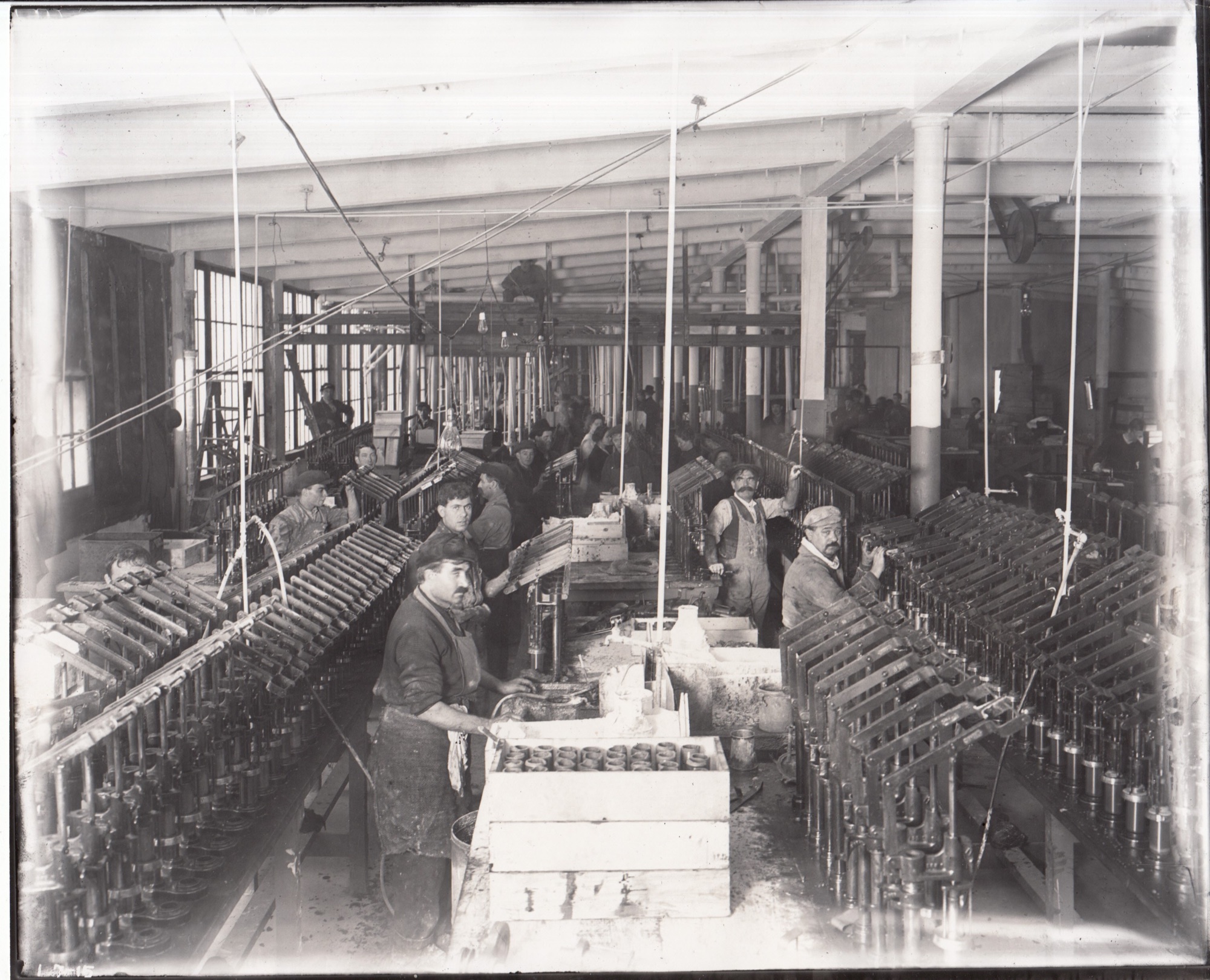
After a satisfactory performance, the master entered a technical journey invisible to the artist. Moulds had to be made, copies pressed and samples compared. A flaw multiplying across a production run could waste far more than another studio take.
Recordings were catalogued by numbers that linked take, selection and manufacturing history. Surviving documentation lets researchers identify alternate performances even when the label supplies only title and artist.
The business listened at several points for different reasons: the studio engineer for capture, Edison or a committee for artistic approval, and factory staff for physical quality.
Silence was part of the apparatus
Acoustic recording required a quiet room, but West Orange was an industrial complex of machinery and workers. Sessions had to be insulated from footsteps, whistles and production noise that could reach the diaphragm.
Performers also controlled their own noise. A turned page, chair movement or breath at the horn could mark the wax permanently. Unlike a modern multitrack session, there was no isolated channel to repair.
The intensity heard in some early records came partly from this concentration. Several minutes had to be performed continuously into an unforgiving mechanical listener.
Listeners later heard only the accepted take, giving the performance an inevitability the studio never possessed. Surviving alternates return the hesitations and choices: a different tempo, a changed word or a balance corrected by moving one player a few inches.
Sources and further reading
- Thomas Edison National Historical Park, “The Recording Archives” – studio records, masters and surviving sound.
- Library of Congress, “Overview of the Diamond Disc Recordings” – repertoire and recording chronology.
- Library of Congress, “Is It Live or Is It Edison?” – tone tests and performance practice.
- Thomas Edison National Historical Park, “Edison Disc Master Mold Playback Tests” – production and quality-control evidence.