Henry Ford first saw Thomas Edison in 1896 as a young engineer seeking approval from the most famous inventor in America. More than thirty years later, Ford rebuilt Edison’s Menlo Park laboratory in Michigan, filled a museum with relics of industrial history and staged a national celebration around his friend.
Between those moments lay a friendship that was affectionate, useful and carefully displayed. Edison and Ford holidayed together, exchanged gifts, joined Harvey Firestone and John Burroughs on elaborate camping trips and lent their names to one another’s projects. Ford admired Edison almost as a disciple admires a master. Edison enjoyed Ford’s energy and resources, while remaining more independent of Ford’s ideas than the mythology sometimes suggests.
The young engineer meets his hero
Ford was sixteen years younger than Edison. In the 1890s he worked for the Edison Illuminating Company in Detroit and built an experimental petrol vehicle in his spare time. At a company convention in New York in August 1896, he described the machine to Edison. According to Ford’s later account, Edison struck the table and urged him to continue: the self-contained vehicle had merit where an electric car depended upon heavy batteries and charging stations.
The incident is supported principally by Ford’s recollection, written after both men were famous. Its exact dialogue should not be treated as a stenographic transcript. The underlying encounter is well established, and its emotional importance to Ford is beyond doubt. Approval from Edison gave the younger man confidence at a moment when his automobile was still an experiment.
The irony is attractive but should not be exaggerated. Edison later spent years developing a storage battery for electric vehicles, while Ford built his fortune with petrol cars. They were not divided into rival camps. Ford tried Edison batteries in an electric Model T project that never reached production, and Edison eventually accepted that the petrol car had won the first mass market.
From admirer to fellow celebrity
By the 1910s Ford no longer approached Edison as an obscure engineer. The Model T had made him one of the richest industrialists in the world. Their public identities fitted neatly together: Edison represented the heroic age of electrical invention; Ford represented mass production and affordable mobility. Newspapers could place them side by side as embodiments of American ingenuity.
The friendship also included Mina and Clara Ford, family visits and time at the Edisons’ winter home in Fort Myers, Florida. Ford bought the neighbouring property in 1916. The two households did not live there continuously, but geographical closeness encouraged holidays and later rubber research.
They were capable of disagreement. Edison valued Ford’s practical gifts but did not endorse every political campaign. Ford’s notorious antisemitism and the propaganda published by his Dearborn Independent cannot be transferred automatically to Edison, whose own attitudes were inconsistent and at times prejudiced but distinct. Friendship is evidence of association, not proof that two men held identical beliefs.
The birth of the Vagabonds
The celebrated camping circle began in 1914, when Ford and the naturalist John Burroughs visited Edison in Florida and explored the Everglades. In 1915 Edison, Ford and tyre manufacturer Harvey Firestone travelled in California after the Panama-Pacific International Exposition and visited the plant breeder Luther Burbank. Longer summer expeditions followed.
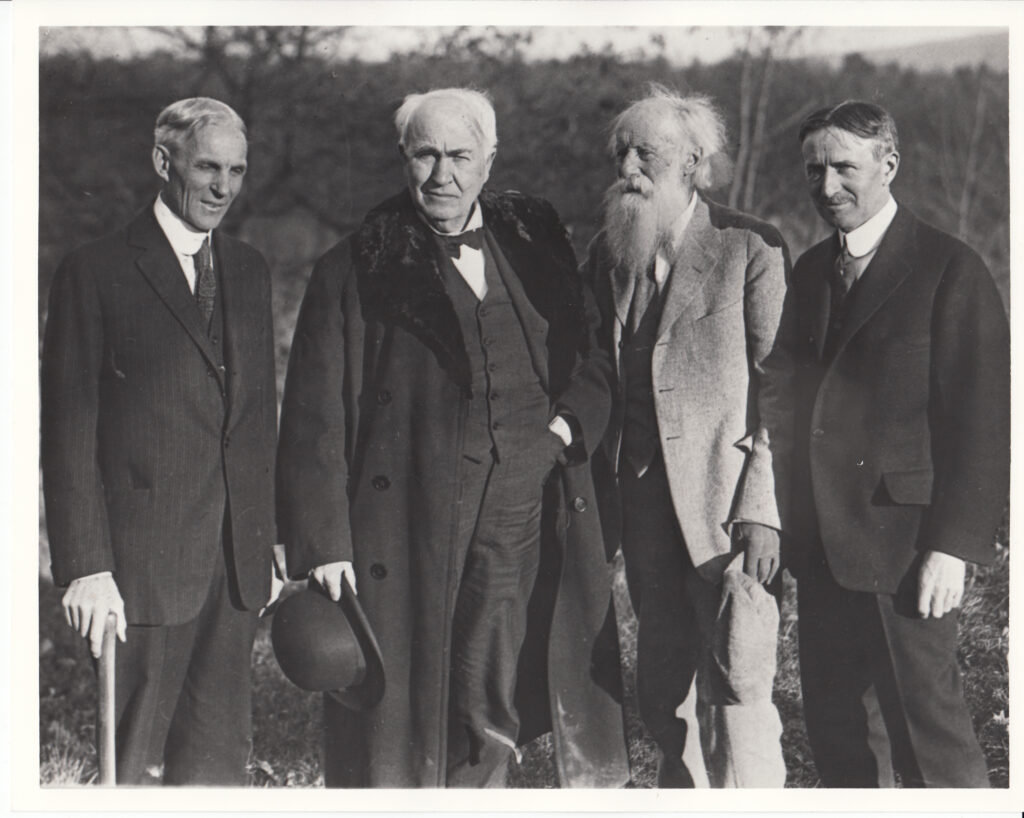
The group came to be known as the Four Vagabonds: Edison, Ford, Firestone and Burroughs. The membership was never as fixed as the name suggests. Wives, children, employees, servants, business associates and political figures joined particular journeys. Burroughs took part from 1916 until 1920; he died in 1921.
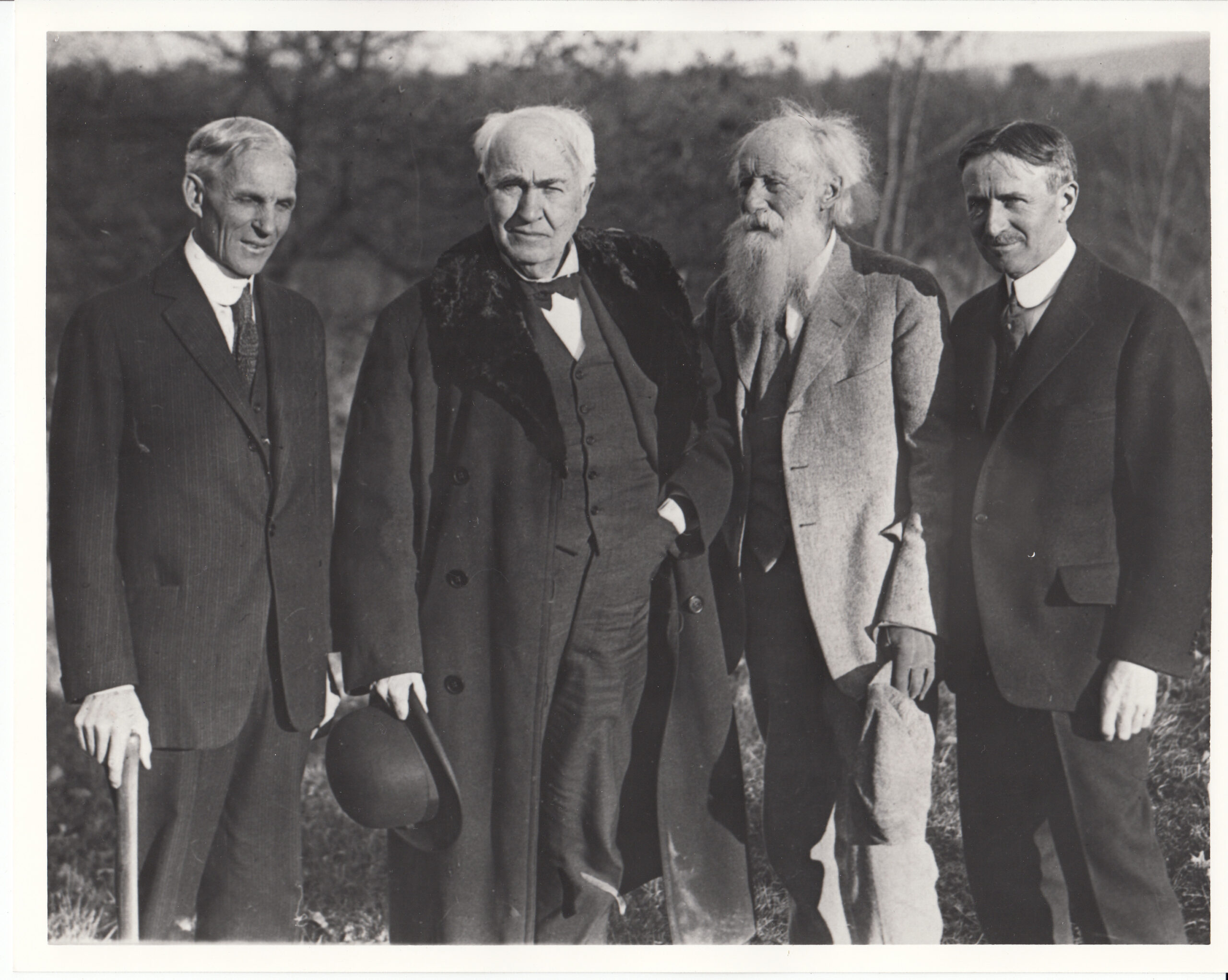
The men travelled through New England, the Adirondacks, West Virginia, Tennessee, North Carolina, Maryland and Michigan. They climbed, chopped wood, inspected factories, raced one another and staged feats for cameras. Edison might test a nap under a tree while Ford climbed one. Burroughs supplied natural history and a literary conscience; Firestone organised and financed much of the comfort.
Camping with a kitchen truck and a film crew
The word “camping” needs qualification. Early outings could be informal, but the expeditions soon acquired a motorised support system. The 1919 trip reportedly involved dozens of vehicles. There were sleeping tents, a dining tent, cots, electric lights, a refrigerated kitchen truck, a professional cook and a large circular table with a revolving centre.
Ford Motor Company photographers and film crews recorded the adventures. Newspapers followed. Roads, cars and rural scenery became part of the same story: modern industry had made nature accessible. Ford complained about attention but understood its promotional value. The Vagabonds sold an image of powerful men remaining boyish, curious and close to the land.
The performance contained genuine pleasure. Edison could escape scheduled visitors at West Orange, Ford could tinker and drive, and all four enjoyed practical jokes and outdoor tests. Yet staff erected the tents and prepared the meals. Their return to simplicity depended upon a complicated service organisation remarkably like the factories they had left behind.
Presidents at the camp table
The circle’s fame drew political guests. President Warren G. Harding joined a 1921 outing in Maryland, where he sat at the great camp table with the families. The presence of a president transformed a holiday into a national tableau of business, invention and government.
That connection should not be confused with a single political programme. Edison offered opinions on public questions but never ran for office. Ford’s pacifist voyage of 1915 and later political ambitions were his own. Firestone had commercial interests in rubber and roads. The camp united public figures without requiring them to agree about policy.
By 1924 crowds and organisation had overwhelmed spontaneity. The group travelled by train, visited President Calvin Coolidge and stopped at Ford’s Wayside Inn in Massachusetts. The grand expeditions ended. Their images, however, became an enduring part of each man’s biography.

Ford collects Edison’s past
Ford’s devotion increasingly took the form of collecting. He acquired machinery, buildings, domestic objects and industrial relics for what became the Henry Ford Museum and Greenfield Village at Dearborn. Menlo Park held special importance. The original New Jersey laboratory had declined, and parts of the site had been dismantled. Ford obtained surviving material, searched for former employees and recreated the complex in Michigan.
The reconstruction was not an untouched building moved whole. It combined original material, recovered objects, testimony and new construction. Ford wanted atmosphere and symbolic completeness. He is said to have insisted that the site’s soil should never again be disturbed after Edison’s visit, another sign that historical preservation had shaded into reverence.
Edison accepted the honour while sometimes smiling at Ford’s intensity. He had not treated Menlo Park as a shrine when he left it. His attention moved to West Orange, where invention had become a far larger industrial enterprise. Ford’s reconstruction helped fix the earlier laboratory as the central stage of Edison mythology.
Light’s Golden Jubilee
On 21 October 1929 Ford dedicated the museum and Greenfield Village during Light’s Golden Jubilee, marking fifty years since the decisive Menlo Park lamp experiments of 1879. President Herbert Hoover, Orville Wright, George Eastman and other distinguished guests attended. Radio carried the ceremony across the United States.

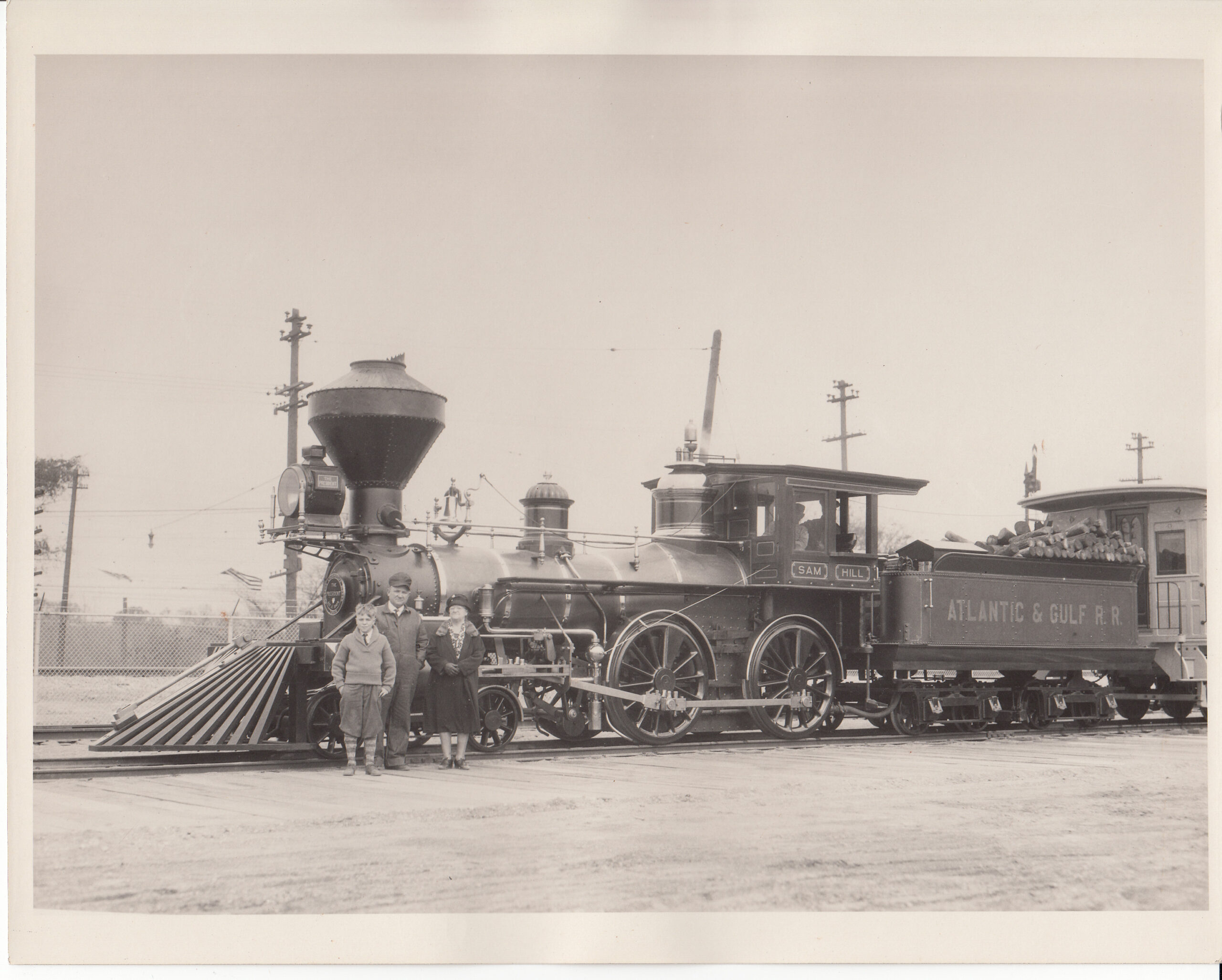
Edison travelled by a train that retraced part of his boyhood railway route. At Smiths Creek he was associated with the locomotive remembered from his youth. In the reconstructed laboratory he re-enacted the lamp test and presented Ford with a commemorative bulb. The event blended history, theatre, friendship and corporate publicity.
Edison, aged eighty-two and in frail health, reportedly became exhausted and briefly collapsed during the celebrations. Ford’s tribute was generous but demanding. It also helped transform a complicated team achievement in electric light into a national anniversary centred upon a single night and a single inventor.
Rubber, business and mutual usefulness
Friendship did not remain ceremonial. Ford and Firestone financed Edison’s late search for a domestic source of natural rubber. The automobile and tyre industries depended upon tropical plantations and vulnerable supply routes. Edison tested thousands of plants and concentrated on goldenrod. The work continued until his final illness, although it did not produce a competitive American rubber crop.
Each man brought something to the partnership. Firestone understood rubber markets; Ford supplied money, land and an industrial motive; Edison supplied a laboratory method and a name capable of attracting specimens from across the country. Their public friendship made cooperation easier to explain and promote.
There were commercial benefits in all directions. Ford associated himself with the revered inventor. Edison’s late work gained financial support and attention. Firestone’s products appeared wherever automobile travel was celebrated. The presence of advantage does not make the friendship false. Powerful friendships often operate through shared projects.
After Edison’s death
Edison died at Glenmont on 18 October 1931. His son Charles had several test tubes sealed in the room shortly afterwards; one was eventually given to Ford and became known as a vessel containing “Edison’s last breath”. The object says more about Ford’s desire for tangible connection than it does about medicine. Whether it literally preserved the final exhalation cannot be demonstrated.
Ford continued to honour Edison through the museum and institute. The relationship became part of Ford’s own public story: the younger mechanic had received encouragement, built an industry, then preserved the world of his mentor. It is a satisfying arc, which is precisely why its rough edges deserve attention.
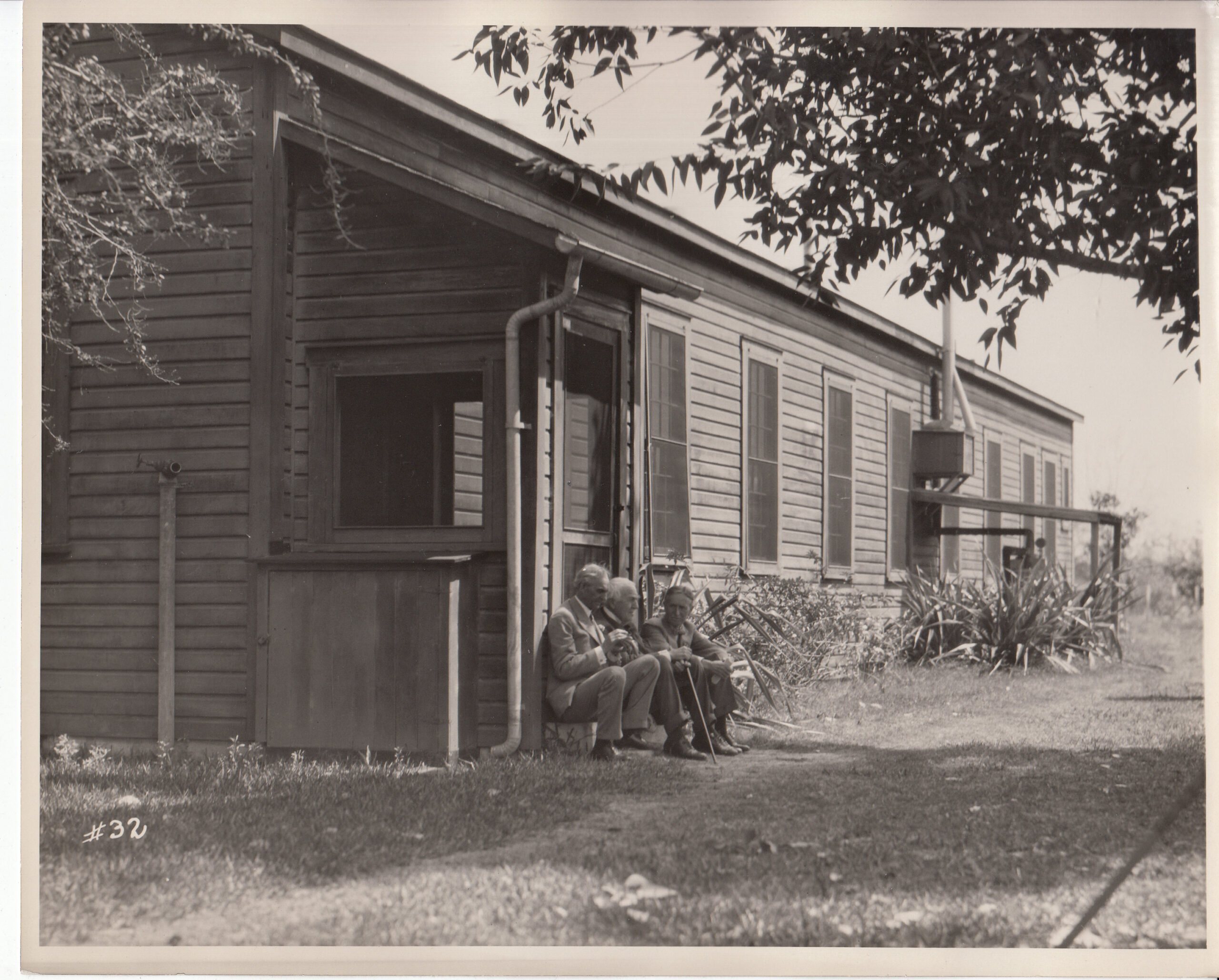
The friendship was real, but not equal in the same way at every stage. It began in hero worship, matured into companionship between famous industrialists and ended in commemoration directed largely by Ford. The Vagabonds photographs capture the middle period best. Behind the cameras and kitchen trucks, two men who had helped mechanise American life were enjoying the freedom their machines had made possible.
Sources and further reading
- The Henry Ford, “Camping with Henry Ford and the Vagabonds” – routes, equipment and publicity of the expeditions.
- The Henry Ford, “The Vagabonds” research topic – chronology from 1914 to 1924.
- The Henry Ford, “Edison and Ford: A Lasting Friendship” – objects and photographs from the relationship.
- Thomas A. Edison Papers, “1914” chronology – the Florida holiday with Ford and Burroughs.
- Thomas A. Edison Papers, “1921–1930” – camping, rubber corporation and Golden Jubilee.
- Thomas Edison National Historical Park, “Edison Biography” – later life, Fort Myers and West Orange context.
- Thomas Edison National Historical Park, Ford and Edison at Greenfield Village – archival photograph and public-domain record.